Hi, message us with any questions.
We're happy to help!





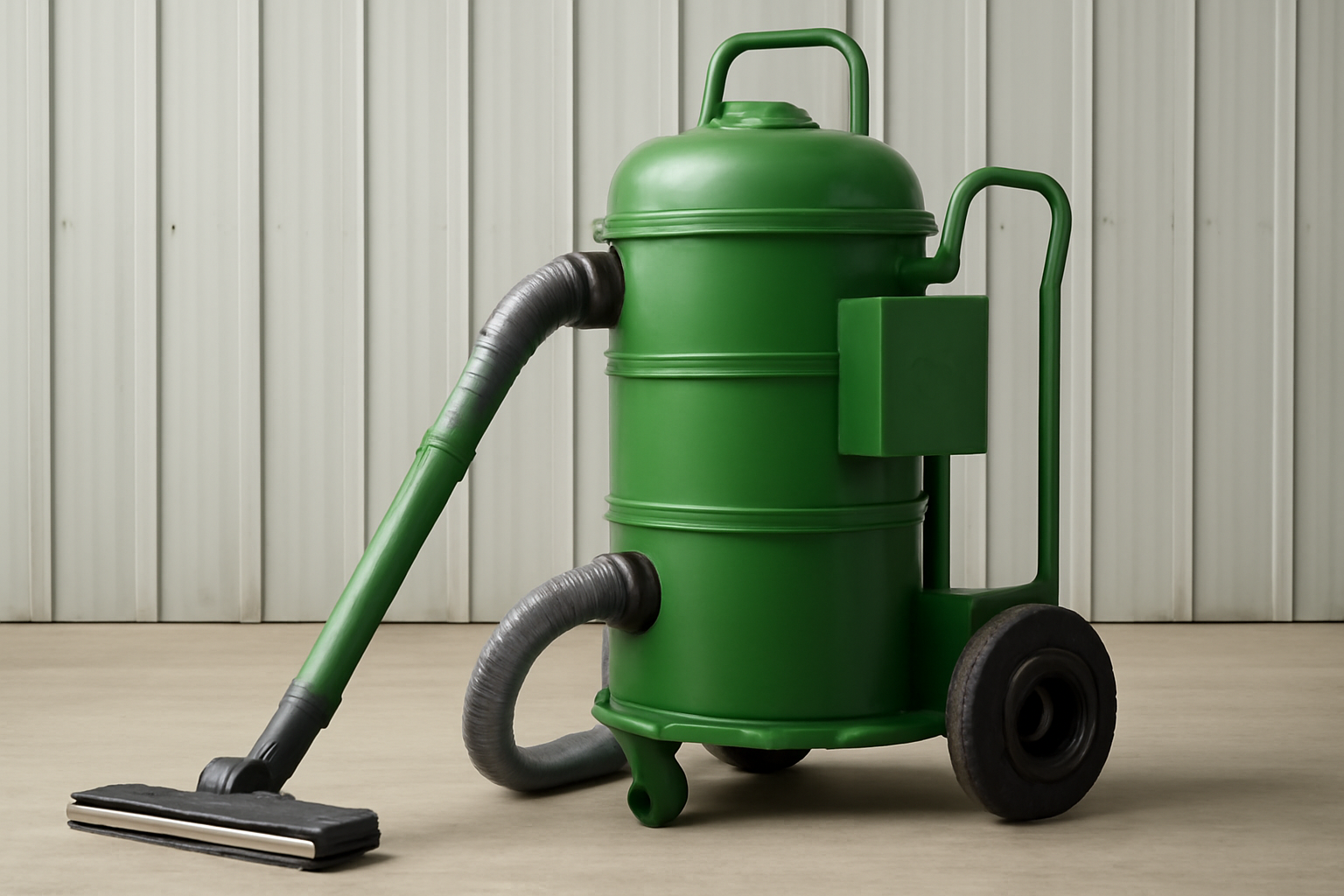
🎯 Target Audience: Industrial Cleaning Equipment Buyers & Procurement Managers (Europe & Middle East)
(Focus: High-performance engineering, energy efficiency, and sustainability in large-scale cleaning operations)
⚙️ 1. Industrial Cleaning’s Turning Point: Performance Meets Responsibility
In the industrial cleaning sector, performance has always been the top priority — suction strength, durability, and capacity were the deciding factors.
But in 2025, another metric has joined the competition: energy efficiency.
Factories, logistics centers, and large facilities are under increasing pressure to meet ESG targets and reduce operational emissions.
Traditional high-wattage vacuums — once seen as powerful — are now viewed as energy-inefficient and unsustainable.
Forward-thinking buyers are turning toward Low-Energy High-Performance Vacuums — machines that deliver the same (or greater) cleaning power while consuming up to 40% less electricity.
These solutions combine smart engineering, green technology, and data-driven optimization to meet modern industrial demands without compromise.
⚡ 2. Rethinking Power: Engineering Efficiency Into Performance
🧩 2.1. From Wattage to Output Efficiency
A 2000W vacuum doesn’t always mean more power — it often means more waste.
Modern Upright Vacuum Cleaners and Household Vacuum Cleaners used in industrial setups are now engineered for energy conversion efficiency, not brute force.
Energy-Saving Efficient Powerful Vacuum Cleaners use:
High-speed brushless motors (90% energy conversion)
Dynamic airflow channels to minimize turbulence
Precision nozzle geometry to optimize suction at lower RPMs
This engineering shift allows for consistent performance with lower wattage, extending motor life and reducing maintenance frequency.
🔋 2.2. Intelligent Power Distribution Systems
Industrial models like Wet Dry Vacuum Cleaners and 4-in-1 Cordless Smart Wet & Dry Vacuum Cleaners are adopting AI-based power modulation — analyzing dust density, floor type, and airflow resistance in real time.
Benefits include:
Automatic power reduction when full suction isn’t needed
Battery optimization for cordless operations
Real-time energy monitoring via smart dashboards
In large facilities, these micro-optimizations can result in energy savings of 25–35% per unit, which translates to massive yearly cost reductions across fleets.
🌿 3. Green Manufacturing: Reducing Carbon at the Source
Efficiency doesn’t end at operation — it starts with how vacuums are made.
Leading manufacturers are adopting sustainable materials and energy-efficient production lines:
Recycled aluminum for motor housing
PCR (post-consumer recycled) plastics for exterior casing
Low-emission paint and adhesive processes
Some Portable Vacuums for Travel and HEPA Filter Vacuum Cleaners now carry ISO 14067 carbon footprint certification, showing transparency in total lifecycle emissions.
For industrial buyers, this data can be a powerful procurement tool, aligning equipment selection with corporate ESG reporting requirements.
🧠 4. High-Performance Doesn’t Mean High Energy
A common misconception in industrial cleaning is that energy reduction equals performance loss.
In reality, it’s the opposite: smart technology enhances both.
Recent comparative testing across European warehouses showed that Energy-Saving Efficient Powerful Vacuum Cleaners delivered:
Equal or better suction (12–15 kPa range)
30–40% less energy consumption
20% quieter operation due to optimized air pathways
The key lies in integrated design — every component (motor, filter, air duct, brush head) must work in sync for system-wide efficiency.
🧩 5. Filtration & Waste Optimization
Industrial-scale cleaning produces massive dust volumes — managing that waste sustainably is critical.
Next-generation HEPA Filter Vacuum Cleaners now integrate multi-stage filtration + self-cleaning sensors:
Cyclonic pre-filtration removes large particles.
Nano-coating HEPA membranes trap micro-particles without clogging.
Auto-reverse airflow systems clean filters in seconds.
This innovation not only improves air quality but also extends filter lifespan by 200%, reducing waste and downtime.
🔧 6. Real-World Example: Manufacturing Plant in Turkey
A metal parts manufacturer in Izmir replaced 150 legacy wet/dry vacuums with 4-in-1 Cordless Smart Wet & Dry Vacuum Cleaners.
Within 10 months, results included:
37% energy cost reduction
60% fewer maintenance calls
95% uptime consistency in automated cleaning schedules
Most importantly, the company achieved ISO 50001 energy management certification, gaining leverage in government tenders and supplier evaluations.
For B2B distributors, stories like these build authority and provide measurable ROI data that buyers demand.
🧭 7. Practical Strategies for Industrial Buyers
For procurement teams looking to modernize cleaning operations sustainably, consider the following roadmap:
Audit your existing equipment’s energy use.
→ Identify high-wattage models and assess total kWh per shift.Upgrade strategically.
→ Replace units with Low-Energy Smart Vacuums that match your cleaning area size.Focus on modular design.
→ Choose vacuums with replaceable motor cores and washable filters.Integrate IoT tracking.
→ Connect vacuums to central dashboards for performance analytics.Prioritize durability.
→ Choose Multi-Functional Durable Vacuum Cleaners that minimize replacement cycles.Partner with verified green suppliers.
→ Request sustainability certifications and lifecycle analysis reports.
🚀 8. The Future of Industrial Cleaning
Tomorrow’s industrial vacuum cleaners will be defined by three pillars:
Efficiency, Intelligence, and Sustainability.
Expect to see:
AI-driven predictive maintenance reducing downtime
Smart grid integration for energy balancing
Fully recyclable, modular vacuum bodies
Cloud-based fleet management for large facilities
The Low-Energy High-Performance Vacuum is more than a machine — it’s a data-driven ecosystem that keeps factories clean, efficient, and compliant with global environmental standards.
💡 Conclusion
The industrial cleaning market is undergoing a technological transformation.
Buyers no longer have to choose between performance and sustainability — modern vacuums deliver both.
By adopting Energy-Saving Efficient Powerful Vacuum Cleaners, HEPA Filter Vacuum Cleaners, and 4-in-1 Smart Wet & Dry Systems, procurement teams can reduce costs, meet sustainability goals, and strengthen operational reliability.
For distributors and industrial buyers, green technology is no longer optional — it’s the competitive advantage that defines tomorrow’s market leaders.
📌 Hashtags
Upright Vacuum Cleaners, Household Vacuum Cleaners, Wet Dry Vacuum Cleaners, 4 in 1 Cordless Smart Wet & Dry Vacuum Cleaner, Portable Vacuum for Travel, HEPA Filter Vacuum Cleaner, Energy-Saving Efficient Powerful Vacuum Cleaner, Industrial Cleaning Equipment, Low-Energy Vacuum Cleaner, High-Performance Vacuum, Smart Cleaning System, Sustainable Manufacturing, Recyclable Vacuum Components, Eco-Friendly Vacuum Cleaner, Green Technology, IoT Cleaning Devices, AI-Powered Vacuum Cleaner, Durable Industrial Vacuum, Commercial Cleaning Tools, High Suction Vacuum Cleaner, Energy Optimization, Smart Airflow Design, Modular Vacuum Design, Sustainable Product Engineering, Battery-Efficient Vacuum, Circular Economy Equipment, Energy-Saving Technology, Quiet Vacuum Cleaner, Industrial Filtration System, HEPA Nano Filter Vacuum, Low Noise Vacuum Cleaner, Sustainable Factory Equipment, Air Quality Improvement, Carbon-Neutral Cleaning Tools, Smart Energy Management, Recyclable Materials, Green Industrial Solutions, ESG-Compliant Equipment, Multi-Functional Durable Vacuum Cleaner, Energy Management Certification, Smart Factory Cleaning, Brushless Motor Vacuum, Warehouse Cleaning Equipment, Energy Cost Reduction, Smart Dust Collection, Industrial Smart Vacuums, Zero Waste Cleaning, Lanxstar



