Hi, message us with any questions.
We're happy to help!





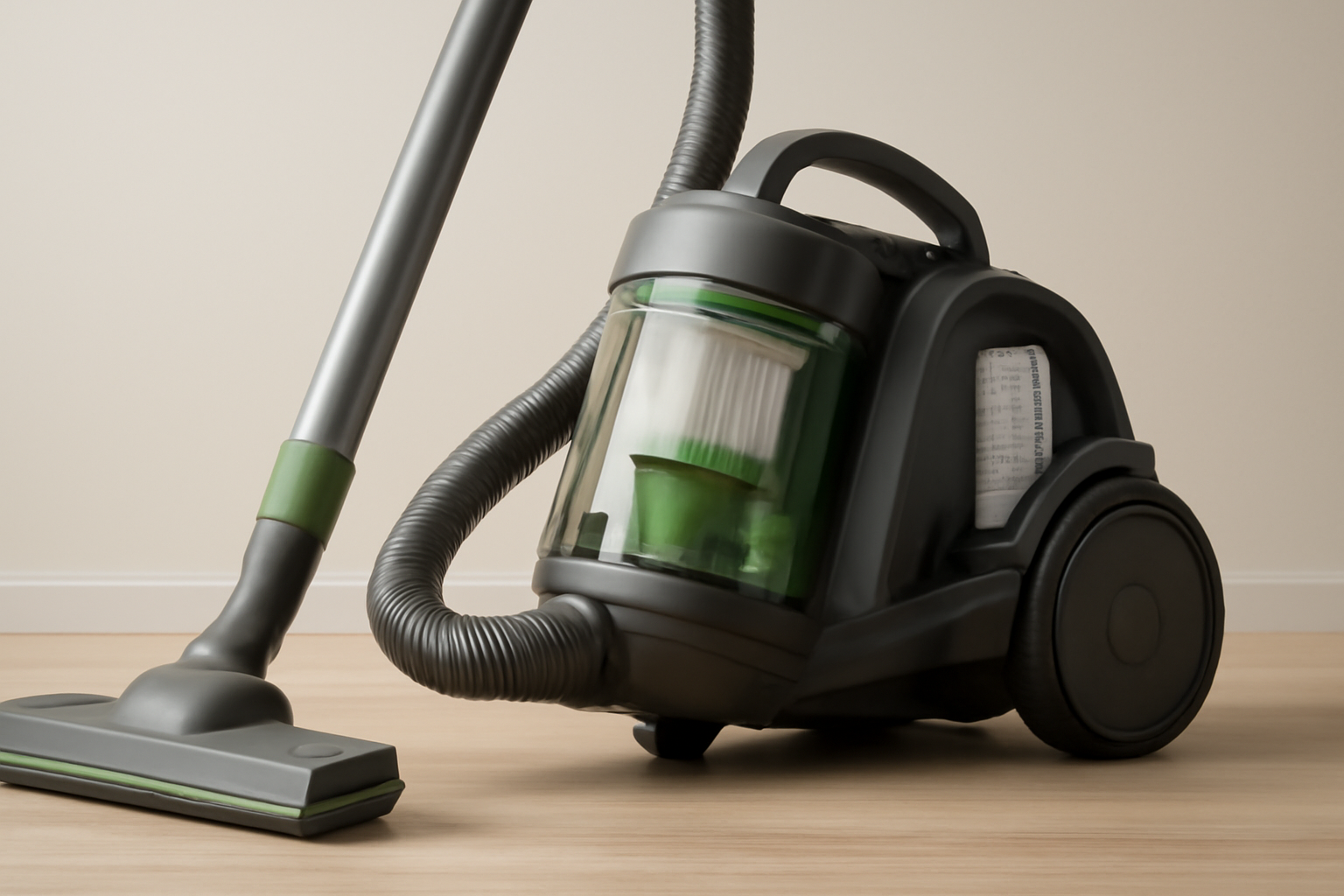
🎯 Target Audience: Product Engineers and Technical Buyers in Europe & the Middle East
(Focus: Innovation in filtration technology, sustainability, and lifecycle performance)
🌬️ 1. The Hidden Engine of Clean: Why Filtration Defines Sustainability
When people think of vacuum cleaners, they often focus on suction power, motor performance, or battery life. Yet, the true heart of a sustainable cleaning system lies in one place — filtration.
For engineers, procurement specialists, and facility decision-makers, understanding how filtration impacts energy efficiency, air quality, and material waste is the new competitive edge.
Modern Upright Vacuum Cleaners and Household Vacuum Cleaners are evolving fast — integrating HEPA Filter Vacuum Cleaners with advanced multi-layer membranes and self-cleaning systems that redefine what “green cleaning” really means.
🌱 2. From HEPA to Hyper-Efficiency: The Next Wave of Filtration
🌀 2.1. Understanding HEPA’s Legacy
The HEPA (High-Efficiency Particulate Air) filter has been the gold standard for decades — capable of capturing 99.97% of particles as small as 0.3 microns.
However, traditional HEPA materials (usually fiberglass or PET composites) face sustainability challenges:
Difficult to recycle
Short filter life
High airflow resistance increasing energy demand
As a result, engineers are now pushing for next-generation filtration technologies that go beyond HEPA — offering cleaner air with a smaller environmental footprint.
⚙️ 2.2. Nano-Coated and Bio-Based Filters
The most advanced Quiet Vacuum Cleaners and Portable Self-Cleaning Vacuum Cleaners are now equipped with nanofiber coatings that improve filtration efficiency while reducing airflow resistance.
Key benefits include:
Lower motor load → energy savings up to 15%
Extended filter lifespan → up to 3× longer than traditional HEPA
Washable or self-regenerating surfaces → drastically cutting filter waste
Some manufacturers are experimenting with bio-based membranes, using polylactic acid (PLA) or bamboo cellulose composites — materials that decompose naturally without releasing microplastics.
This combination of performance + biodegradability is fast becoming the defining feature of sustainable cleaning equipment.
⚡ 3. Energy Efficiency Through Airflow Optimization
Many assume filtration only affects air purity — but it’s directly tied to energy performance.
In traditional systems, airflow restrictions caused by dirty or dense filters can increase motor workload by up to 30%, dramatically reducing efficiency.
By contrast, new HEPA Filter Vacuum Cleaners using nano-porous filters or electrostatic assist layers maintain strong suction at lower wattage.
For instance, one Car Vacuum Cleaner prototype tested in Dubai achieved equal suction power at 1100W that previously required 1600W — a 31% energy reduction achieved solely through smarter filtration design.
🧩 4. Self-Cleaning Systems: Extending Lifespan, Reducing Waste
In commercial settings such as hotels and airports, vacuums are used for thousands of hours annually. Constant filter replacement not only increases cost but also contributes to micro-waste.
To address this, premium Portable Self-Cleaning Vacuum Cleaners now feature reverse airflow regeneration systems — blowing air backward through the filter to shake off dust automatically.
Advantages include:
Filter replacement intervals extended by 200–300%
Reduced maintenance downtime
Consistent suction output over time
When combined with sensor-driven air pressure monitoring, these vacuums automatically trigger cleaning cycles — merging green tech with smart engineering.
🏗️ 5. Material Engineering: Designing for Recyclability
The sustainability of filtration systems doesn’t end with efficiency. It extends to design for disassembly.
Modern Upright Vacuum Cleaners are moving away from glued filter chambers to clip-on modular cartridges, making it easier for technicians to replace or recycle components.
Additionally, many Household Vacuum Cleaners are using mono-material filters — built entirely from recyclable polypropylene instead of mixed composites.
This approach simplifies recycling while maintaining durability.
Some innovative suppliers even offer return-and-recycle programs, allowing B2B buyers to send back used filters for material recovery.
🌿 6. Real Case Study: Middle East Hospitality Group Goes Green
A five-star hotel group in Qatar replaced 400 conventional units with Quiet Vacuum Cleaners featuring HEPA-based hybrid filters. Within one year, they recorded:
35% lower filter waste output
18% reduction in electricity bills
Significant improvement in indoor air quality (IAQ) readings, verified by local health inspectors
The switch not only improved ESG compliance but also became part of the hotel’s marketing message — appealing to eco-conscious travelers.
For regional distributors, this type of case is marketing gold: measurable, replicable, and directly linked to cost savings.
🧠 7. Practical Advice for Engineers and Distributors
If you’re sourcing or developing sustainable vacuums, here are technical and strategic priorities for 2025 and beyond:
Prioritize airflow-efficient filters — low ΔP (pressure drop) saves energy long-term.
Use modular cartridge systems — simplify maintenance and recycling.
Choose washable or auto-cleaning filters — reduce consumable costs.
Leverage bio-based materials — enhance ESG alignment and brand image.
Highlight filtration lifecycle data in product sheets — B2B buyers now expect quantifiable sustainability metrics.
Test and certify under EN 1822 & ISO 16890 standards — compliance builds trust in procurement decisions.
🌎 8. The Future: Filtration as an Intelligent System
Tomorrow’s filtration won’t just be about trapping particles — it will be about communicating.
Next-gen Upright Vacuum Cleaners are being equipped with IoT sensors that track airflow performance, filter wear, and particulate capture levels in real time.
These smart systems can automatically order replacement cartridges, or alert facility managers when efficiency drops — ensuring consistent air quality with zero waste.
In essence, the filtration system becomes part of a connected green ecosystem, supporting both operational excellence and sustainability reporting.
💡 Conclusion
As sustainability becomes the defining theme of modern cleaning equipment, filtration systems have moved from a technical afterthought to a strategic innovation driver.
The new generation of HEPA Filter Vacuum Cleaners, Quiet Vacuum Cleaners, and Portable Self-Cleaning Vacuum Cleaners embody the perfect balance between efficiency, durability, and ecological responsibility.
For engineers and distributors across Europe and the Middle East, adopting advanced filtration is not just about compliance — it’s about building a future-proof product line that satisfies both market demand and planetary needs.
📌 Hashtags
Upright Vacuum Cleaners, Household Vacuum Cleaners, Quiet Vacuum Cleaner, Portable Self-Cleaning Vacuum Cleaner, HEPA Filter Vacuum Cleaner, Car Vacuum Cleaner, Eco-Friendly Vacuum Cleaner, Smart Air Filtration System, Nano-Coated HEPA Filter, Bio-Based Vacuum Filter, Sustainable Cleaning Equipment, Energy-Efficient Vacuum Cleaner, High Suction Vacuum Cleaner, Airflow Optimization, Recyclable Filter Cartridge, Modular Vacuum Design, Long-Life Filter Technology, Smart Sensor Vacuum, Low-Energy Cleaning Equipment, Sustainable Product Design, Industrial Vacuum Systems, Commercial Cleaning Tools, Eco Label Certified Vacuum, HEPA Nano Filter Vacuum, Carbon-Neutral Cleaning Equipment, Smart Cleaning Technology, Durable Filtration System, Green Technology Solutions, IoT-Enabled Vacuum Cleaner, Indoor Air Quality Equipment, ESG-Compliant Cleaning Tools, Air Purification Vacuum, Washable Vacuum Filter, Reusable HEPA Filter, Low Noise Vacuum Cleaner, Portable Cordless Vacuum, Compact Cleaning Solution, Sustainable Materials in Cleaning, Hotel Cleaning Equipment, Facility Management Tools, Circular Design Vacuum, Recyclable Components, Plastic-Free Cleaning Device, Advanced Air Filtration, Sustainable Manufacturing, Energy Saving Motor System, Eco-Friendly Dust Collection, Air Quality Improvement, Zero Waste Filtration, Lanxstar



