Hi, message us with any questions.
We're happy to help!





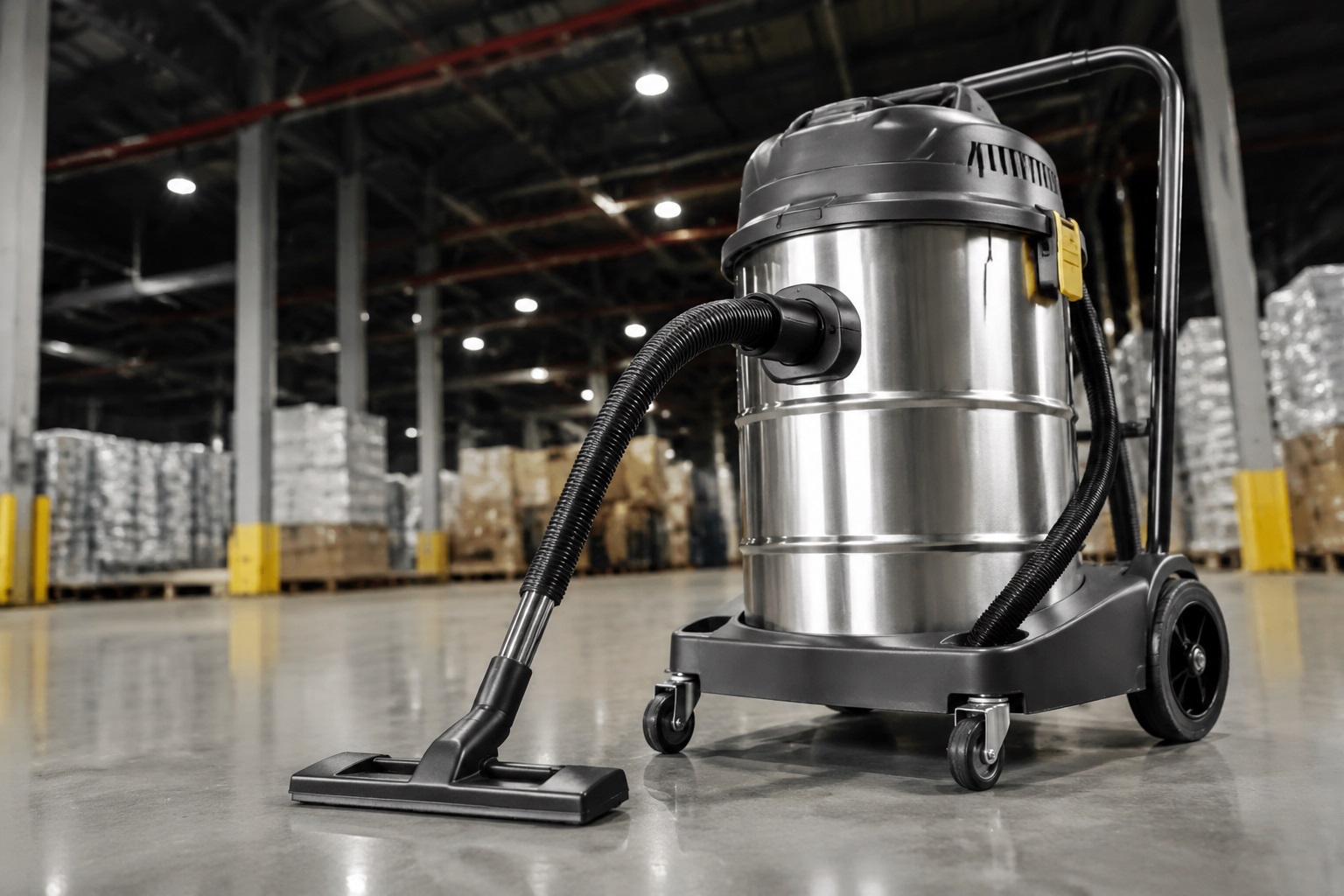
Audience: European & North American Commercial Vacuum Cleaner Procurement Managers, Facility Equipment Buyers, Cleaning Contractors, and Industrial Maintenance Decision Makers
🚀 The New Reality: More Square Footage, Fewer People
Walk into almost any warehouse, logistics hub, manufacturing plant, airport, hospital, or shopping center today and you'll hear the same concern:
"We're expected to clean more space with fewer people."
Labor shortages are no longer a temporary disruption—they have become a structural challenge across the commercial cleaning industry. At the same time, customer expectations, workplace safety regulations, and hygiene standards continue to rise. Cleaning managers can no longer solve operational problems simply by hiring additional workers. In many regions across Europe and North America, qualified cleaning staff are increasingly difficult to recruit, retain, and train.
For procurement managers, this changes the purchasing equation. The conversation is no longer about buying another vacuum cleaner or floor scrubber. It is about investing in labor saving cleaning equipment that delivers measurable gains in cleaning efficiency, supports workforce optimization, and contributes directly to operational productivity.
The companies leading today's cleaning industry are not necessarily employing more people—they are enabling each employee to accomplish significantly more work through better equipment, smarter workflows, and data-driven management.
This article explores practical strategies that commercial buyers can apply immediately when evaluating cleaning equipment investments and managing large-scale facilities.
🔍 Why Labor Is No Longer the Cheapest Resource
Historically, labor represented a flexible operating expense. When workloads increased, companies simply added more cleaners. That model is rapidly becoming unsustainable.
Several trends are reshaping the economics of commercial cleaning:
Aging workforces across developed economies
Rising hourly wages
High employee turnover
Increased demand for healthier indoor environments
Larger commercial facilities requiring daily maintenance
More complex cleaning compliance requirements
Many facility managers now discover that adding another employee is both expensive and uncertain. Even after recruitment, onboarding, and training, productivity often varies significantly between operators.
This is why leading organizations have shifted from labor expansion to workforce optimization. Rather than asking, "How many people do we need?", they ask, "How can one operator accomplish the work previously completed by two or three?"
That subtle change in thinking has fundamentally transformed equipment purchasing decisions.
⚙️ Productivity Starts with Equipment Selection, Not Staffing
Many procurement teams compare cleaning machines primarily by purchase price. This approach often overlooks the largest cost driver over a machine's lifetime: labor.
Consider a simplified example.
A commercial vacuum used for six hours per day over five years represents thousands of operator hours. Even a modest 20% improvement in cleaning speed can generate labor savings that far exceed the initial equipment investment.
Professional buyers increasingly evaluate equipment using metrics such as:
Square meters cleaned per hour
Average operator fatigue
Battery runtime
Maintenance intervals
Downtime frequency
Ease of operator training
Spare parts availability
Total Cost of Ownership (TCO)
This represents a shift away from purchasing products toward purchasing productivity.
The most successful procurement teams understand that a machine is not merely a cleaning tool—it is a labor multiplier.
💡 Cleaning Efficiency Is About Workflow, Not Speed
One of the biggest misconceptions in commercial cleaning is that cleaning efficiency simply means working faster.
In reality, efficiency results from eliminating unnecessary activities.
Experienced facility managers frequently identify hidden productivity losses such as:
Walking long distances to empty dust containers
Frequent battery charging interruptions
Equipment that is too heavy for prolonged use
Multiple machines required for different floor types
Poor maneuverability around shelving and equipment
Time lost changing accessories
These seemingly minor inefficiencies accumulate into hundreds of labor hours every year.
High-performing facilities redesign workflows to minimize these interruptions.
For example, instead of assigning workers by building section, many operations assign cleaning tasks according to equipment capability. One operator may complete all hard-floor vacuuming using a high-productivity machine, while another handles detail cleaning with specialized tools.
This equipment-first workflow consistently produces better labor utilization than traditional location-based assignments.
🏭 Industrial Maintenance Depends on Consistent Cleaning
For manufacturing facilities, cleaning is not merely an aesthetic concern.
It directly supports industrial maintenance.
Dust accumulation, metal particles, packaging debris, and fine industrial contaminants gradually affect machinery performance, employee safety, and production reliability.
Procurement managers often underestimate the relationship between cleaning equipment and equipment uptime.
Consider several examples:
Dust entering electrical cabinets increases overheating risks.
Metal shavings accelerate mechanical wear.
Debris around conveyor systems causes unexpected stoppages.
Fine powders reduce sensor accuracy.
Dirty production areas increase contamination risks.
Routine cleaning therefore becomes a preventive maintenance activity rather than a housekeeping expense.
This perspective significantly changes investment priorities.
Instead of comparing equipment solely against cleaning budgets, organizations increasingly evaluate cleaning equipment as part of broader maintenance strategies that reduce production downtime.
📊 Measuring Operational Productivity Beyond Cleaning Hours
Many organizations still evaluate cleaning teams using one metric:
Hours worked.
This metric reveals almost nothing about actual performance.
Modern facility cleaning management focuses instead on measurable outcomes.
Leading organizations monitor indicators such as:
Area cleaned per operator
Cleaning completion rate
Machine utilization percentage
Battery utilization
Downtime caused by equipment failure
Maintenance cost per operating hour
Operator training time
Customer complaint frequency
Indoor cleanliness scores
Preventive maintenance compliance
These metrics provide procurement teams with objective data when comparing equipment suppliers.
For example, two vacuum cleaners may appear nearly identical during a product demonstration. However, after twelve months, differences in maintenance requirements, battery life, filtration systems, and component durability may produce dramatically different operating costs.
Purchasing decisions should therefore be based on lifecycle performance rather than brochure specifications.
🤖 Automation Is Not Replacing Workers—It Is Redefining Their Roles
Automation often raises concerns about workforce reduction, but commercial cleaning tells a different story.
Across Europe and North America, most cleaning contractors are not trying to eliminate employees—they are trying to overcome labor shortages while maintaining service quality.
This is where labor saving cleaning equipment creates its greatest value.
Instead of assigning workers to repetitive, physically demanding tasks, organizations are redesigning job roles so that machines handle routine operations while employees focus on activities requiring human judgment.
Examples include:
Spot cleaning in high-traffic areas
Detailed sanitation of touchpoints
Customer-facing cleaning tasks
Quality inspections
Equipment maintenance
Specialized cleaning procedures
This shift improves both productivity and employee satisfaction.
Workers experience less physical fatigue, lower injury risks, and greater opportunities to develop technical skills related to operating advanced cleaning equipment.
For procurement managers, this means selecting machines that are intuitive to operate, quick to train on, and reliable over long operating cycles—not simply machines with the lowest purchase price.
🧠 Smart Procurement: Buy Productivity, Not Just Equipment
One of the most common mistakes made by first-time commercial equipment buyers is evaluating products based on specifications alone. Motor wattage, suction power, airflow, battery voltage, and tank capacity all matter—but they rarely determine the real return on investment.
Professional procurement managers evaluate cleaning equipment using business outcomes instead of technical specifications.
Before issuing a purchase order, ask questions such as:
How many labor hours can this machine save every week?
How long does it take to train a new operator?
What is the average service interval?
Are spare parts locally available?
Can the machine operate continuously during peak shifts?
Does the supplier provide technical support and operator training?
Is the filtration system suitable for our working environment?
Can one machine replace multiple pieces of equipment?
These questions shift procurement from cost-based purchasing to value-based investment.
For organizations managing multiple facilities, even a small increase in cleaning productivity can generate significant annual savings across labor, maintenance, and operational costs.
📈 Workforce Optimization Requires Better Data
Successful workforce optimization is no longer based on assumptions.
Modern facility managers increasingly rely on operational data to identify productivity bottlenecks.
Useful performance indicators include:
Cleaning area completed per operator
Average cleaning time per zone
Equipment utilization rate
Battery charging frequency
Maintenance response time
Repair frequency
Downtime caused by equipment failure
Consumable usage
Customer satisfaction scores
Labor cost per cleaned square meter
Collecting these metrics allows managers to make evidence-based purchasing decisions rather than relying on marketing claims.
Many organizations discover that their highest-performing operators are not necessarily working harder—they are simply using equipment that better matches their environment.
🌍 Sustainability and Productivity Can Work Together
Environmental responsibility has become an important purchasing criterion throughout Europe and North America.
Fortunately, improving operational productivity often supports sustainability objectives at the same time.
Modern commercial cleaning equipment contributes through:
Higher energy efficiency
Longer battery life
Reduced water consumption
Lower detergent usage
Durable components with longer replacement cycles
Improved filtration that enhances indoor air quality
Lower overall carbon emissions through efficient operation
Rather than viewing sustainability as an additional expense, many organizations now recognize it as an operational advantage that reduces long-term ownership costs.
For procurement managers responding to ESG initiatives or corporate sustainability goals, selecting energy-efficient cleaning equipment can support both environmental reporting and financial performance.
🏢 Facility Cleaning Management Is Becoming More Strategic
Traditionally, cleaning departments operated independently from facility management.
That separation is disappearing.
Today's facility cleaning management is closely integrated with:
Facility maintenance
Occupational health and safety
Asset management
Energy management
Building operations
Digital facility platforms
Cleaning equipment has evolved into an operational asset that contributes to business continuity rather than simply maintaining appearance.
As a result, procurement teams increasingly collaborate with maintenance managers, operations directors, and finance departments when evaluating equipment investments.
This cross-functional approach leads to better purchasing decisions and stronger long-term returns.
🔬 What Product Engineers Should Prioritize Next
For product development engineers serving the commercial vacuum cleaner market, labor shortages create new design priorities.
Future equipment should focus less on maximum power and more on maximum productivity per operator.
Areas with the greatest innovation potential include:
Lightweight yet durable construction
Intelligent battery management
Modular component replacement
Noise reduction for daytime cleaning
Enhanced HEPA filtration systems
Predictive maintenance alerts
Ergonomic handle and control design
Digital diagnostics via mobile applications
Tool-free maintenance
Fleet connectivity for facility-wide management
These features reduce ownership costs while improving user experience—two factors increasingly valued by commercial buyers.
💼 A Practical Evaluation Checklist for Commercial Buyers
Before selecting your next commercial vacuum cleaner or cleaning system, evaluate every supplier using the following checklist:
✅ Does the equipment improve cleaning efficiency in real operating environments?
✅ Can one operator complete more work without compromising quality?
✅ Is the machine designed for long daily operating hours?
✅ Are maintenance requirements simple and predictable?
✅ Is technical support available in your market?
✅ Are replacement parts easy to obtain?
✅ Does the machine reduce operator fatigue?
✅ Can the equipment support future business growth?
✅ Does the supplier understand industrial applications rather than only selling products?
The best purchasing decisions are rarely based on the lowest quotation. They are based on the lowest lifetime operating cost and the highest long-term productivity.
🚀 Looking Ahead: The Future of Labor-Saving Cleaning Equipment
Over the next decade, commercial cleaning equipment will become increasingly connected, intelligent, and data-driven.
Emerging trends include:
AI-assisted route optimization
IoT-enabled equipment monitoring
Autonomous navigation in complex environments
Predictive maintenance based on real-time diagnostics
Cloud-based fleet management
Remote software updates
Integrated operational reporting
Machine learning for cleaning pattern optimization
For procurement professionals, these developments represent an opportunity to transform cleaning from a cost center into a measurable contributor to operational excellence.
Organizations that invest early in productivity-focused equipment will be better positioned to address labor shortages, improve service quality, and remain competitive in a rapidly changing market.
✅ Conclusion
Doing more cleaning with fewer workers is no longer an ambitious goal—it has become an operational necessity.
The organizations achieving the best results are not relying on larger cleaning teams. Instead, they are combining labor saving cleaning equipment, intelligent procurement strategies, optimized workflows, and data-driven facility cleaning management to maximize every labor hour.
For commercial vacuum cleaner buyers, the key lesson is clear: the right equipment should not simply clean floors—it should increase workforce capacity, support industrial maintenance, enhance cleaning efficiency, and strengthen overall operational productivity.
When purchasing decisions are based on lifecycle value instead of upfront cost, cleaning equipment becomes a strategic investment that delivers measurable returns year after year.
Hashtags
laborSavingCleaningEquipment, industrialMaintenance, workforceOptimization, cleaningEfficiency, operationalProductivity, facilityCleaningManagement, commercialVacuumCleaner, industrialVacuumCleaner, commercialCleaningEquipment, industrialCleaningSolutions, warehouseCleaning, factoryCleaning, facilityMaintenance, cleaningTechnology, smartCleaning, vacuumCleanerManufacturer, B2BCleaningEquipment, industrialFloorCleaning, HEPAVacuum, dustControlSolutions, cleanroomCleaning, maintenanceManagement, facilityOperations, industrialHousekeeping, commercialMaintenance, professionalCleaningMachines, energyEfficientCleaning, batteryPoweredVacuum, ergonomicCleaningEquipment, procurementStrategy, facilityManagers, cleaningContractors, industrialEquipment, buildingMaintenance, workplaceSafety, cleaningInnovation, productivitySolutions, commercialCleaningIndustry, industrialAutomation, smartFacilities, ESGCleaning, sustainableCleaning, facilityProductivity, industrialEngineering, commercialProcurement, equipmentROI, industrialVacuumSystems, cleaningManagement, Lanxstar



