Hi, message us with any questions.
We're happy to help!





Audience: European & North American Industrial Equipment Buyers, Commercial Vacuum Cleaner Distributors, Facility Managers, Product Development Engineers, and Industrial Cleaning Solution Providers
🚀 Industrial Cleaning Is Entering the Age of Automation
Industrial cleaning is no longer viewed as a routine support function. Across manufacturing plants, logistics warehouses, airports, hospitals, and large commercial facilities, cleaning has become an essential contributor to operational continuity, workplace safety, and productivity.
At the same time, businesses face unprecedented challenges—labor shortages, rising operating costs, stricter environmental regulations, and higher expectations for hygiene. These pressures are accelerating investment in automated cleaning equipment, enabling organizations to achieve consistent cleaning quality while reducing dependence on manual labor.
Today's procurement decisions are no longer centered on buying machines. They focus on acquiring intelligent systems that integrate with facility operations, improve workforce utilization, and generate measurable business value.
This article explores the most important automation trends shaping the future of industrial cleaning and explains what commercial buyers should evaluate before investing in next-generation cleaning solutions.
🔍 Why Automation Is Becoming an Operational Necessity
For decades, cleaning operations depended primarily on manual labor. However, several long-term trends have fundamentally changed this model:
Persistent labor shortages across Europe and North America
Increasing labor costs
Larger and more complex industrial facilities
Higher expectations for workplace hygiene
Continuous production schedules that reduce available cleaning windows
Greater emphasis on sustainability and energy efficiency
These challenges have made automation less of a luxury and more of a strategic necessity.
Modern automated cleaning equipment enables organizations to maintain consistent cleaning standards while allowing employees to focus on higher-value tasks that require human judgment.
⚙️ From Machines to Intelligent Cleaning Systems
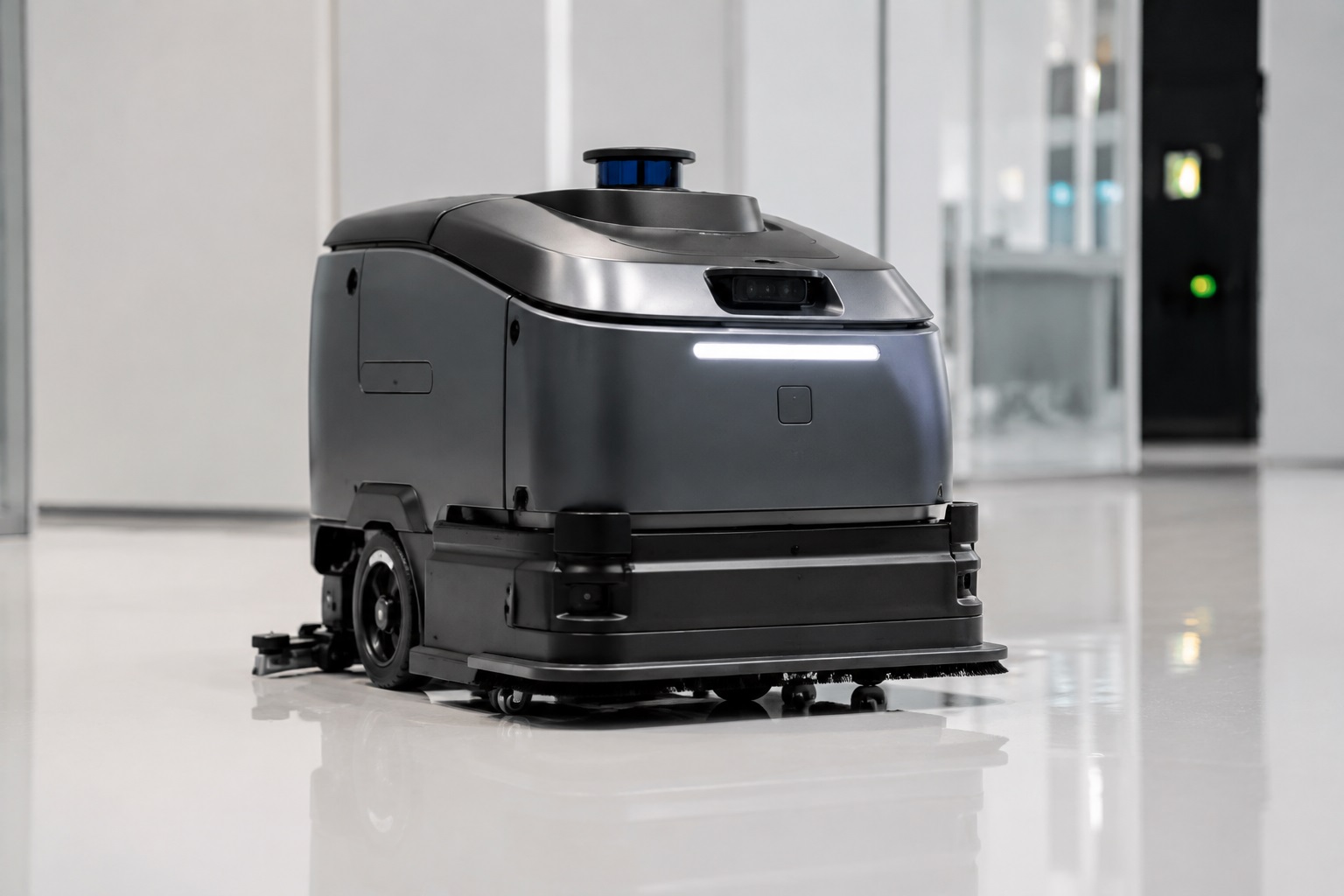
The latest generation of cleaning technology extends well beyond powerful motors and improved suction.
Today's intelligent cleaning systems incorporate technologies such as:
AI-assisted navigation
LiDAR mapping
Obstacle recognition
IoT connectivity
Cloud-based fleet management
Real-time performance monitoring
Predictive maintenance alerts
Remote software updates
Rather than functioning as standalone machines, these systems become part of a connected facility ecosystem.
Facility managers can monitor machine status, cleaning progress, battery levels, and maintenance schedules from a centralized dashboard, improving operational visibility and reducing downtime.
🤖 Industrial Automation Is Transforming Cleaning Operations
The broader trend toward industrial automation has reshaped manufacturing, logistics, and warehousing. Cleaning operations are now following the same path.
Instead of assigning workers to repetitive floor-cleaning tasks, organizations increasingly deploy autonomous equipment to perform routine operations while human staff handle specialized responsibilities such as:
Equipment inspection
Quality assurance
High-touch sanitation
Spill response
Detailed maintenance cleaning
This collaborative approach increases productivity without eliminating valuable human expertise.
Automation allows facilities to operate more efficiently while improving employee safety and reducing physical fatigue.
💡 Smart Maintenance Solutions Reduce Downtime
One of the most significant developments in industrial cleaning is the rise of smart maintenance solutions.
Traditional maintenance follows either fixed schedules or reactive repairs after failures occur.
Smart maintenance takes a different approach by using operational data to predict service requirements before breakdowns happen.
Examples include:
Battery health monitoring
Brush wear detection
Filter replacement notifications
Motor performance diagnostics
Usage-hour tracking
Automatic maintenance reminders
Predictive maintenance minimizes unexpected downtime, extends equipment lifespan, and lowers total ownership costs—critical considerations for procurement managers responsible for long-term equipment investments.
📊 Productivity Tools That Deliver Measurable ROI
Commercial buyers increasingly expect cleaning equipment to demonstrate measurable returns on investment.
Modern productivity tools provide valuable operational insights, including:
Cleaning coverage per shift
Area cleaned per operator
Machine utilization rate
Battery efficiency
Downtime analysis
Service history
Fleet performance comparisons
Operator productivity metrics
These data points enable facility managers to optimize staffing, improve scheduling, and justify future equipment investments with objective performance metrics rather than assumptions.
🏭 Automation Supports Better Facility Management
Automation does not replace effective management—it enhances it.
Integrated cleaning systems allow facility managers to:
Schedule cleaning during low-traffic periods
Coordinate multiple autonomous machines
Monitor cleaning completion remotely
Reduce unnecessary equipment idle time
Improve compliance documentation
Standardize cleaning quality across multiple locations
For organizations operating several facilities, centralized management significantly improves consistency while reducing administrative workload.
🌍 Sustainability Is Driving Equipment Innovation
Environmental responsibility has become a major purchasing criterion for industrial buyers.
Manufacturers are responding by developing industrial innovation that reduces environmental impact while improving operational performance.
Key innovations include:
High-efficiency motors
Water-saving cleaning systems
Low-noise operation
Energy-efficient battery technologies
Longer component life
Reduced chemical consumption
Recyclable materials
Intelligent power management
These improvements support corporate ESG initiatives while lowering operating costs throughout the equipment lifecycle.
🔬 What Procurement Managers Should Evaluate
Selecting automated cleaning equipment requires more than comparing specifications.
Professional buyers should evaluate:
Total Cost of Ownership (TCO)
Expected labor savings
Software capabilities
Ease of integration with existing operations
Availability of technical support
Spare parts supply
Predictive maintenance features
Fleet management functions
Cybersecurity for connected devices
Upgrade potential
The best equipment investment is the one that continues creating value long after installation.
📈 The Future of Automated Cleaning Equipment
Over the next decade, automation will become increasingly intelligent.
Emerging trends include:
AI-driven route optimization
Digital twins for facility cleaning
Autonomous fleet coordination
Machine learning for cleaning schedules
Robotics integrated with warehouse management systems
Cloud analytics for operational benchmarking
Remote diagnostics through mobile platforms
Self-diagnosing equipment
These technologies will further reduce operating costs while increasing cleaning quality and equipment utilization.
Companies that adopt these innovations early will be better positioned to address labor shortages and remain competitive in an increasingly automated industrial environment.
✅ Conclusion
Industrial cleaning is evolving from manual labor into intelligent facility management.
By investing in automated cleaning equipment, organizations can improve productivity, strengthen smart maintenance solutions, support broader industrial automation initiatives, and leverage advanced cleaning technology to achieve long-term operational excellence.
For commercial vacuum cleaner buyers and industrial equipment procurement managers, automation is no longer simply an equipment upgrade—it is a strategic investment in efficiency, sustainability, and business resilience.
Hashtags
automatedCleaningEquipment, smartMaintenanceSolutions, industrialAutomation, cleaningTechnology, productivityTools, industrialInnovation, commercialVacuumCleaner, industrialVacuumCleaner, autonomousCleaningRobot, roboticCleaningSolutions, smartFacilityManagement, industrialCleaningEquipment, warehouseCleaning, factoryCleaning, facilityMaintenance, commercialCleaningTechnology, AICleaning, IoTCleaningEquipment, predictiveMaintenance, connectedCleaningMachines, HEPAVacuumSystems, batteryPoweredCleaningEquipment, commercialMaintenance, industrialHousekeeping, facilityOperations, ESGSolutions, energyEfficientCleaning, automationTechnology, smartWarehousing, industrialProductivity, cleaningInnovation, maintenanceTechnology, professionalCleaningEquipment, industrialEngineering, commercialCleaningIndustry, equipmentManagement, operationalEfficiency, cleanroomCleaning, digitalFacilityManagement, roboticsInCleaning, facilityOptimization, industrialSolutions, B2BCleaningEquipment, futureOfCleaning, commercialProcurement, intelligentCleaningSystems, facilityTechnology, smartManufacturing, Lanxstar