Hi, message us with any questions.
We're happy to help!





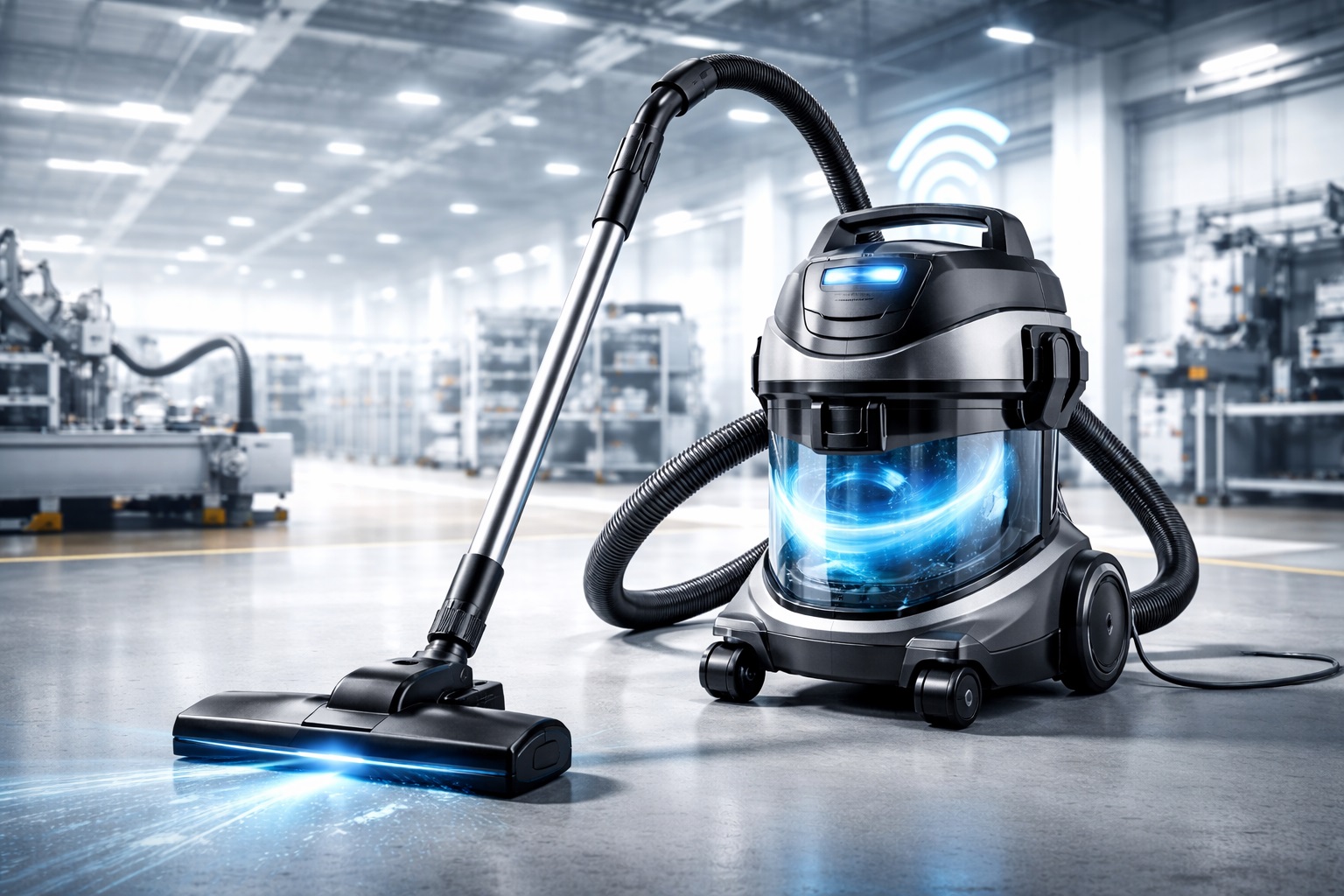
🧠 Introduction: Smart Industrial Cleaning is Here
Industrial environments — from manufacturing floors, warehouses, logistics hubs to processing plants — present unique cleaning challenges. Dust, debris, spills, and particulate buildup not only affect equipment and product quality but also pose occupational safety concerns. Traditional cleaning methods often rely on manual scheduling and reactive maintenance, which increases operational costs, downtime, and labor requirements.
However, the advent of IoT (Internet of Things) and smart connectivity is revolutionizing the way industries approach cleaning. Today’s barrel vacuum cleaner equipped with IoT sensor networks and connectivity platforms is no longer just a standalone tool — it’s a networked industrial asset capable of delivering real‑time insights, optimizing workflows, and enhancing maintenance strategies.
In this article, we explore how connected technologies are shaping the future of industrial cleaning through:
✔ Remote monitoring of cleaning assets
✔ Predictive maintenance to reduce downtime
✔ Data analytics for performance optimization
✔ Automated workflows and smart scheduling
✔ Enhanced equipment lifecycle and safety outcomes
🌍 IoT in Industrial Barrel Vacuum Cleaners: The Foundation
What Is IoT Connectivity?
IoT (Internet of Things) refers to the interconnection of devices embedded with sensors, software, and networking that allows them to collect and exchange data. Applied to barrel vacuum cleaners, IoT enables:
Real‑time data collection on usage patterns and performance
Remote monitoring of equipment status
Predictive analytics that foresee maintenance needs
Integration with facility management systems
The result is a smarter industrial cleaning ecosystem that transforms reactive, manual maintenance into a proactive, data‑driven discipline.
🔍 Remote Monitoring: See What’s Happening Anywhere
From Reactive to Proactive Cleaning
Remote monitoring is one of the core benefits of IoT connectivity. With sensors embedded in vacuum components, industrial managers can remotely track:
Motor running hours
Suction efficiency and airflow
Filter saturation and pressure differentials
Battery health (for cordless units)
Error codes and operational anomalies
This data can be accessed from dashboards or mobile apps, enabling cleaning technicians and operations teams to:
📌 Identify issues before they grow worse
📌 Schedule maintenance at optimal times
📌 Allocate resources more efficiently
Remote Alerts and Notifications
Smart systems can generate automatic alerts for:
Component wear or predicted failure
Filter blockage
Overheating or excessive power draw
Unit disconnects or offline status
Instead of waiting for breakdowns, maintenance teams can respond to precise alerts — minimizing downtime and reducing the likelihood of costly interruptions in industrial operations.
🛠️ Predictive Maintenance: Anticipate, Don’t React
Traditional industrial maintenance schedules are often based on fixed intervals (e.g., monthly filter changes). However, this approach doesn’t account for real usage conditions, which can vary dramatically between environments.
How IoT Enables Predictive Insights
With historical performance data and machine learning algorithms, connected vacuum systems can:
Predict filter saturation before it impacts suction
Flag motor bearing wear long before failure
Determine optimal battery recharge scheduling
Estimate remaining useful life of key components
Instead of replacing parts on a preset timeline, predictive maintenance allows facilities to:
✔ Save on parts and labor costs
✔ Prevent unexpected failures
✔ Optimize spare‑parts inventory
✔ Extend the usable life of equipment
Industrial Case in Point:
A large manufacturing facility deployed IoT‑enabled barrel vacuum cleaners across multiple production lines. Within six months, predictive insights reduced emergency maintenance requests by 42% and increased overall equipment uptime by 18% — directly improving production flow.
📊 Performance Analytics: Data Drives Better Decisions
Cleaning Efficiency from Insights
Connectivity isn’t just about alerts — it’s about understanding patterns. IoT data analytics helps industrial operators answer key questions:
Which areas require the most frequent cleaning?
At what times does debris accumulation peak?
Which machine configurations deliver the best performance?
How do environmental variables (dust type, humidity, temperature) affect performance?
By analyzing this data, decision makers can:
📌 Adjust cleaning schedules based on actual demand
📌 Deploy the right tools (e.g., wet vs dry modules) for specific zones
📌 Forecast parts replacement before failure
📌 Optimize energy usage without sacrificing performance
Visual Performance Dashboards
Most connected systems include visual reporting dashboards that display:
📊 Cleaning cycle data
📈 Performance trends over time
🛠️ Maintenance history and upcoming needs
📍 Usage heatmaps for zone prioritization
These dashboards empower facilities managers with a complete view of cleaning operations — turning vacuum data into actionable strategy.
📅 Smart Scheduling & Automation: Clean on Demand
Industrial IoT isn’t just a reporting tool — it enables automation. With smart connectivity, vacuum cleaners can be set to operate based on:
Conveyor belt cycles
Shift schedules
Peak production hours
Sensor‑detected debris thresholds
This avoids unnecessary manual scheduling and ensures cleaning activities happen when and where they are most needed.
Example:
In a warehouse with high forklift traffic, IoT sensors detect elevated dust levels and automatically trigger a cleaning sequence with connected barrel vacuum cleaners — even outside normal cleaning hours. This reduces airborne particles and prevents contamination of sensitive equipment.
🔌 Integration with Facility Systems: Beyond Standalone Vacuuming
Connected vacuum systems don’t operate in isolation. Advanced industrial implementations link IoT vacuum data with broader facility management platforms:
✔ Building Management Systems (BMS)
✔ Asset Management Suites
✔ Workplace Safety Dashboards
✔ Energy Monitoring Tools
✔ IoT Platforms with Cross‑Device Insights
This integration allows cleaning data to contribute to:
Air quality control strategies
Energy consumption tracking
Lifecycle costing and depreciation insights
Cross‑equipment performance benchmarking
When industrial cleaning systems speak the same data language as other operational technology, companies gain coordinated, enterprise‑level visibility.
💡 Benefits in Industrial Settings
Let’s summarize how IoT and smart connectivity transform barrel vacuum usage in industrial environments:
📈 1. Enhanced Reliability
Predictive maintenance reduces unplanned downtime and prolongs equipment life.
💼 2. Operational Visibility
Remote monitoring and dashboards offer real‑time insights into equipment performance.
🔄 3. Optimized Workflows
Smart scheduling and automation reduce waste and labor overhead.
💰 4. Lower Total Cost of Ownership
Fewer emergency repairs + optimized maintenance = significant cost savings.
🌿 5. Safety and Compliance
Better detection of particulate buildup helps maintain OSHA standards and indoor air quality goals.
🔍 Example: Smart Vacuum Fleet in a Distribution Hub
At a major logistics hub, a fleet of IoT‑connected barrel vacuum cleaners — both wet and dry configurations — was deployed across unloading bays, packing lines, and maintenance areas. Connected to a central dashboard, the system enabled:
✅ Zone‑based cleaning triggers
✅ Predictive alerts for filters and motors
✅ Analytics on high‑debris hotspots
✅ Automated cleaning schedules during off‑peak shifts
Results after 9 months:
33% reduction in labor hours spent on manual checks
25% improvement in suction consistency
19% reduction in energy consumption due to optimized cleaning patterns
🧠 Future Outlook: AI + IoT + Smart Connectivity
The convergence of IoT, AI, and machine learning will only deepen industrial cleaning capabilities:
🔹 AI‑driven anomaly detection
🔹 Automated route planning
🔹 Predictive lifecycle modeling
🔹 Cross‑equipment diagnostics across cleaning fleets
Industrial facilities can look forward to self‑optimizing cleaning ecosystems that require minimal human oversight while maximizing uptime and performance.
🧠 Conclusion: Connected Cleaning is the Competitive Edge
In industrial settings, cleaning is not a standalone operation — it’s an integral part of maintaining productivity, safety, and operational excellence. By embracing IoT (Internet of Things) and smart connectivity:
✔ Industrial teams gain real‑time visibility into vacuum performance
✔ Remote monitoring leads to better decision‑making and quicker response times
✔ Predictive maintenance minimizes disruptions and reduces costs
✔ Data analytics delivers insights that optimize cleaning workflows
✔ Automation ensures cleaning happens when and where it’s needed
For manufacturers, facility operators, and procurement specialists, smart connected barrel vacuum cleaners are no longer optional — they are a strategic investment in modern industrial efficiency.
Hashtags
Lanxstar, IoTInternetOfThings, BarrelVacuumCleaner, SmartConnectivity, IndustrialVacuumCleaning, RemoteMonitoring, PredictiveMaintenance, SmartCleaningTech, ConnectedIndustrialEquipment, CleaningPerformanceData, AutomatedCleaningWorkflows, FacilityMaintenanceInnovation, IoTDashboardInsights, EnergyEfficientCleaning, SmartSchedulingCleaning, AssetHealthMonitoring, IndustrialOperationsOptimization, RealTimeVacuumData, MaintenanceForecasting, CleaningAnalytics, IoTCleaningSolutions, IndustrialFacilityCleaning, SensorDrivenCleaning, SmartVacuumFleet, WetDryIndustrialVacuum, CommercialCleaningTech, IoTIntegration, SmartFacilityMaintenance, DataDrivenCleaningOps, OccupationalSafetyCleaning, AirQualityControlVacuum, IndustrialEquipmentInsights, ConnectedAssetManagement, SmartCleaningAutomation, DigitalCleaningTransformation, PredictiveAlertsVacuum, RemoteVacuumControl, SmartCleaningEcosystem, IoTPlatformIntegration, PerformanceOptimizationTech, FacilityCleaningTrends, IndustrialMaintenanceTech.



