Hi, message us with any questions.
We're happy to help!





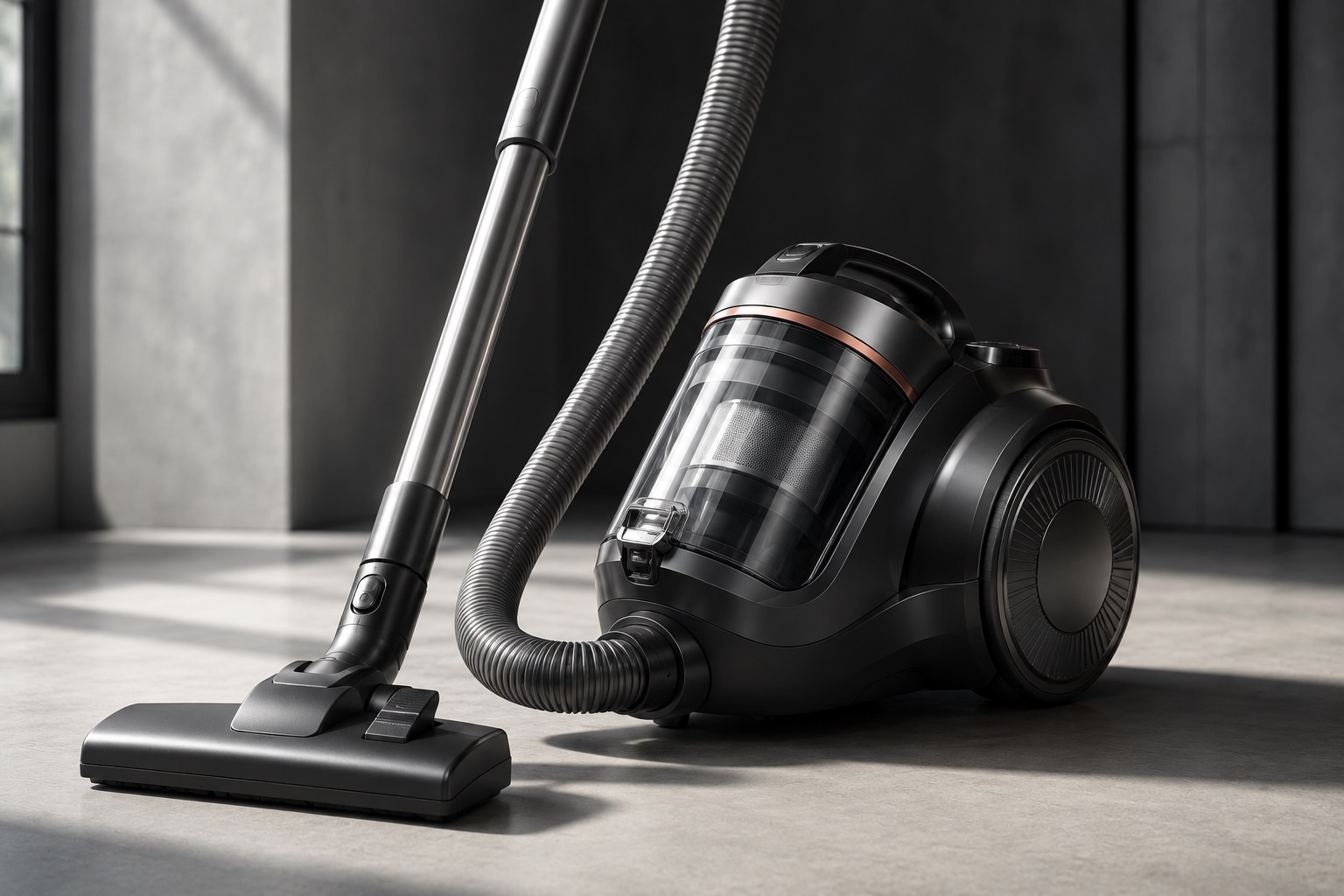
🚨 The Vacuum Cleaner Industry Is Entering the “Durability Era”
For years, the appliance industry competed aggressively on:
suction power
smart features
lightweight design
lower pricing
But in 2026, a different purchasing factor is quietly becoming more influential:
Durability.
Consumers are increasingly frustrated with:
battery degradation
overheating motors
cracked housings
unstable components
expensive repairs
short product lifespan
At the same time, Europe and other mature markets are accelerating:
sustainability regulations
right-to-repair movements
electronic waste reduction policies
This is fundamentally reshaping the vacuum cleaner industry.
Today, vacuum cleaner durability is no longer just an engineering issue.
It is becoming:
a profitability issue
a distributor risk issue
a sustainability issue
a long-term brand trust issue
For vacuum cleaner manufacturers and industrial vacuum suppliers, improving durability is rapidly becoming one of the most important competitive strategies in the global appliance market.
Because modern consumers may initially buy performance —
but long-term markets are built on reliability.
📊 1. Most Vacuum Cleaner Failures Are Actually Structural Failures
One of the biggest misconceptions in the appliance industry is this:
Most consumers do not replace vacuum cleaners because suction disappears first.
In reality, products usually fail because of:
motor fatigue
thermal stress
battery cycle degradation
cracked plastic structures
airflow blockage
bearing wear
vibration instability
In many products:
the weakest structural component determines the entire product lifespan.
This is why improve vacuum durability strategies must focus on:
system integration
not justisolated performance upgrades
📦 Real Distributor Case: Warranty Costs Became More Expensive Than Sourcing
In 2025, a European appliance distributor imported low-cost cordless vacuum cleaners from several overseas suppliers.
Initial sales were strong because pricing was highly competitive.
However, within six months:
warranty claims reportedly exceeded 15%
battery runtime degradation increased rapidly
motor overheating complaints became common
wheel structures began failing under repeated use
Internal engineering review later identified:
insufficient thermal dissipation paths
low-grade injection molded plastics
unstable airflow resistance balance
inconsistent motor cooling systems
The distributor eventually discontinued the product line despite strong early retail demand.
Why?
Because operational instability became more expensive than the original sourcing savings.
This reflects an increasingly important market reality:
Durability now directly affects profitability.
⚙️ 2. Motor Lifespan Is the Core of Vacuum Cleaner Reliability
The motor remains the most critical component in almost every vacuum cleaner system.
Yet many vacuum cleaner manufacturers still optimize primarily for:
short-term suction performance
instead oflong-term motor stability
This creates serious durability problems over time.
🔥 What Actually Reduces Motor Lifespan?
The most common causes of premature motor failure include:
thermal overload
unstable airflow dynamics
dust contamination
low-grade bearings
excessive RPM tuning
poor voltage regulation
vibration resonance
Especially in compact cordless models, thermal accumulation becomes a major engineering challenge.
Brushless DC motors may offer better long-term efficiency, but without proper airflow management and heat control, even advanced motor systems degrade rapidly.
🛠️ Real Engineering Case: Extreme Suction Reduced Reliability
A cordless vacuum cleaner launched in Western Europe aggressively marketed:
ultra-high suction power
compact lightweight structure
premium airflow performance
Initial customer response was extremely positive.
However, after approximately one year of consumer usage, service failure rates increased sharply.
Engineering investigation later identified:
overheating motor chambers
insufficient airflow turbulence control
accelerated bearing wear
restricted thermal dissipation channels
The product achieved strong short-term marketing success.
But long-term durability performance collapsed.
This revealed a critical engineering lesson:
Extreme suction without thermal balance often shortens motor lifespan dramatically.
🌡️ 3. Thermal Management Is Becoming One of the Most Important Engineering Challenges
Many vacuum cleaner failures are fundamentally:
heat-management failures.
Inside modern cordless vacuum cleaners, manufacturers now integrate:
high-speed motors
lithium battery systems
smart sensors
digital control boards
Into increasingly smaller structures.
Without proper thermal engineering, internal heat accumulation accelerates:
battery degradation
electronic instability
plastic deformation
motor fatigue
🔥 Real OEM Problem: Compact Design Created Internal Thermal Stress
An OEM vacuum factory redesigned a cordless vacuum cleaner platform to achieve:
slimmer industrial design
reduced product weight
smaller motor housing
Retail appearance improved significantly.
However, after launch, distributors began reporting:
unstable charging behavior
reduced battery lifespan
overheating during prolonged use
Further engineering analysis discovered:
restricted airflow channels
poor internal cooling circulation
inadequate thermal dissipation space
As vacuum cleaner designs become:
smaller
lighter
more powerful
Thermal engineering is becoming one of the most important drivers of long-term reliability.
🧱 4. Durable Vacuum Materials Matter More Than Most Factories Realize
One hidden reason many vacuum cleaners fail early is poor material fatigue resistance.
Some manufacturers still prioritize:
lower raw material cost
instead ofstructural durability performance
This creates serious long-term reliability problems.
🛠️ The Most Failure-Prone Structural Areas
The most common weak points include:
dustbin hinges
wheel joints
battery covers
extension tube locks
handle connectors
Low-quality plastics often suffer from:
fatigue cracking
heat deformation
structural brittleness
repeated stress failure
Especially under:
vibration
repeated assembly cycles
thermal expansion
📦 Real Retail Case: Plastic Fatigue Destroyed Consumer Trust
A European retail chain launched an affordable cordless vacuum cleaner through a private label partnership.
Initial sales performance was promising.
However, after several months:
dustbin clips began cracking
wheel housings loosened
extension locks repeatedly failed
Although the motor system remained functional, consumers perceived the product as:
cheap and unreliable.
Online reviews deteriorated quickly.
The retailer eventually replaced the supplier entirely.
This demonstrates a critical market reality:
Consumers judge durability through physical interaction — not internal specifications.
♻️ 5. Repairability Is Becoming Part of Product Durability
The appliance industry is slowly moving away from disposable product culture.
Especially in Europe, consumers increasingly value:
replaceable batteries
modular repair systems
accessible spare parts
repair-friendly structures
This trend is heavily influenced by:
sustainability regulations
right-to-repair legislation
electronic waste concerns
🌍 Why Industrial Vacuum Suppliers Already Understand This Better
Many industrial vacuum suppliers already design products around:
replaceable motors
modular airflow systems
maintenance accessibility
simplified component replacement
Because commercial buyers prioritize:
lower lifecycle cost
operational uptime
predictable maintenance
Now household vacuum cleaner markets are beginning to adopt similar expectations.
Durability is no longer just:
“How long the product survives.”
It is increasingly:
“How easily the product can continue surviving.”
📉 6. Good Components Alone Do Not Create Durable Vacuum Cleaners
One overlooked industry truth is this:
Durable parts alone do not guarantee durable products.
Some vacuum cleaner manufacturers use:
premium motors
better batteries
stronger plastics
Yet still experience high failure rates because of:
airflow turbulence imbalance
weak structural integration
vibration instability
pressure loss optimization failures
inconsistent assembly tolerances
Durability depends on:
engineering harmony
not simplycomponent quality
🔧 Real Factory Problem: Vibration Resonance Destroyed Internal Stability
A vacuum cleaner manufacturer upgraded to higher-quality brushless motors expecting lower warranty claims.
However, failure rates remained unexpectedly high.
Engineering analysis later identified:
airflow imbalance
unstable internal mounting structures
vibration resonance during prolonged operation
Over time, repeated vibration gradually loosened internal assemblies and accelerated component fatigue.
The lesson became clear:
Long-term durability requires system-level engineering balance.
🔮 7. Future Durable Vacuum Cleaners Will Focus on “Low Stress Design”
One of the biggest future engineering trends is shifting toward:
lower internal stress
optimized airflow efficiency
stable thermal management
vibration reduction systems
simplified mechanical structures
Instead of aggressively maximizing:
suction peaks
RPM levels
feature quantity
🚀 2027 Industry Prediction
The next generation of successful vacuum cleaner manufacturers will likely prioritize:
balanced motor efficiency curves
stable battery cycle lifespan
durable vacuum materials
modular repair systems
thermal dissipation optimization
acoustic damping engineering
Because future consumers increasingly value:
long-term ownership confidence
overtemporary performance excitement
💡 Real Industry Insight: Durability Is Quietly Becoming More Valuable Than Innovation
For years, appliance brands marketed:
stronger suction
smarter features
more automation
But modern consumers are increasingly asking a different question:
“Will this product still work reliably after three years?”
That single question is quietly reshaping the appliance industry.
In the future vacuum cleaner market:
consumers may admire innovation — but long-term loyalty will belong to reliability.
❓ FAQ: Vacuum Cleaner Durability & Long-Term Reliability
❓ What affects vacuum cleaner durability the most?
The biggest factors include:
motor lifespan
thermal management
airflow dynamics
vibration stability
material fatigue resistance
battery cycle durability
System-level engineering is essential.
❓ Why do some vacuum cleaners fail quickly?
Common causes include:
overheating
airflow imbalance
low-grade plastics
poor thermal dissipation
structural fatigue
inconsistent assembly quality
❓ How can vacuum cleaner manufacturers improve durability?
The most effective improve vacuum durability strategies usually involve:
optimized thermal management
durable vacuum materials
airflow resistance optimization
vibration reduction engineering
modular repair-friendly design
❓ Why is repairability becoming important?
Consumers and regulators increasingly prefer products that:
last longer
reduce electronic waste
allow easier repairs
support replaceable components
Repairability is becoming part of product value itself.
🚀 Conclusion: The Future of Vacuum Cleaners Will Be Defined by Reliability
The appliance industry is entering a major transition period.
Consumers are no longer impressed by:
temporary performance spikes
excessive features
short-term marketing claims
Instead, they increasingly value:
durability
repairability
long-term ownership confidence
For vacuum cleaner manufacturers and industrial vacuum suppliers, durability is no longer just an engineering objective.
It is becoming:
a trust signal
a sustainability advantage
a long-term competitive strategy
The future winners will not simply build more powerful vacuum cleaners.
They will build products capable of surviving years of real-world stress with minimal operational friction.
Because in the future appliance industry:
consumers may initially buy performance — but markets are ultimately built on reliability.
📌 Suitable Readers
Vacuum cleaner manufacturers
Industrial vacuum suppliers
Product development engineers
OEM vacuum factory owners
Appliance sourcing managers
Commercial cleaning equipment buyers
Household appliance distributors
Vacuum cleaner repair professionals
📌 Hashtags
vacuumcleanerdurability, improvevacuumdurability, vacuumcleanermanufacturer, industrialvacuumsupplier, motorlifespan, durablevacuummaterials, airflowdynamics, thermalmanagement, brushlessDCmotor, batterycycledegradation, airflowresistancecoefficient, vibrationreductionengineering, durablevacuumdesign, modularrepairsystem, repairablevacuumcleaner, thermaldissipationpath, fatiguecracking, structuraldurability, motorcoolingsystem, pressurelossoptimization, lithiumbatteryengineering, acousticdampingmaterials, vacuumcleanerengineering, longlastingvacuumcleaner, industrialcleaningequipment, vacuumcleanerOEM, vacuumcleanerODM, applianceengineering, durablecordlessvacuum, smartvacuumengineering, airflowturbulence, vibrationresonance, motorstability, productreliability, sustainableappliances, repairfriendlydesign, vacuumcleanerqualitycontrol, durableplasticmaterials, applianceindustrytrends, commercialvacuumcleaner, vacuumcleanerfactory, energyefficientvacuum, homecleaningtechnology, Europeanappliancebuyers, vacuumcleanerbusiness, vacuumcleanersourcing, vacuumcleanerinnovation, vacuumcleanerbrand, Lanxstar