Building a successful cleaning product line is not about offering the widest range—it is about offering the right mix of products that align with market demand, margin structure, and long-term growth strategy.
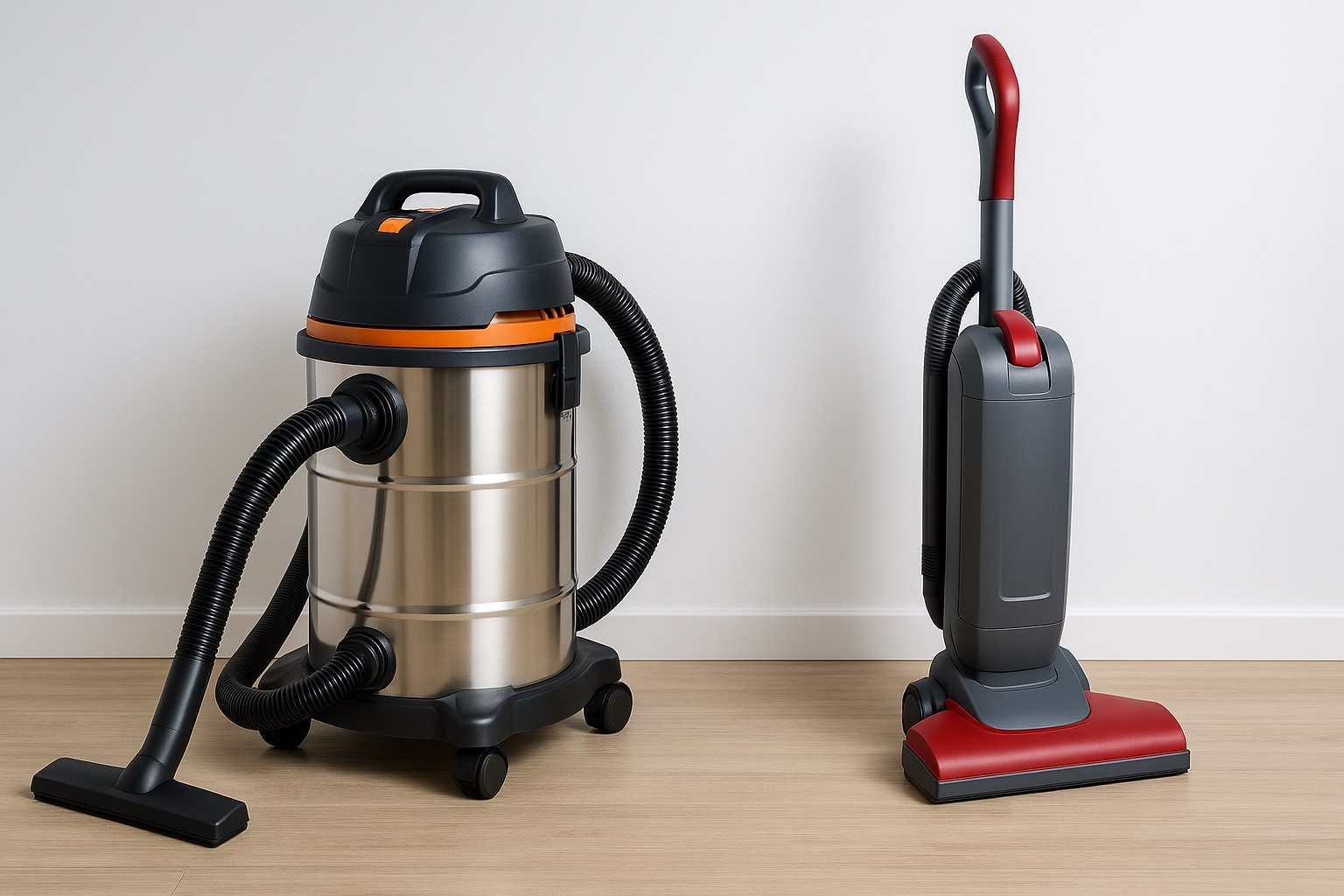
For many distributors and brand owners, the key decision is whether to prioritize barrel vacuum cleaners, upright vacuum cleaners, or a balanced combination of both. Each option serves different customer segments and delivers very different business outcomes.
1. Start With Your Target Customer Segments 🧠
The first step in product line planning is understanding who you sell to.
Upright vacuum cleaners are mainly suited for:
Barrel vacuum cleaners are typically preferred by:
Commercial cleaning companies
Facility management firms
Hotels, offices, warehouses, and industrial users
If your customer base is primarily B2B, barrel vacuums usually provide stronger alignment with real demand.
2. Evaluate Product Line Positioning and Brand Direction 🏢
Your product line sends a clear message to the market.
A product line centered on upright vacuums communicates:
Consumer-focused positioning
High turnover, low differentiation
Strong dependence on price competition
A product line built around barrel vacuums signals:
Distributors aiming to move upmarket or strengthen B2B credibility often prioritize barrel vacuum cleaners.
3. Analyze Margin Structure Across the Portfolio 💰
Product line decisions must be guided by margin reality.
Upright vacuum cleaners:
Barrel vacuum cleaners:
Support higher and more stable margins
Are less exposed to online price wars
Generate additional after-sales income
A healthy product line typically relies on margin stability rather than volume alone.
4. Consider Product Lifecycle and Inventory Planning 📦
Inventory efficiency is critical for distributors.
Upright vacuums:
Barrel vacuums:
For distributors managing limited warehouse space or cash flow, barrel vacuums reduce operational pressure.
5. Balance Entry-Level and Professional Products ⚖️
In many markets, the most effective strategy is not choosing one type exclusively, but defining clear roles.
Common portfolio strategies include:
Upright vacuums as entry-level or promotional products
Barrel vacuums as core professional offerings
Clear separation between consumer and commercial lines
This structure allows distributors to capture volume while protecting profitability.
6. Assess Sales Cycle Length and Customer Relationships 🔄
Different vacuum types create different sales dynamics.
Upright vacuums:
Barrel vacuums:
Longer but more predictable sales cycles
Relationship-driven B2B accounts
Higher repeat purchase potential
If your business model values long-term accounts, barrel vacuums are the stronger foundation.
7. Plan for Scalability and Market Expansion 🌍
A scalable product line should work across regions and industries.
Barrel vacuum cleaners:
Adapt well to offices, hotels, warehouses, and factories
Are suitable for cross-border B2B distribution
Align with standardized commercial cleaning needs
Upright vacuums are often more sensitive to local consumer preferences and retail trends.
Conclusion: Build Your Product Line Around Strategy, Not Habit
Deciding between barrel and upright vacuum cleaners is a strategic product line decision, not a technical one. Upright vacuums can support volume-driven consumer sales, but barrel vacuums offer stronger margins, better scalability, and deeper B2B relationships.
For distributors and brand owners focused on long-term growth in vacuums procurement and vacuum cleaner distribution, barrel vacuum cleaners should form the backbone of the cleaning product line, supported by carefully selected upright models where appropriate.
For professional vacuum solutions and long-term cooperation opportunities, visit www.lxvacuum.com.
Target Readers
Vacuum cleaner distributors and wholesalers
OEM and private-label brand owners
B2B procurement managers
Product and category managers
Commercial cleaning equipment importers
50 Related Keyword Groups
barrel vacuum cleaner, upright vacuum cleaner, cleaning product line strategy, B2B vacuum planning, vacuum cleaner portfolio management, commercial vacuum distributor, vacuum cleaner wholesale, barrel vs upright vacuum selection, professional vacuum equipment, commercial cleaning equipment strategy, vacuum cleaner margin structure, vacuum cleaner product positioning, durable commercial vacuum, long lifecycle vacuum cleaner, inventory planning vacuum distribution, vacuum cleaner category management, B2B cleaning equipment product line, vacuums procurement, vacuum cleaner distribution, Lanxstar vacuum cleaner, commercial vacuum supplier, industrial vacuum distributor, professional cleaning equipment wholesale, vacuum cleaner pricing tiers, high margin vacuum products, barrel vacuum core product, upright vacuum entry level, vacuum cleaner product mix strategy, B2B vacuum sales planning, commercial vacuum scalability, vacuum cleaner customer segmentation, cleaning equipment distributor strategy, vacuum cleaner portfolio optimization, commercial cleaning equipment planning, industrial vacuum sales strategy, vacuum cleaner inventory efficiency, vacuum cleaner distribution model, global vacuum distributor, professional vacuum solutions, commercial vacuum product roadmap, vacuum cleaner channel strategy, B2B cleaning equipment growth, wholesale vacuum cleaner planning, commercial vacuum market positioning