Hi, message us with any questions.
We're happy to help!





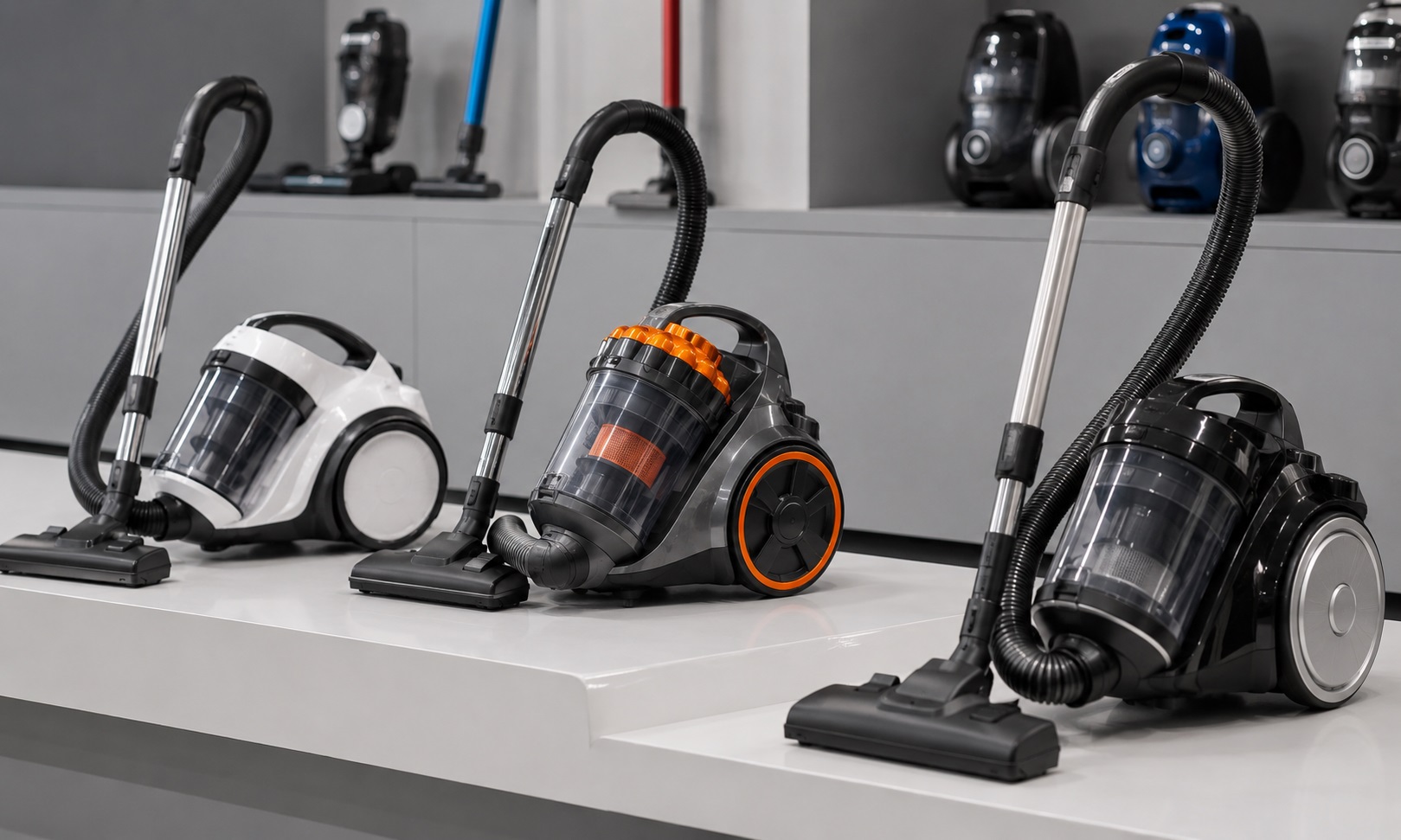
China is one of the world's major manufacturing bases for vacuum cleaners and professional cleaning equipment. Global distributors, importers, retailers, and private-label brands often source from Chinese factories because of broad manufacturing capacity, mature component supply chains, customization possibilities, and competitive production costs.
However, not every supplier offers the same capability.
A buyer searching for a vacuum cleaner manufacturer in China may find factories, trading companies, brand owners, assembly operations, and sourcing agents that all describe themselves as manufacturers.
The real challenge is identifying which supplier can consistently deliver the required product quality, specification, lead time, and after-sales support.
For an ordinary household appliance, a small quality difference may create inconvenience. For an industrial vacuum cleaner used in warehouses, workshops, hotels, construction sites, or factories, inconsistent components can create downtime and higher operating costs.
🎯 The goal is not simply to find a cheap supplier. The goal is to find a manufacturing partner capable of supporting your market over multiple orders.
2. Start by Defining Exactly What Type of Vacuum Cleaner You Need
Before evaluating factories, buyers should define the product category.
Different manufacturers may specialize in very different vacuum cleaner types.
Some focus on household models, while others concentrate on commercial vacuum cleaner products, wet and dry vacuum cleaner systems, or heavy-duty industrial equipment.
Your sourcing brief should identify:
Intended application
Target market
Dry or wet/dry function
Tank capacity
Required suction performance
Noise requirements
Filter type
Motor configuration
Accessories
Voltage and plug type
Target price range
Estimated annual purchasing volume
A hotel distributor, for instance, may prioritize a Portable Quiet Vacuum Cleaner.
A warehouse customer may require a Large-Capacity Wet Dry Vacuum Cleaner.
A construction equipment distributor may need a durable wet dry vacuum cleaner for construction site use.
🏭 Defining the application early prevents buyers from wasting time comparing factories that do not specialize in the correct product category.
3. Factory or Trading Company: Understand Who You Are Buying From
One of the first questions buyers should ask is whether the supplier is an actual manufacturer.
Trading companies are not automatically bad. Some can provide valuable sourcing, product consolidation, and export services.
However, buyers looking for long-term OEM development usually benefit from understanding exactly who manufactures the product.
A genuine industrial vacuum cleaner factory should normally be able to explain:
Production processes
Assembly capacity
Key equipment
Quality-control procedures
Factory organization
Product specialization
Component sourcing
Production lead time
When communicating with a vacuum cleaner supplier China, ask specific production questions rather than simply asking, “Are you a factory?”
For example:
Where are motors sourced?
Which parts are manufactured internally?
How many assembly lines do you operate?
What tests are performed before shipment?
Can you customize motors, tanks, filters, accessories, and packaging?
🔍 Detailed answers are usually more informative than a simple “Yes, we are a manufacturer.”
4. Evaluate Product Specialization
A factory's specialization is an important indicator of technical capability.
A manufacturer producing mainly small domestic vacuums may not be the best choice for an industrial project.
Similarly, an industrial vacuum cleaner supplier may be well suited for large-capacity wet/dry machines but less suitable for compact cordless retail products.
If your target market needs a High Suction Vacuum Cleaner, ask whether the manufacturer has experience with high-airflow systems, motor matching, sealing, and professional accessories.
For a heavy duty vacuum cleaner, evaluate tank construction, wheel strength, hose durability, cable quality, and motor operating characteristics.
For a commercial vacuum cleaner for hotel use, examine low-noise design, compact structure, mobility, and ease of maintenance.
💡 A focused manufacturer often understands application-specific problems better than a supplier offering hundreds of unrelated products.
5. Check OEM and ODM Capability
OEM and ODM capability is especially important for distributors building their own brands.
An OEM vacuum cleaner project may involve customization of:
Logo
Color
Carton
Labels
Manuals
Accessories
Plug and cable
Filters
Tank size
Motor configuration
An ODM vacuum cleaner project may involve deeper product development, including structural modifications, new components, tooling, engineering work, or differentiated appearance.
Ask the manufacturer to explain exactly what can be customized.
Some suppliers use “OEM” only to mean logo printing, while a stronger OEM industrial vacuum cleaner manufacturer may offer broader product configuration and engineering support.
🎨 If private labeling is important, request examples of previous private label vacuum cleaner projects, while respecting other customers' confidentiality.
6. Evaluate Engineering and Technical Communication
Technical communication is one of the clearest signs of supplier quality.
A good vacuum cleaner manufacturer should be able to discuss more than wattage and tank size.
Engineering teams should understand the relationship between:
Motor performance
Vacuum pressure
Airflow
Filtration resistance
Hose diameter
Sealing
Tank geometry
Noise
Electrical requirements
For example, a buyer requesting a high suction power vacuum cleaner may assume a larger motor is the only solution.
An experienced manufacturer may instead suggest improvements in airflow path, sealing, hose dimensions, or filtration.
⚙️ This kind of technical discussion is especially valuable for R&D engineers and product managers.
If the factory cannot explain how design choices affect performance, it may be difficult to manage more complex OEM or ODM projects.
7. Inspect Quality-Control Procedures
Quality control is one of the most important factors in supplier selection.
Buyers should ask how the factory controls quality before, during, and after production.
A structured process may include:
Incoming Material Inspection
Motors, switches, cables, filters, tanks, hoses, and other critical components can be inspected before assembly.
In-Process Quality Checks
Workers or QC staff verify wiring, seals, screws, wheels, labels, and assembly accuracy.
Functional Testing
Finished units may be tested for startup, suction, electrical function, wet/dry operation, and other required functions.
Final Inspection
Appearance, accessories, cartons, labels, quantities, and packaging are checked before shipment.
🔍 For a bulk vacuum cleaner purchase, ask whether the manufacturer can produce according to an approved sample and written specification.
Consistency between the sample and mass production is one of the most important indicators of a reliable supplier.
8. Review Motor and Component Sources
A vacuum cleaner's performance depends heavily on component quality.
The motor is especially important, but buyers should also consider switches, hoses, filters, cables, wheels, connectors, tanks, and accessories.
Two machines that look almost identical may have very different internal components.
For a dual motor vacuum cleaner, buyers should confirm motor specifications, operating characteristics, and electrical requirements.
For a stainless steel vacuum tank, examine material quality, finish, seams, and structural strength.
For a HEPA filter vacuum cleaner, verify the filter specification and how the complete system is sealed.
📦 Strong supply chain management is essential because even a small low-cost component can create high warranty costs if it fails frequently.
9. Verify Production Capacity
Production capacity matters when orders grow.
A factory may produce excellent samples but struggle with large-volume orders.
Ask about:
Monthly production capacity
Number of assembly lines
Peak-season capacity
Standard lead time
OEM lead time
Component procurement time
Packaging production time
Expansion capability
For a bulk order vacuum cleaner project, buyers should also consider whether the factory can handle repeat orders without sacrificing quality.
A smaller factory can still be an excellent partner if its capacity matches your business.
📈 What matters is realistic production planning, not simply the largest number quoted in a sales presentation.
10. Evaluate Supply Chain Stability
The vacuum cleaner industry relies on multiple upstream suppliers.
Motors, stainless steel, plastics, filters, cables, switches, wheels, cartons, and accessories may come from different sources.
A reliable cleaning equipment supplier should manage these upstream relationships carefully.
Ask how the factory handles:
Component shortages
Alternative suppliers
Material substitutions
Cost fluctuations
Long-lead-time parts
Repeat-order consistency
⚠️ Material substitution without buyer approval can create major quality problems.
A professional supplier should inform buyers before making significant changes to an approved component or specification.
11. Compare Pricing Properly
Price matters, but comparing only unit price can be misleading.
A quotation for an industrial vacuum cleaner may vary because of:
Motor quality
Tank material
Tank thickness
Hose quality
Cable length
Filter type
Accessories
Packaging
Testing
Warranty
Order quantity
For this reason, buyers should compare quotations according to the same specification.
💰 If one vacuum cleaner supplier is significantly cheaper than all others, investigate the reason.
The difference may come from better efficiency, but it may also come from lower-cost motors, thinner materials, shorter cables, simpler filters, or reduced quality control.
When evaluating industrial vacuum cleaner cost, focus on total product value rather than the cheapest initial offer.
12. Think in Terms of Total Cost of Ownership
Professional buyers should consider more than factory price.
A useful cost model can include:
Purchase price + freight + customs-related cost + spare parts + maintenance + warranty claims + downtime + replacement frequency
An inexpensive machine that fails frequently can become expensive over time.
For commercial customers, a durable Multi-Functional Durable Vacuum Cleaner may deliver better value than a cheaper machine requiring frequent repair.
Similarly, an energy efficient vacuum cleaner may reduce operating costs when used regularly in hotels, warehouses, or facilities.
📊 For buyers searching for the best value for money hoover or best affordable vacuum, “value” should include reliability and lifecycle cost.
13. Confirm Certification and Market Requirements
International buyers must confirm applicable legal and technical requirements for their destination market.
Requirements vary by country, product type, electrical configuration, and application.
Ask the manufacturer which certifications, declarations, reports, or technical documentation are available.
However, buyers should independently determine which requirements actually apply to their market.
🌍 A factory saying “we export to Europe” does not automatically prove that every model is suitable for every European market.
The exact model, components, rating information, plug, documentation, and applicable standards must be reviewed.
This is especially important when sourcing industrial cleaning equipment or products intended for specialized environments.
14. Check Filtration Claims Carefully
Filtration is a common area where marketing claims can become unclear.
If the product is promoted as a HEPA filter vacuum cleaner, ask for the filter specification and relevant supporting information.
Do not assume that installing one filter component automatically means the complete machine achieves a specific filtration classification.
For an industrial dust extractor, requirements may be much more demanding.
⚠️ Hazardous, combustible, toxic, or regulated dust can require specialized certified equipment.
A standard wet dry vacuum cleaner or commercial machine should not be marketed for applications beyond its verified design.
Responsible manufacturers should understand these limitations.
15. Case Study: Choosing a Factory for Warehouse Vacuum Cleaners
Consider a hypothetical importer sourcing an industrial wet and dry vacuum cleaner for warehouse cleaning supplier program.
Three suppliers offer similar-looking 70-liter models.
Supplier A
Lowest unit price, but limited technical documentation and unclear motor specifications.
Supplier B
Moderate price, provides detailed motor data, tank specifications, hose details, testing procedures, and OEM packaging options.
Supplier C
Highest price and extensive customization, but minimum order requirements are much higher than the buyer's expected volume.
The importer selects Supplier B.
Why?
The goal is not to select the cheapest or most sophisticated factory. The goal is to find the supplier whose capability, price, MOQ, and technical support fit the project.
📦 After field testing, the buyer also upgrades caster quality because warehouse operators move the machine frequently.
This creates better real-world value without unnecessarily increasing every specification.
16. Case Study: Selecting a Manufacturer for Hotel Cleaning Equipment
A hotel equipment distributor needs a Portable Quiet Vacuum Cleaner.
Several factories initially recommend larger motors because stronger power is easier to promote.
However, the distributor evaluates the actual user environment.
Housekeeping teams prioritize:
Low noise
Easy movement
Compact storage
Practical cable length
Lightweight accessories
Simple filter maintenance
The selected supplier has experience with hotel cleaning equipment and suggests a more balanced configuration.
🏨 This manufacturer is a better partner because it understands the target application rather than simply recommending the most powerful model.
17. Request Samples Before Bulk Orders
Sample testing is essential before placing a large order.
A sample allows buyers to evaluate:
Suction
Noise
Mobility
Tank design
Accessories
Cable and hose
Filter maintenance
Product finish
Labels
Packaging
For a wet and dry suction system, test both dry and liquid collection where appropriate.
For a Fast Lightweight Vacuum Cleaner, evaluate whether operators can move and carry it comfortably.
For a heavy duty vacuum cleaner, perform longer-duration testing to better understand durability.
🧪 Real-world sample testing can reveal issues that are difficult to identify from photos or specification sheets.
18. Verify Packaging and Private-Label Capability
Packaging matters for both logistics and branding.
A private label vacuum cleaner may require custom cartons, logos, manuals, barcodes, color labels, and product stickers.
Ask whether the factory manages packaging internally or through external suppliers.
Check:
Carton strength
Internal protection
Print quality
Artwork accuracy
Barcode placement
Manual language
Shipping marks
For retailers, packaging can directly affect customer perception.
For B2B distributors, robust packaging can reduce transport damage.
📦 Buyers should approve final artwork before mass printing to avoid costly corrections.
19. Evaluate Communication Speed and Accuracy
Good communication can prevent expensive mistakes.
A professional manufacturer should respond clearly to technical and commercial questions.
More importantly, information should remain consistent across sales, engineering, production, and QC teams.
Warning signs include:
Frequent changes in specifications
Unclear pricing
Contradictory answers
Unexplained delays
Refusal to provide technical details
Promises that appear unrealistic
🤝 Strong communication becomes even more important in an OEM vacuum cleaner project because multiple customized details must be coordinated.
A supplier that communicates limitations clearly can be more reliable than one that promises everything.
20. Assess After-Sales and Spare-Parts Support
A vacuum cleaner may require replacement filters, hoses, switches, brushes, wheels, motors, or other parts during its service life.
For distributors, spare-parts availability directly affects after-sales cost.
Ask the manufacturer:
Which spare parts are available?
How long will components remain available?
Can spare parts be ordered separately?
Can common replacement parts be included with bulk shipments?
For professional commercial cleaning equipment, accessible replacement components can significantly extend product life.
🔧 A supplier focused only on the initial sale may create problems later.
21. Understand MOQ and Customization Requirements
Minimum order quantities can vary depending on customization.
A standard factory direct vacuum cleaner may have a relatively simple MOQ, while custom colors, printed cartons, new plastics, or special motors can require larger production volumes.
Ask for separate MOQs for:
Standard product
Logo customization
Color customization
Custom carton
Custom manual
Special motor
New tooling
This gives buyers a clearer understanding of project economics.
For new brands, a standard product with light private-label customization may be more practical than developing a completely unique machine immediately.
🚀 Customization should grow with realistic sales volume.
22. Visit or Audit the Factory When Appropriate
For strategic or high-volume sourcing, a factory visit or independent audit can provide useful information.
Buyers can examine:
Production lines
Warehouses
Quality-control areas
Testing equipment
Incoming materials
Finished goods
Worker organization
Packaging process
A visit also allows more direct communication with engineering and production teams.
If an in-person visit is impractical, buyers can consider live video inspections, third-party factory audits, or other verification methods.
🏭 The objective is not simply to see a large building. It is to understand whether the actual manufacturing operation matches the supplier's claims.
23. Red Flags When Choosing a Vacuum Cleaner Factory
Several warning signs deserve additional investigation.
These include:
Prices far below comparable suppliers
Incomplete technical specifications
Unwillingness to provide samples
Constantly changing product details
Unclear factory address or manufacturing role
Limited quality-control documentation
Unrealistic lead-time promises
Poor understanding of target-market requirements
No clear process for handling defects
Unexplained material substitutions
🚩 One red flag does not always mean a supplier should be rejected, but multiple warning signs significantly increase sourcing risk.
24. Build a Supplier Scorecard
A supplier scorecard can make factory comparison more objective.
For example, buyers can assign scores to:
| Evaluation Area | Suggested Weight |
|---|---|
| Product Quality | 20% |
| Manufacturing Capability | 15% |
| Engineering Support | 10% |
| Price Competitiveness | 15% |
| OEM/ODM Capability | 10% |
| Quality Control | 10% |
| Delivery Reliability | 10% |
| Communication | 5% |
| After-Sales Support | 5% |
The exact percentages can be adjusted according to your business.
A high-volume retailer may place more weight on price and capacity, while an industrial distributor may prioritize durability and engineering support.
📈 A scorecard helps prevent sourcing decisions from being based only on the lowest quotation or the most persuasive salesperson.
25. Why Long-Term Partnership Matters
A good manufacturing relationship often becomes more valuable over time.
Repeat orders allow the factory to understand the buyer's preferred specifications, packaging, quality standards, and market requirements.
This can improve communication and reduce development time.
A long-term industrial vacuum cleaner supplier can also help buyers develop new products as customer needs change.
For example, an importer may start with a standard wet and dry vacuum cleaner, then expand into a High Suction Vacuum Cleaner, Portable Quiet Vacuum Cleaner, or Large-Capacity Wet Dry Vacuum Cleaner for different market segments.
🌐 Strong manufacturer relationships can support product portfolio growth rather than simply individual transactions.
26. Working With Lanxstar as a Vacuum Cleaner Manufacturing Partner
Lanxstar works with global buyers seeking commercial and industrial vacuum cleaning products, including wholesale, OEM, ODM, and private-label cooperation.
Buyers evaluating a manufacturing partner should begin by sharing clear project information, including:
Target market
Cleaning application
Product category
Tank capacity
Voltage and plug
Performance requirements
Filtration needs
Accessories
Branding requirements
Packaging needs
Expected order quantity
This enables more accurate product recommendations and quotations.
Whether a buyer needs a commercial vacuum cleaner, wet dry vacuum cleaner, industrial vacuum cleaner, or customized private-label solution, the strongest project begins with clear requirements and transparent communication.
Conclusion
Choosing the right vacuum manufacturer in China requires more than comparing catalog photos and factory prices.
Global buyers should evaluate product specialization, manufacturing capability, engineering support, supply chain stability, quality control, OEM/ODM services, production capacity, certification documentation, packaging, communication, and after-sales support.
Price remains important, but the lowest quotation does not necessarily create the lowest total cost.
A reliable manufacturer should be able to produce consistent products, explain technical decisions, support customization, manage component quality, and deliver repeat orders according to agreed specifications.
For importers, wholesalers, retailers, and distributors, the right manufacturing partner can become an important part of long-term market competitiveness.
For commercial and industrial vacuum cleaner manufacturing solutions, visit www.lxvacuum.com.
If you are interested, please feel free to contact us.
50 Related SEO Keywords
vacuum manufacturer China, vacuum cleaner manufacturer in China, China vacuum cleaner factory, vacuum cleaner supplier China, vacuum cleaner manufacturer, vacuum cleaner supplier, industrial vacuum cleaner manufacturer, industrial vacuum cleaner factory, industrial vacuum cleaner supplier, commercial vacuum cleaner supplier, OEM vacuum cleaner, ODM vacuum cleaner, private label vacuum cleaner, OEM industrial vacuum cleaner manufacturer, Lanxstar, vacuum manufacturer, vacuum cleaner maker, industrial vacuum cleaner, commercial vacuum cleaner, wet and dry vacuum cleaner, wet dry vacuum cleaner, High Suction Vacuum Cleaner, Portable Quiet Vacuum Cleaner, Multi-Functional Durable Vacuum Cleaner, Fast Lightweight Vacuum Cleaner, Energy-Saving Efficient Powerful Vacuum Cleaner, Large-Capacity Wet Dry Vacuum Cleaner, high suction power vacuum cleaner, heavy duty vacuum cleaner, dual motor vacuum cleaner, stainless steel vacuum tank, HEPA filter vacuum cleaner, low noise vacuum cleaner, energy efficient vacuum cleaner, wet and dry suction system, industrial dust extractor, commercial grade vacuum cleaner, industrial cleaning equipment, commercial cleaning equipment, cleaning equipment supplier, wholesale vacuum cleaner, bulk vacuum cleaner purchase, bulk order vacuum cleaner, factory direct vacuum cleaner, import vacuum cleaner from China, China vacuum cleaner sourcing, vacuum cleaner factory audit, custom vacuum cleaner manufacturer, warehouse cleaning solution, hotel cleaning equipment



