Hi, message us with any questions.
We're happy to help!





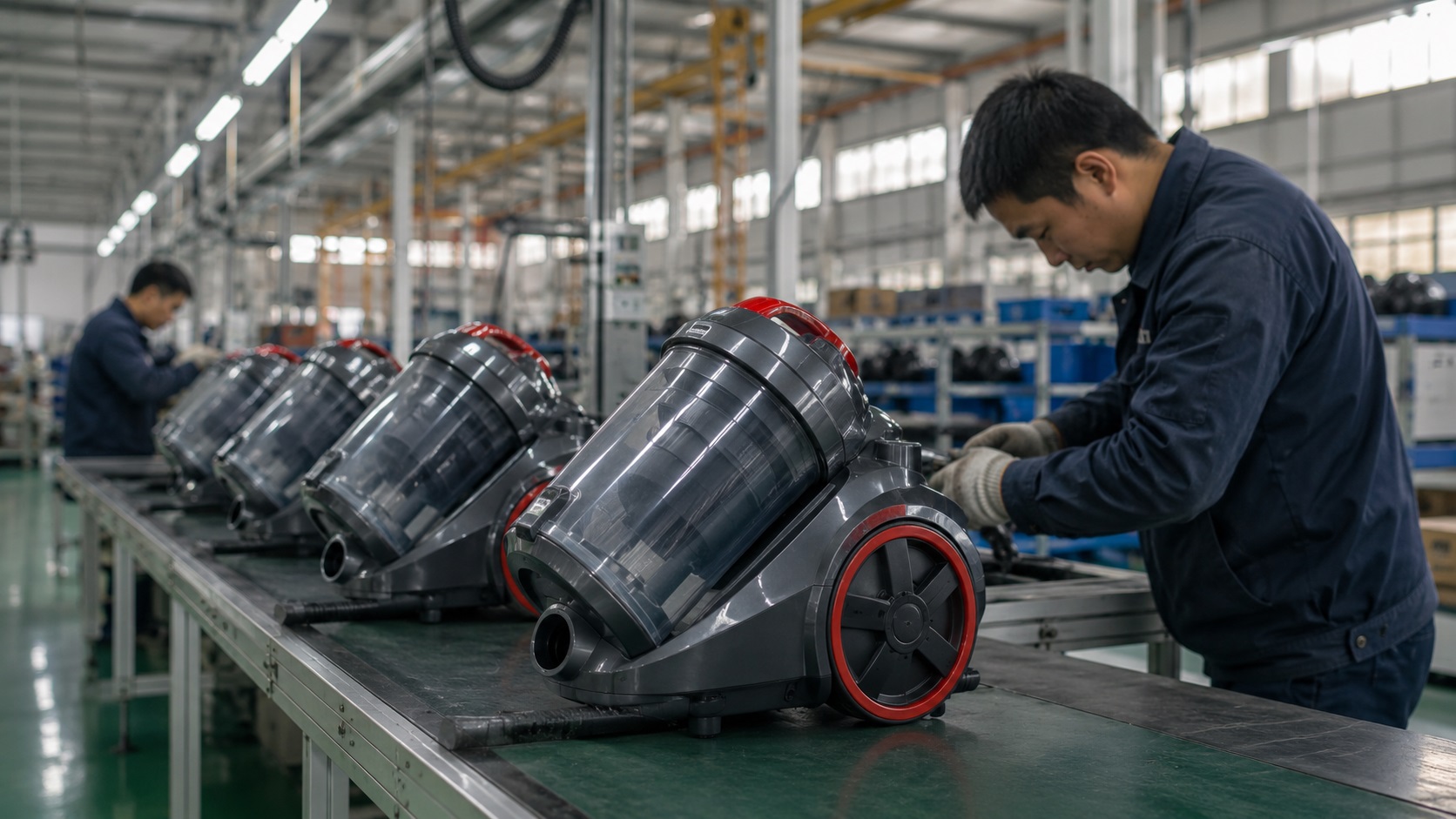
OEM, or Original Equipment Manufacturing, is a common business model for vacuum cleaner importers, wholesalers, distributors, retailers, and cleaning equipment brands.
In an OEM vacuum cleaner project, a buyer works with a vacuum cleaner manufacturer to produce machines according to agreed specifications and sell them under the buyer's own brand or commercial identity.
OEM production can range from relatively simple customization, such as adding a logo and branded carton, to more detailed configuration changes involving motors, filters, tank capacities, accessories, cables, colors, and product positioning.
For global buyers, OEM manufacturing offers an efficient way to build a product line without establishing an entire vacuum cleaner factory.
A distributor may, for example, source a Portable Quiet Vacuum Cleaner for hotel customers, a High Suction Vacuum Cleaner for workshops, and a Large-Capacity Wet Dry Vacuum Cleaner for warehouses under the same private-label brand.
🏭 OEM production is therefore not simply logo printing. It is a structured process of turning market requirements into repeatable factory specifications.
2. Step One: Define the Target Market and Cleaning Application
Successful OEM development starts before the factory begins production.
The buyer should first define who will use the vacuum cleaner and where it will be used.
A commercial vacuum cleaner for hotel use has very different requirements from a wet dry vacuum cleaner for construction site applications.
Hotel buyers may prioritize low noise, lightweight construction, easy mobility, compact storage, and simple accessory handling.
Construction and workshop customers may prioritize strong suction, durable tanks, robust wheels, larger hoses, and heavy-duty accessories.
A warehouse buyer may require a warehouse cleaning solution with larger capacity and longer operating reach, while a retailer may focus on a best affordable vacuum for price-sensitive consumers.
Before requesting a quotation, buyers should ideally specify:
Target country or region
Customer group
Cleaning application
Dry or wet/dry usage
Expected operating duration
Target price segment
Desired product capacity
Required accessories
Electrical requirements
Approximate annual purchasing volume
🎯 The clearer the application, the easier it becomes for the manufacturer to recommend an appropriate product platform.
3. Step Two: Select the OEM Product Platform
Once the buyer's requirements are understood, the vacuum cleaner supplier can recommend suitable existing platforms.
Using a mature platform is one of the main advantages of OEM production.
Instead of developing every component from the beginning, buyers can customize a tested base model.
For example, a buyer may choose between:
Compact commercial vacuum: focused on mobility and lower noise
Medium wet/dry vacuum: balanced capacity and versatility
Heavy duty vacuum cleaner: designed for demanding commercial use
Dual motor vacuum cleaner: suitable for higher-performance applications
For many wholesalers, using an existing platform reduces tooling requirements, development time, and project risk.
However, the buyer should still compare technical specifications carefully.
Two machines that look similar can have different motors, tank structures, filtration systems, cable lengths, accessories, and quality standards.
📋 A professional vacuum cleaner manufacturer in China should provide a detailed specification sheet before the buyer approves the project.
4. Step Three: Confirm Motor and Suction Specifications
Motor selection is one of the most important parts of OEM development.
A customer requesting a high suction power vacuum cleaner may initially focus only on motor wattage. However, actual suction performance depends on the entire airflow system.
Important variables include:
Motor type
Vacuum pressure
Airflow
Hose diameter
Filter resistance
Sealing
Tank design
Nozzle configuration
For some industrial applications, a dual motor vacuum cleaner may provide additional performance.
However, extra motors can also increase energy consumption, noise, machine size, and cost.
This means the correct solution should be based on application rather than marketing numbers.
⚡ An Energy-Saving Efficient Powerful Vacuum Cleaner should deliver the required cleaning performance with an appropriate balance between motor power, airflow, energy use, and operating cost.
Professional buyers can ask manufacturers for measurable technical data instead of relying only on descriptions such as “super powerful.”
5. Step Four: Customize the Wet and Dry Vacuum System
Many commercial OEM projects involve a wet and dry vacuum cleaner because wet/dry machines can serve multiple applications.
A professional wet dry vacuum cleaner may collect dry debris during normal cleaning and liquids when necessary.
OEM buyers can discuss customization around:
Tank capacity
Tank material
Drainage system
Filter configuration
Float protection
Hose dimensions
Wheel structure
Accessory combinations
A Large-Capacity Wet Dry Vacuum Cleaner may be suitable for warehouse cleaning or industrial workshops where frequent tank emptying reduces productivity.
By contrast, a smaller Fast Lightweight Vacuum Cleaner may be more convenient for mobile cleaning teams.
💧 The ideal wet and dry suction system should match both the material being collected and the practical workflow of the operator.
6. Step Five: Select Tank Capacity and Materials
The tank plays an important role in durability, machine weight, visual appearance, and cleaning productivity.
A stainless steel vacuum tank is commonly used in professional wet/dry machines because it provides a commercial appearance and practical durability for many cleaning applications.
Buyers should not choose tank size only according to marketing appeal.
A larger tank can reduce emptying frequency but will become significantly heavier when filled with liquid.
For factory floor cleaning, large capacity may improve productivity.
For hotels and retail stores, compact size and easy maneuverability may be more important.
OEM development should therefore consider tank capacity together with:
Caster size
Wheel-base stability
Handle design
Drainage
Storage requirements
Filled weight
🛞 A vacuum cleaner that is powerful but difficult to move may create a poor user experience.
7. Step Six: Configure the Filtration System
Filtration is another important OEM customization area.
Depending on the application, the manufacturer may offer cartridge filters, foam filters, cloth filters, filter bags, or other filtration components.
A HEPA filter vacuum cleaner may be requested for applications where improved fine-particle filtration is commercially important.
However, buyers should verify technical specifications before making filtration claims.
A filter itself may have a particular rating, while the overall machine performance also depends on sealing and system design.
For an industrial dust extractor, filtration requirements can be even more specialized.
⚠️ If the intended dust is hazardous, combustible, toxic, or regulated, buyers should confirm applicable safety standards and specialized equipment requirements before developing or marketing the product.
Not every standard industrial vacuum cleaner is suitable for every type of dust.
8. Step Seven: Choose Accessories for the End User
Accessories strongly influence how customers perceive the usefulness of a vacuum cleaner.
An OEM accessory kit can include:
Flexible hoses
Extension tubes
Floor brushes
Wet nozzles
Crevice tools
Round brushes
Adapters
Specialized detailing tools
For a car detailing vacuum cleaner, a narrow crevice tool and flexible hose may be essential.
For construction site cleaning equipment, stronger hoses and robust nozzles may be more valuable.
For hotel cleaning equipment, lightweight and easy-to-store accessories can improve housekeeping efficiency.
🧹 Buyers should avoid adding accessories simply to make a package look larger.
A smaller but relevant accessory kit can offer better customer value than a large collection of rarely used tools.
9. Step Eight: Branding and Private Label Customization
After the technical configuration is approved, buyers can define the private-label presentation.
Typical private label vacuum cleaner options may include:
Product logo
Brand colors
Model number
Rating label
Carton graphics
Product stickers
Instruction manual
Barcode
Shipping marks
Accessory list
For retailers, packaging can be a major part of the product's commercial identity.
For B2B industrial distributors, packaging may be simpler, while durability and clear technical labeling can be more important.
🌍 Buyers importing into multiple markets may also require different language versions of manuals, labels, or cartons.
This information should be confirmed before mass production to avoid unnecessary delays.
10. Step Nine: Produce and Evaluate the OEM Sample
Sampling is one of the most important stages in OEM production.
The sample gives buyers an opportunity to verify the physical product before placing a large order.
A sample evaluation should cover more than appearance.
Professional buyers can test:
Suction: Does the machine handle the intended debris?
Noise: Is the sound level acceptable for the application?
Mobility: Are wheels and handles practical?
Accessories: Do attachments fit securely and work effectively?
Tank: Is emptying convenient?
Filtration: Is filter installation and maintenance practical?
Cable and hose: Is the working reach sufficient?
Branding: Are logo, labels, and colors correct?
🔍 Buyers developing a commercial grade vacuum cleaner should test the product in realistic environments whenever possible.
Laboratory specifications alone may not reveal practical usability problems.
11. Case Study: OEM Warehouse Vacuum Cleaner Development
Consider a hypothetical European distributor developing an industrial wet and dry vacuum cleaner for warehouse cleaning supplier product line.
The first requirement is a “powerful industrial vacuum.”
However, warehouse customer interviews reveal additional needs.
The machines must collect packaging debris, dust, sand, and occasional liquids across large floor areas.
Operators also complain about stopping frequently to empty smaller machines.
The OEM specification therefore evolves into:
Large-capacity tank
Strong wet/dry suction
Durable casters
Long hose and cable reach
Practical drainage system
Replaceable filtration components
Heavy-duty accessory set
After sample testing, the buyer discovers that wheel durability and hose length affect productivity almost as much as suction.
📦 This case demonstrates why OEM development should focus on the entire cleaning workflow instead of one specification.
12. Case Study: OEM Hotel Vacuum Cleaner
A second hypothetical buyer supplies housekeeping equipment to hotels.
The buyer initially requests maximum motor power because competitors advertise high wattage.
During field testing, housekeeping staff identify different priorities:
🤫 Low noise
🪶 Lightweight handling
🛞 Smooth movement
🔌 Practical cable length
🧹 Easy-to-store accessories
The buyer therefore develops a Portable Quiet Vacuum Cleaner rather than a larger heavy-duty machine.
The factory applies private-label branding, customized packaging, and a tailored accessory package.
The resulting commercial vacuum cleaner for hotel use provides a clearer market position because it is designed around hotel operations rather than generic specifications.
13. Step Ten: Approve the Final OEM Specification
Before mass production begins, all critical details should be documented.
A final OEM specification can include:
Model number
Motor specification
Voltage and frequency
Plug type
Tank material
Tank capacity
Filter system
Hose
Accessories
Cable length
Product color
Logo
Labels
Manuals
Carton artwork
Packaging quantity
Testing requirements
This document becomes the reference for purchasing, production, quality control, and final inspection.
✅ For a bulk vacuum cleaner purchase, written specifications reduce the risk of misunderstandings between buyer and factory.
They are especially important when similar-looking products are produced for multiple customers with different internal configurations.
14. Step Eleven: Prepare Components for Mass Production
Once the buyer approves the specification and order, the industrial vacuum cleaner factory begins material preparation.
Components may include motors, tanks, plastics, filters, switches, cables, wheels, hoses, accessories, cartons, manuals, and labels.
Simple standard products may use readily available components.
Custom projects can require additional preparation.
For example, branded cartons and color-matched plastic components may need separate production schedules.
📅 This is one reason the lead time for an OEM vacuum cleaner can differ from a standard factory-stock product.
The manufacturer must coordinate multiple suppliers so that all required components are available when the assembly line begins production.
15. Step Twelve: OEM Vacuum Cleaner Assembly
During assembly, individual components become the finished vacuum cleaner.
Depending on the product design, production may include:
Tank preparation
Motor installation
Electrical wiring
Switch assembly
Filter installation
Seal fitting
Wheel installation
Handle assembly
Hose and accessory matching
Label application
Assembly consistency matters greatly.
A poorly fitted seal can reduce suction. Incorrect wiring can create product failures. Loose wheels can lead to customer complaints.
For a heavy duty vacuum cleaner, repeated mechanical stress makes assembly quality particularly important.
🔧 A professional OEM industrial vacuum cleaner manufacturer should maintain standardized assembly procedures for critical operations.
16. Step Thirteen: Quality Control and Product Testing
OEM quality control should occur at multiple stages rather than only after production.
Incoming Component Inspection
Key components such as motors, cables, filters, tanks, and switches can be checked before assembly.
In-Process Inspection
Workers or inspectors can verify wiring, fasteners, seals, labels, and component installation.
Functional Testing
Completed vacuum cleaners can be tested for electrical operation, suction, wet/dry function, and other relevant performance.
Final Inspection
Appearance, accessories, labels, packaging, quantity, and customized details can be checked before shipment.
🔍 For wholesale vacuum cleaner orders, buyers may also arrange their own pre-shipment inspection or third-party inspection according to purchasing policies.
Quality control should confirm that mass-produced units remain consistent with the approved sample and written specification.
17. Step Fourteen: Packaging and Carton Inspection
After testing, vacuum cleaners are packed for shipment.
For standard B2B equipment, packaging may focus mainly on protection and logistics efficiency.
Retail-oriented OEM products may require more elaborate cartons with branding, images, specifications, barcodes, and sales information.
Packaging quality can affect:
Product protection
Container loading
Warehousing
Retail presentation
Customer experience
Freight cost
A damaged carton does not necessarily mean the vacuum cleaner itself is defective, but repeated packaging damage can harm brand perception.
📦 Buyers comparing vacuum cleaner price wholesale should therefore consider packaging quality as part of total product value.
18. Step Fifteen: Bulk Shipment and Export Delivery
Once production and final inspection are complete, the order moves into export preparation.
A bulk order vacuum cleaner shipment may require commercial invoices, packing lists, shipping marks, customs documentation, and container planning.
For large wet/dry vacuums, carton volume can significantly affect shipping cost.
Buyers planning to import vacuum cleaner from China should therefore evaluate landed cost instead of looking only at factory price.
A simplified calculation is:
Product price + OEM customization + packaging + freight + customs-related cost + warehousing + after-sales cost = more realistic sourcing cost
🚢 This approach is especially important when comparing factories in different regions or evaluating multiple tank sizes.
19. What Determines OEM Vacuum Cleaner Cost?
There is no universal OEM price because different specifications create different costs.
Major cost factors can include:
Motor configuration
Tank material and capacity
Filtration system
Hose quality
Cable length
Accessories
Product color
Logo process
Packaging
Order quantity
Certification requirements
Tooling or development work
For example, a dual motor vacuum cleaner will generally have a different cost structure from a compact single-motor machine.
Likewise, a large stainless steel vacuum tank affects material and freight costs.
💰 Buyers searching for the best value for money hoover, good budget vacuum, or best vacuum on a budget should therefore avoid comparing products solely by purchase price.
For professional sourcing, value should include durability, performance, maintenance, warranty, and after-sales cost.
20. How to Choose the Right OEM Vacuum Cleaner Manufacturer
The quality of an OEM project depends heavily on the manufacturing partner.
When evaluating a vacuum cleaner manufacturer in China, buyers should consider:
Product specialization
Manufacturing experience
Technical communication
Production capacity
Quality-control procedures
Customization capability
Sample development
Documentation
Packaging support
Spare-parts availability
Export experience
Lead-time reliability
A professional cleaning equipment supplier should also be willing to explain technical limitations.
Not every requested feature creates a better product.
For example, maximizing tank size, motor power, and accessories simultaneously can increase cost and weight without improving the target user's actual experience.
🤝 A reliable manufacturing partner should help buyers create a balanced specification rather than simply agreeing to every feature request.
21. OEM vs ODM: Which Production Model Should Buyers Choose?
OEM and ODM are related but different approaches.
An OEM vacuum cleaner usually starts from an existing manufacturing platform and adapts it to the buyer's brand or specification.
An ODM vacuum cleaner project may involve deeper design changes, structural engineering, new molds, or more significant product development.
OEM may be more appropriate when buyers prioritize:
Faster market entry
Lower development complexity
Existing product platforms
Branding customization
Controlled investment
ODM can be more appropriate when buyers require stronger product differentiation.
🚀 For many wholesalers and new private-label brands, OEM offers a practical starting point before investing in more complex product development.
22. Lanxstar OEM Vacuum Cleaner Manufacturing Support
Lanxstar works with global buyers exploring OEM, wholesale, private-label, commercial, and industrial vacuum cleaner projects.
Different customers may require very different product configurations.
A distributor serving factories may need a Multi-Functional Durable Vacuum Cleaner or heavy duty vacuum cleaner, while hospitality buyers may focus on quieter and more portable equipment.
Warehouse customers may require a Large-Capacity Wet Dry Vacuum Cleaner, while cleaning contractors may prefer a balance of suction, mobility, filtration, and operating efficiency.
To begin an OEM discussion effectively, buyers should provide:
Target market
Intended cleaning application
Required product type
Voltage and plug
Tank capacity
Motor or performance requirements
Filtration requirements
Accessory requirements
Branding and packaging needs
Expected order quantity
This information allows the vacuum cleaner manufacturer to recommend a more suitable configuration and evaluate OEM feasibility.
Conclusion
Understanding how OEM vacuum production works helps importers, wholesalers, distributors, and private-label brands reduce sourcing risks and create more competitive products.
The process begins with market and application analysis, followed by product-platform selection, motor configuration, tank and filter choices, accessories, branding, sampling, specification approval, component preparation, mass assembly, quality control, packaging, and export delivery.
The strongest OEM project is not necessarily the one with the most features.
It is the product that balances cleaning performance, durability, operating cost, user experience, manufacturing consistency, and target-market pricing.
Whether sourcing a wet and dry vacuum cleaner, industrial vacuum cleaner, or commercial vacuum cleaner, buyers can improve results by communicating clear requirements and working with a manufacturer capable of maintaining those requirements across mass production and repeat orders.
For OEM commercial and industrial vacuum cleaner manufacturing solutions, visit www.lxvacuum.com.
If you are interested, please feel free to contact us.
50 Related SEO Keywords
OEM vacuum cleaner, OEM vacuum cleaner manufacturer, OEM industrial vacuum cleaner, OEM wet dry vacuum cleaner, private label vacuum cleaner, ODM vacuum cleaner, custom vacuum cleaner, Lanxstar, vacuum manufacturer, vacuum cleaner maker, vacuum cleaner manufacturer, vacuum cleaner supplier, vacuum cleaner manufacturer in China, industrial vacuum cleaner factory, industrial vacuum cleaner supplier, industrial vacuum cleaner, commercial vacuum cleaner, wet and dry vacuum cleaner, wet dry vacuum cleaner, High Suction Vacuum Cleaner, Portable Quiet Vacuum Cleaner, Multi-Functional Durable Vacuum Cleaner, Fast Lightweight Vacuum Cleaner, Energy-Saving Efficient Powerful Vacuum Cleaner, Large-Capacity Wet Dry Vacuum Cleaner, high suction power vacuum cleaner, heavy duty vacuum cleaner, dual motor vacuum cleaner, stainless steel vacuum tank, HEPA filter vacuum cleaner, low noise vacuum cleaner, energy efficient vacuum cleaner, wet and dry suction system, industrial dust extractor, commercial grade vacuum cleaner, industrial cleaning equipment, commercial cleaning equipment, cleaning equipment supplier, industrial equipment supplier, wholesale vacuum cleaner, bulk vacuum cleaner purchase, bulk order vacuum cleaner, factory direct vacuum cleaner, OEM vacuum production, vacuum cleaner OEM process, private label vacuum manufacturing, warehouse cleaning solution, construction site cleaning equipment, hotel cleaning equipment, industrial wet dry vacuum cleaner



