Hi, message us with any questions.
We're happy to help!





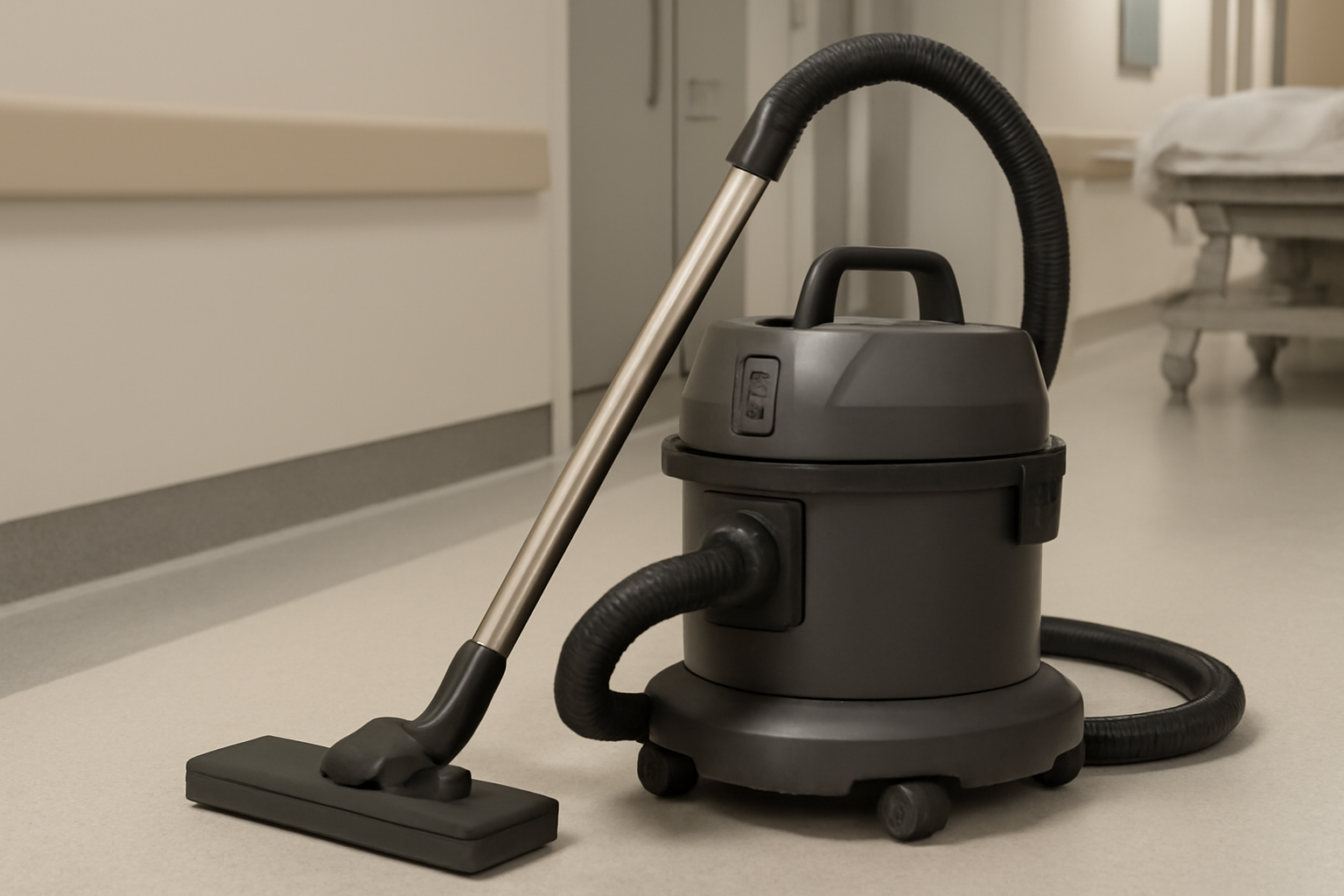
💡 When Hygiene Became a Life-Saving Metric
Hospitals have always been the front line of public health — but during and after the COVID-19 pandemic, they also became epicenters of hygiene innovation.
Traditional cleaning procedures, once considered adequate, suddenly proved insufficient against airborne and surface pathogens that spread faster than staff could respond.
In this context, one regional hospital network in the Middle East redefined its sanitation strategy by adopting industrial-grade HEPA vacuum systems.
The result: a measurable drop in surface contamination, improved air quality, and enhanced compliance with global infection-control standards.
1️⃣ The Challenge: Microbial Threats in a 24/7 Environment
Hospitals operate continuously — meaning cleaning interruptions are impossible.
Every surface, from ICU floors to waiting rooms, can become a transmission hotspot.
According to the World Health Organization (WHO), nearly 15% of healthcare-associated infections worldwide stem from environmental contamination.
The hospital’s infection control team realized their conventional methods — mops, standard vacuums, and surface sprays — couldn’t remove microscopic particles that settle on floors and circulate through air ducts.
They needed a complete upgrade in cleaning technology, one that could integrate with existing disinfection protocols.
2️⃣ The Turning Point: Transition to HEPA Industrial Systems 🧠
The hospital partnered with a European supplier specializing in Upright Vacuum Cleaners and Household Vacuum Cleaners upgraded for healthcare-grade use.
They introduced Large-Capacity Wet Dry Vacuum Cleaners and Cordless Vacuum Cleaners fitted with HEPA H14 filters and sealed containment chambers.
Key features included:
99.995% filtration efficiency for 0.3-micron particles
Quiet operation (<60 dB) suitable for ward cleaning during night shifts
Self-cleaning filter modules for continuous suction
Antimicrobial-coated interiors to prevent bacterial buildup
Within six weeks, surface swab tests revealed a 42% reduction in microbial presence — especially in high-touch zones such as emergency units and surgical corridors.
3️⃣ Seamless Integration with Hospital Protocols 🏗
One of the biggest challenges in healthcare cleaning is avoiding workflow disruption.
Industrial HEPA vacuums were deployed strategically to align with the hospital’s existing cleaning and sterilization schedule.
Day shifts: Upright Vacuum Cleaners for large public areas
Evening shifts: Cordless Vacuum Cleaners for patient rooms and ICUs
Night shifts: Quiet Vacuum for Night Use models for 24-hour disinfection cycles
These vacuums replaced traditional sweeping and mopping, which often released dust back into the air — a major contamination risk identified by the Centers for Disease Control and Prevention (CDC).
4️⃣ Air Quality Monitoring: Beyond the Floor 🌬
Modern industrial vacuums do more than clean surfaces — they transform air management.
The hospital integrated its Smart Vacuum Technology with the HVAC system, feeding real-time data on particle density and filter performance to the central environmental monitoring unit.
This data integration:
Enabled predictive maintenance
Ensured compliance with ISO 14644-1 cleanroom air standards
Reduced airborne bacteria counts by 35%
“We stopped thinking of cleaning as a task,” said the hospital’s facility engineer.
“Now it’s part of our infection-control intelligence.”
5️⃣ Efficiency, Safety, and Cost Optimization 💰
Switching to smart industrial vacuums not only improved hygiene but also lowered operational costs:
Labor hours cut by 28% due to automated cleaning cycles
Maintenance downtime reduced by 40%
Energy savings of 30% using Energy-Saving Efficient Powerful Vacuum Cleaners
Longer equipment lifespan thanks to modular parts and washable filters
These systems demonstrated that sanitation upgrades can yield financial ROI, a key insight for public hospitals managing tight budgets.
6️⃣ Training & Implementation: Human + Machine Synergy 👩⚕️
The hospital introduced staff training modules emphasizing:
Proper handling of Wet Dry Vacuum Cleaners
Filter replacement and sterilization
Smart dashboard operation for cleaning data review
By empowering the cleaning staff with technology literacy, the hospital created a culture of hygiene ownership — ensuring consistent performance and accountability.
The partnership also aligned with the Global Biorisk Advisory Council (GBAC) STAR™ accreditation, giving the hospital international recognition for facility hygiene management.
7️⃣ Sustainable Hygiene: Greener, Cleaner, Smarter 🌱
Healthcare environments produce massive waste, much of it from disposable cleaning supplies.
The hospital’s adoption of Energy-Saving Efficient Powerful Vacuum Cleaner models and reusable HEPA filters cut consumable waste by 45%.
Their machines also featured water-saving wet-cleaning cycles, supporting the region’s sustainability targets under the GCC Green Hospital Initiative.
These eco-friendly systems not only satisfied environmental regulations but also resonated with the hospital’s corporate social responsibility goals — an increasingly critical factor in healthcare branding.
8️⃣ Regional Adoption: A Model for the GCC and Europe 🌍
Following this success, hospitals in Saudi Arabia, the UAE, and Spain began adopting similar systems, facilitated by B2B distributors offering tailored cleaning solutions.
The GCC Cleaning & Hygiene Council has since begun drafting updated specifications for vacuum technology in medical facilities — including HEPA certification and decibel limits.
This convergence of policy, technology, and procurement signals a new era in evidence-based cleaning management.
9️⃣ Conclusion: Cleanliness as a System, Not an Act
The hospital’s transformation proves a fundamental truth:
hygiene cannot be outsourced — it must be engineered.
By integrating Industrial HEPA Vacuums, data monitoring, and sustainability practices, hospitals can achieve infection control standards once thought impossible through manual labor alone.
In the post-pandemic world, cleanliness isn’t just compliance — it’s a metric of patient safety, staff morale, and institutional excellence.
And technology, when applied with precision, turns cleaning from a routine into a lifesaving operation.
🧩 Hashtags
Upright Vacuum Cleaners, Household Vacuum Cleaners, Large-Capacity Wet Dry Vacuum Cleaner, Cordless Vacuum Cleaner, Vacuum Cleaner for Allergies, Quiet Vacuum for Night Use, High Suction Vacuum Cleaner, Energy-Saving Efficient Powerful Vacuum Cleaner, Multi-Functional Durable Vacuum Cleaner, Wet Dry Vacuum Cleaners, Portable Self-Cleaning Vacuum Cleaner, Smart Vacuum Technology, HEPA Filtration System, Smart Cleaning Devices, Commercial HEPA Vacuum, Industrial Cleaning Equipment, Hospital Cleaning Equipment, Healthcare Sanitation Solutions, Clean Air Technology, Infection Control Equipment, B2B Cleaning Distributor, Smart Sanitation Solutions, Medical Facility Hygiene, GCC Cleaning Industry, Middle East Healthcare Procurement, Hospital Hygiene Standards, Energy Efficient Vacuums, Smart Cleaning Management, Sustainable Cleaning Equipment, Professional Cleaning Solutions, Post-Pandemic Cleaning Strategy, Smart Cleaning Automation, Hospital Maintenance Solutions, Smart Air Purification, Hospital Vacuum Systems, Quiet Industrial Vacuum, Smart Cleaning Innovation, Air Quality Equipment, Medical Cleaning Equipment Supplier, Hospital Hygiene Optimization, Facility Cleaning Procurement, Infection Prevention Systems, Smart Healthcare Cleaning, Airborne Pathogen Control, HEPA Hospital Cleaning, Post-COVID Healthcare Strategy, Lanxstar



