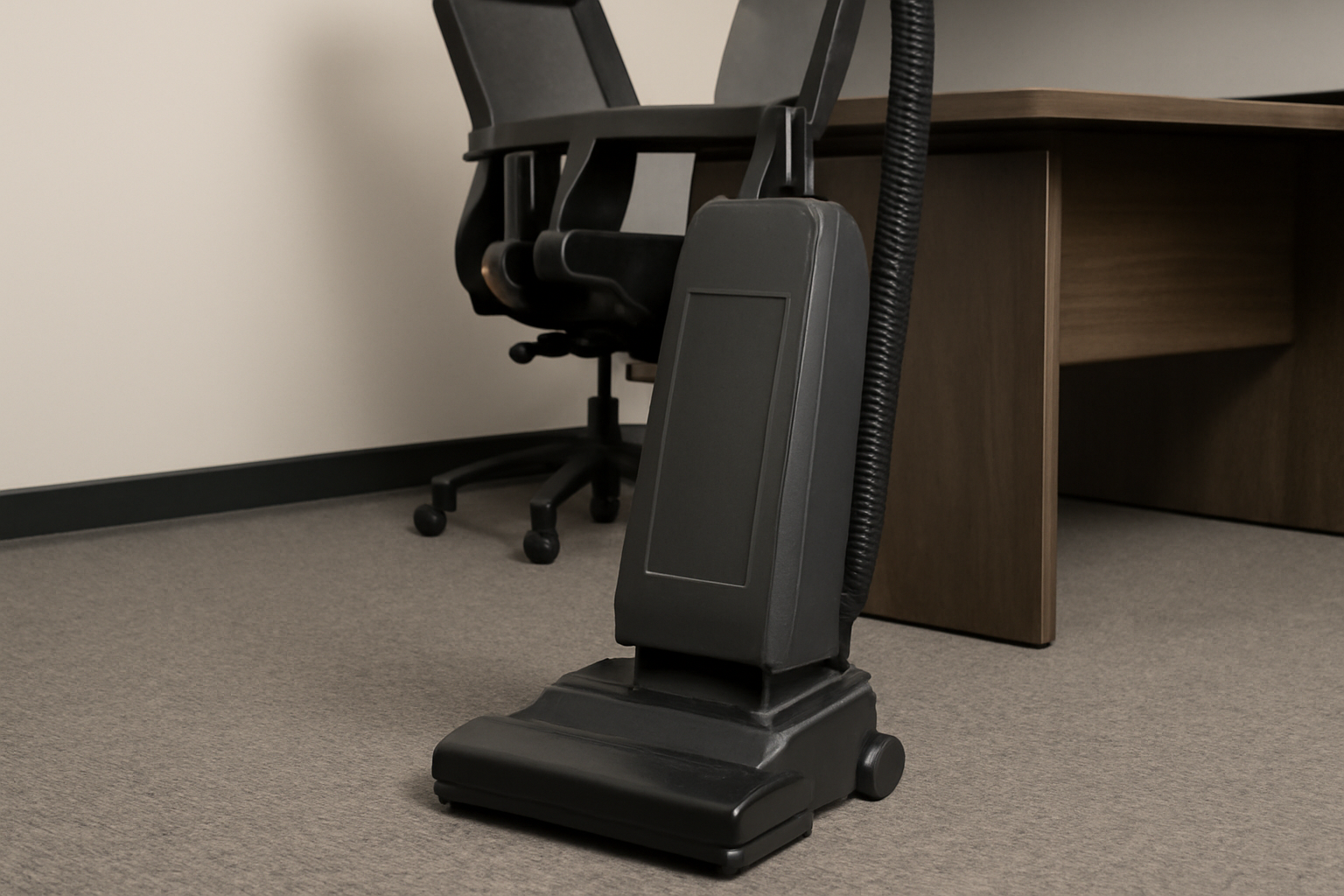
🏢 Clean Workspaces, Clear Minds
As employees returned to offices in the post-pandemic world, cleanliness became a corporate value, not just a maintenance routine.
A tidy desk once symbolized professionalism — now, sanitized air and surfaces represent safety and care.
For facilities teams, that means one thing: deep-cleaning is no longer optional; it’s part of brand identity and employee wellbeing.
Modern Commercial Vacuum Cleaners — especially those featuring HEPA filtration, high suction power, and multi-surface adaptability — are at the heart of this transformation.
Let’s break down how to deep-clean offices step by step, using technology built for the new hygiene era.
1️⃣ Step 1: Audit the Office Environment
Before cleaning, conduct a site hygiene audit. Identify:
High-traffic areas (lobbies, meeting rooms, cafeterias)
High-touch surfaces (keyboards, chair handles, door frames)
Dust accumulation zones (vents, carpet edges, under desks)
Use an Air Quality Meter or IoT-enabled Smart Vacuum Technology to measure particulate matter and humidity levels.
This establishes a baseline for improvement and compliance with ISO 14644 air cleanliness standards.
2️⃣ Step 2: Choose the Right Commercial Vacuum 💡
Not all vacuums are equal — match the model to the task.
Recommended configurations include:
Upright Vacuum Cleaners: for large carpeted areas and open-plan offices
High Suction Vacuum Cleaner: for heavy dust zones
Cordless Vacuum Cleaner: for flexible movement between rooms
Multi-Functional Durable Vacuum Cleaner: for hard floors and mixed surfaces
Car Vacuum Cleaner: for company vehicle sanitation
Always select models equipped with HEPA H13 or higher filtration, ensuring capture of fine particles and allergens.
3️⃣ Step 3: Pre-Clean Preparation 🧽
Before vacuuming, ensure the area is ready:
Remove movable obstacles (chairs, bins)
Disinfect surfaces using EPA-approved wipes
Mark wet areas to avoid accidents during Wet Dry Vacuum Cleaner use
For sensitive office environments (like tech labs or data centers), opt for anti-static vacuum models to prevent dust-related equipment failure.
4️⃣ Step 4: Vacuuming Strategy — The Layered Approach
Effective deep-cleaning involves three layers of vacuuming:
🔹 Layer 1: Surface Layer
Use a High Suction Vacuum Cleaner to remove visible debris from carpets and floors.
🔹 Layer 2: Subsurface Layer
Deploy a Vacuum for Multi-Surface unit with adjustable brush height to extract embedded dust and allergens.
🔹 Layer 3: Air Layer
Run a Commercial HEPA Vacuum during or after cleaning to filter suspended particles — especially critical for shared open spaces.
5️⃣ Step 5: Handle Multi-Surface Cleaning 🧩
Corporate environments often combine carpets, tiles, and wooden floors.
Use Cordless Handheld Vacuum Cleaners for tight corners, vents, and furniture edges.
In cafeterias and restrooms, switch to Wet Dry Vacuum Cleaners with antibacterial cleaning liquids for moisture-prone areas.
These multi-surface workflows help reduce cross-contamination and meet the hygiene guidelines of the European Cleaning & Hygiene Technology Alliance (ECHTA).
6️⃣ Step 6: Post-Clean Air Filtration and Monitoring 🌬
After cleaning, monitor air quality for residual dust or microbial load.
Modern Smart Vacuum Technology integrates real-time sensors that measure:
Data from these devices can be centralized through facility dashboards, offering traceable hygiene logs for compliance audits.
“What gets measured, gets managed — and now, even air hygiene can be measured.”
7️⃣ Step 7: Maintenance and Equipment Hygiene ⚙️
Cleaning the cleaners is essential.
To maintain efficiency and prevent cross-contamination:
Replace HEPA filters every 6–8 weeks (or as per sensor alerts)
Sanitize vacuum hoses and nozzles weekly
Use Portable Self-Cleaning Vacuum Cleaners to automate filter disinfection
Store vacuums in ventilated areas to prevent microbial growth
Adhering to a vacuum hygiene schedule ensures consistent suction power and extends the lifespan of commercial units.
8️⃣ Step 8: Sustainability and Energy Efficiency 🌱
Sustainability is now a procurement requirement.
By investing in Energy-Saving Efficient Powerful Vacuum Cleaner models, offices can reduce energy consumption by up to 30% while maintaining cleaning quality.
Look for products certified under:
These systems often feature brushless motors, smart standby modes, and recyclable materials — proving that clean spaces can also be green.
9️⃣ Step 9: Reporting and Communication 🧾
Transparency builds trust.
Compile cleaning and air-quality reports monthly for internal and client stakeholders.
Use visuals — particle reduction graphs, HEPA filter logs, and equipment utilization charts — to demonstrate measurable results.
This not only enhances accountability but also reinforces the company’s commitment to employee health and corporate responsibility.
🔟 Step 10: Continuous Improvement Loop 🔁
Deep-cleaning isn’t a one-time project; it’s an evolving system.
Use cleaning data to:
With time, smart vacuums learn from patterns — turning every clean into a more efficient, data-backed process.
The office of the future won’t just look clean — it will prove it.
🧩 Hashtags
Upright Vacuum Cleaners, Household Vacuum Cleaners, Multi-Functional Durable Vacuum Cleaner, High Suction Vacuum Cleaner, Vacuum for Multi-Surface, Car Vacuum Cleaner, Commercial HEPA Vacuum, Industrial Cleaning Equipment, Smart Vacuum Technology, HEPA Filtration System, Wet Dry Vacuum Cleaners, Portable Self-Cleaning Vacuum Cleaner, Energy-Saving Efficient Powerful Vacuum Cleaner, Cordless Vacuum Cleaner, Cordless Handheld Vacuum Cleaner, Smart Cleaning Devices, B2B Cleaning Distributor, Office Cleaning Equipment, Workplace Hygiene Solutions, Corporate Cleaning Management, Smart Sanitation Solutions, Clean Air Technology, Facility Hygiene Data, Air Quality Equipment, Smart Cleaning Automation, Sustainable Cleaning Equipment, Energy Efficient Vacuums, Quiet Industrial Vacuum, Smart Cleaning Management, Middle East Cleaning Market, GCC Facility Hygiene, Smart Air Purification, Post-Pandemic Cleaning Strategy, Smart Cleaning Innovation, AI Cleaning Systems, Smart Building Cleaning, Infection Control Equipment, Commercial Cleaning Procurement, Office Hygiene Optimization, Smart Facility Maintenance, Professional Cleaning Solutions, Workplace Safety Hygiene, Data-Driven Cleaning, Office Sanitation Workflow, Lanxstar











