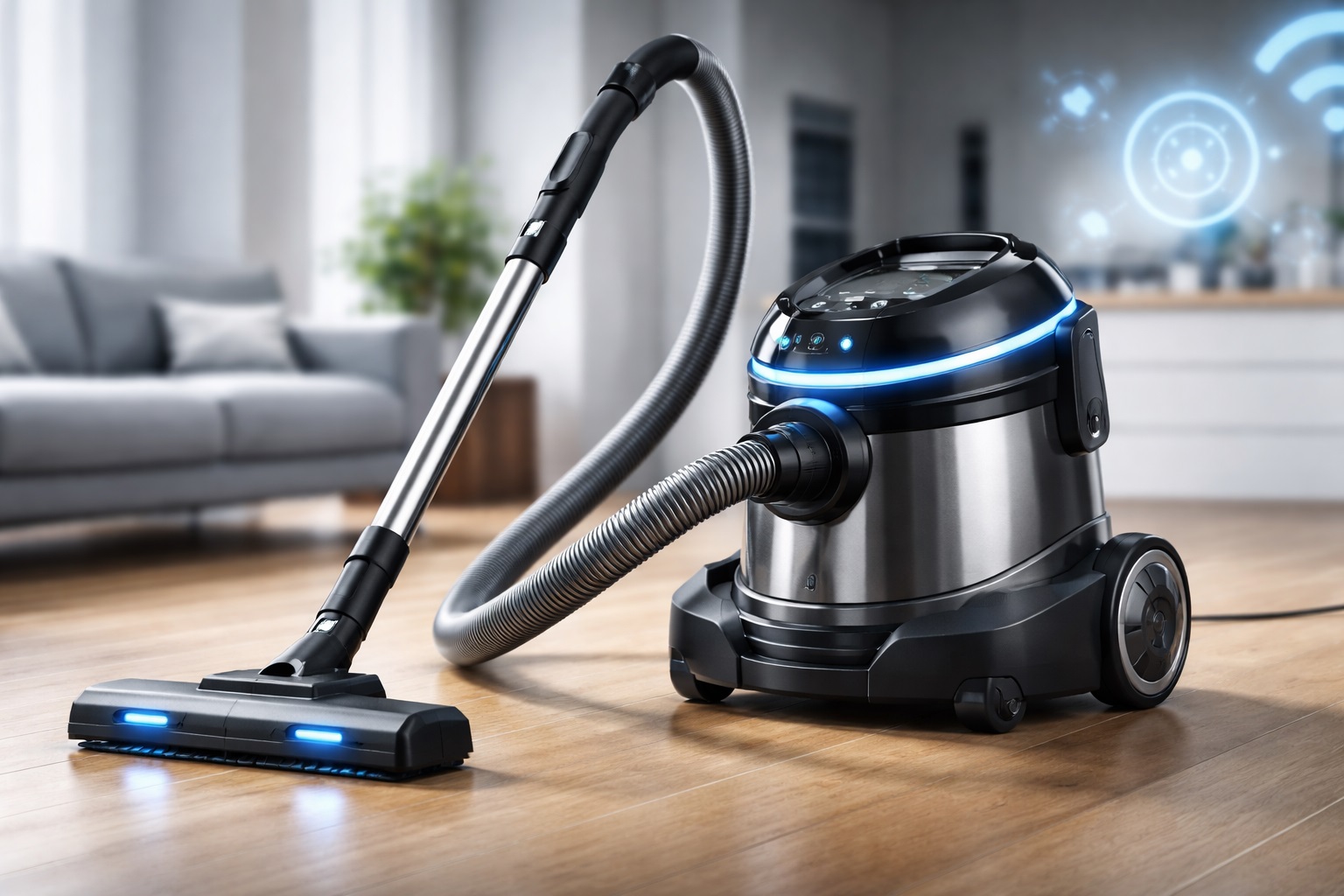
⚡ The Shift Toward Wireless and Cordless Technology in Vacuum Cleaners
Cordless vacuum cleaners, such as the 4-in-1 Cordless Smart Wet & Dry Vacuum Cleaner, have gained increasing popularity due to their flexibility and convenience. These models allow users to clean freely without being tethered to a power outlet, making them ideal for both household vacuum cleaners and commercial use. With the advent of lithium-ion batteries, vacuum cleaners now offer longer battery life while maintaining strong suction power, even in compact designs.
Market Data Support:
According to a report by Grand View Research, the global vacuum cleaner market is expected to reach $24 billion by 2025, with cordless vacuum cleaner demand representing an increasingly significant portion. The report highlights that the cordless vacuum cleaner market has been growing rapidly in recent years, especially in European and North American markets.
🤖 Incorporating Smart Features to Enhance Cleaning Efficiency
As part of the broader trend toward automation, canister vacuum cleaners are becoming smarter by integrating features such as app control, voice control, and AI-powered cleaning modes. The rise of the Internet of Things (IoT) allows vacuum cleaners to seamlessly integrate with smart home systems like Google Home and Amazon Alexa.
Market Data Support:
According to data from Statista, the global smart home device market is expected to reach $90 billion by 2023, with smart vacuum cleaners accounting for a significant portion. By 2025, demand for smart vacuum cleaners will continue to rise, becoming an important consideration for consumers when choosing household cleaning devices.
🏢 The Role of Automation in Commercial Cleaning
In commercial environments, efficiency and high performance are critical. Canister vacuum cleaners are evolving with more robust automation features, specifically designed for businesses, hotels, and large office spaces. For example, autonomous vacuum cleaners are increasingly being used to reduce labor costs and improve cleaning consistency.
Market Data Support:
According to a MarketsandMarkets report, the global commercial cleaning equipment market is expected to reach $7.2 billion by 2026. The growth of automated cleaning equipment is driven primarily by the demand for reduced labor costs and increased efficiency, particularly in commercial sectors where automation in vacuum cleaning is on the rise.
🌙 Quiet Technology for Nighttime Use
One major challenge with traditional vacuum cleaners is noise, which can be disruptive, especially in home environments or in commercial spaces like hotels and offices. The demand for quiet vacuum cleaners that can operate during nighttime hours or in noise-sensitive areas is driving the development of more advanced noise-reduction technologies.
Market Data Support:
A Global Market Insights report indicates that the demand for quiet vacuum cleaners has seen significant growth in recent years, particularly in noise-sensitive environments such as hotels and healthcare facilities. By 2025, the quiet vacuum cleaner market is expected to grow by nearly 15%, becoming the preferred choice for many commercial users.
🦠 The Importance of HEPA Filtration in Modern Vacuum Cleaners
In recent years, there has been a growing emphasis on health-conscious cleaning, especially in homes with allergy or asthma sufferers. HEPA filter vacuum cleaners are in high demand as these filters can capture up to 99.97% of particles, including dust mites, pollen, and pet dander.
Market Data Support:
Technavio's market research indicates that the market for HEPA filter vacuum cleaners will grow by approximately 10% by 2024, driven largely by the increasing consumer awareness of air quality, particularly among individuals sensitive to allergens.
Conclusion: The Future of Canister Vacuum Cleaners
The future of canister vacuum cleaners is undoubtedly tied to advancements in automation and smart technology. With innovations in cordless designs, app-based control, autonomous cleaning, and quiet operation, these machines are becoming more efficient, user-friendly, and capable of handling a wider variety of cleaning tasks.
As automation and smart technologies continue to evolve, vacuum cleaner manufacturers must stay at the forefront of these innovations, offering products that not only meet the growing demands for convenience and performance but also address the increasing consumer interest in sustainability and health-conscious cleaning solutions.
Hashtags:
Lanxstar, SmartVacuumCleaners, CordlessVacuum, HouseholdVacuum, BarrelVacuum, HEPAFilterVacuum, 4in1CordlessVacuum, WetAndDryVacuumCleaner, QuietVacuumForNightUse, AutomationInVacuumCleaners, AIVacuum, SmartHomeVacuum, CommercialVacuumCleaners, AutonomousCleaning, VacuumTechnologyTrends, SustainableCleaning, HealthConsciousCleaning, CleanAirTechnology, BatteryPoweredVacuum, VacuumInnovation, HomeCleaningSolutions, SmartVacuumTechnology, SuctionPower, PetFriendlyVacuum, SmartCleaning, VoiceControlledVacuum, RobotVacuum, DustFreeLiving, CommercialCleaning, NoiseReductionVacuum, AdvancedVacuumFeatures, TechnologyInCleaning, VacuumCleanerTrends, EcoFriendlyVacuum, HEPAFilter, VacuumEngineering, SmartVacuumDesign, VacuumCleanerAutomation, EfficientCleaning, IntelligentVacuum, CleaningSolutions, HealthSafeCleaning, NightTimeCleaning, CordlessCleaning, InnovativeVacuum, VacuumPerformance, SustainableTech, IndoorAirQuality, AdvancedFiltration, CleaningInnovation, FutureOfCleaning, VacuumCleanerIndustry.