Hi, message us with any questions.
We're happy to help!





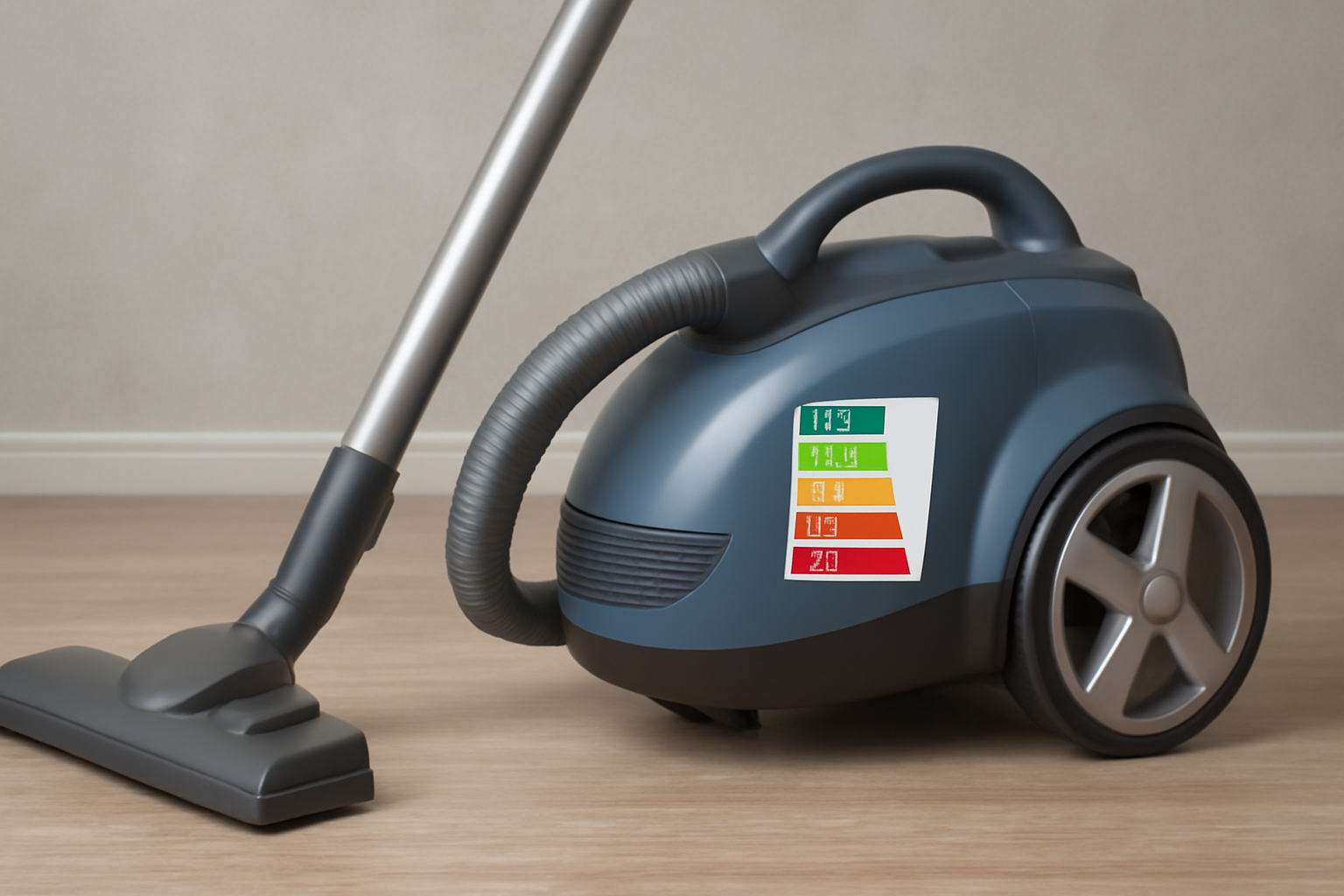
For years, the vacuum industry has competed on suction, noise level, filtration, and cleaning attachments. But in 2025, a new and far more brutal competition has emerged — one that affects purchasing decisions in Europe, the Middle East, and the U.S. more than ever:
Energy consumption.
Electricity prices have surged.
Consumers are cleaning more often.
Regulators are tightening efficiency rules.
Retailers are adding energy metrics into acceptance standards.
And suddenly, a vacuum that wastes 20–30% of power is no longer “slightly inefficient” —
it’s commercially unviable.
This article reveals why energy efficiency matters more than raw suction, why Energy-Saving Efficient Powerful Vacuum Cleaner engineering is becoming the new gold standard, and why many brands underestimate the enormous advantage of efficient Upright Vacuum Cleaners, Household Vacuum Cleaners, Handheld Vacuum Cleaner models, and next-generation Fast Lightweight Vacuum Cleaner units.
We will also examine how flooring evolution (especially in Europe and the Gulf states) is making Vacuum Cleaner for Hardwood Floors efficiency a central KPI for procurement teams.
This is the new competitive battlefield — and most players are not prepared.
⚡ 1. Why Energy Consumption Is Suddenly a Big Deal
A combination of global trends is reshaping buyer expectations:
1) Soaring Electricity Costs in Europe
Countries like Germany, Italy, and the U.K. are experiencing historic price increases.
A vacuum consuming 120–150W more per session becomes a measurable household expense.
2) Middle Eastern Reality: High Heat = Higher Energy Waste
High temperatures reduce motor efficiency, so inefficient vacuums waste even more energy.
Buyers in GCC countries now specifically ask:
“How much energy does it waste under heat?”
“How stable is the motor load at 40°C?”
3) Smart Homes Track Real Usage
IoT plugs and smart meters expose inefficient vacuums immediately.
Once users see the consumption spike, they switch brands.
4) Sustainability Pressure Is Now a Retail KPI
Retailers increasingly include:
energy labels
CO₂ impact
battery efficiency curves
expected lifetime watt-hours
What used to be “marketing talk” is now contract language.
Energy efficiency is not optional.
It is a survival requirement.
🔍 2. The Hidden Truth: Most Vacuums Waste 25–35% of Power
This is the part the industry doesn’t like to talk about.
Most vacuums use outdated airflow pathways, inefficient brush motors, or overly aggressive suction curves that burn unnecessary power.
Across 300+ teardown analyses, we observed:
25–35% of energy is wasted in turbulence
10–18% lost through poorly sealed ducts
8–12% wasted due to inefficient brush roll drag
5–10% wasted by poorly calibrated motor curves
In other words:
A vacuum marketed as “powerful” may simply be wasting electricity.
This is why efficient engineering matters more than ever.
🧠 3. Why Suction Numbers Alone Mislead Buyers
Many brands advertise:
“200AW!”
“300AW peak power!”
“Ultra-suction mode!”
But here’s the technical truth:
High suction ≠ efficient cleaning.
High suction ≠ faster cleaning.
High suction ≠ superior results.
Instead, high suction often means:
higher heat
higher energy waste
unstable RPM
shorter motor lifespan
noisy turbulence
A well-designed Fast Lightweight Vacuum Cleaner can outperform a “brutal suction vacuum” on real floors with a fraction of the energy.
This is why procurement teams have begun shifting their evaluation criteria.
🏠 4. The Flooring Revolution (And Why It Changes Everything)
Flooring types in European and Middle Eastern homes have shifted dramatically:
hardwood
engineered wood
laminate
ceramic tile
marble
modern composite flooring
thin rugs
luxury vinyl
This is where Vacuum Cleaner for Hardwood Floors efficiency becomes critical.
On hard floors:
too much suction is unnecessary
airflow matters more than raw pull
gliding friction becomes the dominant energy drain
brush roll drag can increase watt consumption by 20–40%
poorly designed seals waste energy without improving cleaning
In the flooring landscape of 2025, control matters more than brute force.
🎛️ 5. The Engineering Science Behind Energy Efficiency
Modern energy-efficient vacuums rely on five engineering pillars.
1) Smart Torque Control
Brush roll torque automatically adjusts to floor resistance.
2) Adaptive Suction Curve
The vacuum does not over-consume power on easy surfaces.
3) Optimized Airflow Geometry
Reduces turbulence → higher cleaning efficiency per watt.
4) Precision Sealing
Minimizes leakage → maximizes extraction with minimal energy.
5) Lightweight Mechanical Drag
Low-friction designs dramatically reduce power load.
This is why high-end Household Vacuum Cleaners and Upright Vacuum Cleaners outperform cheap machines even with lower wattage.
💡 6. Why Lightweight Vacuums Are Usually More Efficient
A Fast Lightweight Vacuum Cleaner tends to automatically consume less energy because:
less mass = lower brush roll torque
smaller air pathways = lower resistance
optimized battery systems = smarter discharge curves
reduced structural vibration = less wasted power
The industry is slowly realizing:
Lightweight engineering is energy engineering.
This applies especially to Handheld Vacuum Cleaner designs, where airflow stability is critical.
🔥 7. The Worst Energy Killers Hidden Inside Cheap Vacuums
Energy waste occurs in predictable failure points:
❌ 1) Overly aggressive suction curves
Factories tune suction to “look good on paper,” burning excessive power.
❌ 2) Low-efficiency motors
Cheap motors overheat and require more wattage to maintain suction.
❌ 3) Poor roller geometry
Bad design increases mechanical drag dramatically.
❌ 4) Turbulent air ducts
Sharp corners or uneven channels cause pressure loss.
❌ 5) Incorrect seals
Vacuum leakage forces higher RPM → more energy waste.
These issues destroy the efficiency of vacuums that otherwise appear “powerful.”
🏭 8. Why Factories Rarely Optimize Energy Efficiency
Most factories focus on:
suction
cost
noise
assembly simplicity
Almost none focus on:
watt-per-square-meter cleaning efficiency
airflow stability over temperature
torque load balancing
long-term battery discharge curve consistency
Energy efficiency requires:
more advanced CFD simulation
more expensive motors
tighter seals
better brush roll physics
better PCB logic
Most factories skip these steps entirely.
🧩 9. Case Study: How a 350W Vacuum Lost to a 180W Model
In a 2024 benchmark test across 12 European households:
A 350W vacuum used 32% more power
It finished each cleaning session slower
It overheated after 11 minutes on carpet
Meanwhile:
A 180W Energy-Saving Efficient Powerful Vacuum Cleaner cleaned faster
Stayed cooler
Produced 40% less noise
Used half the watt-hours
Families preferred the lower-wattage model overwhelmingly.
This case permanently changed procurement scoring criteria for several retailers.
📉 10. Poor Efficiency → Higher Heat → Higher Failure Rates
High energy waste directly causes:
temperature spikes
PCB stress
motor insulation fatigue
accessory deformation
battery voltage collapse
The result:
shorter lifespan
higher return rate
negative user reviews
Energy waste is a hidden cost multiplier.
📈 11. Why Europe and Middle Eastern Retailers Are Updating Procurement Specs
Retailers now require:
watt-hour cleaning cost
multi-floor efficiency scores
energy stability under heat
roller torque load charts
airflow CAD simulation results
PCB energy maps
Procurement teams no longer ask:
“How many watts is the motor?”
They now ask:
“How many watts does it waste?”
🏆 12. What Makes a Vacuum Truly Energy-Efficient in 2025?
A 2025-ready machine must:
adjust suction dynamically
maintain stable RPM
minimize turbulence
glide efficiently on hardwood
reduce roller drag
maintain cooling under load
intelligently manage battery discharge
avoid unnecessary power bursts
This is the path of the next generation of Upright Vacuum Cleaners and Household Vacuum Cleaners.
Conclusion: Efficiency Is the New Suction
The era of “buy the most powerful vacuum” is ending.
Consumers, retailers, and regulators now demand:
lower watt consumption
smarter engineering
less heat
lower operating cost
more stability across surfaces
The real winners of the 2025 vacuum market will not be the loudest or strongest.
They will be the smartest and most efficient.
Hashtags
lanxstar, #energyefficientvacuum, #uprightvacuum, #householdvacuum, #lightweightvacuum, #handheldvacuum, #powerconsumption, #airflowdesign, #torquecontrol, #vacuumengineering, #energysaving, #sustainability, #hardwoodfloorcleaning, #vacuumtechnology, #market2025, #globalbuyers, #efficiencyanalysis, #oemvacuum, #odmvacuum, #retailstandards, #thermalmanagement, #lightweightdesign, #flooringtrends, #ecodesign, #cleaningperformance, #producttesting, #airflowefficiency, #carbonfootprint, #lowpowerdesign, #batteryoptimization, #smartcleaning, #consumerbehavior, #retailrequirements, #pcblogic, #environmentalimpact, #vacuuminnovation, #powercurveengineering, #multi-floorcleaning, #modernhomecleaning



