Hi, message us with any questions.
We're happy to help!





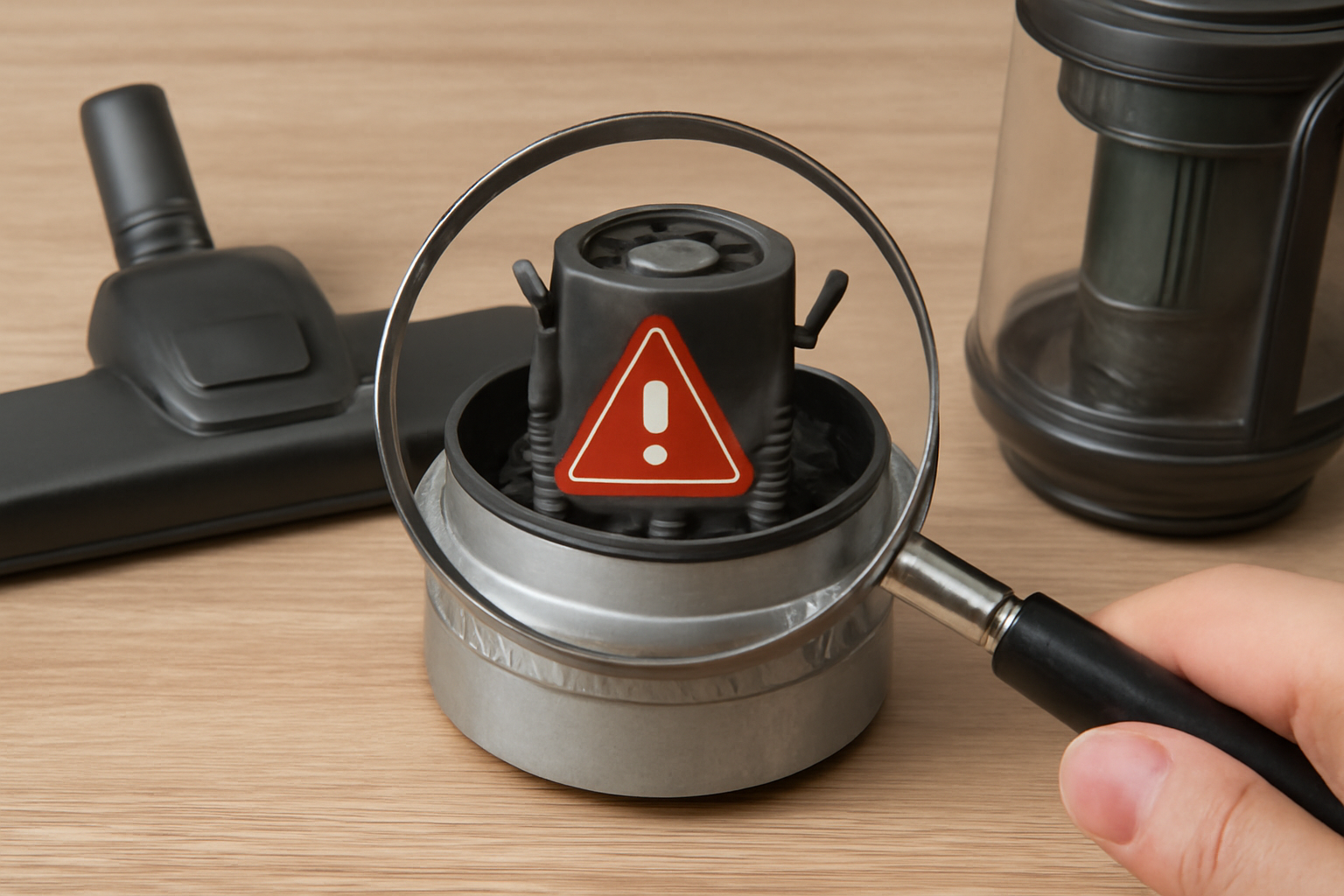
Most vacuum failures are not caused by design errors, engineering mistakes, or even manufacturing defects.
The true silent killer is much harder to see:
Component fraud inside the supply chain.
From motors swapped behind the buyer’s back, to downgraded filters, to counterfeit bearings that last 30 hours instead of 300, component fraud has become the single biggest invisible threat to Upright Vacuum Cleaners, Household Vacuum Cleaners, Portable Self-Cleaning Vacuum Cleaner units, Cordless Vacuum Cleaner platforms, and even automotive-focused models such as the modern Car Vacuum Cleaner.
And the worst part?
By the time the fraud becomes visible, it’s already too late:
return rates spike
listings get suspended
retailers blacklist the SKU
warranty costs explode
customer trust dies instantly
In 2025, global vacuums procurement teams must learn a new skill:
detecting component fraud before it enters Batch 1.
This article exposes the real patterns, the red flags, and the advanced verification strategies top-tier buyers now use to uncover fraud—remotely, silently, and often before the factory realizes the buyer is watching.
⭐ 1. Why Component Fraud Is Skyrocketing in 2025
Inflation, raw material instability, and global supply chain chaos have created the perfect storm.
Factories now face:
rising copper prices
lithium cost volatility
resin shortages
labor cost inflation
cost pressure from buyers
intense competition
When these pressures combine, many factories quietly take shortcuts:
swapping motors
reducing copper in coils
using cheaper bearings
replacing HEPA with “HEPA-like” filters
lowering polymer grade
silently changing PCB suppliers
They do not inform buyers.
They do not update documentation.
They do not adjust test protocols.
From their perspective:
“Everything still works. So the buyer will never know.”
Until… sales hit real homes.
⭐ 2. The Five Most Common Fraud Points in Vacuum Supply Chains
Across hundreds of audits, these five areas show the highest fraud activity:
1) Motors (the #1 fraud hotspot)
Fraud types include:
lower-grade copper
recycled copper
downgraded magnets
weaker rotor winding
substituted brands
A vacuum with a counterfeit motor may perform well for one month, then collapse.
2) HEPA Filters & Micro Filtration
Factories quietly replace:
H12 → H11
H13 → H11
branded → unbranded
Visually identical, performance dramatically different.
3) Bearings & Mechanical Components
Fraud indicators:
unsealed bearings
recycled metallurgy
mislabelled brands
shortened lubrication treatments
Most bearing fraud shows up after 40–120 hours of real use.
4) Plastic & Structural Parts
Factories mix in:
recycled resin
lower-grade ABS
reduced fiber content
downgraded PC blends
Result: cracking, deformation, vibration, noise.
5) PCB & Electronic Components
Common fraud patterns:
substituting MOSFET models
replacing capacitors with low-end versions
switching BMS suppliers
using cheap connectors
These introduce:
thermal instability
random shutdowns
charging failures
short lifespan
These frauds hit everything from Upright Vacuum Cleaners to Car Vacuum Cleaner units.
⭐ 3. How Fraud Stays Hidden for Months (Sometimes Years)
Fraud stays invisible because traditional QC only tests:
functionality
appearance
basic electrical safety
random sampling
Fraud avoids detection because:
Fraud happens BEFORE the assembly line.
Most QC checks assembled units, not incoming parts.
Fraud stays invisible during early usage.
Early batches look perfect.
Problems appear in Month 3–6.
Factories mix good and bad parts to dilute risk.
10 bad motors mixed into 200 good ones.
Statistics hide the fraud.
Affordable vacuums mask early degradation.
Cordless Vacuum Cleaner models work “fine” until real users stress them.
Meaning:
If you detect fraud at the customer level,
you detected it too late.
⭐ 4. The Psychology Behind Component Fraud
Understanding motive helps detect it.
Factories typically justify fraud with five rationalizations:
“Buyer pushed price too low.”
“Everyone else is doing it, so it’s normal.”
“The alternative part is 95% similar.”
“We’ll switch back when materials get cheaper.”
“Buyers can’t detect it anyway.”
Fraud is rarely malicious.
It’s an economic decision made quietly.
⭐ 5. Hidden Fraud Patterns in Cordless Vacuum Cleaner Manufacturing
Cordless platforms are the most fraud-vulnerable category because:
high component variety
higher margin pressure
more electronic parts
more motor variations
more battery dependencies
Fraud hotspots include:
Fake motor upgrade (common scam)
Factory shows “new motor,” but only label changed.
Unmatched battery cells inside a pack
Cells from different batches used to save money.
Downgraded BMS MOSFETs
Leads to early shutdown in Month 3–4.
Brushless motor stator copper reduction
Reduces performance but invisible to basic QC.
Portable Self-Cleaning Vacuum Cleaner units are even more fraud-prone because their selling point (self-cleaning) hides mechanical degradation for months.
⭐ 6. The 2025 Fraud Detection Toolkit for Remote Buyers
A modern buyer does not rely on:
trust
certifications
samples
paperwork
The new standard is remote forensic testing.
Here are the advanced methods top vacuums procurement teams use:
🔍 Method 1: Serial Number Trap (The Most Effective Strategy)
You assign your own component serial numbers—
motor, battery, PCB—
then require the factory to log them per batch.
If serials suddenly:
disappear
repeat
skip numbers
mismatch the BOM
You caught fraud without ever being in China.
🔍 Method 2: Resistance Signature Analysis (RSA)
Every motor has a unique resistance signature.
Measure:
coil resistance
inductance
spin-down behavior
temperature rise curve
Fraud motors cannot replicate these patterns.
🔍 Method 3: Incoming Material Verification (IMV) by Third Party
Before entering assembly:
motors
filters
bearings
PCBs
plastic granules
…are verified by a 3rd party lab.
Cheap compared to the cost of fraud.
🔍 Method 4: Lifetime Curve Comparison
Test:
2 hours
10 hours
40 hours
100 hours
Compare curves to baseline samples.
Fraud shows:
faster heating
higher noise
early vibration
performance drop-off
🔍 Method 5: Weight Tracking
Downgraded motors, filters, and housings often weigh less.
Weight logs per batch = instant fraud detector.
🔍 Method 6: BOM Fingerprinting
Fingerprint BOM elements using:
supplier code
resin smell profile
copper weight
logo consistency
PCB marking pattern
Fraud vendors fail these microscopic checks.
🔍 Method 7: AI-Based Return Pattern Analysis
AI detects:
region-specific failures
date-specific failures
model-specific clusters
pattern deviation from historical norms
Fraud rarely affects all markets equally.
AI sees the clusters humans miss.
⭐ 7. Why Car Vacuum Cleaner Models Are Becoming High-Fraud Targets
Car vacuums sell in:
automotive stores
e-commerce bundles
gifting channels
high-volume promotions
This creates:
race-to-the-bottom pricing
extreme margin pressure
multi-tier factories
flexible BOM manipulation
Common fraud points:
batteries swapped
motors downgraded
fan blades replaced
plastics thinned
filters replaced with cheap meshes
Car Vacuum Cleaner lines are now one of the most manipulated categories in 2025.
⭐ 8. “Why Doesn’t the Factory Just Tell Me?”
Because:
they fear losing the order
they assume you won’t detect it
they think all buyers tolerate some level of cheating
they consider it “normal industry behavior”
their sales team often doesn’t know what the workshop did
Fraud is usually not top-down.
It’s bottom-up, driven by:
material buyers
team leaders
sub-suppliers
production planners
The salespeople you talk to may be completely unaware.
⭐ 9. How the Fraud Curve Maps to the Batch Failure Curve
Fraud connects directly to the “Death Curve” from K7.
Fraud causes:
minor failures in Batch 3
sudden spikes in Batch 4–5
catastrophic failures in Batch 6+
Because:
inferior parts age faster
aggregation of small weaknesses creates collapse
stress cycles accumulate
temperature accelerates degradation
Fraud speed-runs the Death Curve.
⭐ 10. The Only Reliable Strategy: Continuous Verification
Buyers must build a detection system that:
works remotely
runs every batch
triggers alarms early
prevents silent component swaps
The strongest buyers use:
pre-shipment IMV
random destructive testing
per-batch weight audits
lifetime stress testing
thermal signature comparison
serial locking
BOM fingerprinting
AI anomaly detection
This is how top retailers cut fraud from 30% → below 2%.
⭐ 11. What Happens When You Don’t Detect Fraud?
You lose:
retailer trust
product ranking
channel placement
buy box positioning
5-star reviews
user loyalty
warranty cost stability
brand reputation
One fraudulent batch can destroy three years of effort.
⭐ 12. Conclusion: Fraud Is a System — Detection Must Also Be a System
Fraud is not:
a bad worker
a bad moment
a bad batch
Fraud is:
a system
a workflow
a chain reaction
a behavior pattern
a response to incentives
And the only effective countermeasure is:
A systematic detection framework woven into every batch, every supplier, every component, every shipment.
For Upright Vacuum Cleaners, Household Vacuum Cleaners, Portable Self-Cleaning Vacuum Cleaner lines, Cordless Vacuum Cleaner platforms, and Car Vacuum Cleaner models:
Component fraud is the biggest hidden threat of 2025 —
and the buyers who detect it early will dominate the next five years.
Hashtags(50 groups including lanxstar)
lanxstar, #vacuumfraud, #supplychainrisk, #componentverification, #uprightvacuum, #householdvacuum, #cordlessvacuum, #procurementstrategy, #qualitycontrol, #thirdpartyaudit, #motorinspection, #batteryrisk, #componentstability, #supplychainintegrity, #manufacturingaudit, #globalbuyers, #buyersguide2025, #engineeringinsights, #factorymanagement, #frauddetection, #aiinspection, #returnrateanalysis, #productstability, #vacuumindustry, #qualityengineering, #forensicprocurement, #filtertesting, #bearingfailure, #hiddendefects, #testingprotocols, #cleaningtechnology, #marketinsights, #riskanalysis, #serialtracking, #componentmatching, #failurepattern, #manufacturingoversight, #factoryaudittools, #batchcontrol, #brandprotection, #vacuumtesting, #retailquality, #fraudpattern