Hi, message us with any questions.
We're happy to help!





“Silence is luxury — especially when it cleans your home.”
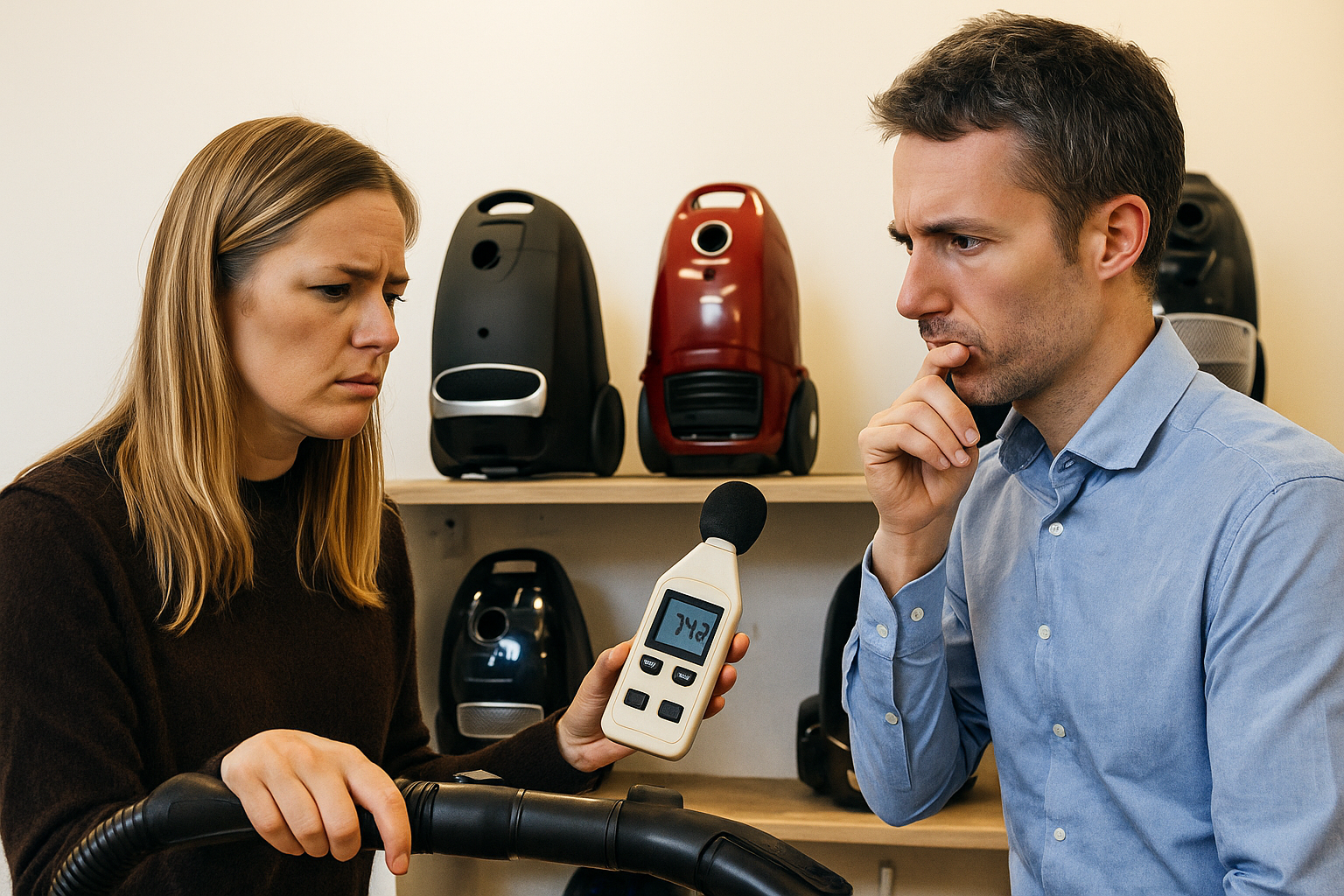
A quiet vacuum cleaner is more than just a comfort; it reflects engineering quality, motor efficiency, and acoustic innovation. Yet many “silent” vacuums advertised online or at trade fairs are not truly quiet. They may list an impressive low decibel rating, but once you switch them on, the noise tells another story.
This article explains how noise levels are really measured, what makes a vacuum genuinely quiet, and how buyers can identify misleading claims before purchasing.
🔊 1. Understanding Noise Ratings
Vacuum manufacturers often use decibels (dB) to describe sound output. While decibels measure loudness, they don’t tell the full story.
Decibel range: Most vacuums operate between 65–85 dB. A 10 dB increase roughly doubles perceived loudness.
Measurement distance: Some brands measure at 3 meters instead of 1 meter — making numbers look lower.
Frequency sensitivity: Human ears are more sensitive to high frequencies; a vacuum with a high-pitched tone feels louder even at the same dB level.
Pro tip: Always ask at what distance and in which mode the sound level was measured.
⚙️ 2. Why Cheap “Quiet” Models Often Fail the Test
Budget vacuums reduce noise by limiting motor speed, not by improving sound insulation. The result? Lower suction, poor cleaning, and a shorter lifespan.
Common shortcuts include:
Thin plastic housings that amplify vibration.
Absence of internal noise-absorbing foam.
Unbalanced fan blades that create whistling tones.
Poor motor bearings that hum as they wear down.
A truly quiet design isolates and stabilizes every moving component — not just the motor.
🧠 3. The Science of Quiet Engineering
Silence is achieved through mechanical precision and acoustic damping, not marketing labels. Professional-grade vacuums integrate:
Brushless motors — reduce friction and vibration.
Dual-layer acoustic foam — absorbs mid-frequency noise.
Sealed air channels — minimize airflow turbulence.
Vibration-isolating mounts — prevent the motor’s motion from resonating through the shell.
Each of these adds cost but dramatically improves the user experience.
🎯 4. The Decibel Trap: Why Numbers Can Mislead
A vacuum cleaner advertised at “60 dB” may appear silent, but decibels alone don’t reveal:
The pitch (a high whine feels harsher than a low hum).
The motor tone profile (uneven airflow can cause oscillating noise).
The room acoustics (hard surfaces reflect sound, amplifying noise).
Therefore, professional testers use sound spectrograms to analyze tone distribution — something most low-cost manufacturers never perform.
💨 5. Materials That Reduce Noise
The choice of material affects both sound and durability:
| Component | Poor Material | Premium Option | Effect |
|---|---|---|---|
| Motor Housing | Thin ABS | Reinforced ABS + insulation | Reduces resonance |
| Fan | Stamped metal | Balanced aluminum | Lowers vibration |
| Hose | Hard PVC | Flexible EVA | Softens airflow sound |
| Dust Bin | Loose fit | Sealed latch design | Cuts rattle noise |
Quiet vacuums are engineered holistically; every part contributes to lowering noise.
🌬️ 6. Airflow Design — The Hidden Factor
Noise in a vacuum comes from air turbulence, not just the motor. Smooth airflow paths reduce both noise and energy loss.
Advanced designs include:
Tapered air ducts to maintain laminar flow.
Rubber gaskets that seal gaps and stop hissing.
Curved exhaust vents that redirect air quietly.
If you hear a sharp hiss, it’s often air escaping from poorly sealed joints.
🧩 7. Testing Before You Buy
Whether purchasing for household or commercial use, test vacuums in real conditions.
Compare on the same floor type and same power mode.
Use a sound meter app to measure noise at 1 m distance.
Listen for motor tone stability — steady hum means balanced parts.
Evaluate suction performance simultaneously; quiet should not mean weak.
If possible, request demo videos or on-site trials before bulk orders.
⚡ 8. Balancing Silence and Power
Completely silent vacuums don’t exist. The goal is low-frequency, consistent sound, not absolute silence.
Premium cordless and wet-dry models balance both by:
Using multi-stage turbines instead of single impellers.
Incorporating airflow-optimized brushes that cut friction noise.
Controlling motor RPM electronically to match surface type.
When power and silence work together, you get efficient cleaning without fatigue.
🏠 9. Noise Levels by Vacuum Type
| Type | Typical Noise Level | Quiet Design Feasibility |
|---|---|---|
| Corded upright | 75–85 dB | Moderate |
| Cordless stick | 65–75 dB | High |
| Robot vacuum | 55–65 dB | Very high |
| Wet-dry industrial | 80–90 dB | Moderate with damping |
| Handheld mini | 60–70 dB | High |
For apartments, cordless or robotic units are ideal. For workshops, focus on sealed canisters and thicker casings.
🔋 10. Long-Term Reliability
Quietness that lasts requires components that stay balanced. Over time, vibration loosens screws and bearings.
To preserve silence:
Clean filters regularly to prevent airflow blockage.
Replace worn brushes and seals.
Store vacuums away from extreme heat.
Inspect hoses for cracks that cause whistling leaks.
A well-maintained vacuum remains quiet for years, while neglected ones grow louder month by month.
🌍 11. What Procurement Teams Should Check
For importers and distributors in the Middle East, the main checklist when sourcing quiet vacuums should include:
Verified noise test reports (ISO 3744 or EN 60704).
Consistent motor performance after 300 hours of use.
Availability of spare acoustic parts like seals and foams.
Local voltage compatibility (220–240 V).
Buyers who request such documentation filter out 80 % of unreliable suppliers before shipment.
✨ 12. Key Takeaways
Decibels alone can’t define “quiet.” Tone and vibration matter more.
Cheap models achieve silence by lowering power — not by better design.
True quiet requires structural insulation, balanced motors, and sealed airflow.
Always test noise and suction together.
A slightly higher cost upfront ensures durability and real comfort.
Silence isn’t the absence of sound — it’s the presence of intelligent design.
📊 SEO TAG
quiet vacuum cleaner, low noise vacuum, silent vacuum, cordless stick vacuum, cordless handheld vacuum, energy efficient vacuum, powerful suction vacuum, wet and dry vacuum cleaner, HEPA filter vacuum, high efficiency vacuum, portable quiet vacuum, noise reduction vacuum, durable home vacuum, strong suction vacuum, apartment vacuum cleaner, compact cordless vacuum, rechargeable vacuum cleaner, dustproof vacuum, lightweight vacuum, multi-functional vacuum cleaner, pet hair vacuum, vacuum noise level, decibel test vacuum, vacuum cleaner for apartments, commercial vacuum cleaner, industrial wet dry vacuum, quiet operation vacuum, sealed motor vacuum, efficient air flow vacuum, vacuum cleaner testing, suction power vacuum, HEPA filtration vacuum, smart cordless vacuum, durable floor cleaner, noise control vacuum, anti-vibration vacuum, vacuum with HEPA filter, energy saving vacuum, easy maintenance vacuum, strong motor vacuum, low decibel vacuum, home appliance vacuum, procurement guide vacuum, silent home cleaner, quiet cordless vacuum, eco vacuum cleaner, noise optimized vacuum, vacuum cleaner selection guide, quiet industrial vacuum, acoustic design vacuum, smooth airflow vacuum.



