Hi, message us with any questions.
We're happy to help!





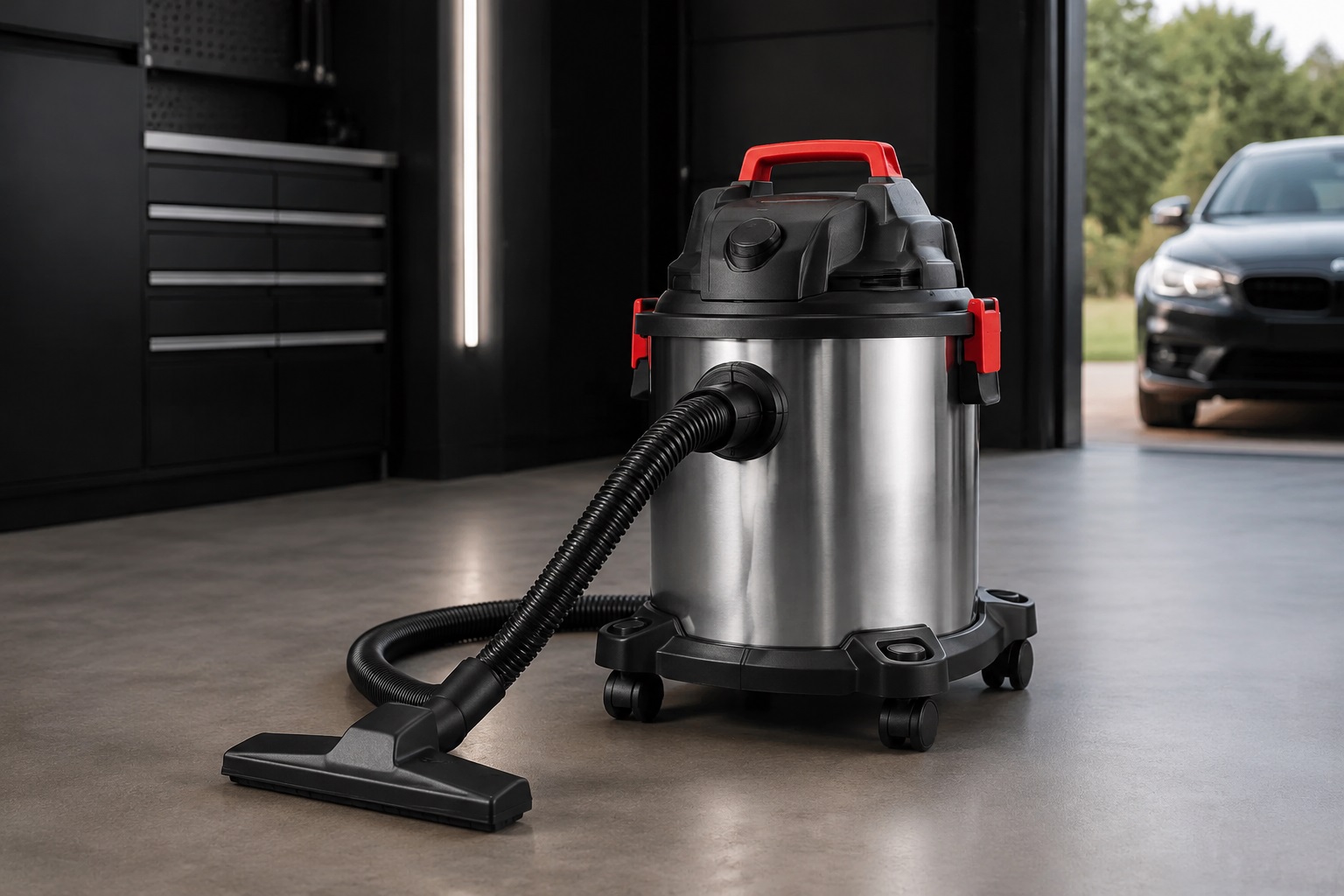
Why Smart European Operators Are Upgrading to High Suction Wet Dry Vacuum Systems
The European car wash industry is changing fast.
Customers today expect more than a quick exterior wash. Interior cleanliness, user experience, and service efficiency now directly influence online reviews, repeat visits, and long-term business profitability.
This shift has transformed the role of the modern car wash vacuum cleaner.
For many successful operators, vacuum systems are no longer secondary equipment. They have become part of the customer experience itself.
And in highly competitive European markets, customer experience is becoming one of the strongest business advantages.
🔥 The Real Problem Most Car Wash Owners Discover Too Late
Many first-time buyers focus only on:
Purchase price
Motor wattage
Machine appearance
Catalog specifications
But experienced operators evaluate something far more important:
Operational downtime.
Cheap vacuum systems rarely save money long-term.
Instead, they often create hidden costs through:
Customer complaints
Longer cleaning times
Reduced station efficiency
Maintenance interruptions
Negative online reviews
A self-service operator in France shared that frequent hose leakage and unstable airflow in low-cost imported vacuum systems caused repeated customer dissatisfaction during weekend peak hours.
The machines looked competitive on paper.
But operationally, they became a liability.
This is why professional European buyers increasingly prioritize:
Stable suction performance
Industrial motor durability
Filtration efficiency
Energy consumption
Spare parts access
Supplier reliability
Because the real cost of a vacuum system is not the invoice price.
It is the long-term operational impact.
⚙️ Why High Suction Performance Changes Business Efficiency
Many suppliers advertise “high power,” but experienced buyers understand that:
Power does not equal airflow efficiency.
A professional high suction vacuum maintains consistent airflow during continuous commercial operation.
This matters especially in Europe, where operators regularly deal with:
Winter moisture
Road salt
Sand
Pet hair
Mud
Fine dust particles
Weak airflow systems increase cleaning time significantly.
And longer cleaning time creates customer queues.
A self-service car wash operator in Germany reported that upgrading from a standard single-motor vacuum system to a dual-motor industrial vacuum reduced average interior cleaning time from approximately 11 minutes to under 7 minutes during high-traffic weekend periods.
That improvement increased:
Vehicle turnover speed
Customer throughput
User satisfaction
Overall station efficiency
This is why many experienced operators now calculate:
Cleaning speed per vehicle — not just machine cost.
💧 Why Wet Dry Vacuum Cleaners Are Dominating the European Market
Traditional dry-only systems are becoming less practical in many European regions.
Weather conditions across:
Germany
Scandinavia
The UK
Northern Europe
create year-round moisture challenges inside vehicles.
As a result, many operators now prefer commercial wet dry vacuum cleaner systems.
🚿 Real Operational Benefits of Wet Dry Systems
Wet-dry systems can handle:
Mud extraction
Liquid spills
Snow residue
Damp carpets
Deep interior detailing
This flexibility becomes especially valuable during winter seasons.
Several self-service stations in Northern Europe reported increased customer usage frequency after upgrading to wet-dry vacuum systems capable of handling slush and moisture more effectively.
Operators noticed that customers spent less time dealing with wet interior debris and completed cleaning faster.
That directly improved station flow efficiency during busy periods.
📉 The Hidden ROI Problem Cheap Vacuum Systems Create
One of the biggest mistakes new buyers make is focusing only on initial pricing.
Professional operators think differently.
They calculate:
Total Operating Cost.
A detailing center in the Netherlands purchased several low-cost commercial vacuum units to reduce startup expenses.
Within the first year, they encountered:
Frequent motor overheating
Reduced airflow consistency
Hose cracking
Delayed spare parts delivery
The downtime eventually forced temporary service interruptions during peak customer periods.
According to the operator, repair costs and lost business exceeded the original savings from purchasing cheaper equipment.
This situation is extremely common in the commercial cleaning industry.
🛠️ What Experienced European Buyers Actually Evaluate
Professional B2B buyers rarely make purchasing decisions based only on brochures.
They focus on operational reliability.
🌀 1. Continuous Airflow Stability
Strong suction during startup means very little if airflow weakens after extended operation.
Commercial stations require machines capable of operating continuously for:
8–12 hours daily
Weekend peak traffic
High-frequency customer turnover
Operators in busy urban locations often discover that weak suction systems create customer waiting lines during peak hours.
And queues directly reduce customer satisfaction.
🔇 2. Noise Compliance Is Becoming Critical
Across Europe, local noise regulations are becoming stricter.
One distributor in Germany noted that commercial buyers increasingly request quieter vacuum systems because urban operating environments now place greater emphasis on customer comfort and noise reduction.
Excessive vacuum noise creates several business problems:
Poor customer experience
Employee fatigue
Local compliance challenges
Modern industrial systems increasingly use:
Optimized airflow channels
Advanced motor insulation
Noise-reduction engineering
to improve operational comfort.
♻️ 3. Filtration Technology Directly Impacts Maintenance
Many buyers underestimate the importance of filtration systems.
Poor filtration design often leads to:
Motor overheating
Reduced suction
Frequent clogging
Higher maintenance costs
Premium commercial systems now commonly integrate:
HEPA filtration
Cyclonic separation
Multi-stage airflow filtering
Several detailing operators in Scandinavia reported significantly lower maintenance frequency after upgrading to advanced filtration systems with improved dust separation capability.
Better filtration protects both:
Airflow performance
Motor lifespan
🚀 Why European Buyers Are Becoming More Selective About Suppliers
The European B2B market has changed significantly in recent years.
Today, buyers expect far more than basic product supply.
Professional buyers increasingly evaluate whether a vacuum cleaner supplier can provide:
Stable delivery timelines
OEM customization support
Spare parts availability
Technical documentation
CE compliance assistance
Long-term cooperation reliability
One UK distributor mentioned that delayed spare parts delivery from overseas suppliers became one of the biggest operational frustrations after the pandemic-era logistics disruptions.
As a result, many buyers now prioritize:
Supply chain stability over low pricing.
🧪 The Engineering Difference Between Consumer and Commercial Vacuum Systems
One of the most common purchasing mistakes is treating household vacuum technology as equivalent to industrial systems.
Commercial car wash environments require completely different engineering standards.
Professional commercial systems typically include:
Industrial-grade motor structures
Heavy-duty cooling systems
Reinforced hoses
Continuous operation capability
Industrial airflow architecture
A small detailing business in Belgium reported that consumer-grade machines failed within several months when exposed to continuous daily commercial use.
Commercial environments create:
Longer runtime pressure
Higher debris volume
More airflow resistance
Greater thermal stress
This is why experienced buyers increasingly prefer working directly with professional vacuum cleaner manufacturers that understand industrial operating conditions.
📊 ROI Example: Why Industrial Vacuum Systems Often Cost Less Long-Term
Consider two commercial vacuum systems:
| Feature | Low-Cost Unit | Industrial System |
|---|---|---|
| Purchase Price | Lower | Higher |
| Motor Lifespan | 600–800 Hours | 3000+ Hours |
| Downtime Risk | Frequent | Minimal |
| Energy Efficiency | Lower | Higher |
| Airflow Stability | Inconsistent | Stable |
| Maintenance Frequency | High | Low |
Now calculate:
Downtime losses
Repair labor
Customer dissatisfaction
Energy costs
Replacement components
The cheaper machine often becomes more expensive within 12–18 months.
This is why experienced operators focus on:
Long-term operational profitability.
Not short-term purchasing savings.
🌍 The Future of Commercial Vacuum Systems in Europe
The next generation of commercial vacuum technology is moving toward:
Smart diagnostics
IoT monitoring
Lower energy consumption
Quieter airflow systems
Modular maintenance
Sustainable materials
Forward-thinking operators increasingly understand that:
Customer experience is becoming the new competitive battleground.
And surprisingly, vacuum system quality plays a major role in that experience.
💡 5 Costly Mistakes European Buyers Should Avoid
❌ Choosing Based Only on Price
Cheap systems often create expensive maintenance problems later.
❌ Ignoring Spare Parts Availability
Without local parts support, small repairs can create long operational delays.
❌ Underestimating Noise Regulations
Urban commercial environments increasingly enforce stricter sound standards.
❌ Buying Consumer-Level Equipment
Household-grade systems fail quickly in heavy commercial usage.
❌ Ignoring Energy Efficiency
Electricity costs across Europe continue rising every year.
Efficient systems create meaningful long-term savings.
✅ Conclusion
Choosing the best vacuum for car wash business Europe operations requires much more than comparing machine prices.
Professional buyers now prioritize:
High suction performance
Wet-dry capability
Operational stability
Energy efficiency
Filtration quality
Reliable supplier support
The most successful European operators understand a simple truth:
Cheap vacuum systems rarely stay cheap.
Reliable industrial systems improve:
Customer experience
Cleaning speed
Operational stability
Long-term profitability
And in today’s competitive market, operational reliability is becoming one of the most valuable business investments a car wash operator can make.
👥 Recommended Audience
European car wash business owners
Commercial vacuum distributors
Car wash equipment importers
B2B cleaning equipment buyers
Commercial detailing entrepreneurs
Vacuum cleaner R&D engineers
Cleaning equipment industry associations
Hashtags
carwashvacuumcleaner, vacuumforcarwashbusinessEurope, vacuumcleanermanufacturer, vacuumcleanersupplier, wetdryvacuumcleaner, highsuctionvacuum, commercialvacuumcleaner, industrialvacuumsystem, selfservicecarwashvacuum, professionalvacuumcleaner, industrialwetdryvacuum, heavydutyvacuumcleaner, centralvacuumsystem, automotivecleaningequipment, commercialcleaningequipment, commercialvacuummanufacturer, industrialcleaningsolutions, detailingvacuumcleaner, airflowengineering, vacuumtechnology, energyefficientvacuum, HEPAfiltrationvacuum, smartvacuumsystem, vehicleinteriorcleaning, outdoorvacuumstation, dualmotorvacuum, stainlesssteelvacuum, vacuummotortechnology, Europeanvacuummarket, commercialequipmentEurope, commercialsuctionsystem, filtrationtechnology, industrialmotorvacuum, commercialdetailingtools, vacuumforselfservicecarwash, professionalcarwashsolutions, industrialvacuummanufacturer, commercialcleaningindustry, selfservicecleaningsystems, vacuumengineering, highperformancevacuum, carwashmaintenance, B2Bvacuumsupplier, carwashbusinesssolutions, carwashoperator, coinoperatedvacuum, highpowervacuumcleaner, vacuumsystemEurope, Lanxstar, commercialairflowsystem



