Hi, message us with any questions.
We're happy to help!





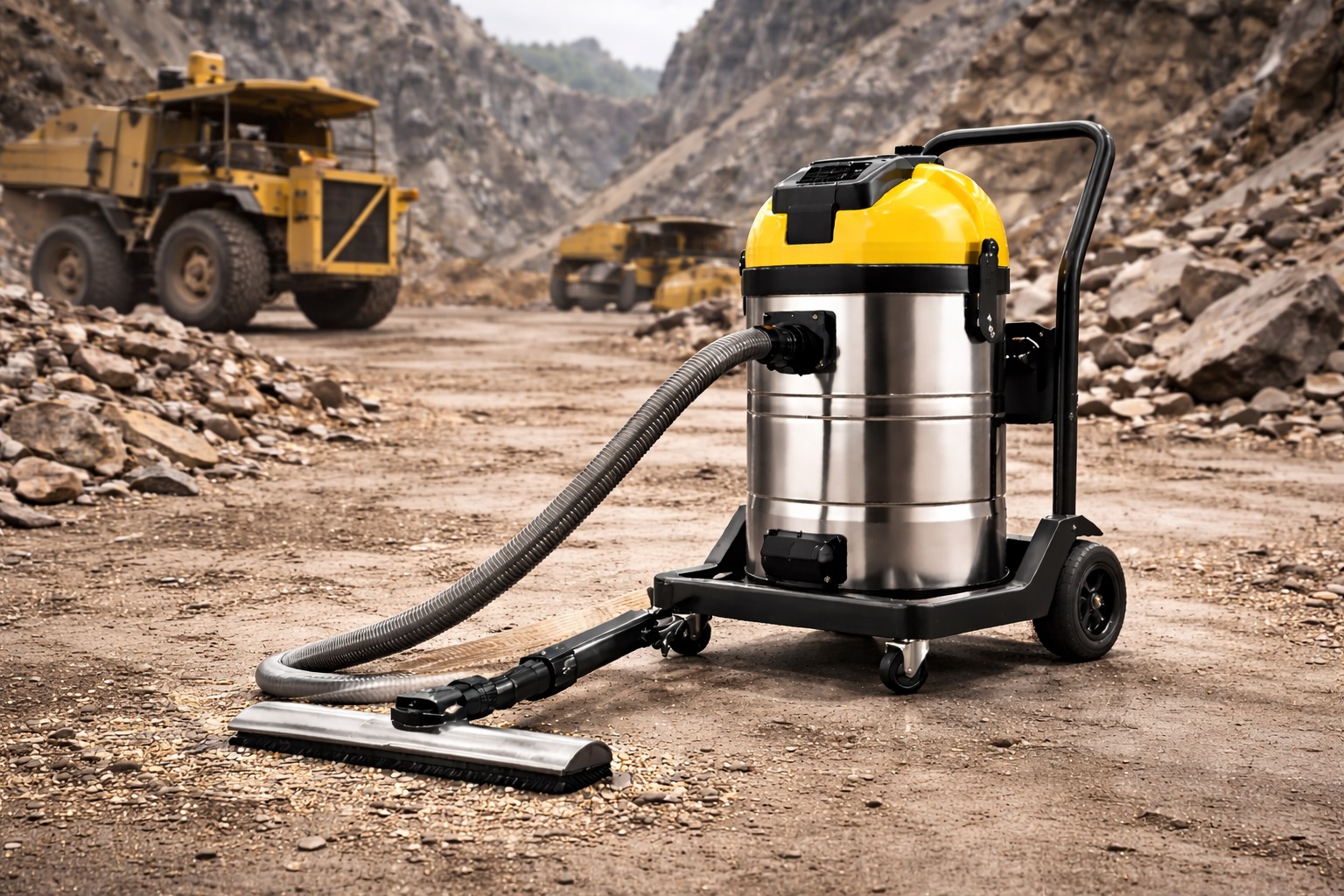
⛏️ The 3 “real enemies” of mine-site cleanliness
Dust everywhere: fine dust migrates from conveyors, transfer points, and haul roads into workshops and control rooms.
Wet mud and slurry: wet season conditions and washdowns turn cleaning into slow, repeated work.
Tool failure: harsh environments destroy hoses, filters, and wheels long before motors “wear out.”
Mining operations don’t need “nicer cleaning.” They need reliable site control: less dust migration, faster spill recovery, and fewer safety incidents. That’s why barrel vacuum cleaners (drum-style high-capacity units) are widely used on mine sites—because they can handle large volumes, long cleaning routes, and mixed debris when paired with wet/dry capability.
This guide is written for EU & Middle East B2B vacuum cleaner procurement buyers and distributors supporting mining operations. It focuses on practical cleaning solutions across workshops, conveyors, equipment cabins, and site facilities—built around a realistic fleet strategy.
I. 🗺️ Where barrel vacuum cleaners fit on a mining site
Barrel systems provide the most value where volume + distance + mess are constant:
Workshop floors (metal debris, dust, parts packaging)
Maintenance bays (oil, coolant, wet grime)
Conveyor corridors and transfer points (continuous dust accumulation)
Change rooms and site facilities (boots track mud and dust everywhere)
Shutdown cleaning (bulk debris recovery with fewer emptying stops)
Where they’re not the default:
Offices and carpeted admin areas: Upright Vacuum Cleaners are faster.
Very light tasks: Household Vacuum Cleaners can be used only in non-industrial, clean spaces if site policy allows.
Cab interiors: a dedicated Car Vacuum Cleaner or compact unit is more ergonomic than dragging a drum unit up steps.
Procurement takeaway: Mining sites run best with a fleet mix, not one universal vacuum.
II. 🧩 The mining fleet model: “right tool for the right zone”
Instead of buying one “industrial vacuum” and forcing it everywhere, build a zone-based set:
1) Barrel vacuum cleaners = bulk recovery backbone
Use them for:
long routes and large debris volume
workshop and conveyor corridor patrols
shutdown cleanups
2) Wet Dry Vacuum Cleaners = spill and mud control
Use them for:
wet season mud, water ingress
washdown recovery
oily wet debris in maintenance bays
3) Car Vacuum Cleaner = operator cabins and mobile equipment
Use it for:
seats, mats, vents, tight corners
quick daily hygiene to reduce dust exposure and keep controls clean
4) Multi-Functional Durable Vacuum Cleaner = harsh-site workhorse spec
In mining, “multi-functional” should mean:
impact-resistant hose and fittings
rugged wheels/casters
tool kit that survives grit and abrasion
easy-to-service design
5) Vacuum Cleaner for Multi-Surface = real tool strategy
Because mining sites include:
grated walkways, rough concrete, rubber mats, metal stairs, cabin upholstery
A true Vacuum Cleaner for Multi-Surface setup requires the right nozzles and brushes—not just a label.
III. 🏗️ Application Case 1: Workshop and maintenance bay cleanup
Problem
Workshops accumulate:
metal shavings, dust, packaging debris
oily wet grime around equipment
constant foot traffic and tracked mud
Solution
Stage barrel vacuum cleaners for dry debris routes
Keep Wet Dry Vacuum Cleaners ready for wet/oil incidents
Use abrasion-resistant hoses and a wide floor tool for speed
Effectiveness
fewer slips and near-misses
faster bay turnover between jobs
less time sweeping (which re-aerosolizes dust)
IV. 🧲 Application Case 2: Conveyor corridor and transfer-point dust control
Problem
Dust accumulates at transfer points and migrates along corridors. Sweeping spreads dust; blowdowns move it elsewhere.
Solution
Assign barrel vacuum cleaners to conveyor corridors on a schedule
Use crevice tools for edges and under guards
Add a multi-surface tool pack for grated flooring and uneven surfaces
Effectiveness
less dust migration into workshops and control rooms
improved visibility and lower housekeeping burden
better baseline for inspections and safety audits
V. 💧 Application Case 3: Wet season mud, water ingress, and slurry
Problem
Wet season conditions and washdowns create mud and standing water that slows crews and increases slips.
Solution
Deploy Wet Dry Vacuum Cleaners as a response system:
Recover bulk liquid with squeegee tool
Remove wet debris without clogging workflows
Reopen walkways fast
For large incidents, specify higher capacity—this is where wet/dry performance becomes measurable productivity.
Effectiveness
faster reopening of walkways and work zones
reduced slip hazard reports and downtime
less reliance on “mop and wait” routines
VI. 🚜 Application Case 4: Heavy equipment cabin cleaning (daily hygiene)
Problem
Cabins collect dust, grit, food debris, and fine particles that affect:
operator comfort and respiratory exposure
control cleanliness (buttons, screens)
overall equipment condition
Solution
Use a dedicated Car Vacuum Cleaner (or compact cabin kit):
crevice tools for seat rails and control edges
brush tools for vents and dashboards
quick storage in vehicle or crib room
Effectiveness
faster daily cleanup (operators actually do it)
cleaner controls and fewer dust-related complaints
better hygiene standard across the fleet
VII. 🧰 The real meaning of “multi-surface” on a mine site
A Vacuum Cleaner for Multi-Surface should handle:
rough concrete and gravel fines
grated floors and stairs
rubber mats and anti-slip textures
cabin upholstery and fabric seats
Tool kit that proves multi-surface capability
wide floor head for workshop concrete
stiff brush head for anti-slip textures
crevice tools for edges, guards, and corners
upholstery tool for cabins (supports your Car Vacuum Cleaner workflow)
squeegee head for wet recovery zones
Procurement should ask suppliers for a standardized accessory pack and spares availability—this is what keeps tools usable in harsh conditions.
VIII. 📉 TCO in mining: why durability beats cheap “industrial” pricing
Mining kills equipment through:
abrasion, impacts, hose tearing
filter overload and clogging
caster failures and handle breakage
A Multi-Functional Durable Vacuum Cleaner spec should prioritize:
hose durability and abrasion resistance
rugged wheels and metal fittings
fast access maintenance
standardized consumables across the site fleet
The cheapest unit is often the most expensive once you count downtime and broken accessories.
IX. 🧾 Screenshot-friendly procurement scorecard (mining edition)
Rate each supplier 1–5. Total /50.
✅ 10-point scorecard
Dust handling in harsh environments (no frequent clogging)
Wet/mud recovery readiness (true wet tools and workflow)
Durability of hoses, fittings, and wheels
Multi-surface tool kit capability
Ease of service and cleaning (filters, tank access)
Fleet compatibility (shared tools/consumables)
Cabin cleaning support (car vacuum kit availability)
Operator ergonomics and mobility on uneven ground
Consumables and spare parts availability in EU/MENA
Documentation support (SOPs, maintenance schedules)
Interpretation:
40–50: strong mine-site fit
30–39: workable with strict maintenance discipline
<30: expect tool failure, downtime, and operator avoidance
Conclusion: mining cleaning efficiency comes from rugged systems and zone discipline
Barrel vacuum cleaners are effective in mining when they’re deployed as part of a site cleaning system: bulk recovery routes for dust and debris, dedicated Wet Dry Vacuum Cleaners for mud and spills, and a practical Car Vacuum Cleaner kit to keep cabins clean and operators comfortable.
Keep Upright Vacuum Cleaners for offices, restrict Household Vacuum Cleaners to non-industrial clean areas, and define “multi-functional” as durability, serviceability, and standardized tooling—backed by a real Vacuum Cleaner for Multi-Surface accessory strategy. The payoff is measurable: fewer slip hazards, less dust migration, and more productive maintenance bays.
Hashtags
MiningSiteCleaning, BarrelVacuumCleaners, DrumVacuumSystem, IndustrialVacuumForMining, WetDryVacuumCleaners, MultiFunctionalDurableVacuumCleaner, VacuumCleanerForMultiSurface, CarVacuumCleaner, UprightVacuumCleaners, HouseholdVacuumCleaners, WorkshopBayCleaning, MaintenanceBayHousekeeping, MetalShavingsCleanup, ConveyorCorridorCleaning, TransferPointDustControl, DustMigrationPrevention, WetSeasonMudRecovery, WaterIngressResponse, SlurryCleanup, SpillResponseSOP, SqueegeeRecoveryTool, SlipHazardReduction, RoughConcreteCleaning, GratedFloorCleaning, AntiSlipSurfaceCleaning, RubberMatCleaning, StairAndWalkwayCleaning, LongRouteCleaning, BulkDebrisRecovery, AbrasionResistantHose, RuggedCasterWheels, HeavyDutyAccessories, CreviceToolMining, StiffBrushHead, UpholsteryToolKit, CabinHygieneProgram, OperatorComfort, EquipmentCabinCleaning, ControlPanelDust, FilterCloggingPrevention, PreSeparatorCyclone, CartridgeFilterSystem, ServiceabilityDesign, ConsumablesPlanning, SparePartsEU, SparePartsMENA, DistributorReadyConfig, ProcurementScorecard, TCOModel, EUIndustrialProcurement, MENAIndustrialSupply, Lanxstar



