Hi, message us with any questions.
We're happy to help!





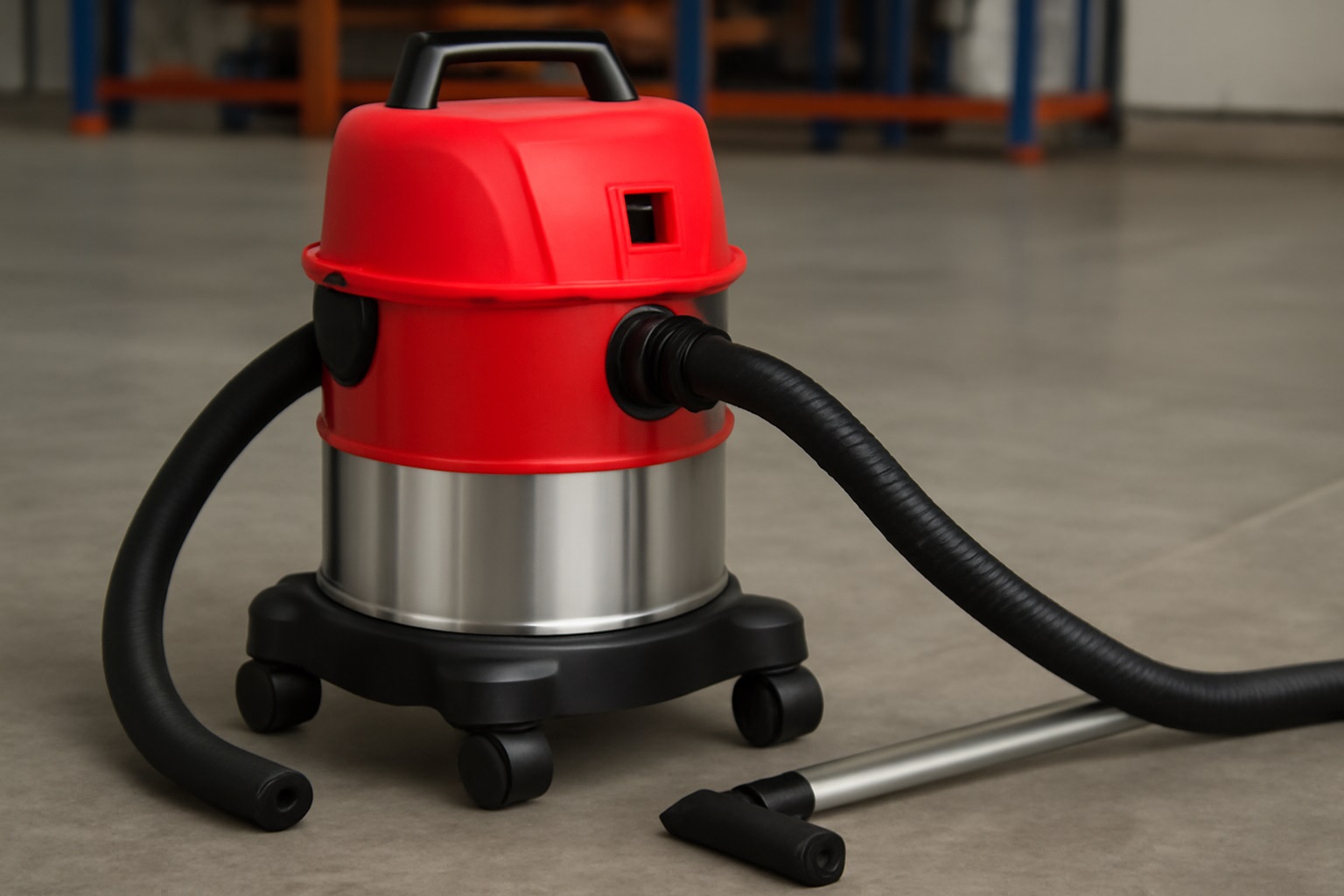
In factory procurement, Vacuum Capacity is often treated as a simple question: “Bigger tank = better productivity.” But the relationship between a Barrel Vacuum Cleaner and Work Efficiency is more precise—and more useful—than that. Capacity only improves efficiency if it reduces interruptions, maintains airflow, and fits the way operators actually clean.
This guide is written for EU & Middle East B2B procurement buyers who want a practical framework to decide when a High-Capacity Vacuum truly increases productivity, when it creates ergonomic friction, and how to quantify the labor savings so finance will approve the purchase.
We’ll also clarify where Upright Vacuum Cleaners and Household Vacuum Cleaners fit in facility programs, so you don’t accidentally lower efficiency with the wrong tool in the wrong zone.
🧭 1) Define Work Efficiency the Procurement Way (Not the Marketing Way)
For cleaning operations, Work Efficiency is not “how strong the vacuum is.” It’s:
Work Efficiency = Cleaned Area (or tasks completed) ÷ Total Time Spent
Total time includes:
active vacuuming time
walking to disposal points
emptying time
filter cleaning time
unclogging time
rework time (when pickup quality drops)
Key point: Capacity impacts efficiency mainly by reducing non-cleaning time.
🪣 2) Capacity Improves Efficiency Through One Mechanism: Fewer Interruptions
A High-Capacity Vacuum helps when your current process has “stop-and-go” patterns:
the tank fills too often,
operators pause to empty,
dust plumes require secondary cleanup,
cleaning windows are short and interruptions cause tasks to be skipped.
The “Interruptions Ladder”
0–1 emptying/shift → strong efficiency
2 emptyings/shift → acceptable in heavy debris areas
3+ emptyings/shift → efficiency drops sharply (and compliance drops too)
If you’re above 3, capacity is probably an efficiency bottleneck.
🧮 3) The Simple Formula to Quantify Efficiency Gains (Buyer-Ready)
If you need to justify a High-Capacity Vacuum, use a simple minutes-saved model:
Minutes Saved per Shift = (Old Emptyings − New Emptyings) × Minutes per Emptying
Then convert to labor cost:
Labor Savings/Month = Minutes Saved per Shift × Shifts per Month ÷ 60 × Labor Rate
Typical emptying time ranges (realistic)
clean disposal near point: 2–4 minutes
messy disposal or long walk: 5–10 minutes
shared disposal station with queues: 10+ minutes
Procurement insight: If disposal is far, capacity ROI increases—even if cleaned area stays the same.
🌀 4) The Hidden Constraint: Big Capacity Doesn’t Help If Filters Load First
Here’s why some large barrels still “feel weak” fast:
fine powder loads filters quickly
airflow collapses
operators vacuum slower
they stop to shake/clean filters
efficiency tanks—even with a big tank
Efficiency rule
Capacity increases efficiency only if airflow stays usable long enough to benefit from fewer emptying events.
So for fine powder environments, upgrading filtration or adding a separator can raise Work Efficiency more than upgrading tank size.
🧱 5) Debris Density Changes the Capacity–Efficiency Relationship
Vacuum Capacity is measured in liters, but factories don’t clean “liters.” They clean real debris that fills tanks differently.
How debris type behaves
Metal chips/shavings: tanks fill fast and become heavy quickly
Fibers/lint: tanks look full early (low weight, high volume)
Fine powder: tanks fill slowly but filters load fast
Packaging scraps: bulky, irregular volume
Buyer takeaway: A High-Capacity Vacuum is most efficient when debris is bulky or abundant and filtration remains stable.
🧰 6) Efficiency Isn’t Just Capacity—It’s Emptying Workflow
Two vacuums with the same Vacuum Capacity can have different efficiency outcomes based on how fast they empty.
Features that increase efficiency without changing liters
easy-open latches
stable barrel handling under load
dust-free disposal (liner bags / sealed emptying)
drain ports for wet pickup
clear fill line (prevents overfill clogs)
Procurement insight: If emptying is annoying, operators delay emptying, overfill, and clog—destroying efficiency.
🧍 7) The Ergonomics Tradeoff: When High-Capacity Vacuum Reduces Efficiency
Bigger tanks are not always better. A too-large Barrel Vacuum Cleaner can:
be harder to move around tight aisles
increase operator fatigue
require more storage space
become a tipping risk if base design is weak
encourage “overfill” because it looks like it can take more
Practical decision rule
If your facility has:
narrow aisles, many obstacles, frequent machine-edge cleaning
then a mid-capacity barrel + handheld detail unit often delivers higher Work Efficiency than one large barrel.
🧩 8) The “Two-Vacuum” Strategy That Often Wins on Efficiency
Many facilities get the best efficiency by separating tasks:
Barrel Vacuum Cleaner for floors and aisles (bulk cleaning)
Handheld or detail vacuum for machine edges and small spills (quick compliance)
This approach:
reduces overhandling of large units
increases cleaning frequency
prevents dust buildup
keeps each tool in its efficient operating zone
Even if you don’t buy handhelds, the principle remains: match tool size to task size.
🧹 9) Where Upright and Household Vacuums Fit in Efficiency Planning
🧷 Upright Vacuum Cleaners
They can increase Work Efficiency in:
office carpets and controlled zones
They usually reduce efficiency in production zones because they’re not designed for industrial debris transport.
🏠 Household Vacuum Cleaners
They may look “efficient” initially (lightweight), but in production zones:
clog faster
overheat more often
require replacement churn
cause rework cleaning
This reduces Work Efficiency over time.
Boundary: Use these categories only where dust load and debris type match their design intent.
📝 10) RFQ Questions That Tie Capacity to Efficiency (Not Marketing)
If you want suppliers to compete on Work Efficiency, ask:
What is the recommended max fill level (usable capacity) and why?
How long does emptying take in normal use?
What disposal options reduce dust plumes?
How does airflow change after 15 minutes on our dust type?
What is the recommended cleaning interval for filters?
What hose diameter is recommended for our debris type and distance?
What is the typical emptying frequency in similar factories?
Suppliers who can answer these are selling productivity, not just liters.
✅ Conclusion 🏁⏱️
The relationship between Vacuum Capacity and Work Efficiency is simple but often misunderstood: capacity improves efficiency only when it reduces interruptions without causing new problems like airflow collapse, difficult handling, or messy emptying. A High-Capacity Vacuum is most valuable when debris volume is high, disposal is far or slow, and the vacuum’s filtration keeps airflow stable long enough to take advantage of fewer emptying stops.
If you quantify emptying minutes, account for filter loading, and evaluate ergonomics honestly, you can choose the right Barrel Vacuum Cleaner capacity—and increase real efficiency, not just specs.
Hashtags
Lanxstar, BarrelVacuumCleaner, VacuumCapacity, WorkEfficiency, HighCapacityVacuum, capacityVsEfficiency, emptyingFrequency, minutesSavedModel, laborMinutesSavings, disposalWorkflow, dustFreeEmptying, linerBagSystem, sealedEmptying, filterLoadingCurve, airflowRetention, capacityVsAirflow, suctionVsAirflow, finePowderChallenge, metalChipsCleanup, textileLintVolume, packagingDebrisPickup, debrisDensityGuide, ergonomicHandling, operatorFatigue, aisleMobility, casterDurability, tipResistance, easyOpenLatches, quickEmptyDesign, wetPickupDrainPort, shiftCleaningProductivity, endOfShiftCleaning, spotCleaningCompliance, twoVacuumStrategy, accessoryKitEfficiency, hoseDiameterSelection, longHoseLossControl, procurementRFQChecklist, totalCostOfOwnership, downtimeReduction, facilityHousekeepingProgram, warehouseAisleCleaning, productionFloorCleaning, auditReadinessCleaning, multiSiteStandardization, UprightVacuumCleaners, HouseholdVacuumCleaners, B2BSourcing, EUDistributionSupport, MENAServiceNetwork, sparePartsAvailability, OEMVacuumSupplier