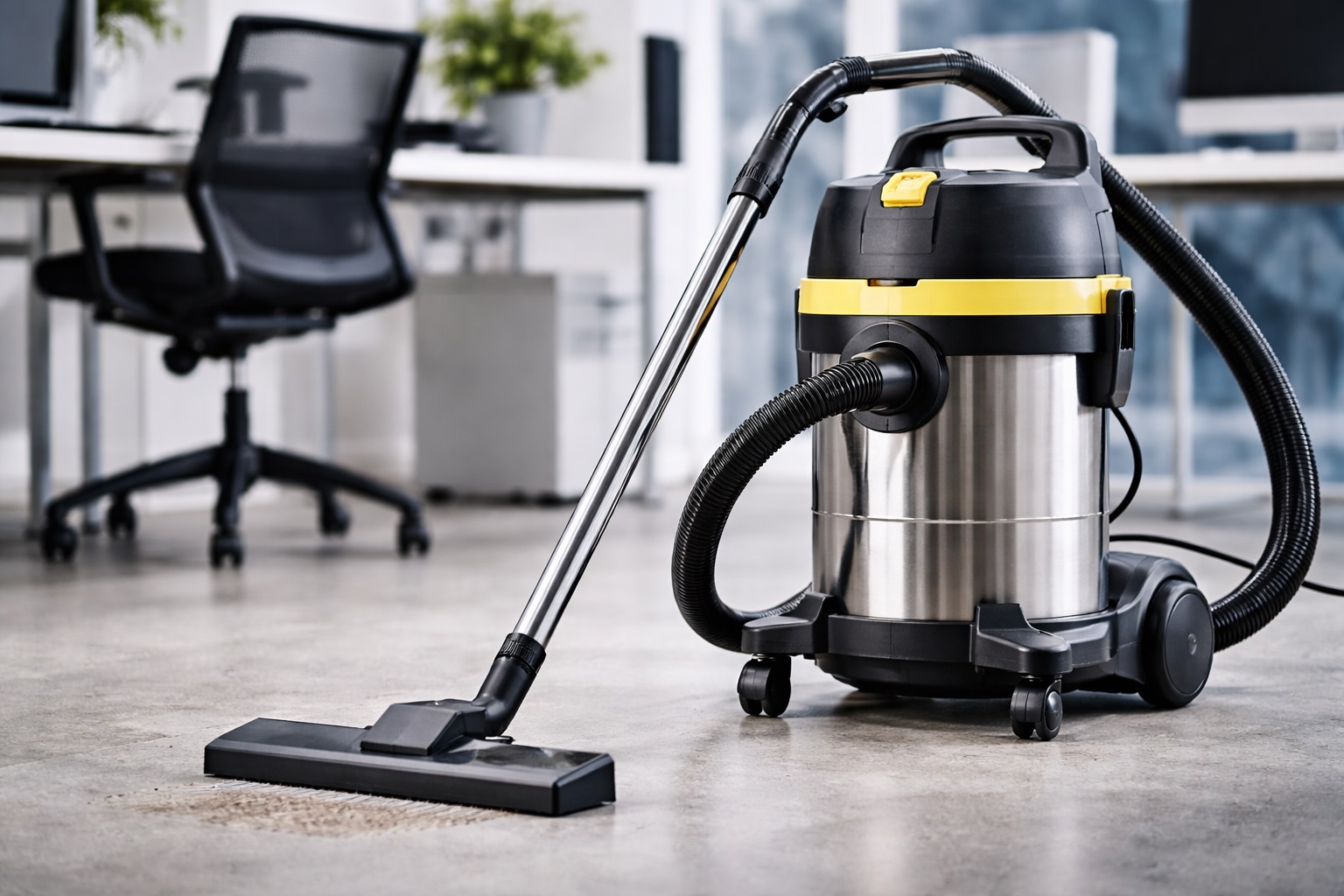
Most bad purchasing decisions don’t fail immediately.
They fail quietly — over time.
For European and Middle Eastern B2B buyers, purchasing a commercial vacuum is rarely about one machine.
It’s about uptime, labor efficiency, service stability, and long-term cost control.
Yet many buyers still rely on:
Specification sheets
Price comparisons
Short demonstrations
Professional buyers ask different questions — the kind that reveal risk before money is committed.
This article outlines 7 critical questions every B2B buyer should ask before purchasing a commercial vacuum, helping you avoid hidden costs and long-term operational pain.
🔍 1. How Does This Vacuum Perform After Hours of Continuous Use?
Most suppliers highlight peak performance.
But in real commercial environments:
A vacuum that performs well for 10 minutes may struggle after 3 hours.
This is especially critical for a wet and dry vacuum cleaner, where moisture, debris, and fine dust accelerate wear.
Professional buyers ask:
What does performance look like after a full working shift — not just at startup?
⚙️ 2. What Makes This a “Durable” Machine — in Practice?
Many products are marketed as a Multi-Functional Durable Vacuum Cleaner.
But durability is not a label — it’s a usage promise.
Buyers should clarify:
Reality:
Durability only matters when it matches your real workload.
💨 3. Is High Suction Stable or Just Impressive on Paper?
A High Suction Vacuum Cleaner looks attractive in specifications.
But suction that drops under filter load leads to:
Slower cleaning
Repeated passes
Higher labor cost
Key distinction:
Peak suction sells machines.
Stable suction saves money.
Professional buyers focus on consistency, not maximum numbers.
⚡ 4. How Energy Efficiency Holds Up Over Time?
An Energy-Saving Efficient Powerful Vacuum Cleaner should reduce operating cost — not just meet initial benchmarks.
Ask:
How efficiency changes after months of use
Whether performance degradation is expected
Who bears responsibility if energy use rises
In regulated markets, energy performance affects:
Operating cost
Compliance risk
Contract eligibility
🧭 5. Can One Machine Handle Multiple Surfaces Reliably?
A Vacuum for Multi-Surface environments must transition smoothly between:
Carpet
Tile
Stone
Slightly damp areas
Poor multi-surface performance increases:
Training complexity
Operator error
Inconsistent results
Buyer insight:
Versatility reduces operational friction — but only if it’s real.
🌬️ 6. Is the Filtration System Designed for Sensitive Environments?
A Vacuum Cleaner for Allergies is more than a better filter.
What really matters:
Poor filtration leads to:
Secondary dust circulation
Re-cleaning labor
Complaints in offices, healthcare, and hospitality
🔇 7. How Quiet Is the Machine After Months of Use?
A Quiet Vacuum for Night Use must remain quiet over time.
Noise issues often appear due to:
Motor imbalance
Insulation wear
Structural vibration
If noise increases:
Professional buyers evaluate:
Noise stability — not just initial compliance.
🧠 Final Insight: Smart Buyers Ask Operational Questions
Experienced B2B buyers understand:
Specifications describe machines.
Questions reveal risk.
The right questions:
The wrong questions only lead to short-term savings.
🔍 A Quick Buyer Self-Check
If your evaluation focuses mainly on:
Price
Peak performance
Basic specs
Then the most important risks are still hidden.
📌 Suitable Reading Audience
European & Middle Eastern B2B vacuum buyers
Commercial vacuum distributors
Facility management procurement teams
Cleaning industry entrepreneurs
Professional cleaning associations
📌 Hashtags
commercial vacuum buyer guide, B2B vacuum purchasing, wet and dry vacuum cleaner, multi-functional durable vacuum cleaner, high suction vacuum cleaner, energy-saving efficient powerful vacuum cleaner, vacuum for multi-surface, vacuum cleaner for allergies, quiet vacuum for night use, industrial vacuum system, professional cleaning equipment, B2B cleaning equipment, vacuum distributor, European vacuum market, Middle East cleaning equipment, commercial cleaning systems, facility management tools, warehouse cleaning equipment, hotel cleaning solutions, hospital cleaning equipment, night shift cleaning tools, energy efficient cleaning, long life vacuum motor, low maintenance vacuum, commercial cleaning ROI, total cost of ownership, procurement strategy, industrial sourcing, B2B buyer insights, cleaning industry innovation, vacuum technology, dust control solutions, indoor air quality tools, professional hygiene equipment, commercial equipment sourcing, supply chain reliability, private label vacuum, vacuum brand building, B2B distribution model, cleaning equipment growth, after-sales service system, industrial equipment buyers, facility operations efficiency, Lanxstar











