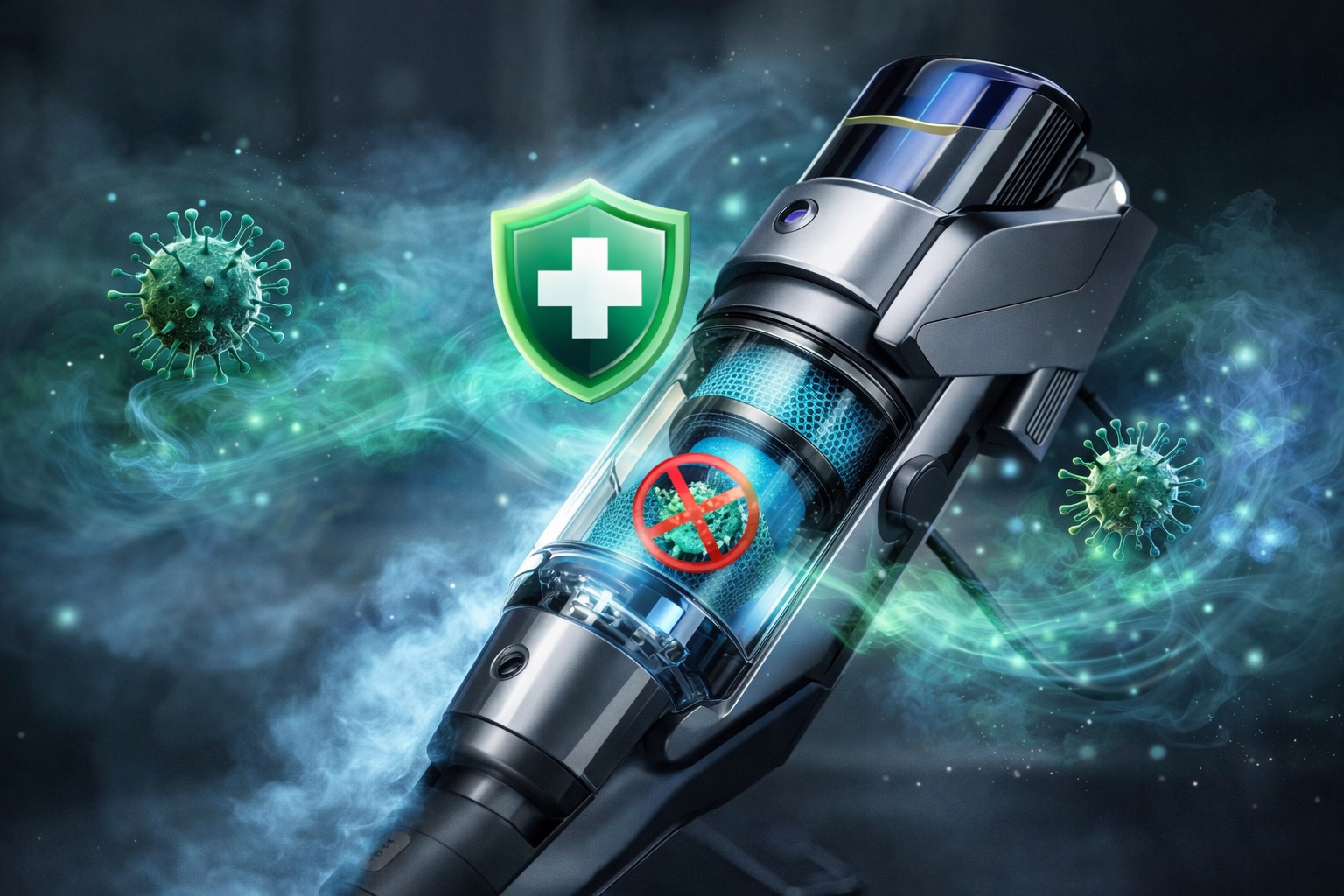
In today’s vacuum cleaner market, hygiene is no longer a premium feature—it is a baseline expectation.
Consumers may not understand airflow engineering or motor efficiency, but they immediately notice odor, dust leakage, and perceived cleanliness. For B2B buyers in Europe and the Middle East, this creates a powerful opportunity: upgrading vacuum cleaners for anti-bacterial and anti-odor performance does not just improve products—it unlocks higher price acceptance and longer product life cycles.
This article explains how hygiene-focused upgrades work at the manufacturing level, especially for wet and dry vacuum cleaner and portable self-cleaning vacuum cleaner categories.
🦠 Why Hygiene Now Drives Vacuum Cleaner Sales
Post-pandemic consumer behavior permanently changed expectations.
Buyers increasingly associate vacuum cleaners with:
For distributors, products positioned as Vacuum Cleaner for Allergies or hygiene-focused cleaning solutions often show:
However, hygiene performance must be engineered, not advertised.
🧱 Anti-Bacterial Design Starts Inside the Structure
True anti-bacterial performance begins with material selection.
In a multi-functional durable vacuum cleaner, bacteria growth often occurs in:
Moist internal chambers
Dust containers
Filter housings
Advanced manufacturers reduce this risk by:
Using anti-microbial treated plastics in high-contact zones
Eliminating unnecessary internal cavities where moisture accumulates
Designing smoother airflow paths to prevent residue buildup
Manufacturing insight:
Reducing bacterial growth is more about structure and drainage than chemical coatings alone.
💧 Odor Control in Wet & Dry Systems: Where Most Products Fail
Odor complaints are one of the top return triggers for wet and dry vacuum cleaner products.
Common causes include:
Residual moisture trapped after use
Organic debris decomposition
Incomplete drying of internal components
Factories that successfully control odor:
Separate wet airflow from dry motor chambers
Design self-draining tanks
Test post-use drying efficiency, not just suction
These details dramatically reduce “smell after one week” complaints.
🧼 Self-Cleaning Systems That Actually Stay Clean
A portable self-cleaning vacuum cleaner promises hygiene—but often delivers the opposite if poorly designed.
Effective systems include:
Poorly designed self-cleaning systems often become bacterial incubators, increasing odor and allergen complaints.
Key difference:
Good self-cleaning designs focus on what happens after cleaning, not just the cleaning process itself.
🌬️ Filtration for Allergies: Balancing Clean Air and Usability
A vacuum cleaner for allergies must control two conflicting factors:
Manufacturers reduce hygiene-related returns by:
Using multi-layer filtration instead of single HEPA reliance
Sealing airflow paths to prevent dust re-emission
Testing filtration performance under real dust loads
For allergy-focused buyers, consistent performance matters more than headline filtration numbers.
🌳 Hygiene Meets Surface Protection on Hardwood Floors
For a vacuum cleaner for hardwood floors, hygiene is inseparable from surface care.
Key design considerations include:
Soft roller materials that resist bacterial buildup
Controlled suction to avoid debris scattering
Easy-clean brush designs to prevent odor retention
Products that combine hygiene with floor protection often outperform traditional models in premium segments.
⚡ Energy Efficiency Without Hygiene Trade-Offs
An energy-saving efficient powerful vacuum cleaner must maintain hygiene without increasing power consumption.
Advanced factories achieve this by:
Optimizing airflow efficiency
Reducing internal resistance
Matching motor output precisely to filtration demands
This allows manufacturers to improve hygiene performance without sacrificing energy ratings, a critical requirement for European markets.
📊 Why Hygiene Upgrades Increase Sales, Not Just Costs
For B2B buyers, hygiene-focused upgrades deliver:
Importantly, these upgrades often require design intelligence more than material cost increases.
🚀 Hygiene Is the New Performance Benchmark
Suction power alone no longer defines product quality.
In modern markets, vacuum cleaners are judged by:
How clean they smell after use
How well they protect indoor air
How hygienic they remain over time
Professional buyers increasingly audit hygiene design before approving new SKUs, because hygiene failures are visible, emotional, and costly.
📌 Suitable Readers
European vacuum cleaner importers
Middle Eastern vacuum cleaner distributors
B2B vacuum cleaner buyers
OEM / ODM sourcing managers
Cleaning equipment product managers
Vacuum cleaner R&D engineers
Floor care and hygiene solution brands
📌 Hashtags
wet and dry vacuum cleaner, multi-functional durable vacuum cleaner, energy-saving efficient powerful vacuum cleaner, portable self-cleaning vacuum cleaner, vacuum cleaner for allergies, vacuum cleaner for hardwood floors, anti bacterial vacuum cleaner, anti odor vacuum system, hygiene focused vacuum cleaner, OEM vacuum cleaner, ODM vacuum cleaner, vacuum cleaner manufacturer, vacuum cleaner hygiene design, vacuum cleaner filtration system, sealed airflow vacuum, HEPA vacuum cleaner system, allergy friendly vacuum cleaner, hardwood floor vacuum solution, self cleaning vacuum technology, vacuum cleaner odor control, vacuum cleaner moisture management, energy efficient vacuum cleaner, low noise vacuum cleaner, durable vacuum cleaner design, vacuum cleaner R&D, vacuum cleaner engineering, vacuum cleaner testing, vacuum cleaner compliance, CE vacuum cleaner, RoHS vacuum cleaner, vacuum cleaner for Europe, vacuum cleaner for Middle East, B2B vacuum cleaner sourcing, vacuum cleaner distributor, vacuum cleaner importer, commercial vacuum cleaner, home hygiene equipment, floor care solutions, portable cleaning devices, vacuum cleaner innovation, cleaning industry trends, vacuum cleaner OEM ODM, hygiene driven product upgrade, indoor air quality cleaning, Lanxstar











