Hi, message us with any questions.
We're happy to help!





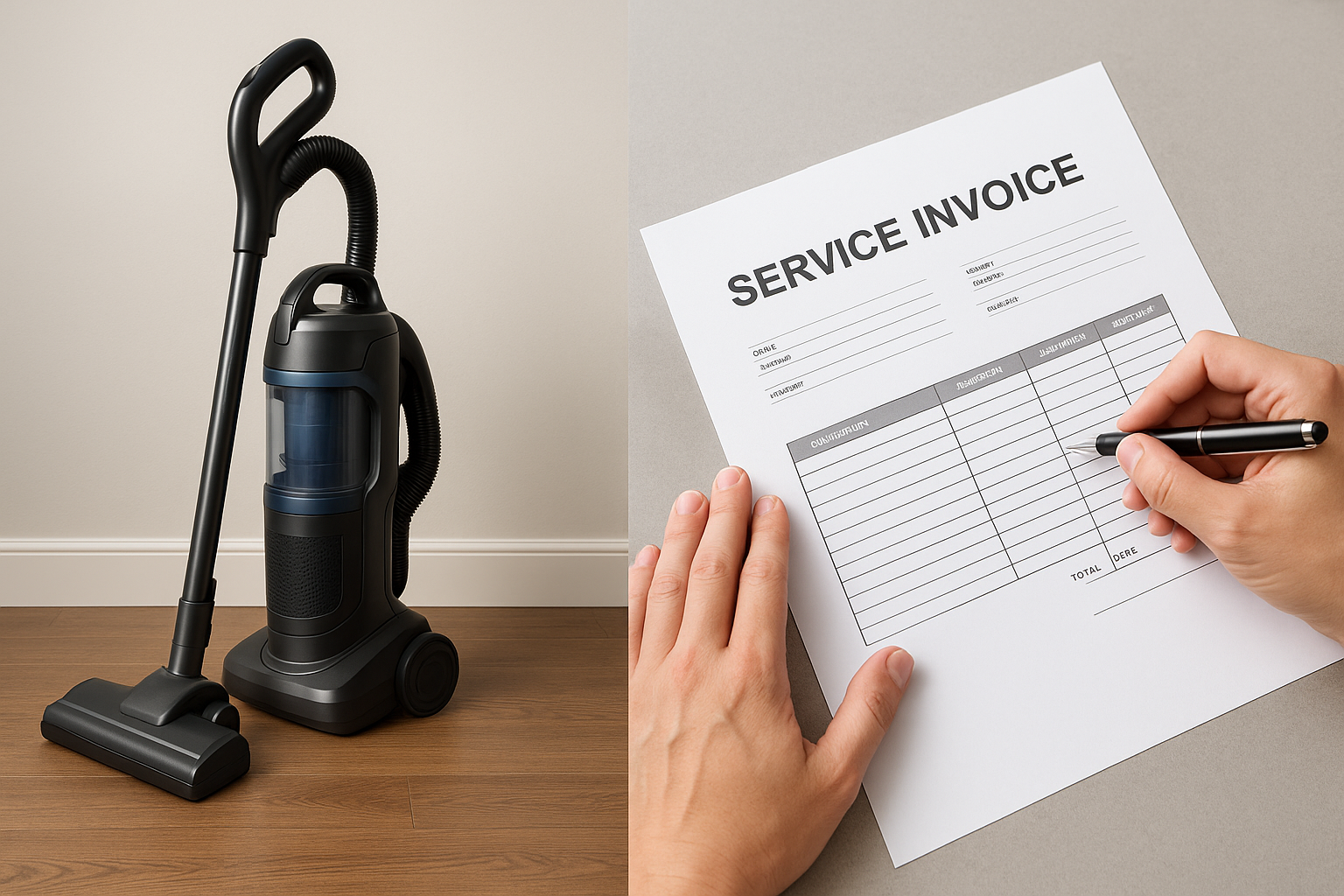 🌍 The global vacuum cleaner industry has entered a new maturity phase. For decades, growth came from releasing better hardware—stronger suction, lighter frames, smarter navigation. But as competition intensifies and margins tighten, leaders are realizing that product innovation alone is no longer enough.
The next frontier is service-led growth—a model where success comes not from how many machines you sell, but from the value you deliver after the sale. Whether it’s predictive maintenance, consumables supply, or data-driven performance analytics, service models are redefining what “growth” means in the vacuum sector.
This article explores when and how vacuum cleaner manufacturers, exporters, and OEMs should transition from a product-centric to a service-centric business strategy.
⚙️ 1. The Traditional Product-Led Model: Its Strength and Limits
For decades, manufacturers competed by making better machines:
More suction power in the High Suction Vacuum Cleaner.
Quieter operation in the Portable Quiet Vacuum Cleaner.
Automated cleaning features in the Self-Cleaning Vacuum Cleaner.
This model worked well when markets were expanding, and each hardware improvement brought visible differentiation. But today, innovation cycles are shorter, and copycat models appear within months.
Product-led growth now faces three limits:
Margin Compression: Price wars erode profitability.
Feature Saturation: Most brands offer similar performance levels.
Customer Retention Challenges: Once sold, customer contact often ends.
Service-led growth addresses all three by deepening engagement beyond the initial sale.
🌍 2. When Do You Know It’s Time to Shift?
There’s no universal timeline—but clear signals indicate readiness to evolve:
Declining hardware margins. Your premium Multi-Functional Durable Vacuum Cleaner line struggles to maintain profit even with added features.
Post-sales inquiries increase. Customers begin asking for consumables, filters, or upgrades.
Your competitors launch service programs. If others are bundling maintenance or IoT subscriptions, you risk losing loyalty.
Aftersales costs rise. Managing support manually becomes inefficient, signaling a need for automation.
If your growth graph has flattened while customer interaction spikes, it’s time to move from selling units to selling outcomes.
💡 3. What Does Service-Led Growth Mean in Practice?
Service-led doesn’t mean abandoning hardware—it means monetizing the entire lifecycle of your vacuum systems.
Offer preventive maintenance contracts for industrial clients using the Fast Lightweight Vacuum Cleaner fleet.
Sell energy audits and performance optimization for commercial customers with the Energy-Saving Efficient Powerful Vacuum Cleaner.
Enable digital dashboards for operators managing Large-Capacity Wet Dry Vacuum Cleaner units in hotels or hospitals.
This model generates recurring revenue while building stronger customer loyalty and predictable cash flow.
📊 4. How IoT and Data Enable the Shift
Digital transformation is the foundation of service-led strategy. IoT connectivity and analytics turn vacuums into data sources, allowing continuous customer engagement.
The Li-ion Cordless Handheld Vacuum Cleaner can transmit usage hours and battery health to the cloud.
Wet Dry Vacuum Cleaners can share sensor data about dust density and fluid pickup efficiency.
A 4 in 1 Cordless Smart Wet & Dry Vacuum Cleaner can report predictive maintenance alerts before breakdowns occur.
With this data, manufacturers can offer value-added services like remote diagnostics, performance optimization, or subscription-based consumable replenishment.
🔧 5. Rethinking R&D for Service Integration
When shifting to service-led growth, R&D priorities evolve:
From “features” to “functions.” Instead of asking, “What’s the next motor design?” engineers ask, “How can we monitor performance remotely?”
From “launch once” to “iterate continuously.” Smart firmware updates keep devices like cordless handheld vacuums improving after delivery.
From “cost engineering” to “lifecycle value.” The Cordless Vacuum Cleaner becomes a platform for ongoing upgrades, not a one-time purchase.
In this model, product and service development merge into one continuous loop.
🚚 6. Aftersales and Predictive Maintenance as Core Growth Drivers
Aftersales used to be reactive—repairs and parts requests. Now, it’s proactive.
The Car Vacuum Cleaner can send error codes directly to service centers, scheduling automatic repairs.
A quiet vacuum cleaner used in hospitals can trigger filter replacement reminders through a mobile app.
A wet dry vacuum in industrial zones can predict clogging based on airflow analytics.
Predictive maintenance not only reduces downtime but also reinforces the brand’s reliability and customer trust.
⚙️ 7. Building a Service Ecosystem
Service-led models thrive on ecosystems—a network of data, partners, and processes.
Key building blocks include:
IoT Infrastructure: Secure cloud platforms for connected vacuums.
Local Partners: Certified technicians managing regional repairs.
Consumables Supply: Regular delivery programs for filters, brushes, or dust bags.
Customer Portals: Self-service dashboards for fleet management and analytics.
Imagine a Self-Cleaning Vacuum Cleaner network where users can monitor performance, schedule cleaning cycles, and request upgrades—all via subscription. That’s the essence of service-led architecture.
🌐 8. How to Monetize Services
Monetization takes multiple forms:
Subscription Plans: Offer monthly cleaning analytics for businesses using the High Suction Vacuum Cleaner.
Consumables Auto-Replenishment: Deliver filters automatically for users of the Portable Quiet Vacuum Cleaner.
Extended Warranties and Upgrades: Offer annual service bundles for the Energy-Saving Efficient Powerful Vacuum Cleaner fleet.
Training and Certification: Train maintenance teams using the Large-Capacity Wet Dry Vacuum Cleaner systems.
The goal is not to replace hardware sales but to amplify them with recurring, high-margin services.
📈 9. Case Study: From Hardware Sales to Smart Contracts
A European OEM began by selling traditional vacuums, including the Multi-Functional Durable Vacuum Cleaner line, through distributors. Facing shrinking margins, the company embedded IoT chips and launched “cleaning-as-a-service.”
Clients now pay per square meter cleaned rather than per unit purchased. IoT sensors track machine performance and energy efficiency. Within two years:
Recurring revenue surpassed hardware profit.
Churn rate dropped 40%.
Market differentiation increased in industrial sectors.
The takeaway: service-led transformation turns transactions into relationships.
💬 10. Cultural and Organizational Challenges
Transitioning models requires mindset shifts:
Sales teams must learn to sell value, not volume.
Engineering teams must design for longevity, not disposability.
Finance teams must adjust to recurring revenue recognition.
For exporters of models like the Fast Lightweight Vacuum Cleaner or Li-ion Cordless Handheld Vacuum Cleaner, success means viewing every shipment as the start—not the end—of a customer journey.
🧠 11. The Role of AI in Scaling Service Models
Artificial Intelligence transforms service operations by automating insights:
AI can detect abnormal vibrations in the Self-Cleaning Vacuum Cleaner, triggering maintenance alerts.
Predictive algorithms can forecast energy savings for the Energy-Saving Efficient Powerful Vacuum Cleaner fleet.
Voice-controlled systems like the 4 in 1 Cordless Smart Wet & Dry Vacuum Cleaner can provide real-time diagnostics in multiple languages.
AI ensures service-led models scale efficiently across markets and languages.
🌍 12. When Not to Shift—Yet
Service-led growth isn’t for everyone—at least not immediately. You may want to wait if:
Your market still prioritizes low-cost imports.
IoT infrastructure is unreliable or data laws are restrictive.
Your team lacks service logistics capacity.
In such cases, gradual transitions—starting with maintenance programs or digital dashboards—are safer than a full pivot.
✅ Conclusion
The vacuum cleaner industry is evolving from hardware performance to holistic experience. The brands that thrive will treat every vacuum—whether a High Suction Vacuum Cleaner, a Cordless Vacuum Cleaner, or a wet dry vacuum—as a gateway to long-term customer value.
Shifting from product-led to service-led growth doesn’t mean abandoning engineering excellence; it means extending it beyond the factory floor into the customer’s daily operations.
Those who make the shift early will own the future of the cleaning industry.
For more insights on service-led growth strategies, visit www.lxvacuum.com.
📌 Suitable Audience
Vacuum cleaner exporters and OEMs
Product managers and R&D engineers
Aftermarket and service directors
Global business strategists
📌 SEO TAG
vacuum cleaner service-led strategy, IoT-enabled cleaning services, predictive maintenance vacuum systems, recurring revenue model appliances, aftersales innovation vacuum cleaners, vacuum data analytics platform, smart contract cleaning industry, connected vacuum service network, subscription-based vacuum services, lifecycle value vacuum exporters, smart aftersales vacuum programs, data-driven product upgrades, modular IoT vacuum ecosystem, predictive AI cleaning analytics, digital transformation vacuum manufacturers, fleet management vacuum services, B2B cleaning-as-a-service, global service strategy exporters, connected cleaning technology, service monetization vacuum appliances, predictive consumables supply, sustainable aftersales growth, IoT performance optimization vacuum, vacuum cleaner lifecycle management, service-led product development, Middle East vacuum market evolution, service-driven brand loyalty, AI maintenance forecasting vacuum, modular smart vacuum services, vacuum cleaner digital dashboard, remote diagnostics IoT vacuums, cleaning equipment recurring revenue, subscription maintenance appliances, aftermarket innovation exporters, service ecosystem integration, data monetization vacuum industry, connected device analytics exporters, smart fleet management vacuum cleaners, predictive failure detection vacuums, AI optimization vacuum systems, customer retention cleaning equipment, recurring billing vacuum services, predictive energy efficiency vacuums, data-driven product lifecycle strategy, industrial cleaning service innovation, cross-market service scaling vacuums, B2B IoT service strategy exporters, connected appliances subscription model



