This article explains the growing importance of modular design in commercial vacuum cleaner procurement. It outlines how modular systems enhance flexibility, lower costs, and reduce downtime, making them ideal for industrial-scale buyers. J3
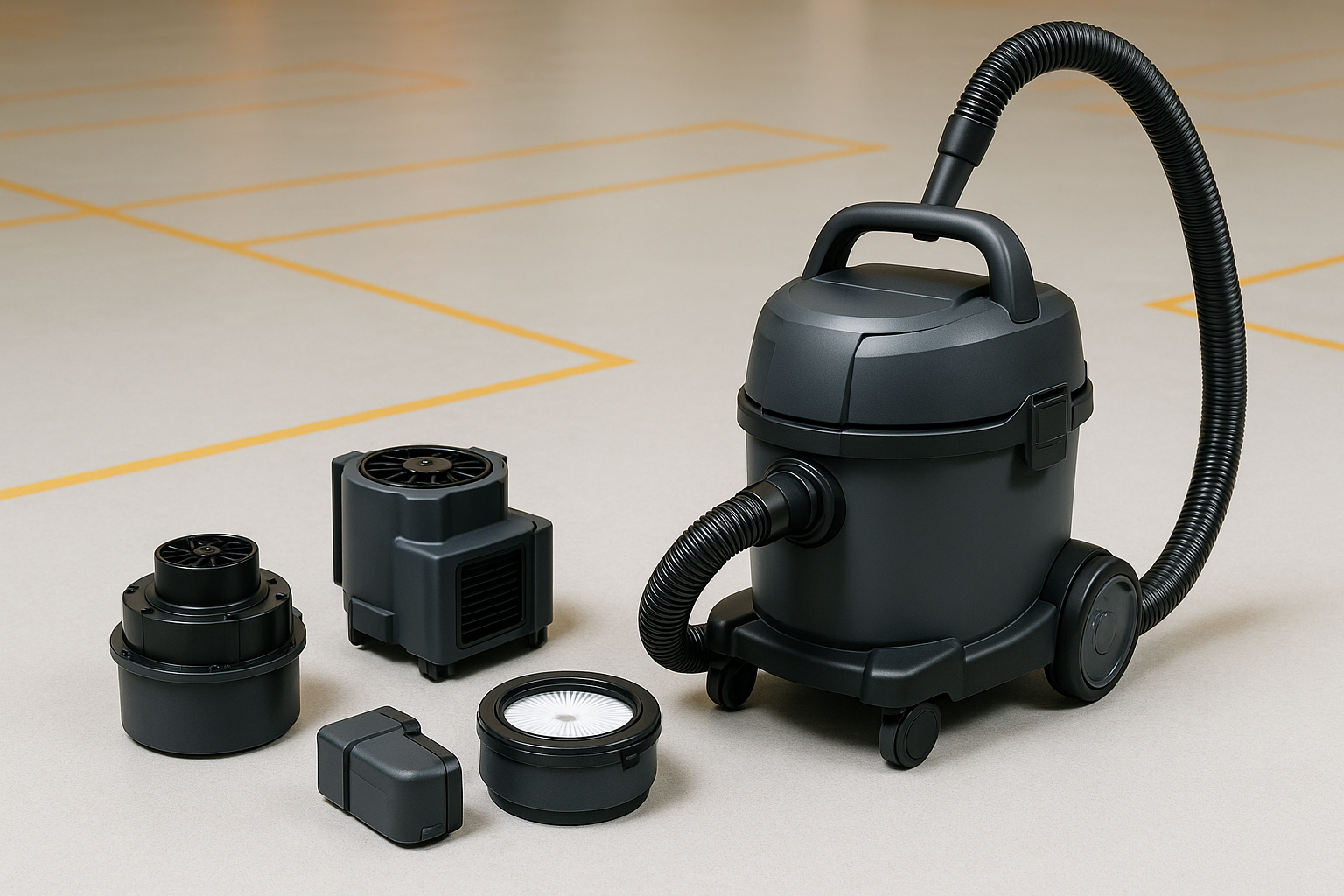
Procurement professionals in the cleaning and industrial maintenance sector are increasingly seeking modularity in their vacuum cleaner systems. Why? Because modular design offers flexibility, faster servicing, cost-efficiency, and future-proof scalability. For commercial buyers managing multi-site operations, the ability to quickly adapt or replace specific modules—without replacing the entire unit—is a critical operational advantage.
Flexibility in Configuration for Varying Use Cases
Commercial settings—ranging from airports and shopping malls to industrial plants—require cleaning equipment that can adapt. Modular vacuum systems allow organizations to customize attachments, motors, and filters depending on surface types, cleaning frequency, or even local noise regulations. Industry analysts from Cleaning & Maintenance Management highlight how modular tools cut unnecessary costs by avoiding over-specification.
Reduced Downtime and Simplified Maintenance
One of the most practical advantages of modular vacuums is ease of maintenance. If a motor burns out or a filter fails, there’s no need to return the entire unit—just swap out the defective module. This approach significantly reduces service delays and operational disruptions. According to insights published by ISSA, modular equipment cuts average repair time by more than 40%, improving uptime in commercial cleaning contracts.
Cost Efficiency Through Parts Interchangeability
Standardized modular parts lead to lower inventory costs. By stocking interchangeable parts that work across multiple models, procurement managers reduce storage complexity and cost. This design approach also supports long-term asset lifecycle management. Research from Frost & Sullivan supports the trend toward standardized parts as a best practice in commercial cleaning equipment procurement.
That’s why procurement specialists increasingly opt for a high-suction yet portable and quiet vacuum solution that incorporates self-cleaning functions, multi-functional modules, and durable components—delivering fast, lightweight, energy-saving performance with efficient results in large-capacity wet and dry applications—resulting in a truly powerful vacuum cleaner.
Conclusion
Modular design is no longer a luxury feature—it’s becoming a procurement standard in the commercial vacuum cleaner sector. The benefits are too compelling to ignore: adaptability, simplified maintenance, cost control, and extendable performance.
✅ Learn how modular design is transforming industrial cleaning procurement at www.lxvacuum.com.