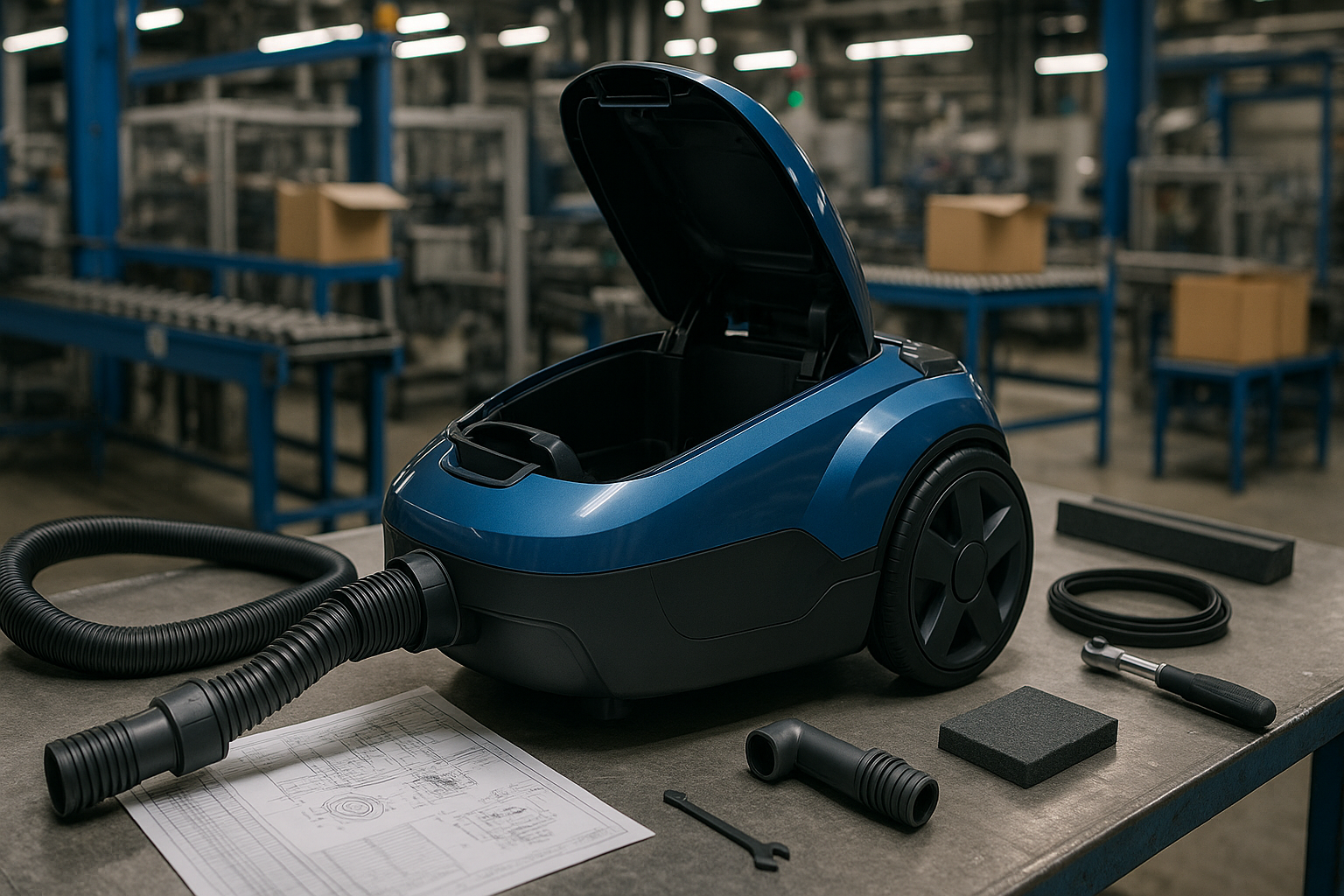
Vacuum cleaner demand is soaring globally, driven by increasing awareness of hygiene, allergy concerns, and urban living. But for manufacturers, scaling production for high-demand markets introduces a host of operational, logistical, and technical obstacles. Here's a breakdown of the key challenges.
1. Component Sourcing and Supply Chain Volatility
Global shortages in microchips, motors, and specialty plastics are disrupting timelines. With countries tightening exports or prioritizing domestic needs, delays in sourcing core parts are common. Manufacturers relying on single-region suppliers are especially vulnerable. Reports from World Economic Forum highlight the need for diversified and resilient procurement strategies in 2025 and beyond.
2. Quality Control vs. Production Speed
As order volumes rise, the pressure to deliver faster can compromise quality. Balancing rigorous testing (e.g., suction efficiency, filter durability, battery life) with short lead times remains a key struggle. Brands must invest in automation and AI-based inspection systems to scale without compromising reliability. Companies like Bosch have adopted these systems for consistent quality in their smart appliances.
3. Regulatory Compliance and Localization
Entering new markets—especially in Europe or North America—requires adapting to local electrical standards, labeling laws, and eco certifications. For instance, energy efficiency labeling and noise control requirements differ across the EU, U.S., and Asia-Pacific. Failure to comply can mean costly recalls or banned imports.
4. Design Complexity and Customer Expectations
High-demand markets expect more than suction—they want quiet operation, energy efficiency, low weight, and smart features. Incorporating HEPA filters, multiple cleaning modes, and long-life batteries without inflating cost is an ongoing engineering puzzle. For example, one of our newest designs integrates high suction technology into a compact, highly portable form with ultra-quiet output, automatic self-cleaning, multi-functional adaptability, robust durability, rapid-cleaning speed, lightweight mobility, energy-efficient power systems, enhanced filtration, and a powerful, large-capacity wet dry vacuum cleaner.
5. Environmental and Sustainability Pressures
Governments and consumers alike are demanding recyclable materials, lower emissions, and longer-lasting products. Manufacturers face both the cost and innovation burden of meeting these sustainability goals, which often conflict with mass-production cost efficiencies. Refer to IEA’s Net Zero roadmap for context on expected industrial compliance.
To learn more about our vacuum solutions, visit: www.lxvacuum.com











