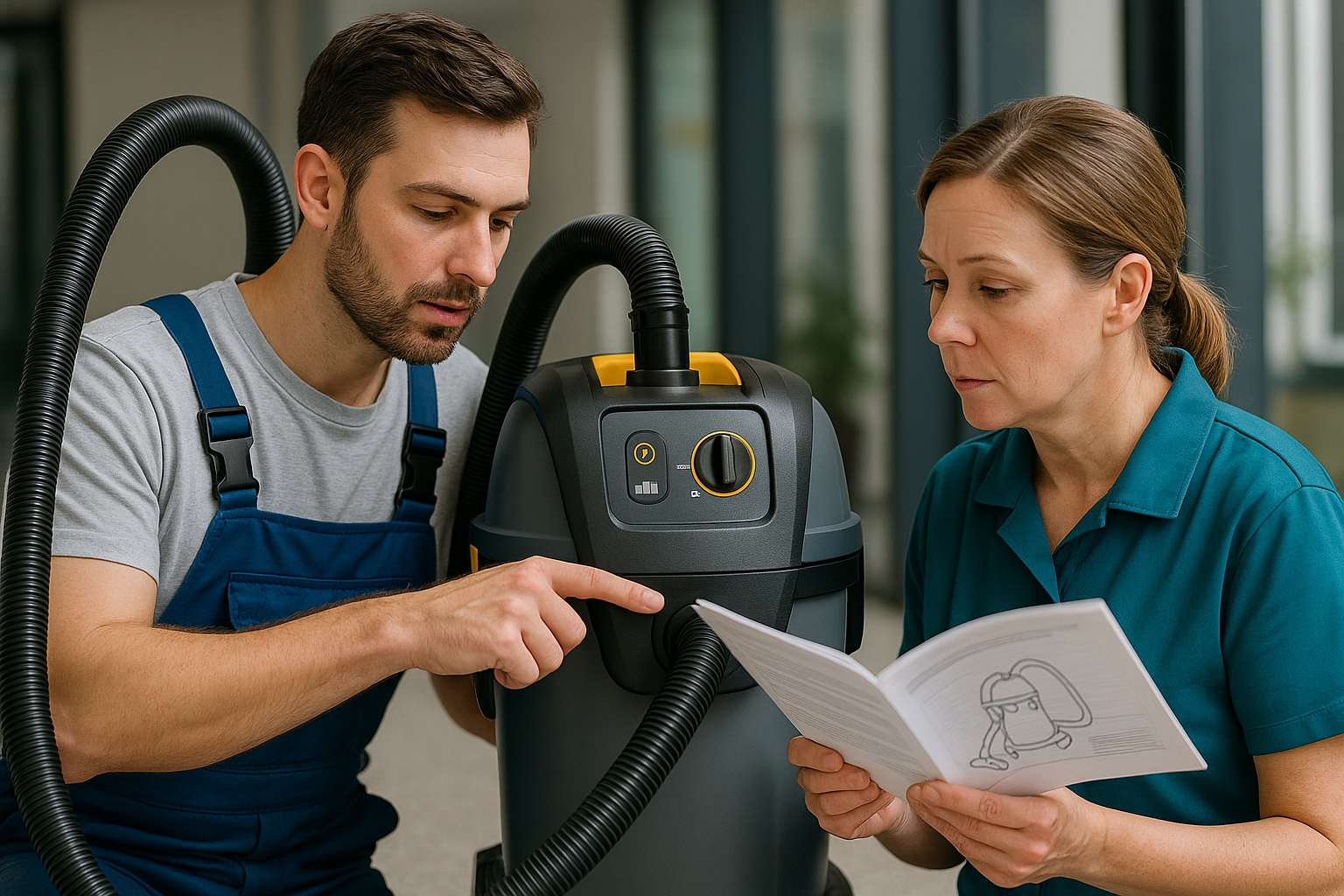
In commercial settings, even the most advanced vacuum cleaner can fail to deliver results if the end-user doesn’t know how to use it effectively. From improper filter maintenance to inefficient usage modes, lack of user training often results in poor performance, safety incidents, and negative brand perception.
1. Training Impacts Safety and Efficiency
In high-traffic environments like airports, hospitals, and government buildings, janitorial teams are under time pressure. Misuse of commercial vacuum cleaners—especially wet/dry models—can lead to overflows, electric faults, or injuries.
OSHA – Equipment Training Standards
2. Product Lifetime and Service Costs Rise Without Training
End-users who aren’t shown proper maintenance—like when to clean HEPA filters or how to change nozzle attachments—often overburden the machine. This increases service costs, accelerates wear, and leads to premature warranty claims.
GSA – Facility Maintenance Protocols
3. Training Reinforces Brand Value in B2B Environments
In the B2B market, a brand is not just judged by product specs, but by post-sale experience. Training sessions help buyers feel confident in their purchase and often lead to repeat orders and word-of-mouth referrals.
In one successful program, the supplier delivered a tailored onboarding experience for facility teams, showcasing a vacuum cleaner engineered to combine high-suction performance with practical portability, impressively quiet operation with autonomous self-cleaning, fully multi-functional capabilities with rugged durability, lightning-fast responsiveness with agile lightweight form, energy-saving modes with optimized efficiency, and robust power capacity with an extra-large tank—delivering a truly commercial-grade large-capacity wet and dry vacuum cleaner. This comprehensive approach ensured the product wasn't just delivered—it was adopted with confidence.
4. Trained Users Extend Brand Advocacy
The International Facility Management Association (IFMA) notes that facilities with vendor-backed training programs are more likely to renew contracts and expand purchasing agreements, thanks to reduced downtime and clearer ROI tracking.
Vacuum cleaner brands that embed training into their commercial sales strategy don’t just build customer satisfaction—they build market dominance. In modern B2B procurement, training is no longer a nice-to-have; it’s a brand differentiator.
www.lxvacuum.com