Hi, message us with any questions.
We're happy to help!





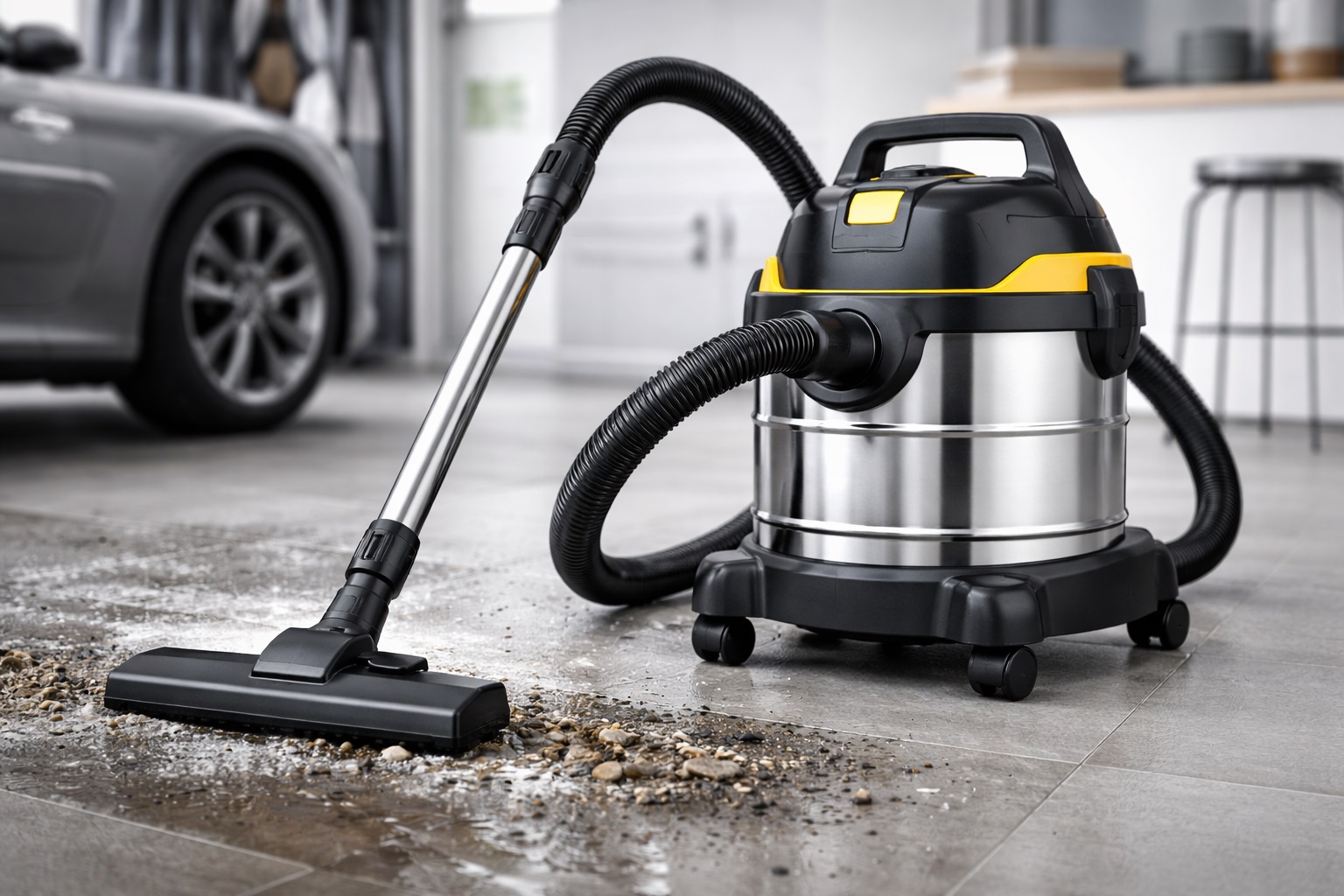
In 2026, one category is dominating buyer attention at the Canton Fair: the low cost wet and dry vacuum cleaner.
But this is not just a product trend—it’s a signal of a deeper shift in global sourcing logic, product design strategy, and distributor profitability models.
For European buyers working with a vacuum cleaner manufacturer China, understanding why this category is rising is the difference between:
Following the market
Or getting ahead of it
This article combines on-site logic, real cases, and actionable sourcing strategies to help you make better decisions.
🏢 On-Site Observation: What Buyers Are Actually Doing at Canton Fair
Walking through the canton fair vacuum cleaner halls in 2026, several patterns are clear:
Wet & dry vacuum booths attract longer buyer engagement
Traditional dry vacuum booths see faster walk-through rates
Buyers ask more about:
Durability
Multi-function usage
Spare parts
👉 Key Insight:
Buyers are no longer asking “How cheap is it?”
They are asking “How versatile and reliable is it?”
🧠 Core Reason #1: Multi-Function Is Replacing Single-Use Products
The rise of the affordable industrial vacuum cleaner is driven by a simple shift:
👉 One machine must solve multiple cleaning problems
European users increasingly need:
Dust cleaning (daily use)
Liquid handling (kitchen, bathroom)
Workshop/garage cleaning
Wet & dry vacuums meet all three.
🛠️ Mini Case: Why Wet & Dry Models Move Faster in Retail
A Polish importer tested a low cost wet and dry vacuum cleaner in hardware stores.
📈 Results:
Sales speed ↑ 1.6x
Higher perceived value
Better retailer acceptance
👉 Insight:
“Multi-function” is easier to sell than “low price”
💰 Core Reason #2: China Manufacturers Are Redefining Cost
The modern vacuum cleaner manufacturer China is no longer competing only on labor cost.
They now focus on:
Modular design
Component sharing
Simplified engineering
👉 This allows a china vacuum supplier to produce:
Wet & dry models
At near dry-vacuum pricing
📦 Real Case: From Price Competition to Margin Growth
A Western European importer sourced a dry vacuum at €38.
❌ Problem:
Weak differentiation
Limited pricing power
🔄 Adjustment:
Switched to an affordable wet and dry vacuum cleaner at €52.
📈 Result:
Retail price ↑ 30%
Margin improved
Sales volume stable
👉 Key Insight:
Better product = stronger pricing control
⚠️ Failure Case: When “Cheap” Becomes Expensive
A small EU buyer selected the lowest-priced canton fair vacuum cleaner at €29.
📉 What Happened:
Defect rate reached 14%
No spare parts support
Lost 2 key retail clients
👉 Lesson:
The cheapest sourcing decision often leads to the highest long-term cost.
⚔️ Core Reason #3: The Definition of “Budget” Has Changed
Old Logic:
Lowest price wins
New Reality (vacuum cleaner trends 2026):
Best cost-performance balance wins
| Buyer Assumption | Market Reality |
|---|---|
| Cheap = competitive | Returns reduce profit |
| Industrial = niche | Now entering home market |
| Simple sells better | Multi-function sells faster |
👉 Conclusion:
The market is shifting toward “smart budget products”
🔇 Core Reason #4: Technology Is Moving Downstream
Features once considered premium are now standard in budget models:
Noise reduction (<75 dB)
Improved filtration
Durable motors
👉 Thanks to china vacuum supplier innovation, budget products now deliver:
Better reviews
Lower return rates
Higher repeat orders
🧮 B2B Procurement Checklist at Canton Fair
When evaluating a canton fair vacuum cleaner, do this:
✔ Compare real noise level on-site
✔ Request working demo (not just catalog)
✔ Ask for spare parts list before pricing
✔ Check EU compliance readiness
✔ Confirm production stability
👉 Pro Insight:
Most mistakes happen because buyers evaluate samples—not supply systems.
🎯 What You Should Do at Your Next Canton Fair Visit
To leverage this trend effectively:
✔ Step 1: Shortlist Smartly
Focus on:
Wet & dry models
Suppliers with engineering capability
✔ Step 2: Test Beyond Appearance
Run the machine
Check noise
Inspect hose and joints
✔ Step 3: Evaluate Business Fit
Can it sell at 2.5x markup?
Does it fit your channel (retail / hardware / eCommerce)?
✔ Step 4: Think Long-Term
Spare parts availability
After-sales system
👉 Reality:
Your profit depends more on product stability than purchase price
🏭 How to Identify a Reliable Supplier
A strong vacuum cleaner manufacturer China should offer:
Transparent pricing logic
Compliance support
OEM/ODM capability
Spare parts ecosystem
👉 Golden Rule:
A good supplier protects your business—not just your margin.
📊 Why This Trend Will Continue
The growth of low cost wet and dry vacuum cleaner products is driven by:
Urban living constraints
Demand for multi-function
Retail margin pressure
👉 Within 2–3 years:
Wet & dry will become standard in budget segments
🚀 Strategic Advantage for Early Movers
Early adopters can:
Capture shelf space
Build differentiation
Avoid price wars
👉 Late adopters will compete only on cost.
💡 Final Insight (Critical)
The rise of low cost wet and dry vacuum cleaner products at Canton Fair is not temporary.
It reflects a structural shift:
From cheap → to value
From single-use → to multi-function
From price competition → to margin optimization
👉 Buyers who ignore this trend will soon find themselves competing only on price.
📌 Target Audience
European vacuum cleaner distributors
B2B sourcing managers
Importers and wholesalers
📌 Hashtags
canton fair vacuum cleaner, low cost wet and dry vacuum cleaner, vacuum cleaner trends 2026, vacuum cleaner manufacturer china, affordable industrial vacuum cleaner, china vacuum supplier, vacuum cleaner distributor Europe, wet dry vacuum market, OEM vacuum cleaner China, vacuum cleaner sourcing China, vacuum cleaner import Europe, vacuum cleaner wholesale supplier, industrial vacuum cleaner low cost, multi function vacuum cleaner, compact wet dry vacuum, vacuum cleaner CE certification, vacuum cleaner ERP compliance, vacuum cleaner private label, vacuum cleaner OEM factory, vacuum cleaner customization, vacuum cleaner supply chain, vacuum cleaner bulk order, vacuum cleaner factory China, vacuum cleaner export business, vacuum cleaner startup Europe, cleaning equipment supplier, vacuum cleaner product development, vacuum cleaner engineering design, vacuum cleaner accessories supplier, vacuum cleaner hose manufacturer, vacuum cleaner filter HEPA, vacuum cleaner spare parts, vacuum cleaner logistics Europe, vacuum cleaner warehouse EU, vacuum cleaner market trends, vacuum cleaner B2B solution, vacuum cleaner for retailers, vacuum cleaner distribution strategy, vacuum cleaner margin improvement, vacuum cleaner import strategy, vacuum cleaner procurement guide, vacuum cleaner innovation 2026, vacuum cleaner cost optimization, vacuum cleaner industrial use, vacuum cleaner home use, vacuum cleaner hybrid model, vacuum cleaner competitive analysis, vacuum cleaner sourcing tips, Lanxstar



