Hi, message us with any questions.
We're happy to help!





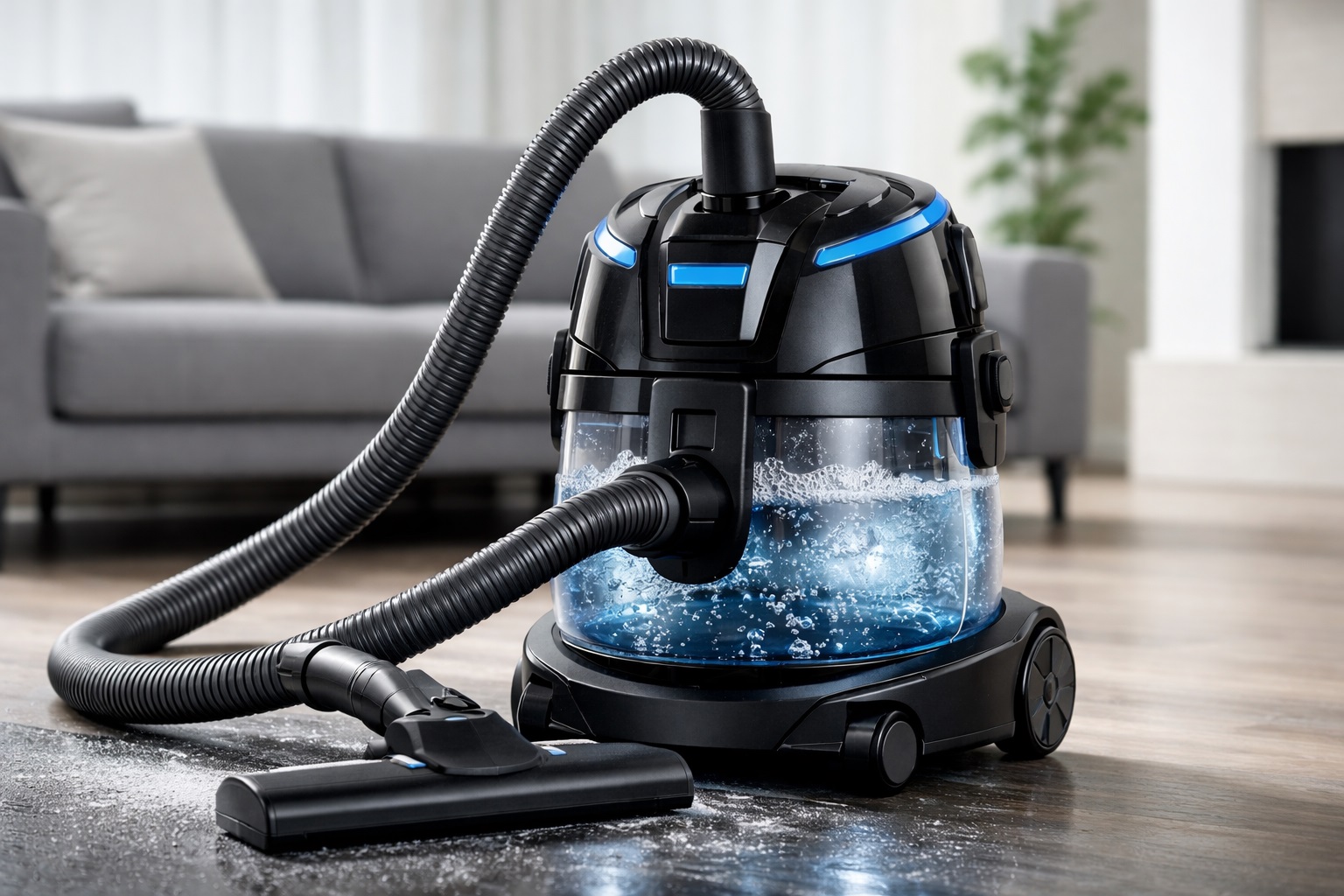
Filtration technology is one of the most critical components of a vacuum cleaner. While suction power often receives the most attention, filtration determines how effectively dust, allergens, and fine particles are captured and retained 🌬️
Among modern vacuum cleaners, water filtration and HEPA filtration are the two most widely discussed systems. Each technology works differently and serves distinct market needs. Understanding their mechanisms is essential for buyers, distributors, and engineers preparing for 2026 and beyond.
1. Why Filtration Technology Matters in Vacuum Cleaners
Filtration directly affects indoor air quality.
A vacuum cleaner with strong suction but poor filtration may release fine dust back into the environment. This is particularly problematic in apartments, offices, hotels, and homes with pets or allergy-sensitive users 🐾
This is why HEPA Filter Vacuum Cleaner designs and water-based filtration systems continue to gain global market share.
2. How Water Filtration Works 💧
Water filtration uses liquid as a natural dust trap.
In a water filtration vacuum, dust-laden air is drawn into a chamber filled with water. Heavy particles, pet hair, and debris are trapped in the water, while cleaner air is expelled.
This system is commonly used in Wet Dry Vacuum Cleaners and Wet and Dry Vacuum Cleaner models designed for mixed cleaning environments.
3. Advantages of Water Filtration Systems
Water filtration offers several strong advantages:
Effective capture of heavy dust and debris
Reduced dust re-circulation into the air
Excellent performance for wet cleaning tasks
Lower dependence on disposable filters
These features make water filtration popular in Large-Capacity Wet Dry Vacuum Cleaner solutions for workshops, warehouses, and industrial facilities 🏭
4. Limitations of Water Filtration
Despite its strengths, water filtration has clear trade-offs.
Water tanks must be emptied and cleaned after use. Improper maintenance may cause odor or hygiene issues. Water-based systems are also heavier, limiting their suitability for Fast Lightweight Vacuum Cleaner or Portable Vacuum for Travel applications.
Portability is not water filtration’s strong point.
5. How HEPA Filtration Works 🌪️
HEPA filtration relies on dense fiber filters.
A HEPA Filter Vacuum Cleaner uses multi-layer filters that mechanically trap up to 99.97% of particles as small as 0.3 microns. This includes dust mites, pollen, and fine allergens.
HEPA filtration is widely used in Cordless Vacuum Cleaner, Apartment Vacuum Cleaner, and quiet vacuum cleaner designs.
6. Advantages of HEPA Filtration
HEPA filtration excels in fine particle control.
Key benefits include:
Superior allergen and dust mite removal
Ideal for Vacuum Cleaner for Allergies
Compact and lightweight integration
Easy daily operation
HEPA systems dominate residential, office, and healthcare cleaning markets worldwide 🏠
7. Limitations of HEPA Filtration
HEPA filters require ongoing maintenance.
Filters must be cleaned or replaced regularly. When clogged, airflow drops, reducing performance even in a High Suction Vacuum Cleaner. Replacement cost is also a concern for buyers focused on the best vacuum on a budget or good budget vacuum cleaner categories.
Filter quality consistency is critical.
8. Water Filtration vs HEPA: Performance Comparison
From a performance standpoint:
Water filtration handles wet debris and heavy dust more effectively
HEPA filtration performs better with fine particles and allergens
Water systems suit wet dry vacuum environments
HEPA systems excel in dry indoor cleaning
There is no universally superior option—application defines the winner 🎯
9. Maintenance and User Experience Differences
User experience varies significantly.
Water filtration avoids filter replacement but requires cleaning after each use. HEPA systems are easier daily but involve periodic filter replacement.
Busy households and offices prefer HEPA. Industrial and garage users favor water filtration.
10. Impact on Noise and Energy Efficiency 🔋
Filtration influences airflow and energy usage.
Water-based systems often create higher airflow resistance, increasing motor load. HEPA systems, when well-designed, support Energy-Saving Efficient Powerful Vacuum Cleaner performance.
Quiet HEPA-based designs dominate Quiet Vacuum for Night Use segments.
11. Application Scenarios by Market Segment
Different markets favor different technologies:
Residential apartments lean toward HEPA filtration
Pet owners prefer HEPA for hair and dander
Workshops and garages favor water filtration
Commercial spaces use both depending on wet or dry needs
Clear segmentation supports effective vacuum cleaner distribution strategies.
12. Procurement Perspective: Choosing the Right Technology
From a vacuums procurement standpoint, decision factors include:
Cleaning environment and frequency
Maintenance capability
Operating cost over time
Mobility and product weight
Correct filtration choice reduces long-term risk.
13. Product Development and Engineering Considerations
Engineering design must align with filtration choice.
HEPA systems require airtight seals and optimized airflow. Water filtration systems demand corrosion-resistant materials and leak-proof construction.
Filtration impacts motor design and housing structure.
14. Market Trends and Technology Integration 🚀
Hybrid filtration platforms are emerging.
Some manufacturers combine cyclonic separation, HEPA filtration, and wet-dry functionality into Multi-Functional Durable Vacuum Cleaner designs.
Modularity is shaping future filtration innovation.
15. Distributor and Retail Strategy
Clear education improves conversion.
Distributors that clearly explain filtration differences reduce returns and increase customer trust. This is increasingly important in competitive online channels.
Knowledge-based selling outperforms spec-based selling.
16. Brand and Manufacturing Role
Manufacturers such as Lanxstar develop both HEPA and water filtration platforms to support diverse regional needs, helping distributors cover residential, commercial, and industrial segments efficiently.
Product flexibility strengthens global reach.
Conclusion
Water filtration and HEPA filtration represent two fundamentally different approaches to vacuum cleaner design. Water filtration excels in wet and heavy-duty environments, while HEPA filtration dominates residential, allergy-sensitive, and quiet-cleaning scenarios.
Understanding how these technologies work—and where each performs best—empowers buyers, distributors, and engineers to make smarter decisions in the evolving global cleaning market.
To explore vacuum cleaner solutions featuring advanced filtration technologies, visit
www.lxvacuum.com
50 Related Keyword Groups
Lanxstar vacuum cleaner, water filtration vacuum cleaner, HEPA Filter Vacuum Cleaner, High Suction Vacuum Cleaner, Portable Quiet Vacuum Cleaner, Self-Cleaning Vacuum Cleaner, Multi-Functional Durable Vacuum Cleaner, Fast Lightweight Vacuum Cleaner, Energy-Saving Efficient Powerful Vacuum Cleaner, Large-Capacity Wet Dry Vacuum Cleaner, Wet Dry Vacuum Cleaners, Wet and Dry Vacuum Cleaner, wet dry vacuum, Li-ion Cordless Handheld Vacuum Cleaner, cordless handheld vacuums, Cordless Vacuum Cleaner, Car Vacuum Cleaner, quiet vacuum cleaner, Quiet Vacuum for Night Use, Portable Vacuum for Travel, Apartment Vacuum Cleaner, Vacuum Cleaner for Pet Hair, Vacuum Cleaner for Allergies, Vacuum for Multi-Surface, Vacuum Cleaner for Hardwood Floors, best vacuum on a budget, best budget hoover, good budget vacuum, best affordable vacuum, best budget vacuum, best value for money hoover, best value hoover, best vacuum cleaners on a budget, best vacuums on a budget, good budget vacuum cleaner, vacuums procurement, vacuum cleaner distribution