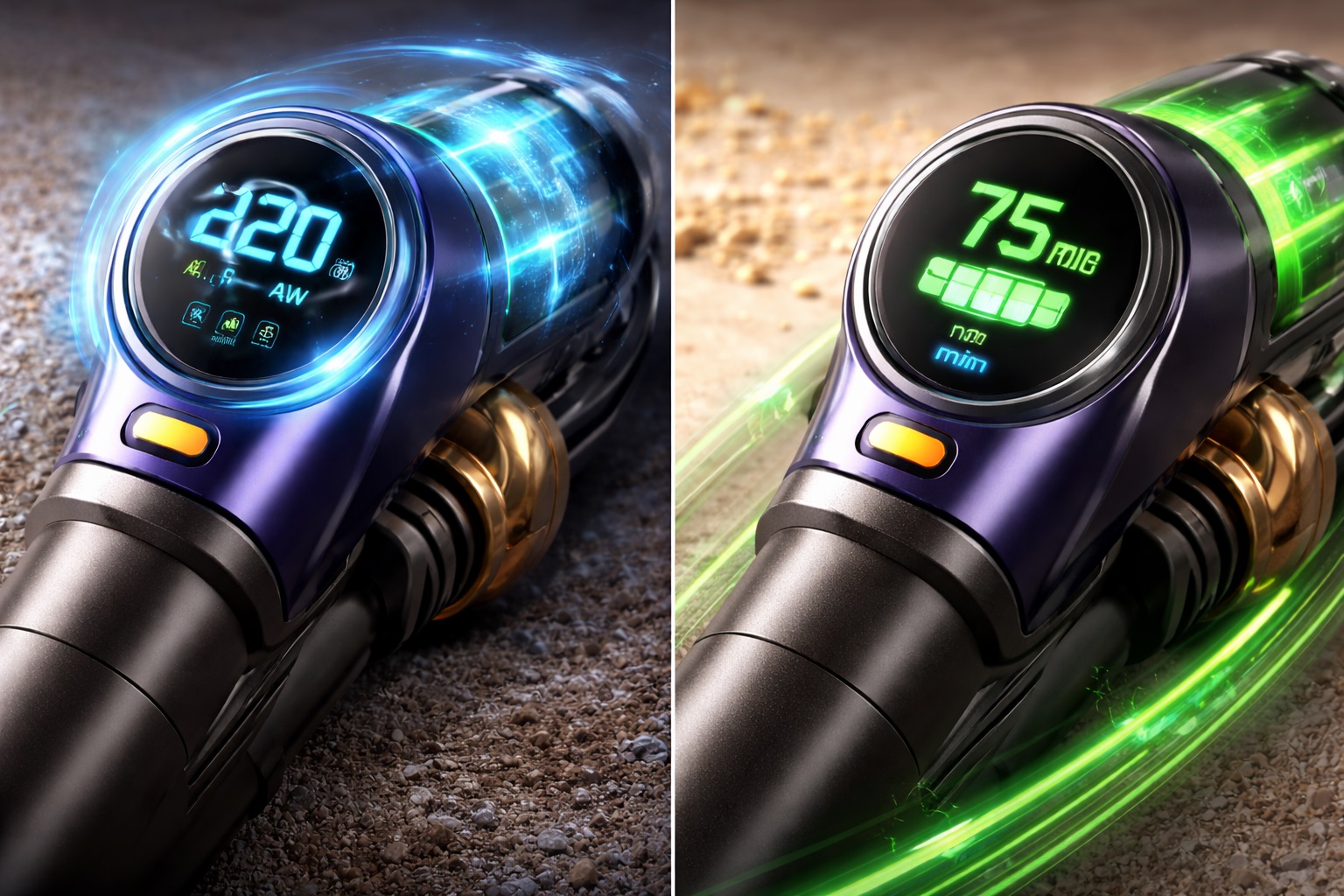
A B2B Reality Check for Europe & Middle East Buyers
🚀 Why This Specs Debate Matters So Much in B2B
For years, vacuum cleaner marketing has trained buyers to believe:
Higher suction + bigger battery = better vacuum cleaner
In reality, this assumption causes more B2B sourcing mistakes than almost any other factor.
For distributors and B2B buyers dealing with:
wet and dry vacuum cleaner
multi-functional durable vacuum cleaner
4 in 1 cordless smart wet & dry vacuum cleaner
quiet vacuum cleaner
vacuum cleaner for hardwood floors
vacuum cleaner for pet hair
misunderstanding specs leads directly to:
This article explains how to read specs the way engineers do—not marketers.
🧠 The Core Truth: Specs Are Not Performance
Two vacuum cleaners can list:
…and still perform completely differently.
Why? Because real performance depends on system efficiency, not isolated numbers.
⚙️ Suction Power: What the Number Really Means (and What It Doesn’t)
Common Suction Metrics
Air watts
Pascals (Pa)
Motor wattage
The Problem
These numbers are usually measured:
💡 B2B Insight
High suction vacuum cleaner specs often describe peak output, not usable performance.
When High Suction Becomes a Problem
On hardwood floors, excessive suction causes stickiness and scratches
On quiet vacuum cleaner designs, higher suction = more noise
On cordless units, suction spikes drain batteries fast
👉 High suction is not universally beneficial.
🔋 Battery Life: Why mAh Is a Trap
Battery specs look simple—but they’re misleading.
What Buyers See
Large battery capacity
Long runtime claims
What Actually Matters
A 4 in 1 cordless smart wet & dry vacuum cleaner running sensors, pumps, and motors will drain batteries far faster than a dry-only unit—even with the same battery size.
💡 Procurement Reality
Battery life must always be evaluated together with power consumption, never alone.
🔄 The Real Equation: Suction × Runtime × Efficiency
Professional buyers should evaluate vacuum cleaners using this logic:
Usable Cleaning Time = Balanced Power × Efficient Airflow × Controlled Energy Use
This is especially critical for:
🧼 Wet and Dry Vacuum Cleaner: Power Is Not the Hero
In wet & dry systems, performance depends more on:
Many buyers assume wet cleaning needs more power—it doesn’t.
💡 B2B Lesson
Overpowered wet & dry models often suffer from:
Short runtime
Excessive noise
Higher failure rates
🧩 Multi-Functional Durable Vacuum Cleaner: Why Balance Wins
Multi-functional units combine:
Dry vacuuming
Wet cleaning
Sometimes smart sensing
Every added function competes for battery and motor resources.
Durable Design Means:
Moderate suction
Stable airflow
Controlled thermal load
💡 Distributor Insight
Balanced machines last longer and generate fewer warranty claims than “spec monsters”.
🔇 Quiet Vacuum Cleaner: The Silent Trade-Off
Quiet vacuum cleaner engineering is where spec misunderstanding peaks.
Noise Reduction Requires:
Lower motor RPM
Smoother airflow paths
Vibration isolation
This naturally limits peak suction—but improves:
User comfort
Night-time usability
Review scores
👉 For quiet vacuum for night use, stability beats raw power every time.
🌳 Vacuum Cleaner for Hardwood Floors: Less Is More
Hardwood floors demand:
Gentle contact
Controlled suction
Smooth movement
High suction vacuum cleaners often:
Pull too tightly
Increase friction
Cause scratches
💡 Buyer Rule
For hardwood floors, airflow control > suction strength.
🐶 Vacuum Cleaner for Pet Hair: Efficiency Over Force
Pet hair cleaning is often misunderstood.
What really matters:
Brush-roll design
Consistent airflow
Anti-tangle systems
A lower-suction but efficient design often outperforms a higher-suction model that loses airflow under load.
❌ Common B2B Mistakes When Reading Specs
Comparing suction numbers across brands directly
Believing advertised runtime without mode context
Ignoring noise and heat generation
Assuming higher specs = higher durability
Each mistake increases return rates more than price differences ever will.
🧭 A Smarter B2B Spec Evaluation Framework
✔ Ask how suction is delivered, not how high it peaks
✔ Match battery life to real cleaning modes
✔ Evaluate wet & dry systems as energy systems, not motors
✔ Prioritize stability for hardwood and night use
✔ Test pet hair performance under load
This approach dramatically reduces post-sale issues.
🏁 Final Takeaway
Suction power and battery life are not enemies—but they must be balanced.
For EU & Middle East B2B buyers, the winners are vacuum cleaners that:
Understanding specs correctly is no longer optional—it’s a competitive advantage.
📌 Suitable Readers
Vacuum cleaner distributors & wholesalers
B2B sourcing managers
Product managers & R&D engineers
Cleaning equipment entrepreneurs
Appliance import decision-makers
📌 Hashtags
wet and dry vacuum cleaner, multi-functional durable vacuum cleaner, 4 in 1 cordless smart wet & dry vacuum cleaner, quiet vacuum cleaner, vacuum cleaner for hardwood floors, vacuum cleaner for pet hair, vacuum cleaner distributor, B2B vacuum cleaner, EU vacuum market, Middle East vacuum market,
cordless vacuum cleaner, high suction vacuum cleaner, battery powered vacuum cleaner, energy efficient vacuum cleaner, low noise vacuum cleaner, smart vacuum technology, cleaning appliance B2B, durable cleaning equipment, vacuum cleaner wholesaler,
floor care solutions, hardwood floor cleaning, pet hair cleaning solutions, wet dry vacuum system, vacuum motor technology, airflow optimization, battery management system,
after sales cost reduction, product sourcing strategy, vacuum cleaner R&D, cleaning technology innovation, intelligent vacuum system,
urban cleaning solutions, night cleaning appliances, modern home appliances, appliance distribution, vacuum cleaner business, global vacuum cleaner market, professional cleaning solutions,
vacuum cleaner market insights, appliance supply chain, cleaning industry trends, Lanxstar, B2B sourcing guide











