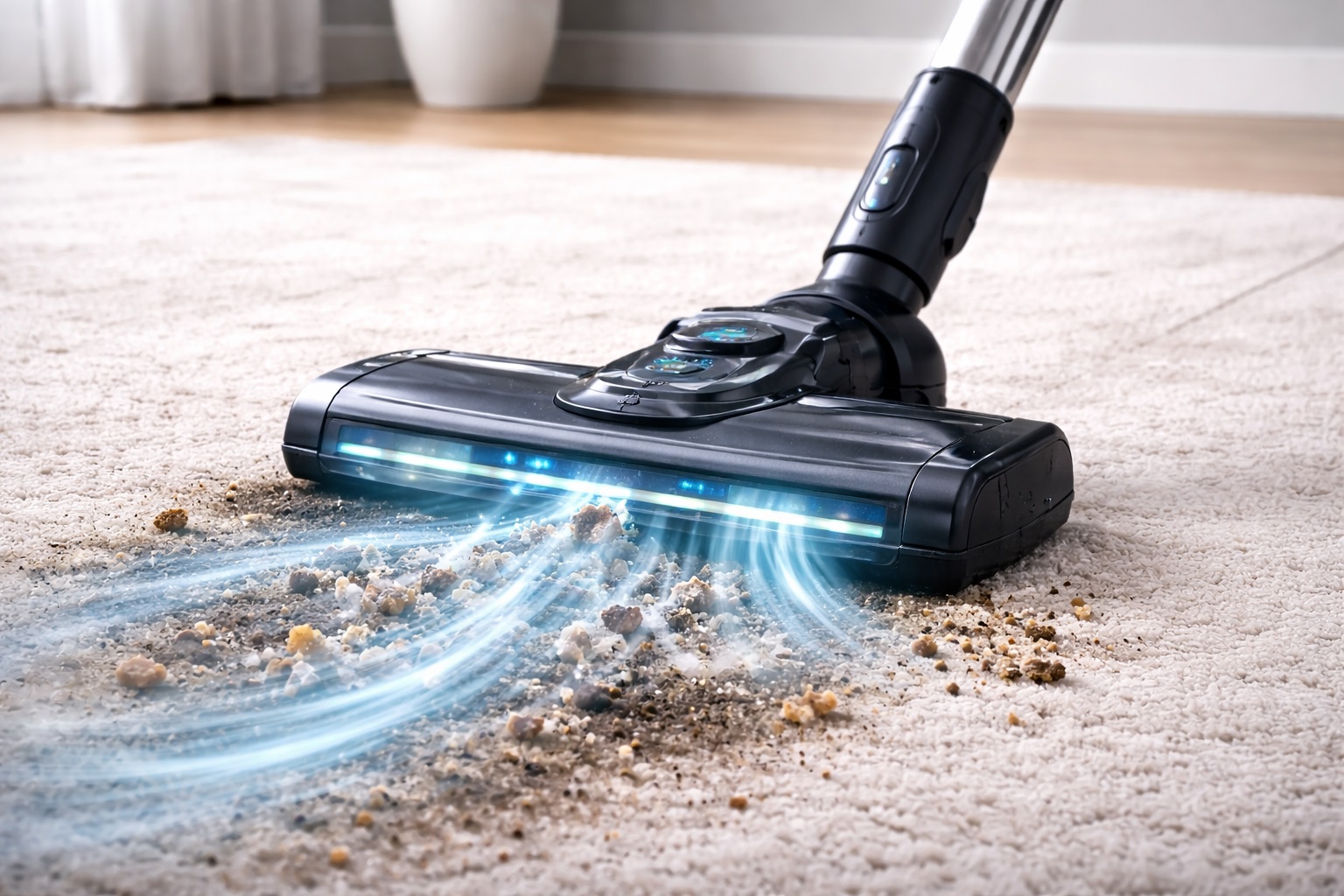
When shopping for a vacuum cleaner, suction power is often the first specification people notice. Terms like “high suction,” “powerful motor,” or “maximum airflow” are everywhere—but what do they actually mean in daily cleaning?
Understanding vacuum suction power helps you choose a cleaner that works efficiently instead of relying on marketing claims. This guide explains how suction power works, what really affects cleaning performance, and how to select the right vacuum for your home 🧹.
1. What Is Vacuum Suction Power?
Suction power refers to the vacuum’s ability to pull air—and the dirt carried within it—into the machine. In simple terms, stronger suction allows a vacuum to lift dust, hair, and debris more effectively from surfaces.
A High Suction Vacuum Cleaner excels at:
Removing embedded dirt from carpets
Lifting pet hair from fabric
Capturing fine dust particles
However, suction alone does not guarantee good cleaning results.
2. Suction Power vs. Cleaning Efficiency
Many people assume higher suction always means better cleaning. In reality, cleaning efficiency depends on a combination of factors:
Suction strength
Airflow volume
Brush or nozzle design
Sealing and filtration
A vacuum with moderate suction but excellent airflow and brush contact may clean better than a poorly designed vacuum with higher raw power ⚙️.
3. Airflow: The Often-Ignored Factor
Airflow determines how much air moves through the vacuum system. Strong airflow carries dirt into the dust container before it can fall back to the floor.
Efficient airflow is critical for:
This is why well-engineered Energy-Saving Efficient Powerful Vacuum Cleaner models can outperform less efficient high-wattage machines.
4. Cordless Vacuums and Suction Power
In the past, cordless vacuums were considered weaker. Today, modern Cordless Vacuum Cleaner designs use advanced motors and airflow optimization to deliver impressive performance.
A Li-ion Cordless Handheld Vacuum Cleaner can provide enough suction for:
While corded vacuums still offer an advantage for long, uninterrupted sessions, cordless suction is more than sufficient for most households 🔋.
5. Suction Power for Different Floor Types
Different surfaces require different suction behavior.
Hard floors: Moderate suction with smooth airflow prevents debris scattering
Carpets: Strong suction helps lift embedded dirt
Rugs: Balanced suction avoids pulling fabric fibers
A good vacuum adjusts suction or airflow automatically, making it ideal as a Vacuum for Multi-Surface use.
6. Pet Hair and High Suction Performance
Pet hair is lightweight and clings to surfaces. A Vacuum Cleaner for Pet Hair needs strong suction combined with effective brush design.
High suction helps:
Without adequate suction, hair wraps around brushes instead of being collected 🐾.
7. Suction and Filtration for Allergy Control
For allergy sufferers, suction works together with filtration. A HEPA Filter Vacuum Cleaner ensures that dust and allergens pulled in by suction do not escape back into the air.
Strong suction is important for:
Removing dust mites from carpets
Capturing pollen and fine particles
Improving indoor air quality
This combination makes high-suction HEPA vacuums suitable as a Vacuum Cleaner for Allergies 🌬️.
8. Wet and Dry Vacuums: A Different Kind of Suction
A Wet and Dry Vacuum Cleaner uses suction to handle both dry debris and liquid spills. These vacuums are designed with sealed motors and special airflow paths to manage moisture safely.
A Large-Capacity Wet Dry Vacuum Cleaner or 4 in 1 Cordless Smart Wet & Dry Vacuum Cleaner balances suction with liquid handling, making it versatile for kitchens and utility areas 🧼.
9. Noise Level and Suction Balance
More suction often means more noise—but not always. Advanced engineering allows some vacuums to deliver strong suction while remaining a quiet vacuum cleaner.
A Quiet Vacuum for Night Use combines:
Efficient motor design
Sound insulation
Optimized airflow
This balance is especially important in apartments and shared living spaces 🔇.
10. Does Higher Wattage Mean Higher Suction?
Wattage measures energy consumption, not suction power. A vacuum with high wattage but poor airflow design may clean worse than a lower-wattage, well-engineered model.
This is why many best vacuum on a budget options focus on efficiency instead of raw power numbers.
11. Choosing the Right Suction Level for Your Home
When selecting a vacuum based on suction power, consider:
The goal is efficient cleaning, not maximum power at all costs.
Conclusion: Suction Power Is Important, but Design Makes the Difference
Vacuum suction power is a key factor in cleaning performance, but it works best when paired with good airflow, effective brushes, and proper filtration. Understanding how suction really works helps you choose a vacuum that cleans faster, deeper, and more comfortably.
For homeowners and buyers exploring well-balanced, high-performance vacuum solutions, learn more at www.lxvacuum.com
50 Related Keyword Groups
High Suction Vacuum Cleaner, Portable Quiet Vacuum Cleaner, Self-Cleaning Vacuum Cleaner, Multi-Functional Durable Vacuum Cleaner, Fast Lightweight Vacuum Cleaner, Energy-Saving Efficient Powerful Vacuum Cleaner, Large-Capacity Wet Dry Vacuum Cleaner, Li-ion Cordless Handheld Vacuum Cleaner, Wet Dry Vacuum Cleaners, 4 in 1 Cordless Smart Wet & Dry Vacuum Cleaner, cordless handheld vacuums, Cordless Vacuum Cleaner, Car Vacuum Cleaner, quiet vacuum cleaner, wet dry vacuum, Portable Vacuum for Travel, HEPA Filter Vacuum Cleaner, Apartment Vacuum Cleaner, Wet and Dry Vacuum Cleaner, Quiet Vacuum for Night Use, Vacuum Cleaner for Pet Hair, Vacuum Cleaner for Allergies, Vacuum for Multi-Surface, best vacuum on a budget, best budget hoover, good budget vacuum, best affordable vacuum, best budget vacuum, best value for money hoover, best value hoover, best vacuum cleaners on a budget, best vacuums on a budget, good budget vacuum cleaner, Lanxstar vacuum cleaners, Lanxstar cordless vacuum, vacuums procurement, vacuum cleaner distribution