Hi, message us with any questions.
We're happy to help!





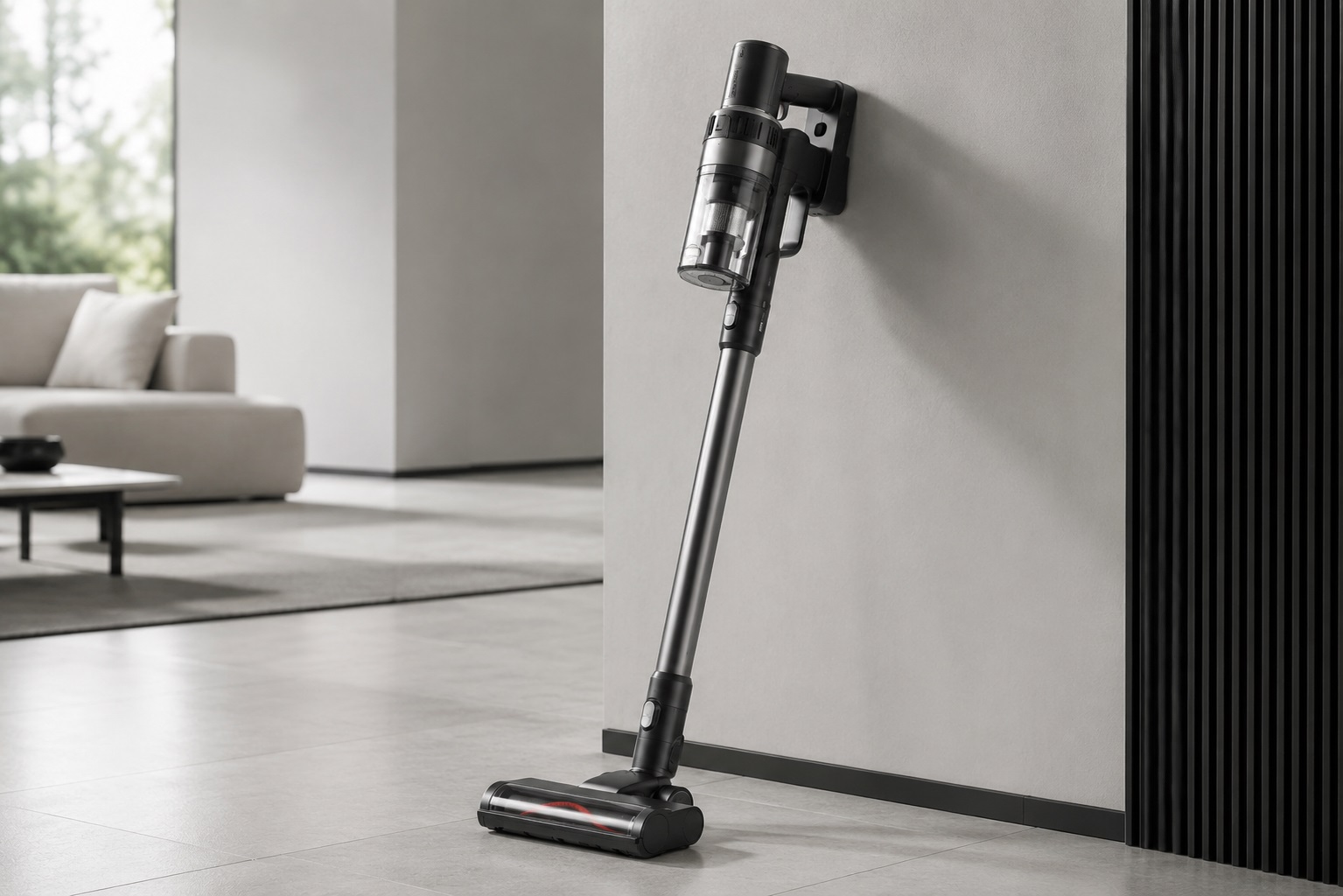
🚨 European Consumers Are No Longer Buying “Traditional Appliances”
For many years, vacuum cleaner competition focused mainly on:
suction power,
motor performance,
battery runtime,
and manufacturing cost.
That competitive logic is rapidly becoming outdated.
In 2026, European consumers increasingly evaluate vacuum cleaners through a completely different perspective:
lifestyle integration.
Today’s buyers are no longer choosing products based only on cleaning performance.
They are also evaluating:
emotional comfort,
visual harmony,
acoustic experience,
sustainability,
and interior compatibility.
For every serious vacuum cleaner manufacturer and OEM vacuum supplier, understanding evolving vacuum cleaner design trends Europe is becoming essential for long-term competitiveness.
Because in the modern European market:
consumers are no longer buying cleaning devices — they are buying modern living experiences.
⚡ Why Vacuum Cleaner Design Is Becoming a Strategic Business Advantage
European households are changing rapidly.
Several major social and lifestyle shifts are reshaping appliance purchasing behavior:
smaller urban apartments,
minimalist interior culture,
remote working lifestyles,
sustainability awareness,
and smart home ecosystems.
As a result, vacuum cleaners are no longer hidden inside storage rooms.
They are increasingly visible parts of modern home environments.
This changes how consumers evaluate products.
Today, buyers increasingly care about:
visual simplicity,
storage convenience,
material texture,
acoustic comfort,
and aesthetic integration.
According to multiple European appliance retail studies, consumers increasingly associate premium product design with:
engineering reliability,
product quality,
and long-term brand trust.
This is why modern vacuum design is becoming one of the most important competitive areas in the European appliance market.
🔥 The Industry Shift Most OEM Factories Still Underestimate
❌ European Consumers No Longer Want “Industrial Looking” Appliances
One of the biggest mistakes many factories still make is assuming stronger visual appearance creates stronger market appeal.
That logic is fading rapidly across Europe.
In 2026, consumers increasingly prefer vacuum cleaners that feel:
lightweight,
calm,
elegant,
and emotionally non-disruptive.
Bulky structures, aggressive industrial styling, oversized dimensions, and visually complicated interfaces are gradually losing popularity.
Especially in markets such as:
Germany,
Sweden,
Denmark,
France,
and the Netherlands,
minimalist aesthetics increasingly dominate purchasing psychology.
Consumers increasingly favor products inspired by:
Scandinavian interior design,
soft neutral color palettes,
hidden functionality,
and ergonomic simplicity.
Several premium European appliance brands are increasingly adopting Scandinavian-inspired CMF strategies featuring:
matte finishes,
warm neutral materials,
soft-touch textures,
and visually integrated interfaces.
For many consumers today:
visual comfort has become part of product performance itself.
📉 Real Market Observation: Why One Vacuum Cleaner Failed Despite Strong Specifications
At a European appliance exhibition in Milan during late 2025, a cordless vacuum cleaner attracted strong distributor interest because of:
high suction power,
long battery runtime,
and competitive OEM pricing.
Technically, the product performed extremely well.
However, several distributors later rejected cooperation after reviewing consumer feedback sessions.
The reason was surprisingly simple:
The vacuum cleaner looked too “industrial” for modern European homes.
Participants repeatedly described the product as:
bulky,
visually aggressive,
and difficult to integrate into minimalist living environments.
One Scandinavian distributor privately explained:
“European consumers increasingly want appliances that visually disappear into their homes.”
Following the exhibition, the manufacturer redesigned:
the handle proportions,
charging dock structure,
color palette,
and body geometry.
Only six months later, the updated model achieved significantly stronger distributor interest despite minimal changes to technical performance.
This reflects a major market shift:
design perception is increasingly influencing commercial success more than specifications alone.
🌍 How Social Media Is Quietly Reshaping Vacuum Cleaner Design
One of the most underestimated changes in the European appliance industry is the influence of social media aesthetics.
Platforms such as:
Instagram,
TikTok,
Pinterest,
and YouTube lifestyle channels
are increasingly shaping consumer expectations around home appliances.
Products now appear regularly inside:
interior design content,
minimalist home tours,
lifestyle influencer videos,
and smart living inspiration posts.
This creates a completely new design pressure for manufacturers.
Products with visually minimalist and lifestyle-friendly appearances increasingly perform better across:
social media engagement,
online click-through rates,
and premium retail positioning.
Younger European consumers increasingly prefer appliances that complement:
modern furniture,
neutral interiors,
and “social-media-friendly” home environments.
This is transforming vacuum cleaners from purely functional appliances into:
visual lifestyle products.
🧩 The Most Important Vacuum Cleaner Design Trends in Europe for 2026
🎨 1. Minimalist Design Language
Minimalism continues dominating European appliance aesthetics.
Consumers increasingly prefer:
hidden controls,
clean surfaces,
soft curves,
and visually simplified structures.
Over-designed products increasingly appear outdated and visually stressful.
The strongest-performing products often emphasize:
intuitive interaction,
low visual noise,
and calm design harmony.
🌱 2. Sustainable CMF Design
Sustainability is no longer limited to energy efficiency.
It is now deeply influencing CMF strategy:
Color, Material, and Finish.
European consumers increasingly associate:
matte finishes,
recycled textures,
and soft-touch materials
with premium product quality and environmental responsibility.
Visible sustainability cues are becoming important emotional purchasing triggers.
Modern sustainable design increasingly includes:
recycled plastics,
replaceable structures,
modular engineering,
and eco-friendly packaging systems.
🔇 3. Quiet Design Is Becoming Luxury Design
Noise perception is becoming a major emotional factor in modern appliance purchasing.
As European apartments become smaller and more acoustically sensitive, consumers increasingly associate quiet products with:
engineering sophistication,
premium quality,
and emotional comfort.
In many premium product segments:
acoustic comfort is becoming part of luxury perception.
Modern buyers increasingly prefer vacuum cleaners that feel:
smooth,
soft,
and emotionally unobtrusive.
📦 4. Compact and Storage-Friendly Engineering
Urban European living spaces are becoming increasingly space-efficient.
This creates strong demand for products supporting:
vertical docking,
foldable structures,
lightweight portability,
and easy storage integration.
Consumers increasingly reject products requiring excessive physical space.
Compact engineering now directly affects:
retail conversion,
apartment compatibility,
and online purchasing decisions.
🤖 5. Invisible Intelligence and Smart Simplicity
Smart home adoption continues growing across Europe.
However, consumers increasingly want technology that feels:
intuitive,
seamless,
and emotionally natural.
The strongest-performing smart vacuum designs increasingly focus on:
automatic adjustment systems,
minimal interface complexity,
hidden technology integration,
and effortless interaction.
In 2026, appliance design is shifting toward:
invisible intelligence.
Consumers no longer want products that feel technologically overwhelming.
They want products that feel intelligently effortless.
🧠 Why Younger European Consumers Are Reshaping Product Expectations
Millennial and Gen Z consumers are becoming increasingly influential in European home appliance purchasing.
This generation evaluates products differently from previous buyers.
Younger consumers increasingly prioritize:
interior compatibility,
sustainability,
visual identity,
social media aesthetics,
and emotional design experience.
For many younger buyers, appliances are no longer separate utility tools.
They are extensions of:
lifestyle identity,
home atmosphere,
and personal taste.
This explains why many modern appliance brands increasingly invest in:
lifestyle-oriented industrial design,
emotional branding,
and premium visual storytelling.
📊 Why Design Is Becoming a Branding Strategy
In the past, vacuum cleaners were often viewed as purely functional household equipment.
Today, they are increasingly becoming:
lifestyle technology products.
This changes how consumers evaluate brands.
Modern design now directly influences:
perceived innovation,
premium positioning,
social media visibility,
customer trust,
and emotional engagement.
The influence of premium brands such as Dyson and Miele has significantly accelerated consumer expectations around emotional appliance design and visual sophistication.
In many European retail environments today:
design quality itself has become marketing value.
⚠️ The Hidden Risk of Ignoring European Design Trends
Many factories still focus heavily on:
motor specifications,
battery performance,
and manufacturing cost reduction.
But European consumers increasingly make emotional purchasing decisions.
Products appearing:
outdated,
noisy,
oversized,
or visually aggressive
are gradually losing competitiveness even when technical specifications remain strong.
For distributors, poor design creates:
weaker retail conversion,
lower shelf attractiveness,
reduced social media engagement,
and declining online click-through rates.
This explains why modern buyers increasingly prioritize suppliers capable of combining:
engineering,
aesthetics,
and lifestyle understanding.
📈 Practical Design Strategies for OEM Vacuum Suppliers
✅ Prioritize European CMF Trends
Focus on:
matte finishes,
warm neutral colors,
tactile premium materials,
and low-contrast visual language.
Avoid visually aggressive industrial styling.
✅ Design for Social Media Visibility
Products increasingly need to look attractive inside:
lifestyle videos,
home content,
and interior photography.
Visual shareability now influences product marketing performance.
✅ Improve Acoustic Engineering Early
Noise reduction should be integrated during early product development rather than treated as a secondary adjustment.
Acoustic comfort increasingly affects premium perception.
✅ Simplify Human Interaction
Consumers increasingly prefer:
fewer buttons,
intuitive interfaces,
and emotionally effortless operation.
Complexity increasingly reduces perceived sophistication.
🔥 The Future of Vacuum Cleaner Design in Europe
The European market is moving toward a future where vacuum cleaners are expected to combine:
engineering performance,
emotional comfort,
sustainability,
acoustic refinement,
and lifestyle integration.
The strongest products in 2026 will not necessarily be the most powerful.
They will be the products that best integrate into modern European living environments.
In the next five years, vacuum cleaners may evolve from household appliances into fully integrated lifestyle devices designed around:
visual harmony,
emotional comfort,
sustainable living,
and intelligent interaction.
Factories that continue designing products only around motor performance may gradually lose relevance in the future European market.
Because in the future:
consumers may compare how vacuum cleaners feel just as much as how they clean.
🎯 Final Thoughts
The European vacuum cleaner market is entering a new design era shaped by:
minimalism,
sustainability,
social media aesthetics,
acoustic comfort,
and emotional product experience.
For every serious vacuum cleaner manufacturer and OEM vacuum supplier, understanding evolving vacuum cleaner design trends Europe is no longer optional.
The real question is no longer:
“Can your factory manufacture vacuum cleaners?”
The real question is:
“Can your products visually and emotionally belong inside the future European home?”
That is becoming one of the most important competitive challenges in the global appliance industry.
Frequently Asked Questions About Vacuum Cleaner Design Trends in Europe
❓ What vacuum cleaner designs are most popular in Europe in 2026?
Minimalist, quiet, compact, sustainable, and visually integrated designs are becoming the dominant trends across European markets.
❓ Why is modern vacuum design becoming more important?
Because European consumers increasingly associate design quality, emotional comfort, and lifestyle compatibility with overall product value and brand trust.
❓ How is social media influencing vacuum cleaner design?
Platforms such as Instagram, TikTok, and Pinterest are increasing demand for visually attractive appliances that integrate naturally into modern interior aesthetics.
❓ What should OEM vacuum suppliers prioritize for Europe?
Suppliers should focus on minimalist CMF design, acoustic engineering, compact structures, sustainable materials, and emotionally intuitive user experiences.
Hashtags
vacuumcleanerdesign, vacuumcleanerdesigntrendsEurope, vacuumcleanermanufacturer, OEMvacuumsupplier, modernvacuumdesign, Europecleaningtrends, cordlessvacuumcleaner, smartvacuumdesign, minimalistvacuumcleaner, sustainablevacuumcleaner, vacuumcleanerOEM, vacuumcleanerinnovation, Europeanhomeappliances, vacuumcleanerengineering, vacuumcleanerindustry, vacuumcleanerRND, premiumvacuumcleaner, lownoisevacuumcleaner, compactvacuumcleaner, Scandinavianhomedesign, applianceindustrialdesign, ergonomicvacuumcleaner, smartcleaningdevices, ecofriendlyvacuumcleaner, homecleaningtechnology, vacuumcleanerfactory, vacuumcleanerwholesale, vacuumcleanerdistributor, applianceCMFdesign, modernhomeappliances, acousticengineering, vacuumcleanerbranding, applianceproductdesign, OEMcleaningproducts, Europehomecleaningmarket, vacuumcleanerfuturetrends, intelligenthomeappliances, interiorfriendlydesign, sustainableproductdesign, roboticvacuumcleaner, applianceinnovationEurope, lifestyletechnologyproducts, vacuumcleanersupplier, Europeanconsumertrends, smartlivingproducts, modernappliancedesign, premiumhomecleaning, industrialdesigntrends, Lanxstar, futurevacuumcleanerdesign



