Hi, message us with any questions.
We're happy to help!





🎯 Target Audience
European & Middle Eastern B2B vacuum cleaner buyers, distributors, and industry professionals
Introduction: No Brand Is Perfect—and That’s the Point
In the vacuum cleaner industry, most comparisons sound the same:
strong suction, advanced technology, premium quality.
But experienced buyers know the truth:
every major vacuum cleaner brand has strengths—and trade-offs.
Whether sourcing Household Vacuum Cleaners, Upright Vacuum Cleaners, or specialized solutions like quiet, lightweight, multi-surface, or allergy-safe models, the key to smart procurement is not finding a “perfect brand,” but matching brand strengths to real usage needs.
This article offers an honest, non-promotional comparison framework, focusing on where major vacuum brands typically perform well—and where they often fall short.
🔍 How to Read This Comparison (Important)
This is not a brand ranking.
Instead, it compares common strengths and weaknesses found among major vacuum brands, based on engineering focus, product strategy, and real-world performance.
Think of it as a decision lens, not a scoreboard.
🏠 Household Vacuum Cleaners: Broad Appeal, Broad Compromises
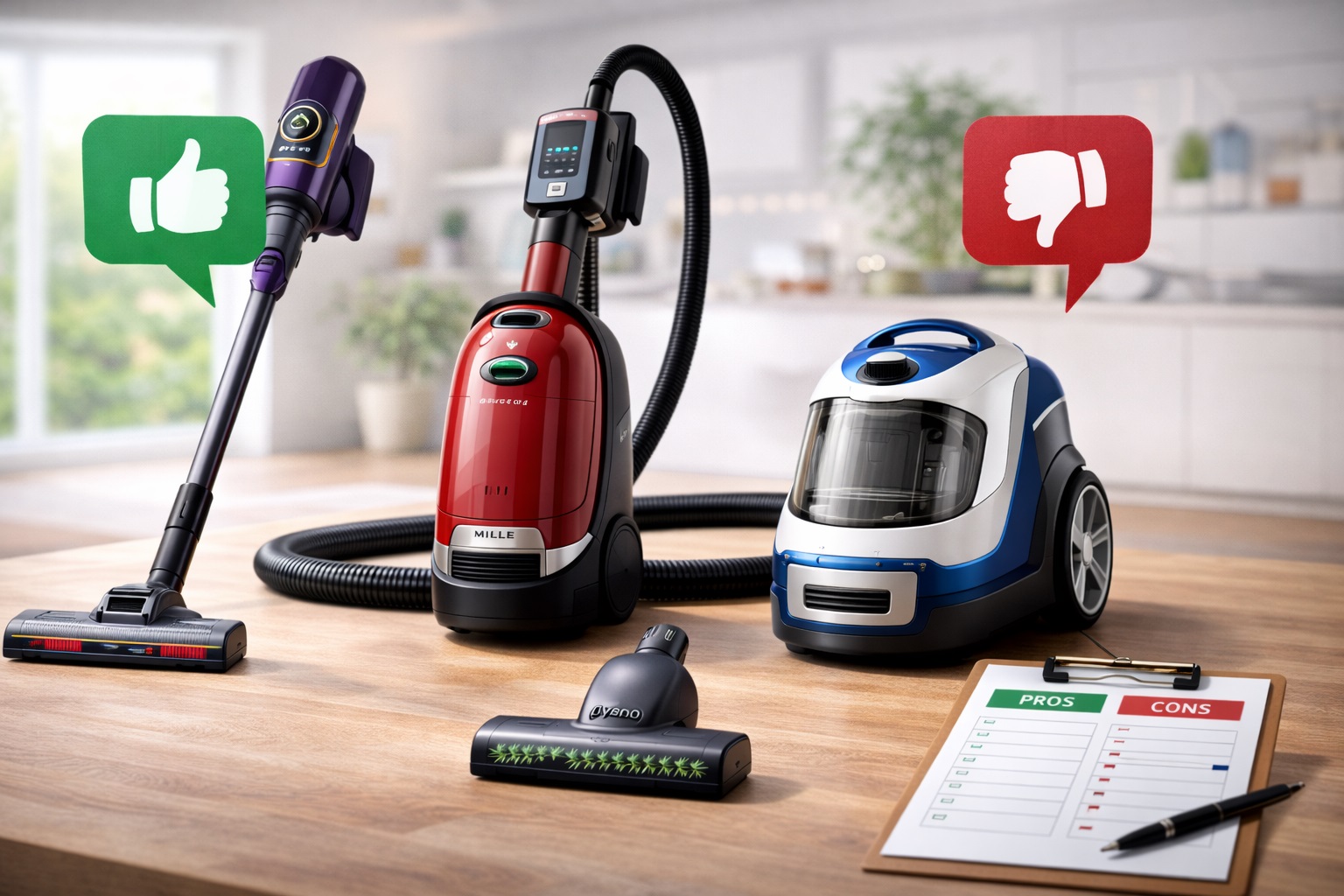
✅ Pros
Designed for mass-market reliability
Easy to use and maintain
Broad accessory compatibility
⚠️ Cons
Often optimized for average use, not heavy-duty cleaning
Performance may degrade faster under daily, high-load conditions
Feature additions sometimes come at the cost of durability
Most large brands perform well for standard households, but may underperform in demanding environments without careful model selection.
🧩 Upright Vacuum Cleaners: Power and Simplicity—With Limits
✅ Pros
Strong carpet cleaning performance
Direct airflow paths improve suction stability
Easier servicing and maintenance
⚠️ Cons
Bulkier designs reduce flexibility
Less suitable for stairs, cars, and tight spaces
Noise levels can be higher if not carefully engineered
Upright Vacuum Cleaners from major brands excel in floor-focused cleaning, but often require complementary products for full-home coverage.
🔇 Quiet Vacuum Cleaner: Silence Comes with Trade-Offs
✅ Pros
Improved user comfort
Suitable for apartments and shared spaces
Better acceptance in hospitality and urban markets
⚠️ Cons
Poorly designed quiet models may sacrifice suction
Heavy sound insulation can increase weight
Some brands quiet machines cosmetically rather than structurally
A truly effective Quiet Vacuum Cleaner relies on airflow engineering, not just insulation—something not all brands prioritize.
⚡ Fast Lightweight Vacuum Cleaner: Convenience vs Durability
✅ Pros
Easy handling and quick cleaning
Strong appeal to urban and aging populations
Lower shipping and storage costs
⚠️ Cons
Reduced structural durability in some models
Smaller dust capacity
Performance can drop under heavy load
Fast Lightweight Vacuum Cleaner designs work best for frequent light cleaning, but may struggle as a primary solution in demanding households.
🏠 Vacuum for Multi-Surface: Versatility Isn’t Automatic
✅ Pros
One machine for multiple floor types
Reduced need for multiple devices
Strong consumer appeal
⚠️ Cons
Many brands rely on manual adjustments
Fixed brush systems limit true adaptability
Compromised performance on at least one surface
True multi-surface performance requires adaptive systems, which only some brands invest in fully.
🧼 Vacuum Cleaner for Allergies: Where Claims Often Exceed Reality
✅ Pros
Growing focus on health and indoor air quality
HEPA filtration increasingly common
Strong differentiation opportunity
⚠️ Cons
“HEPA” claims without full system sealing
Filters that clog quickly and reduce suction
Certification not always transparent
A reliable Vacuum Cleaner for Allergies depends on sealed airflow and verified filtration, not brand reputation alone.
🧠 What Major Vacuum Brands Typically Do Well
Scalable manufacturing and supply stability
Strong marketing and brand recognition
Broad product portfolios
These strengths help with market entry and retail confidence, especially in competitive regions.
⚠️ Where Major Brands Often Fall Short
Over-generalized products for diverse use cases
Feature-driven designs that increase complexity
Slower response to niche demands (quiet use, allergy sensitivity, pet hair, etc.)
Size and scale can sometimes reduce product flexibility.
📈 How B2B Buyers Should Use This Comparison
Instead of asking “Which brand is best?”, ask:
Which brand’s strengths match my target users?
Which weaknesses am I willing to accept—or mitigate?
Do I need one versatile model or a product ecosystem?
Is performance consistent over time, not just at launch?
The best sourcing decisions come from alignment, not admiration.
🔮 Market Outlook: Honest Comparisons Will Matter More
As buyers become more informed:
Marketing-driven differentiation will weaken
Transparency will gain value
Brands that acknowledge trade-offs will earn more trust
In the future, honesty itself will become a competitive advantage.
✅ Conclusion
Major vacuum cleaner brands offer real strengths—but also real limitations.
Across Household Vacuum Cleaners, Upright Vacuum Cleaners, Quiet Vacuum Cleaner designs, Fast Lightweight Vacuum Cleaner models, Vacuum for Multi-Surface systems, and Vacuum Cleaner for Allergies, the smartest buyers succeed by understanding trade-offs and choosing accordingly.
In vacuum procurement, the best decision is not about choosing the strongest brand—but the right one.
📌 Suitable Readers
European vacuum cleaner distributors
Middle East vacuum cleaner importers
B2B procurement managers
Home appliance retail strategists
Cleaning equipment associations
Product development engineers
📌 Hashtags
Upright Vacuum Cleaners, Household Vacuum Cleaners, Quiet Vacuum Cleaner, Fast Lightweight Vacuum Cleaner, Vacuum for Multi Surface, Vacuum Cleaner for Allergies, Vacuum Brand Comparison, Honest Product Evaluation, B2B Vacuum Buyers, Vacuum Cleaner Distributor, Vacuum Cleaner OEM, Vacuum Cleaner ODM, European Vacuum Market, Middle East Vacuum Market, Home Cleaning Appliances, HEPA Vacuum System, Allergy Friendly Vacuum, Low Noise Vacuum, Silent Cleaning Technology, Lightweight Cleaning Equipment, Durable Appliance Design, Multi Surface Cleaning Solutions, Vacuum Engineering Quality, Energy Efficient Vacuum, Practical Home Appliances, Vacuum Product Development, Vacuum Market Trends, Private Label Vacuum, Global Vacuum Industry, Commercial Cleaning Equipment, Vacuum After Sales Service, Vacuum Quality Control, Vacuum Testing Standards, Household Appliance Strategy, Long Term Value Products, User Focused Engineering, Cleaning Equipment Industry, Vacuum Industry Insights, Procurement Decision Framework, Performance Trade Offs, Transparent Sourcing, Smart Buying Strategy, Reliable Home Appliances, Lanxstar