Hi, message us with any questions.
We're happy to help!





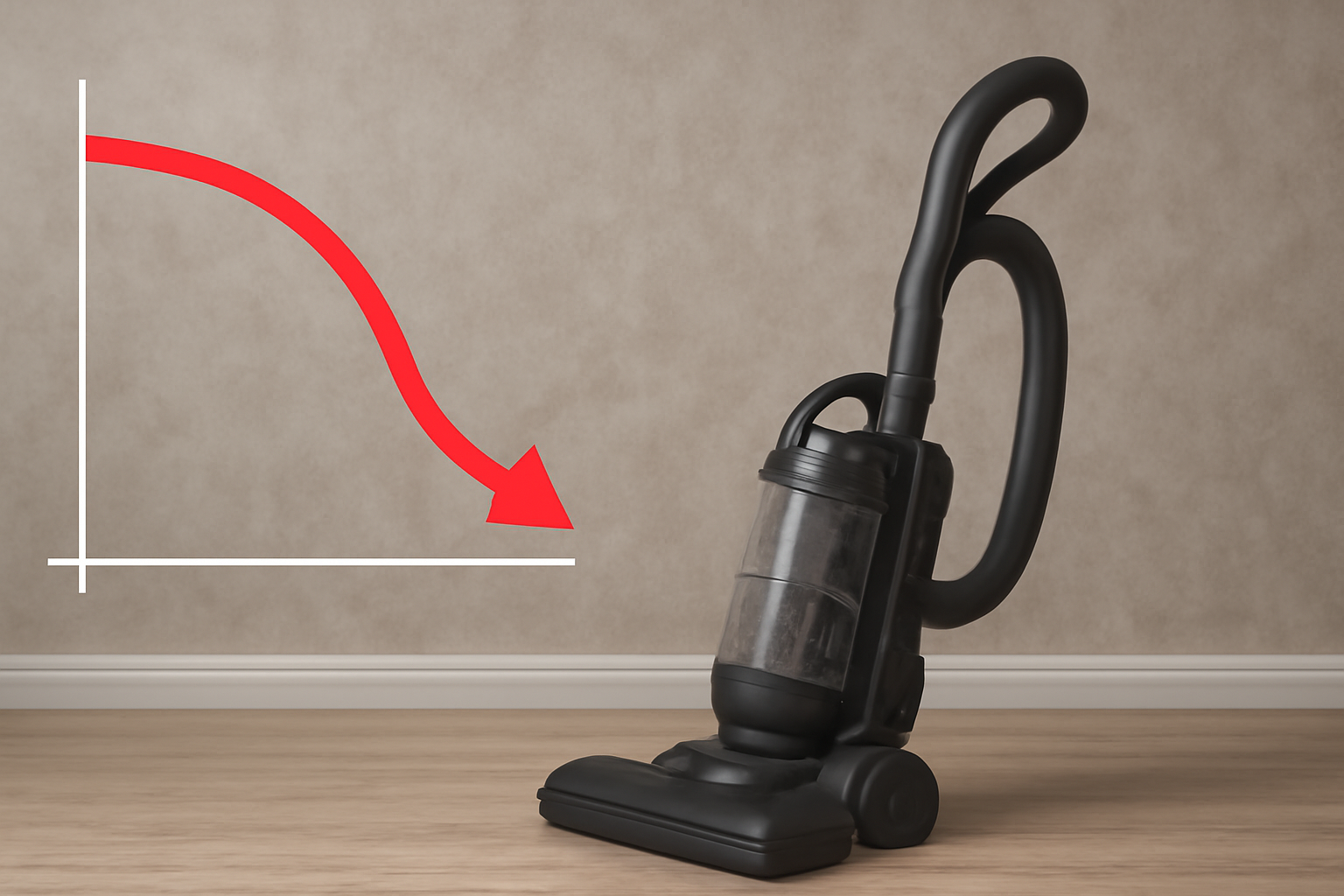
Every buyer has lived this nightmare:
The first shipment looks fine.
The second shipment sells well.
Then the third shipment hits the market…
…and suddenly:
return rates spike
retailers send angry emails
social reviews turn toxic
“quality problem” becomes the new label for your brand
From the outside it looks random.
Inside the supply chain, it follows a very predictable pattern:
Vacuum batch failures almost always follow a “death curve” — a repeatable sequence of small changes, ignored warnings, and compounding risks.
In this article we’ll decode that curve, show why Upright Vacuum Cleaners, Household Vacuum Cleaners, Multi-Functional Durable Vacuum Cleaner lines, Wet Dry Vacuum Cleaners, and even Large-Capacity Wet Dry Vacuum Cleaner models are especially vulnerable, and explain how professional vacuums procurement teams are now designing systems to detect batch risks before they explode.
If you buy from factories, this is the part of the story you’re rarely told.
🩺 1. What Is the “Death Curve” in Vacuum Production?
The “death curve” is a pattern seen across thousands of vacuum orders:
Batch 1–2: Everything looks good
best parts
strongest QC
top engineering focus
Batch 3–5: Hidden changes creep in
small component swaps
supplier adjustments
quiet process shortcuts
Batch 6+: Failures cluster
sudden return spikes
specific markets hit hardest
one or two models become “toxic” for retailers
From the outside, buyers think:
“Bad luck.”
“Maybe shipping damage.”
“Maybe one bad lot.”
Reality:
the death curve is a systemic result of how most factories behave over time.
🧩 2. Why Batch 1 Is Almost Always the Best You’ll Ever Get
Factories treat Batch 1 like a prestige project:
the most experienced workers assemble the units
the most stable components are chosen
engineering is watching closely
management wants to impress the client
every defect looks like a disaster, so QC is strict
That’s why the first batch of Upright Vacuum Cleaners or Household Vacuum Cleaners often performs surprisingly well.
But Batch 1 is not “normal.”
It’s performance under maximum attention.
The problem begins when:
the project becomes routine
engineers move on
cost pressure increases
the novelty is gone
That’s when the curve starts to bend downward.
🧨 3. The Four Hidden Forces That Push Batches Down the Death Curve
Across factories producing Multi-Functional Durable Vacuum Cleaner lines, Wet Dry Vacuum Cleaners, and standard home vacuums, four silent forces drive batch decay.
1) Cost Creep
Raw material prices change.
Factories feel margin pain.
Instead of negotiating, some factories:
source cheaper plastics
downgrade seals
reduce copper grade
change adhesives
Often without telling the buyer.
2) Supplier Drift
Sub-suppliers change due to:
stock shortages
price hikes
internal purchasing decisions
A motor supplier, PCB vendor, or filter supplier gets swapped.
Sometimes compatible.
Often not fully validated.
3) Process Shortcutting
As production scales:
calibration steps get skipped
“minor” testing is reduced
inspectors are overloaded
training quality drops
Everything still looks “okay” on paper,
but process robustness is declining.
4) Attention Collapse
Once the project is not “new” anymore:
the best engineers move to new clients
line leaders rotate
management stops tracking it closely
The result:
a vacuum that used to be stable starts silently sliding into risk.
🌡️ 4. Why Wet & Dry and Large-Capacity Models Fail Harder When Batches Slip
Products like Wet Dry Vacuum Cleaners and Large-Capacity Wet Dry Vacuum Cleaner units are structurally more complex:
water + dust + airflow
heavier loads
more seals
more corrosion risk
more mechanical stress
When a factory downgrades:
tank plastic
gasket materials
screw quality
anti-rust coatings
…the failure impact multiplies.
What looks like a “small cost optimization” becomes:
tank deformation
leaking seals
handle breakage
mold issues
rust and structural failures
The death curve for wet & dry categories is steeper
because complexity punishes shortcuts.
🔍 5. Early Symptoms of a Batch Entering the Death Curve
Before big failures appear, vacuums whisper warnings.
Signs include:
slightly higher noise level
more cosmetic defects
more “DOA” (dead on arrival) units
increasing minor complaints (“weird smell,” “slightly crooked,” “loose fit”)
slightly higher missing-part incidents
These signs are often ignored because:
units still mostly work
returns are still acceptable
sales are still strong
But for experienced vacuums procurement teams,
these are red alerts:
“The system is drifting. Fix it now, or pay later.”
📉 6. The Typical Death Curve Timeline (Month by Month)
While every case is different, a common pattern emerges:
Month 0–3
Batch 1: performance strong, complaints low.Month 4–6
Batch 2–3: minor noise, occasional defects, a few odd complaints.Month 7–10
Batch 3–5: suddenly certain regions report high returns, especially on sensitive models like Upright Vacuum Cleaners or multi-functional units.Month 10–18
One retailer or one channel gets hit with concentrated failures,
and the product is labeled as “problematic” or “unreliable.”
Once a model gets that label in European or GCC retail,
resurrecting it is extremely difficult.
🧪 7. Why Traditional QC Can’t Stop the Death Curve
Most QC systems were designed for:
detecting individual defects
validating samples
catching obvious problems
They are not designed for:
monitoring drift over time
detecting process shortcuts
correlating return data with batch changes
checking consistency of sub-suppliers
That’s why:
a factory can show you “good QC reports”
you still get bad batches
Traditional QC can tell you if a product is bad today.
It cannot tell you whether the next batch will be worse.
🧠 8. How Smart Procurement Teams Break the Death Curve
Leading vacuums procurement teams now treat stability as a separate engineering project.
They implement three layers of defense:
Layer 1 — Component Locking
Approved BOM with specific part numbers
Any change requires written approval
Motor, PCB, filter, seal, structural plastics are “non-negotiable parts”
Layer 2 — Process Monitoring
QC reports tracked by batch and time
first-pass yield measured monthly
minor defect trends analyzed (not ignored)
random third-party inspections
Layer 3 — Field Feedback Loop
returns labeled by batch and production date
failure root cause analysis shared with factory
corrective actions tightly linked to real failures
Factories may not like the extra discipline.
But brands that adopt it drastically flatten the death curve.
🧱 9. The “Stability Contract” Top Buyers Use With Key Suppliers
High-level buyers are starting to create what they informally call a Stability Contract — not about price, but about behavior.
It includes:
no component downgrades without written approval
advance notice for any sub-supplier change
defined quarterly engineering reviews
agreed test plans for new materials or processes
shared return-rate dashboards
penalties for unauthorized changes
For complex products like Multi-Functional Durable Vacuum Cleaner lines or Wet Dry Vacuum Cleaners, this is often the only way to keep quality stable over time.
🧮 10. A Simple Risk Formula to Predict Batch Failure
Procurement teams can approximate batch risk using:
Batch Risk Score (BRS) =
(component change level × process drift × attention loss)
(field complaint trend × product complexity)
Where:
component change level = how many parts have changed in 6–12 months
process drift = reduction in test coverage, calibration, training
attention loss = how “routine” the project has become
field complaint trend = small issues rising over time
product complexity = single-function vs Multi-Functional Durable Vacuum Cleaner vs Large-Capacity Wet Dry Vacuum Cleaner
High BRS = death curve already in motion.
Low BRS = stable product with predictable behavior.
🔁 11. Why “Revisions” Without a Strategy Make Things Worse
Many brands try to “fix” a problem batch by quickly launching a new revision:
V2, V3, “2025 Edition,” “Pro+”
Without:
stabilizing the supply chain
controlling BOM
strengthening process discipline
All they do is:
add more variables
confuse troubleshooting
create overlapping problems in multiple generations
Strong brands follow a different rule:
Stabilize first. Revise later.
They fix the death curve before adding new features.
🏁 12. The Real Lesson: Your Biggest Risk Is Not a Single Defect — It’s an Uncontrolled Curve
Vacuum quality problems rarely come from one dramatic mistake.
They come from:
small component changes
quiet supplier swaps
relaxed QC routines
unmanaged complexity
fading engineering attention
Over time, those factors bend your product’s performance downward
until one batch becomes a disaster.
The good news:
the curve is predictable
the warning signs are visible
the tools to flatten it already exist
For Upright Vacuum Cleaners, Household Vacuum Cleaners,
Multi-Functional Durable Vacuum Cleaner ranges,
Wet Dry Vacuum Cleaners,
and Large-Capacity Wet Dry Vacuum Cleaner products,
the winners in the next decade will be the brands and buyers who treat batch stability as a core discipline of vacuums procurement — not a lucky accident.
Hashtags
lanxstar, #vacuumquality, #batchfailure, #uprightvacuum, #householdvacuum, #wetdryvacuum, #durablevacuum, #multifunctionvacuum, #supplychainrisk, #procurementstrategy, #vacuumsprocurement, #qualitycontrol, #componentmanagement, #oemvacuum, #odmvacuum, #retailperformance, #globaldistribution, #failureanalysis, #productstability, #returnrate, #riskmanagement, #supplieraudit, #manufacturingprocess, #engineeringmaturity, #consistencycontrol, #factorymanagement, #productlifecycle, #brandprotection, #market2025, #buyersguide, #technicalinsights, #cleaningindustry, #productiondrift, #qualityassurance, #manufacturingstability, #fieldfeedback, #datadrivenprocurement, #vacuumengineering, #deathcurveanalysis



