Hi, message us with any questions.
We're happy to help!





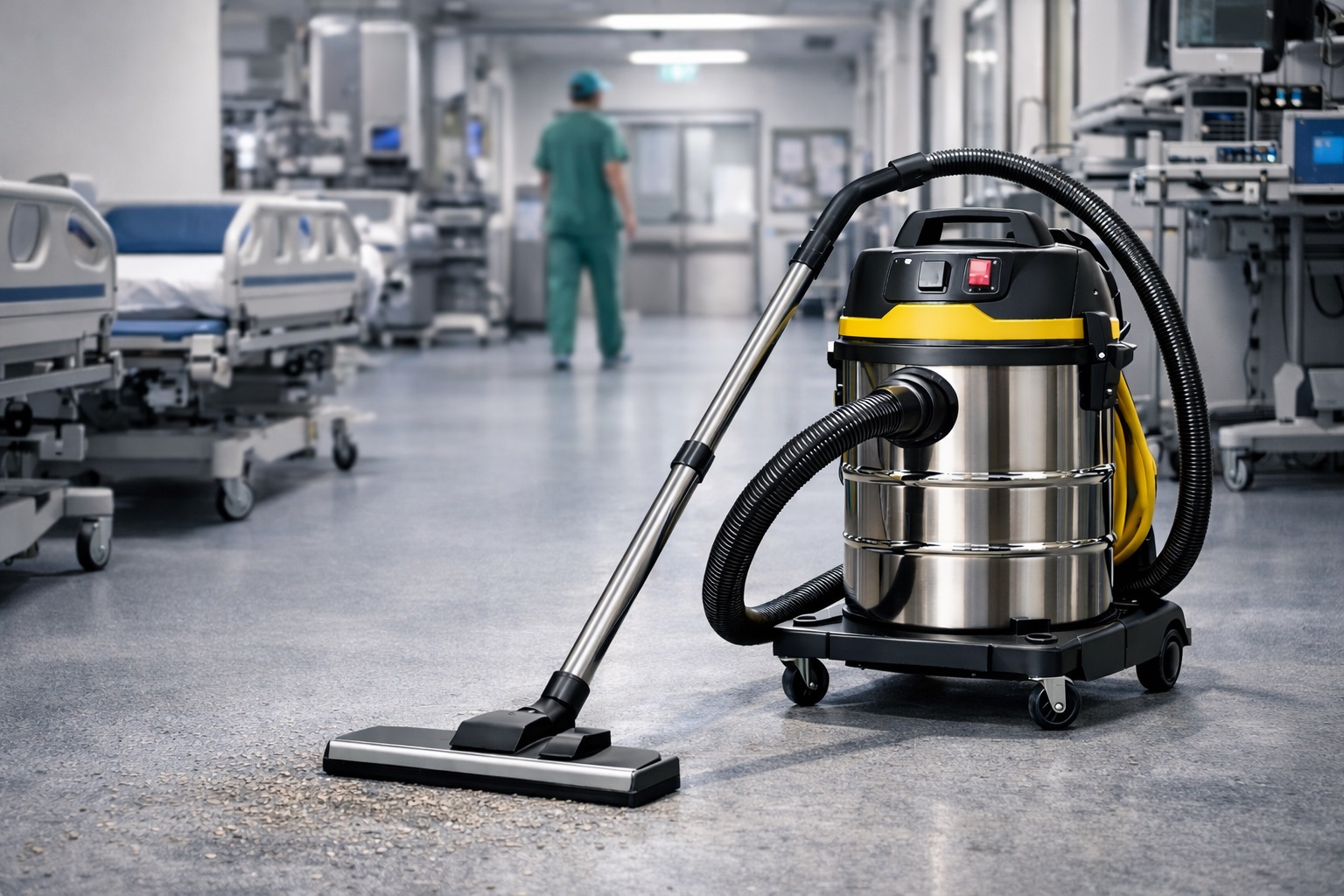
(A procurement guide for EU & Middle East B2B buyers in healthcare management)
In healthcare environments, cleanliness is not only a matter of aesthetics but also a critical component of patient safety and infection control. Hospitals, clinics, and other healthcare facilities require high-performance vacuum cleaners that can effectively clean while preventing contamination, minimizing allergens, and maintaining a sterile environment.
While Upright Vacuum Cleaners and Household Vacuum Cleaners may be sufficient for light-duty residential cleaning, they do not meet the stringent demands of healthcare environments. Barrel Vacuum Cleaners, with their robust features and versatility, offer an optimal solution for hospital cleaning needs.
In this article, we will explore how Barrel Vacuum Cleaners can enhance cleaning efficiency in healthcare settings, helping hospitals comply with hygiene standards, reduce allergens, and ensure quiet, non-disruptive cleaning during critical hours.
🏥 I. Why Barrel Vacuum Cleaners Are Ideal for Healthcare Environments
Healthcare facilities, especially hospitals, have very specific cleaning requirements to maintain hygiene, prevent cross-contamination, and ensure patient safety. Barrel Vacuum Cleaners provide a number of advantages for healthcare environments, including:
Key Benefits of Barrel Vacuum Cleaners:
Powerful Suction for Effective Cleaning: Barrel Vacuum Cleaners are equipped with strong motors capable of handling large volumes of debris, including dust, hair, and larger particles, while maintaining consistent suction for thorough cleaning.
Large Capacity: Barrel vacuums have larger tanks, which means they can operate longer without needing to be emptied, reducing downtime during cleaning tasks.
Versatility: They come with a variety of attachments, including HEPA filters, wet-dry nozzles, and crevice tools, making them suitable for cleaning a wide range of surfaces and hard-to-reach areas in hospitals.
Quiet Operation: Many Barrel Vacuum Cleaners are designed with noise reduction features, which is critical in hospital environments where quiet vacuuming is necessary to avoid disturbing patients during rest or sensitive procedures.
🛢️ II. Applications of Barrel Vacuum Cleaners in Hospitals
Barrel vacuums can be used across a range of healthcare settings, including hospitals, clinics, and treatment rooms, where cleanliness is paramount. Below are some key applications:
🧹 1) General Hospital Cleaning
Best for: Hospitals, clinics, waiting rooms
Why: Barrel Vacuum Cleaners with large capacity tanks and strong suction can quickly clean high-traffic areas such as hospital corridors, patient rooms, and waiting areas. They can handle dust, dirt, and debris efficiently while reducing the risk of cross-contamination.
💧 2) Spill Management in Laboratories or Treatment Rooms
Best for: Medical laboratories, surgical rooms, chemotherapy units
Why: Healthcare environments often deal with liquid spills, including blood, bodily fluids, and chemicals. Wet-dry Barrel Vacuum Cleaners can safely handle these spills, preventing the spread of contaminants and maintaining a clean, safe environment.
🧼 3) Cleaning in High-Sensitivity Areas
Best for: Operating rooms, ICUs, cleanrooms
Why: Barrel Vacuums equipped with HEPA filters are perfect for cleaning high-sensitivity areas. These vacuums prevent the release of airborne particles, ensuring the environment remains free from allergens, dust, and other contaminants.
🔇 4) Quiet Vacuuming for Night Shifts
Best for: Hospitals, patient care areas
Why: Hospitals often operate 24/7, and cleaning must be done during off-hours without disturbing patients. Quiet Vacuum Cleaners help minimize noise levels while still providing effective cleaning. This is particularly important in patient recovery areas, where sleep and rest are crucial.
⚡ III. Optimizing Barrel Vacuum Cleaners for Hospital Cleaning
To maximize the efficiency of Barrel Vacuum Cleaners in hospital environments, here are some best practices and optimization strategies:
🧷 1) Use the Right Attachments for Specific Tasks
Different areas of a hospital require different cleaning methods. Select attachments based on the specific cleaning task:
Floor nozzles for general floor cleaning.
Crevice tools for cleaning corners, edges, and around hospital equipment.
Soft brushes for cleaning upholstery and delicate equipment.
Wet-dry nozzles for cleaning up liquid spills in patient rooms or labs.
⚡ 2) Regular Maintenance and Cleaning of Vacuum Parts
Maintaining your Barrel Vacuum Cleaner ensures it operates at peak efficiency. Regular maintenance includes:
Cleaning and replacing HEPA filters to ensure efficient dust and allergen capture.
Checking hoses and attachments for blockages.
Regularly emptying and cleaning the vacuum tank to prevent bacterial buildup.
📅 3) Scheduling Cleaning Tasks
Hospitals operate around the clock, so it’s essential to schedule cleaning during low-traffic hours. Optimize cleaning schedules by setting:
Nighttime vacuuming for general cleaning and dusting.
Daytime quick cleanups during non-peak hours, using quieter models if necessary.
🔧 4) Training Staff on Proper Vacuum Usage
Ensure that cleaning staff is properly trained in how to use Barrel Vacuum Cleaners. Training should cover:
The importance of selecting the right attachments for different areas.
Proper maintenance procedures to prolong the vacuum’s lifespan.
How to operate the vacuum efficiently while minimizing disruption to patients.
📊 IV. Efficiency Metrics for Hospital Cleaning
Track the following metrics to ensure your Barrel Vacuum Cleaner is optimizing hospital cleanliness:
Cleaning time per area: Track how long it takes to clean each area (waiting rooms, patient rooms, operating rooms).
Debris collection rate: Measure how much debris is collected during each vacuuming cycle to assess effectiveness.
Noise levels during operation: Ensure noise levels are kept within acceptable limits, particularly during night cleaning shifts.
Maintenance costs: Monitor costs related to maintenance and replacement parts to assess the total cost of ownership.
🧰 V. Minimum Specifications Checklist for Hospital Vacuums
When choosing a Barrel Vacuum Cleaner for hospital environments, ensure the following specifications are met:
HEPA filtration to capture fine particles, dust, and allergens
Wet-dry capability for managing both liquid spills and solid debris
Large tank capacity to handle continuous cleaning without frequent emptying
Quiet operation to minimize disruption during patient care
Durable construction to withstand continuous use in demanding environments
Non-contaminating materials to avoid cross-contamination risks
Attachments for specific cleaning tasks (e.g., soft brushes, crevice tools, floor nozzles)
✅ VI. 15-Minute Acceptance Micro-Process (For Hospital Vacuums)
Use this checklist to validate the performance of your Barrel Vacuum Cleaner:
Suction test (3 min): Test the vacuum on various surfaces (hospital floors, carpets, upholstery) to ensure effective debris removal.
Filtration efficiency check (4 min): Inspect the vacuum’s HEPA filter to confirm it captures allergens and dust without leaking particles.
Noise level check (3 min): Ensure the vacuum meets hospital noise standards, particularly for use in patient rooms.
Wet-dry functionality test (5 min): Verify that the vacuum can effectively clean both liquid spills and solid debris.
❓ VII. FAQ (Buyer Questions That Drive Decisions)
1) Can Barrel Vacuum Cleaners be used in hospitals for allergen removal?
Yes, Barrel Vacuum Cleaners equipped with HEPA filters are ideal for capturing allergens, dust, and fine particles, ensuring a cleaner and safer environment for patients.
2) How does a Quiet Vacuum Cleaner benefit hospital cleaning?
A Quiet Vacuum Cleaner reduces noise disturbances, making it ideal for nighttime cleaning or cleaning in areas where patients are resting, such as recovery rooms or ICUs.
3) What maintenance is required for a Barrel Vacuum Cleaner in healthcare settings?
Routine maintenance includes checking filters (especially HEPA filters), cleaning hoses, inspecting attachments for wear, and ensuring the tank is emptied regularly to avoid bacterial buildup.
4) Can Barrel Vacuum Cleaners handle both dry debris and wet spills in hospital settings?
Yes, Wet-Dry Barrel Vacuum Cleaners are perfect for cleaning up both solid debris and liquid spills, which are common in hospital environments like laboratories and patient care areas.
5) How do I ensure my Barrel Vacuum Cleaner meets hospital cleaning standards?
Ensure that the vacuum has HEPA filtration, wet-dry functionality, low noise levels, and durable, non-contaminating materials to meet the demanding standards of hospital cleaning.
🏁 Conclusion
In hospital and healthcare environments, maintaining cleanliness is essential for patient safety, infection control, and overall operational efficiency. Barrel Vacuum Cleaners offer a powerful, versatile solution for hospital cleaning needs, from high-suction power to quiet operation. With the right attachments, HEPA filters, and proper maintenance, Barrel Vacuums can help hospitals meet hygiene standards, reduce allergens, and improve cleanliness in sensitive areas. By optimizing your vacuum usage with the proper tools and schedules, you ensure a safer and cleaner environment for both staff and patients.
📌 Hashtags
HospitalCleaning, BarrelVacuumCleaner, HEPAFiltration, VacuumForAllergies, QuietVacuumCleaner, InfectionControl, HospitalVacuum, HealthcareVacuum, WetDryVacuum, CleanroomVacuum, PatientSafety, HospitalHygiene, AllergyControl, QuietVacuum, DustControl, Lanxstar