Hi, message us with any questions.
We're happy to help!





🎯 Target Audience
European & Middle Eastern B2B vacuum cleaner buyers and distributors
Introduction: Why 2025 Is a Turning Point for Vacuum Brands
Most vacuum cleaner rankings still focus on brand visibility and retail popularity.
However, in 2025, professional buyers know this logic no longer works.
For European and Middle Eastern B2B buyers, the real competition is not about who sells the most units—but which vacuum brands still perform after 12–18 months of real use.
Household Vacuum Cleaners today must balance high suction, energy efficiency, filtration reliability, and multi-surface adaptability—while remaining compliant with tightening regulations.
This article explains who is leading the vacuum market in 2025, and more importantly, why serious buyers are choosing them.
🔍 What Defines a “Top Vacuum Brand” in 2025 (B2B Reality Check)
Most brands define leadership through spec sheets.
Top brands define leadership through field performance.
Most brands focus on:
Peak wattage numbers
Short-term suction tests
Visual design and retail packaging
Top vacuum brands focus on:
Suction stability under real dust load
Energy efficiency over thousands of cycles
Sealed airflow and filtration integrity
Long-term serviceability for distributors
From a B2B perspective, these differences directly impact warranty cost, return rates, and brand reputation.
🚀 Category Leaders in the 2025 Vacuum Market
🧩 1. Upright Vacuum Cleaners: Why This Category Still Dominates
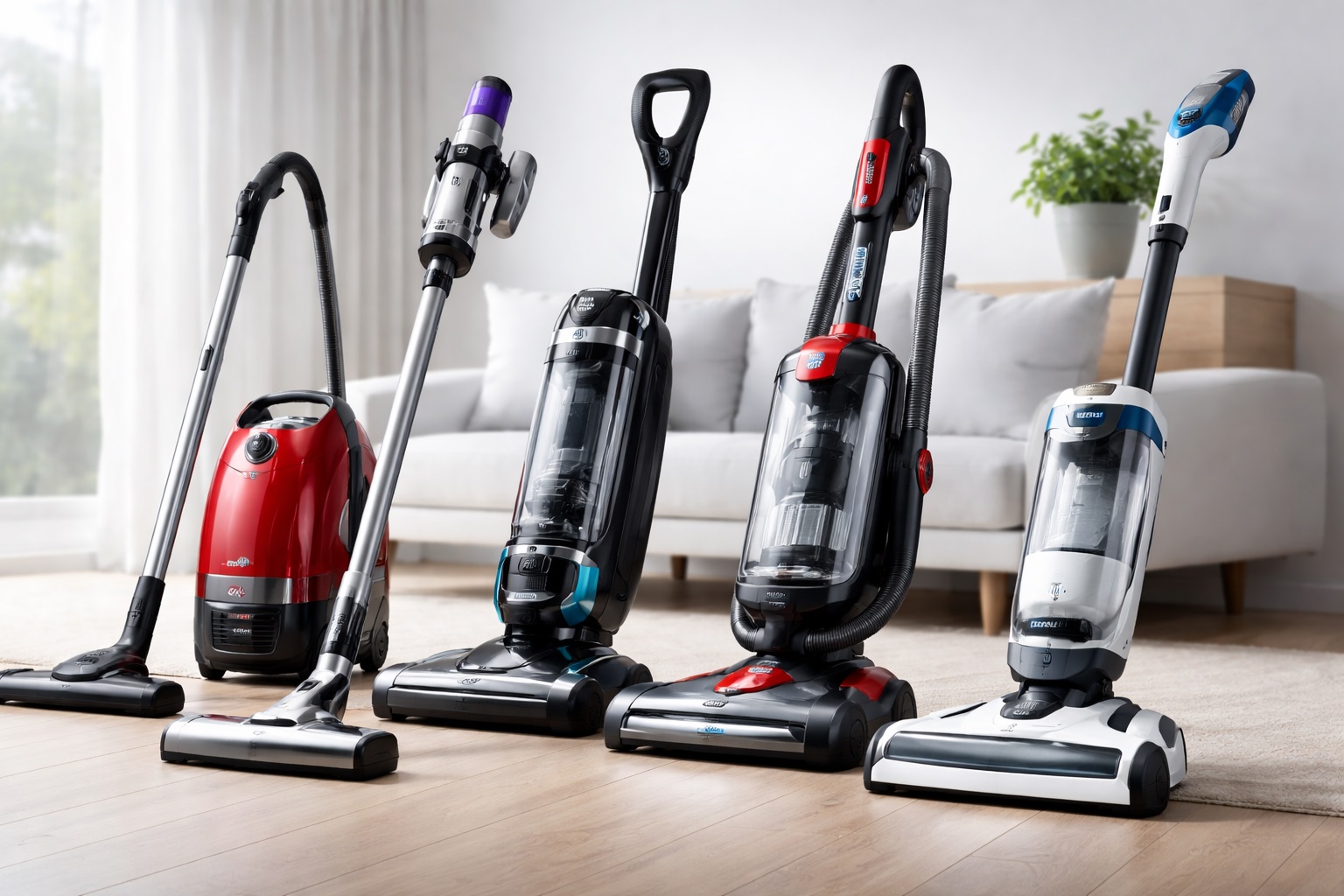
Upright Vacuum Cleaners remain the preferred format across Europe and the Middle East, particularly for mixed carpet and hard-floor environments.
Most upright failures come from:
Airflow loss due to poor internal sealing
Brush roll inefficiency under load
Motor overheating after extended use
Top-performing upright models in 2025 succeed because they:
Maintain consistent airflow even at high dust capacity
Balance motor torque and brush resistance
Reduce clogging points inside the suction channel
For distributors, this means fewer service claims and higher repeat orders.
⚡ 2. High Suction Vacuum Cleaner: The Metric Everyone Gets Wrong
High suction is not defined by wattage anymore.
Most brands still market power input.
Top brands engineer suction output.
Leading High Suction Vacuum Cleaner manufacturers optimize:
Airflow velocity, not just motor size
Cyclone geometry to minimize turbulence
Pressure consistency across different floor types
The result is strong cleaning performance with lower energy consumption, which is essential for compliance in regulated markets.
🌱 3. Energy-Saving Efficient Powerful Vacuum Cleaner Brands
Energy efficiency is no longer optional—it is a commercial requirement.
In 2025, top brands deliver:
High suction-to-watt ratios
Intelligent motor load control
Reduced heat loss and mechanical stress
For B2B buyers, energy-saving vacuum cleaners offer:
Lower lifetime operating cost
Easier approval in institutional tenders
Strong positioning in eco-conscious retail channels
Efficiency has become a sales advantage, not just a compliance checkbox.
🧼 4. Vacuum Cleaner for Allergies: Where Most Products Fail
Many vacuums claim to be “HEPA-equipped.”
Few deliver true allergy protection.
Top Vacuum Cleaner for Allergies designs include:
Fully sealed airflow systems
Certified HEPA filtration (not partial filtration)
Minimal secondary dust leakage
This is critical for:
Healthcare facilities
Hospitality groups
Family-oriented household markets
In 2025, allergy-safe performance is measurable, testable, and expected.
🏠 5. Vacuum for Multi-Surface: One Machine, Real Adaptability
Modern homes combine hardwood, tiles, rugs, and carpets.
The challenge is not cleaning one surface—but transitioning between them efficiently.
Leading Vacuum for Multi-Surface brands implement:
Adaptive brush roll speed
Automatic suction adjustment
Tool-free mode switching
For distributors, this reduces SKU complexity while increasing consumer satisfaction.
🧠 What Top Vacuum Brands Do Differently (Insights Most Articles Miss)
🔧 Engineering Comes Before Marketing
Top brands invest more in motor endurance testing than influencer campaigns.
📦 Modular Design Lowers Distribution Risk
Replaceable components reduce warranty exposure and simplify after-sales support.
🌍 Compliance Is Built-In, Not Added Later
Winning brands design for EU and Middle East regulations from day one—saving time and cost.
📈 How Professional Buyers Should Evaluate Vacuum Brands in 2025
Instead of asking “Which brand sells the most?”, experienced buyers ask:
Does suction performance remain stable after long-term use?
Is energy efficiency consistent across different surfaces?
Is allergen filtration independently certified?
Can the supplier support scalable distribution?
Are spare parts and service structures mature?
Top brands lead because they answer yes consistently.
🔮 Market Outlook: Where the Vacuum Industry Is Heading
By late 2025:
Technical thresholds will rise
Low-quality brands will exit
Buyers will prioritize reliability over novelty
For B2B players, brand selection today determines margin stability for years ahead.
✅ Conclusion
In 2025, vacuum brand leadership is defined by engineering discipline, efficiency, and adaptability.
Whether sourcing Upright Vacuum Cleaners, Household Vacuum Cleaners, or advanced multi-surface systems, professional buyers should focus on long-term value, not short-term specifications.
If you evaluate vacuum performance beyond marketing claims, this is usually where meaningful conversations begin.
📌 Suitable Readers
European vacuum cleaner distributors
Middle East vacuum cleaner importers
B2B procurement managers
Vacuum industry entrepreneurs
Cleaning equipment associations
Product R&D engineers
📌 Hashtags
Upright Vacuum Cleaners, Household Vacuum Cleaners, High Suction Vacuum Cleaner, Energy Saving Vacuum, Efficient Powerful Vacuum Cleaner, Vacuum Cleaner for Allergies, Vacuum for Multi Surface, B2B Vacuum Buyers, Vacuum Cleaner Distributor, Vacuum Cleaner OEM, Vacuum Cleaner ODM, European Vacuum Market, Middle East Vacuum Market, Commercial Vacuum Solutions, Home Cleaning Technology, HEPA Vacuum System, Allergy Safe Vacuum, Energy Efficient Appliances, Smart Vacuum Engineering, Vacuum Motor Technology, Cleaning Equipment Industry, Vacuum Brand Strategy, Vacuum Product Development, Vacuum Regulatory Compliance, Eco Friendly Vacuum, High Performance Vacuum, Multi Surface Cleaning, Carpet and Hard Floor Vacuum, Vacuum Airflow Design, Cyclone Vacuum System, Vacuum Supply Chain, Private Label Vacuum, Vacuum Innovation 2025, Vacuum Cleaner Manufacturing, Global Vacuum Brands, Vacuum Market Trends, Vacuum Business Growth, Vacuum Distribution Network, Vacuum After Sales Service, Vacuum Quality Control, Vacuum Testing Standards, Vacuum Energy Rating, Vacuum Retail Strategy, Vacuum Engineering Insights, Lanxstar



