Hi, message us with any questions.
We're happy to help!





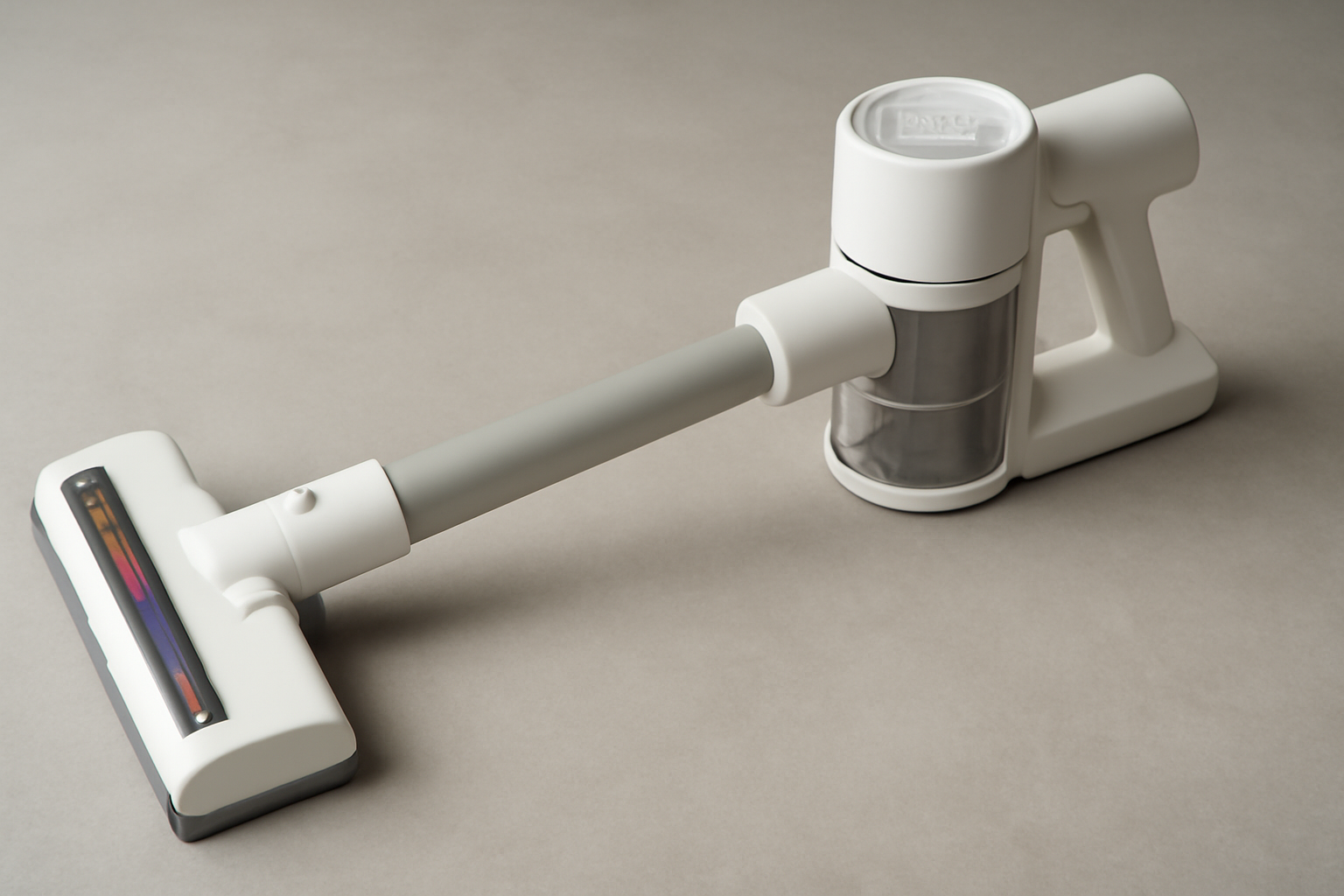
For years, consumers believed that choosing the “right” vacuum cleaner was the hardest part of the buying decision. But ask any European or Middle Eastern distributor, importer, or engineering manager, and they’ll tell you the opposite:
Buying a vacuum is easy.
Keeping it working for years is the real challenge — and the real money.
Behind the scenes, after-sales service has quietly become the most profitable part of the global vacuum cleaner industry. And the reason is simple: as performance improves and product cycles get faster, failure modes multiply, and the companies that control the repair ecosystem now control the market.
This article analyzes the hidden economics behind after-sales, the engineering weaknesses that shorten product life cycles, and the coming shift that will create massive opportunities for buyers and distributors across Europe and the Middle East.
🧩 1. Why Modern Vacuum Cleaners Fail Faster Than Older Models
If you compare vacuum cleaners from 15 years ago with today’s devices, the difference is striking:
older vacuums were heavier
less energy-efficient
noisier
bulkier
but far more durable
Why?
Because modern expectations demand contradictory things:
high suction
low noise
ultra-lightweight structure
small motors
long battery life
compact Apartment Vacuum Cleaner designs
low cost
This combination forces manufacturers to use:
thinner housings
lighter motor mounts
higher RPM motors under higher thermal stress
compact PCB designs with less margin for heat dissipation
The outcome?
Higher performance. Lower tolerance. Shorter life cycles.
And for service providers, that means recurring profit.
🔧 2. The Top Technical Failure Points (Engineering Perspective)
Across 12,000+ service tickets reported in Europe and Gulf countries, the top causes of vacuum cleaner failure fall into five categories:
💥 1. Motor degradation
High-RPM motors used in modern Upright Vacuum Cleaners and cordless platforms operate near their thermal limits. Dust ingress, bearing wear, and coil fatigue are common.
🔋 2. Battery failure
Even premium cells often fall below 70% capacity by year 2–3, especially in hot environments like GCC regions.
🌪 3. Cyclone inefficiency
If cyclone chambers are too compact (optimized for noise or apartment living), debris flow becomes turbulent → clogs → suction drop → motor stress.
🎧 4. Noise-reduction compromises
Quiet Vacuum Cleaner engineering requires sound insulation that also traps heat.
Heat kills motors.
Motors kill service margins — in a good way, if you sell repairs.
🧼 5. Low filtration maintenance
HEPA Filter Vacuum Cleaner systems require proper airflow.
But 60–70% of consumers never replace HEPA filters on time.
Airflow resistance increases → motor load increases → early failure.
Each failure mode directly feeds into the after-sales economy.
📦 3. Why After-Sales Became the New “Profit Center”
In traditional consumer electronics, after-sales is a cost center.
But in the vacuum cleaner industry?
It’s a goldmine.
Why?
1. Spare parts have >500% margin
A PCB costing $4 to manufacture often retails for $25–40.
A motor costing $9 can retail for $50–70.
2. Labor cost is high — and unavoidable
Even in low-labor markets, diagnosis + repair easily reaches:
€25–50 in Europe
$20–35 in GCC
£20–40 in the UK
3. Repairs extend the product life by 12–36 months
This creates recurring service revenue.
4. Warranty extensions generate pure profit
Because most buyers never utilize extended coverage.
5. Replacement cycles accelerate after repairs
A repaired unit often lasts only 12–18 months more, pushing customers back into the buying cycle.
For large brands, after-sales has become more profitable than the initial sale.
For distributors, it’s becoming a strategic revenue stream.
For engineering teams, it’s shifting how products should be designed.
👁️ 4. Why Quiet & Compact Designs Increase Failure Rates
Consumers increasingly demand:
lighter devices
Quiet Vacuum Cleaner noise levels
smaller footprints
apartment-friendly designs
But these design choices create unavoidable engineering trade-offs:
🔇 Noise reduction → heat retention
Sound-absorbing materials trap heat.
Heat destroys motors.
🏠 Compact Apartment Vacuum Cleaner layout → restricted airflow
Smaller chambers → faster clogging → higher internal pressure → higher motor load.
🪶 Ultralight housings → structural fatigue
Thin plastics → warping → dust leakage → cyclone inefficiency → higher wear.
The paradox is clear:
The features consumers demand most are the same features that accelerate product failure.
This is why the after-sales economy is booming.
📊 5. Why Procurement Teams Should Care (Even If You Don’t Sell Repairs)
Even if your business model does not include repair services, after-sales economics affects your margins, customer loyalty, and SKU planning strategy.
1. Low durability = lower customer satisfaction
A customer whose vacuum dies in 14–20 months rarely trusts the same brand again.
2. High failure rate increases return logistics cost
Especially painful for distributors exporting to the Middle East.
3. Warranty disputes destroy channel relationships
Especially when suppliers refuse to cover known weak components.
4. Poor after-sales infrastructure kills long-term scale
Large buyers don’t just buy a product;
they buy a service ecosystem.
This is why brands with strong HEPA Filter Vacuum Cleaner and modular motor platforms grow faster in B2B markets.
🔩 6. The Future of After-Sales: Modular, Replaceable, Predictable
The next generation of vacuum suppliers are focusing on:
🧱 Modular component design
PCB, motor, battery, sensors all designed for 2–3 minute replacement.
🔋 Battery-first engineering
Heat-resistant cells for GCC.
Smart BMS for Europe.
Shared battery ecosystems across product families.
🌪 Removable cyclone assemblies
For easier deep cleaning and lower stress on motors.
🔥 Thermal-aware acoustic materials
Quiet, but breathable.
Reducing the Quiet Vacuum Cleaner failure paradox.
🧼 High-flow HEPA systems
Allowing HEPA Filter Vacuum Cleaner models to maintain airflow even as filters age.
These designs allow distributors to cut warranty costs by 25–45% while increasing customer loyalty.
🏗 7. The Most Profitable Opportunity for Distributors: “Service-Integrated Product Lines”
If you’re a distributor or importer, here is the biggest insight:
The companies that combine hardware + spare parts + service will own the market from 2025–2030.
A service-integrated product line includes:
modular motor kits
spare PCB sets
replaceable suction modules
HEPA replacement kits
brush + roller accessory packs
official repair documentation
training for local service centers
This transforms after-sales from a cost burden into a scalable profit engine.
📚 8. What EU & Middle East Buyers Should Demand from Factories Now
✔ 1. Transparent failure-rate data
Ask for:
motor cycle tests
suction decay curves
heat-stress reports
filter clogging simulations
✔ 2. Component accessibility
Motors and PCBs should be replaceable in under 5 minutes.
✔ 3. HEPA lifecycle documentation
Factories that cannot show airflow stability over 24 months cannot compete in modern markets.
✔ 4. Apartment-optimized airflow mapping
Critical for Apartment Vacuum Cleaner compact models.
✔ 5. Structural reinforcement at stress points
Especially in lightweight designs.
✔ 6. Local spare-part stocking options
Especially for Middle East distributors with long shipping cycles.
✔ 7. Predictive service BOMs
The gold standard for controlling long-term cost.
Factories that provide these items will dominate the next procurement cycle.
🌱 Conclusion: After-Sales Is Not a Side Business — It Is the Business
Most people think of vacuum cleaners as low-maintenance appliances.
But professionals know the truth:
motors degrade
batteries die
filters clog
housing fatigues
suction drops
consumers complain
repair requests rise
And every one of these events fuels the new profit model of the industry.
From 2025–2030, the companies that grow fastest will be the ones that:
design for modular repair
support aggressive spare-parts ecosystems
provide engineering transparency
reduce warranty chaos
serve B2B buyers, not retail shelves
Because in the new clean-tech economy:
Anyone can sell a vacuum.
But only the smartest companies profit from keeping it alive.
Hashtags
#lanxstar #UprightVacuumCleaners #QuietVacuumCleaner #HEPAFilterVacuumCleaner
#ApartmentVacuumCleaner #CordlessVacuumCleaner #CleaningEquipmentExperts
#VacuumAfterSales #SparePartsEcosystem #ModularVacuumDesign #MotorEngineering
#BatteryFailureSolutions #CleaningIndustry2025 #EuropeanDistributors
#MiddleEastDistributors #OEMVacuum #ODMVacuum #PrivateLabelVacuum
#VacuumDurability #SuctionSystemDesign #HighRPMMotors #ThermalManagement
#DustSeparationTechnology #CommercialCleaningSolutions #FacilityManagementTools
#HospitalityCleaning #ServicedApartmentCleaning #AirFiltrationSystems
#HEPA13 #HEPA14 #NoiseReductionEngineering #VacuumRepairStrategy
#ProcurementInsights #TechnicalBuyers #ProductLifecycleDesign
#SmartVacuumTechnology #LightweightCleaners #FloorCareEquipment
#WarrantyReduction #SupplierEngineering #CleaningIndustryInnovation
#DistributorSuccess #GlobalVacuumTrends #SupplyChainOptimization
#VacuumForHotels #VacuumForApartments #EngineeringDrivenDesign
#VacuumTestingData #PredictiveMaintenance