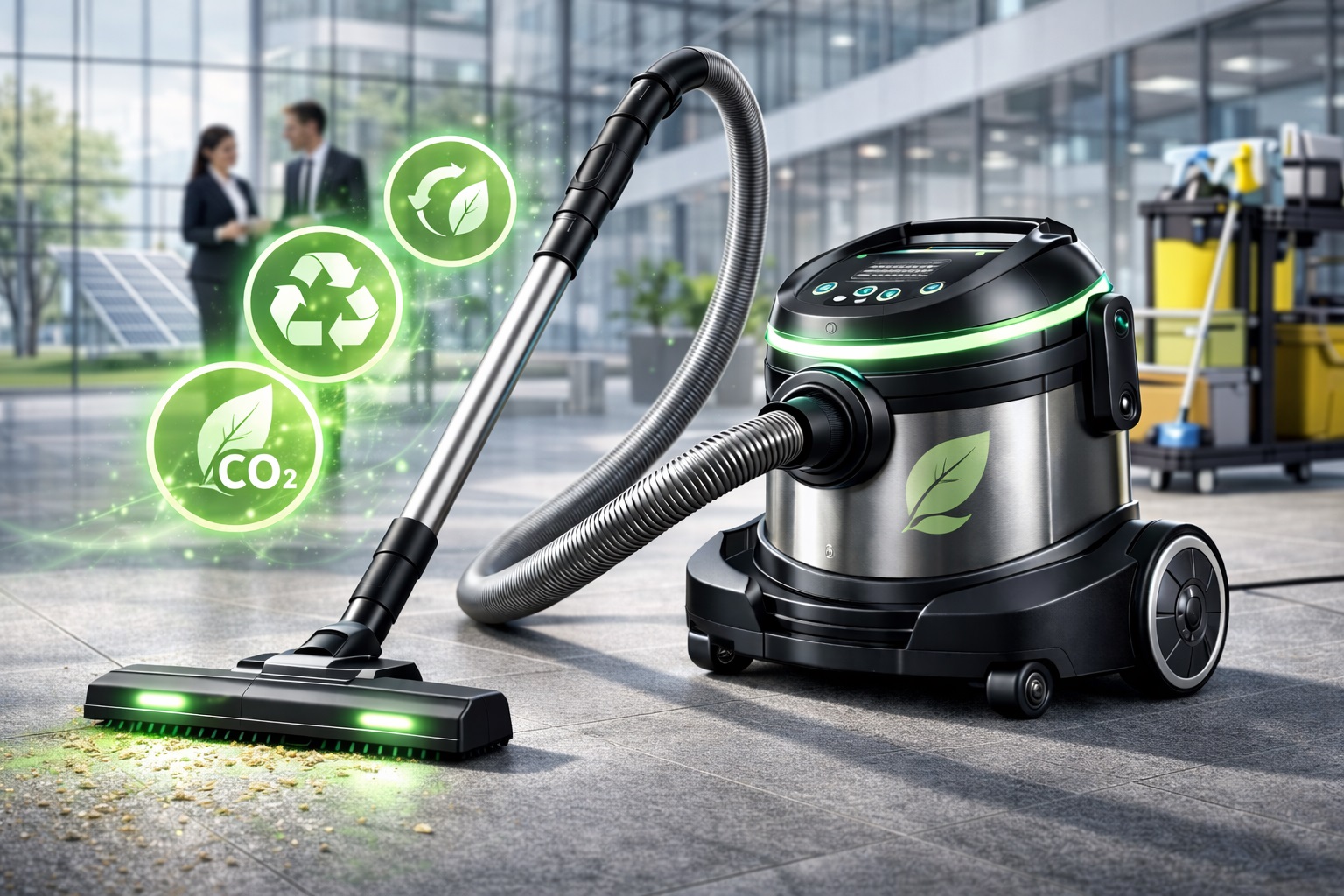
🔍 Introduction: Why Green Cleaning Matters for Business
As environmental standards tighten worldwide, businesses are increasingly prioritizing sustainability in operations. Cleaning equipment plays a surprisingly large role in energy use, indoor air quality, and lifecycle waste. Forward‑thinking companies are adopting green cleaning strategies — and barrel vacuum cleaners are at the forefront of that shift.
Today’s sustainable cleaning involves not only powerful, reliable machines but also technologies that reduce energy consumption, improve indoor air quality, minimize noise pollution, and extend product lifespans. This article explores how businesses can apply these principles using modern vacuum technologies.
⚡ Choose Energy‑Efficient Models to Reduce Consumption
Energy‑Saving Efficient Powerful Vacuum Cleaner Designs
Energy efficiency is a cornerstone of sustainability. Modern barrel vacuum cleaners with optimized motor and airflow designs use less electricity while maintaining strong suction, lowering operational costs and reducing carbon footprints.
Key Components:
High‑efficiency brushless or digital motors
Smart airflow pathways with minimal resistance
Variable power settings for different floor types
Market Data:
According to industry analysis, energy‑efficient cleaning equipment can cut facility power usage by as much as 30%, contributing significantly to corporate sustainability goals.
Business Case:
A European office complex implemented energy‑rated barrel vacuums and cut annual energy costs by 15% while improving overall cleanliness scores.
🏠 Deploy Long‑Lasting Household Vacuum Cleaners for Lower Lifecycle Impact
Durability contributes to sustainability by extending product life and reducing waste.
Strategies for Green Lifecycle:
Choose vacuums with replaceable modular parts
Focus on corrosion‑resistant components to reduce premature failures
Select brands offering long warranty and support services
This approach reduces the frequency of replacements, keeping products longer in active use and out of landfill streams.
🌊 Wet Dry Vacuum Cleaners: Versatility Encourages Less Waste
Wet dry vacuum cleaners are inherently sustainable because they replace the need for multiple machines.
Eco Benefits:
One unit handles both wet and dry debris
Reduces the need to purchase multiple cleaning tools
Lowers packaging, shipping emissions, and material use
Real‑World Insight:
A logistics facility switched from four separate cleaning devices to a single wet‑dry barrel vacuum. The result: reduced inventory, simplified maintenance, and a 12% net decrease in waste from consumables such as filters and bags.
🦠 Prioritize Clean Air with HEPA Filtration
Indoor air quality affects occupant health and well‑being — a priority in offices, hospitals, schools, and residential settings. HEPA filter vacuum cleaners capture fine particulate matter often missed by standard filters, preventing re‑emission into indoor air.
Green Cleaning Advantages:
Improves air quality and occupant satisfaction
Supports health‑focused sustainability policies
Reduces allergens and particulate emissions
Benchmark Insight:
A healthcare network that implemented HEPA‑equipped barrel vacuums reported measurable improvements in indoor air quality scores within three months — a win for both patient health and environmental compliance.
🌙 Reduce Noise Pollution with Quiet Vacuum for Night Use
Noise levels are a sustainability consideration, especially in urban environments and shared facilities where night‑time cleaning is necessary.
Quiet Design Elements:
Sound‑insulating housings
Low‑rpm, high‑efficiency motors
Night mode operation profiles
Business Value:
Quiet operation not only improves occupant comfort but also aligns with local noise ordinances — a facet of environmental sustainability often overlooked in procurement decisions.
📊 Establish Green Cleaning Protocols & Training
Technology alone isn’t enough. To achieve sustainable outcomes, businesses should:
✔ Train staff on efficient cleaning practices
✔ Standardize routine maintenance for peak performance
✔ Establish cleaning schedules to optimize energy and labor use
✔ Use eco‑certified consumables (bags, filters, detergents)
📈 Measure, Report & Improve: The Green Feedback Loop
Implementing sustainable cleaning requires ongoing tracking and improvement:
Energy use metrics from smart vacuums
Filter replacement and waste logs
Noise level monitoring
Indoor air quality assessments
Many organizations have adopted sustainability dashboards that integrate data sources — including connected cleaning equipment — to monitor performance and achieve green goals.
🧠 Conclusion: Sustainability Equals Operational Excellence
Barrel vacuum cleaners can be powerful tools in a business’s green cleaning strategy. When selected and used strategically, vacuum systems contribute to:
✔ Lower energy consumption
✔ Improved indoor environmental quality
✔ Reduced lifecycle waste
✔ Enhanced occupant comfort and satisfaction
✔ Compliance with environmental standards and ESG goals
For facility managers, procurement teams, sustainability officers, and product developers, integrating sustainable cleaning solutions like energy‑efficient, low‑noise, HEPA‑equipped barrel vacuums is both environmentally responsible and economically smart.
Hashtags
Lanxstar, UprightVacuumCleaners, HouseholdVacuumCleaners, WetDryVacuumCleaners, EnergySavingEfficientPowerfulVacuumCleaner, QuietVacuumForNightUse, HEPAFilterVacuumCleaner, SustainableCleaningSolutions, GreenFacilityMaintenance, EcoFriendlyCleaning, EnergyEfficientCleaning, GreenTechnologyVacuum, IndoorAirQualityControl, LowCarbonCleaningTech, QuietOperationVacuum, WasteReductionCleaning, FacilitySustainability, ESGCleaningStrategies, LifecycleImpactReduction, SmartCleaningEfficiency, UrbanEcoCleaning, CleanAirVacuumTech, CorporateGreenProcurement, EcoCertifiedCleaning, SustainableApplianceDesign, GreenCleaningProtocols, GreenTrainingVacuum, RecyclableVacuumComponents, NoisePollutionReduction, EnergyTrackingCleanTech, EcoFriendlyFacilityTools, GreenCleaningMetrics, EnvironmentallyConsciousCleaning, CleanBuildingStandards, SustainableFacilityEquipment, ZeroWasteCleaningSolutions, DurableCleaningTech, HealthFocusedCleaning, GreenInnovationVacuum, EnergyLabelCompliance, HVACCompatibleCleanTech, SustainabilityReporting.