Hi, message us with any questions.
We're happy to help!





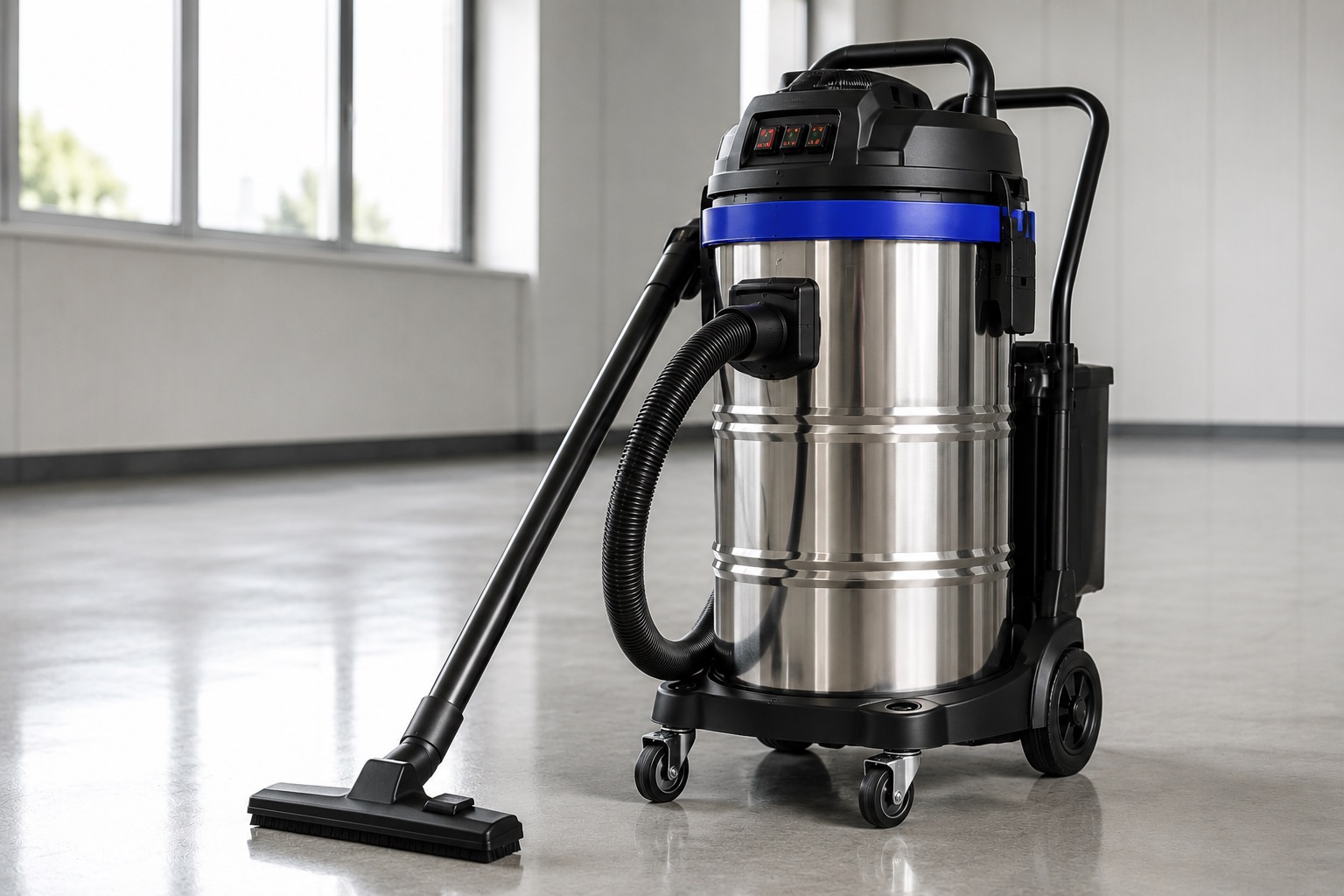
Why Many “High Suction” Vacuums Perform Worse in Real Industrial Cleaning
In the commercial cleaning industry, many buyers still believe:
“The stronger the suction power, the better the vacuum cleaner.”
This idea dominates product marketing across the global vacuum industry.
Manufacturers frequently promote:
ultra high suction
powerful motors
maximum wattage
extreme vacuum pressure
But experienced engineers and industrial cleaning contractors understand a more important truth:
Strong suction without proper airflow efficiency often creates worse real-world cleaning performance.
In fact, many industrial vacuum systems fail not because of weak motors — but because of poor airflow engineering.
For OEM buyers, distributors, and commercial cleaning equipment importers, understanding the relationship between vacuum suction power and airflow is essential for selecting reliable cleaning systems.
This guide explains the real engineering logic behind suction vs airflow vacuum performance, including:
hidden industry misconceptions
engineering limitations
real industrial case studies
procurement decision frameworks
airflow optimization strategies
## ⚙️ What Is Vacuum Suction Power?
Vacuum suction power refers to the machine’s ability to generate negative pressure.
In industrial vacuum engineering, suction is commonly measured using:
Water Lift
Static Pressure
Sealed Suction Testing
📌 What Strong Suction Actually Does
High suction power improves:
fine dust extraction
deep carpet cleaning
powder recovery
liquid pickup
sealed surface cleaning
The stronger the vacuum pressure:
the more aggressively debris is pulled upward
the easier dense particles can be extracted
the better the machine performs on resistant surfaces
However:
Suction alone does not determine total cleaning efficiency.
## 🌪️ What Is Airflow in a Vacuum Cleaner?
Airflow measures how much air moves through the vacuum system.
It is usually measured in:
CFM (Cubic Feet per Minute)
m³/h (Cubic Meters per Hour)
Airflow determines:
debris transportation speed
cleaning coverage
pickup efficiency
continuous cleaning performance
Without sufficient airflow, debris cannot move efficiently through:
hoses
filtration systems
airflow channels
Even extremely strong suction becomes inefficient if airflow movement is weak.
## 🚨 The Biggest Industry Myth: Higher Suction = Better Cleaning
This is one of the most misleading concepts in vacuum cleaner marketing.
Many suppliers advertise:
“2000W High Suction Vacuum”
But never explain:
airflow resistance
hose turbulence
CFM decay
airflow pathway optimization
static pressure loss
filtration resistance
As a result, many “high suction” vacuums perform poorly during real industrial operation.
📌 Common Problems
Machines with excessive suction but poor airflow often experience:
hose clogging
unstable debris transport
airflow collapse during long runtime
overheating
reduced cleaning speed
higher maintenance frequency
## 📊 Real Cleaning Efficiency Formula
Cleaning Performance = Balanced Airflow × Stable Suction × Low Resistance
NOT:
Higher Wattage = Better Cleaning
This is one of the most important engineering principles in industrial vacuum system design.
## 🔬 Suction vs Airflow Vacuum — The Real Engineering Difference
| Performance Factor | High Suction | High Airflow |
|---|---|---|
| Fine dust extraction | Excellent | Good |
| Large debris pickup | Medium | Excellent |
| Deep carpet cleaning | Excellent | Medium |
| Cleaning speed | Medium | Excellent |
| Hose transport efficiency | Medium | Excellent |
| Continuous operation | Depends on airflow | Strong |
| Blockage resistance | Lower | Higher |
## 🏭 Case Study: Why a “High Suction” Warehouse Vacuum Failed
A warehouse cleaning contractor in Germany purchased several industrial vacuums marketed with extremely high suction power.
During initial demonstrations, the machines appeared impressive.
The motors generated strong static pressure and aggressive suction.
However, after several weeks of daily operation, workers reported:
debris accumulation inside hoses
unstable airflow
frequent clogging
motor overheating
reduced cleaning efficiency
🔍 Engineering Analysis
The issue was not insufficient suction.
The real problem was:
Poor airflow efficiency.
The vacuum system generated high static pressure but lacked sufficient airflow volume to transport larger warehouse debris efficiently through long hose systems.
📌 Additional Engineering Problem
Engineers later discovered:
airflow resistance increased rapidly during long operation
hose turbulence reduced transport stability
filtration resistance caused airflow decay after 20 minutes of runtime
## ✅ Final Optimization Strategy
The contractor switched to industrial systems featuring:
optimized airflow channels
balanced pressure-airflow ratios
larger hose diameters
lower turbulence pathways
improved airflow efficiency
📈 Results
| Improvement | Result |
|---|---|
| Cleaning speed | Increased |
| Hose blockage | Reduced significantly |
| Continuous runtime stability | Improved |
| Operator efficiency | Higher |
| Maintenance frequency | Lower |
## 🧠 Why Airflow Efficiency Matters More Than Buyers Realize
In many industrial environments, airflow matters more than peak suction.
This is especially true for:
warehouse cleaning
packaging facilities
woodworking workshops
manufacturing plants
commercial floor cleaning
Because industrial debris must be:
transported continuously
moved through long hose systems
separated through filtration systems
maintained under long runtime conditions
Without sufficient airflow:
debris movement slows
clogging increases
suction stability collapses
cleaning productivity decreases
## 🔧 Why Airflow Drops After 20 Minutes of Operation
Many vacuum systems perform well during short demonstrations.
However, during continuous operation:
filter resistance increases
motor heat rises
airflow turbulence becomes unstable
airflow resistance curves worsen
RPM stability decreases
This causes:
CFM decay
weaker debris transport
lower cleaning efficiency
📌 Industry Insight
Professional industrial vacuum factories test:
continuous airflow stability
long-runtime airflow efficiency
thermal airflow performance
—not simply peak suction numbers.
## 🧪 Why Some High Wattage Vacuums Perform Worse
Many low-cost suppliers focus heavily on wattage marketing because it is easy to advertise.
However, poorly engineered systems often suffer from:
inefficient fan blade design
unstable RPM control
airflow restriction
weak hose geometry
poor sealing
excessive turbulence
📊 Example Comparison
| Vacuum Type | Wattage | Airflow Efficiency | Real Cleaning Performance |
|---|---|---|---|
| Cheap 2200W vacuum | Low | Poor | Medium |
| Optimized 1400W industrial system | High | Excellent | Superior |
📌 Engineering Conclusion
Professional cleaning efficiency depends more on:
airflow optimization
pressure balance
turbulence control
filtration efficiency
than raw wattage alone.
## 🏨 Case Study: How Airflow Optimization Improved Hotel Cleaning Efficiency
A commercial cleaning supplier in France struggled with customer complaints regarding inefficient hallway cleaning in hotels.
The vacuums used strong suction motors but weak airflow systems.
Operators noticed:
debris remaining near wall edges
multiple cleaning passes required
unstable suction after long operation
rising motor temperature during daytime cleaning
🔍 Engineering Diagnosis
The machines generated high static pressure but weak airflow movement across wide commercial floor areas.
This reduced real cleaning productivity.
✅ Optimization Solution
The supplier upgraded to systems featuring:
balanced airflow-suction ratios
larger airflow channels
reduced airflow resistance
optimized filtration pathways
acoustic airflow engineering
📈 Results
| Improvement | Result |
|---|---|
| Cleaning speed | Faster |
| Operator fatigue | Reduced |
| Daytime cleaning efficiency | Improved |
| Energy consumption | Lower |
| Customer satisfaction | Higher |
📌 Industry Insight
For hotels and commercial buildings:
Balanced airflow often creates more operational value than maximum suction power.
## 📌 How Buyers Should Choose Between High Suction and High Airflow
| Application | Recommended Priority |
|---|---|
| Fine industrial dust | Strong suction |
| Large debris pickup | High airflow |
| Warehouse cleaning | High airflow |
| Carpet extraction | High water lift |
| Hotels & offices | Balanced airflow + low noise |
| Wet vacuum systems | Stable suction + airflow |
## 🔥 Filtration Systems Also Affect Airflow Performance
One of the most overlooked engineering factors is filtration resistance.
As filters become clogged:
airflow decreases
pressure stability weakens
motor heat rises
suction efficiency falls
Professional systems solve this through:
cyclone separation
HEPA airflow optimization
automatic filter cleaning
airflow-balanced filtration design
Good filtration engineering improves both:
airflow stability
suction consistency
## 🚀 The Future of Industrial Vacuum Engineering
Modern industrial vacuum systems are increasingly optimized around:
airflow efficiency
smart airflow monitoring
brushless motor systems
energy-saving airflow design
low-resistance filtration
noise reduction engineering
Professional vacuum cleaner suppliers are now competing on total system efficiency rather than simply advertising larger motors.
## 🌍 How Professional OEM Vacuum Suppliers Design for Different Markets
Different regions prioritize different performance characteristics.
| Market | Buyer Preference |
|---|---|
| Germany | Energy efficiency & durability |
| USA | Strong suction performance |
| France | Low-noise airflow systems |
| Scandinavia | Sustainable operation |
| UK | Compact balanced systems |
This is why professional OEM development requires application-specific airflow engineering rather than universal motor configurations.
## 💡 How B2B Buyers Can Avoid Common Sourcing Mistakes
❌ Mistake #1: Comparing Only Wattage
Higher wattage does not guarantee better cleaning performance.
❌ Mistake #2: Ignoring Airflow Efficiency
Poor airflow dramatically reduces real cleaning productivity.
❌ Mistake #3: Choosing Extreme Suction Without Balance
Too much suction with weak airflow increases clogging risk.
❌ Mistake #4: Ignoring Runtime Airflow Stability
Some vacuums lose airflow rapidly during continuous operation.
❌ Mistake #5: Choosing Suppliers Without Engineering Testing
A professional industrial vacuum factory should provide:
airflow test reports
sealed suction testing
runtime airflow data
thermal testing reports
application-specific engineering recommendations
## 🚀 Looking for a Reliable Vacuum Cleaner Supplier?
Professional industrial vacuum manufacturers should help buyers optimize:
airflow efficiency
suction balance
thermal stability
filtration resistance
energy consumption
long-term operating reliability
The best industrial vacuum systems are not simply the most powerful.
They are the most balanced.
For serious B2B buyers, understanding suction vs airflow vacuum engineering is essential for selecting reliable commercial cleaning equipment.
📌 Suitable Audience
European industrial vacuum distributors
North American commercial cleaning equipment buyers
OEM vacuum sourcing managers
Industrial cleaning equipment engineers
Commercial vacuum product developers
B2B cleaning equipment importers
📌 Hashtags
vacuumsuctionpower, suctionvsairflowvacuum, airflowefficiency, highsuctionvacuum, industrialvacuumfactory, vacuumcleanersupplier, industrialcleaningequipment, commercialvacuumcleaner, airflowtechnology, vacuumengineering, industrialvacuumsystem, industrialcleaningsolutions, vacuumairflowdesign, commercialcleaningsystems, industrialvacuumcleaner, airflowoptimization, vacuumperformance, industrialsuctionsystem, highpowervacuum, vacuumfiltrationsystem, industrialvacuumtechnology, commercialfloorcleaning, vacuumairflowefficiency, industrialmaintenanceequipment, professionalcleaningequipment, industrialdustcollection, vacuumcleanerfactory, b2bvacuumsupplier, wetdryvacuumsystem, vacuumcleanerengineering, industrialairflowsystem, industrialvacuumdesign, commercialvacuumsolutions, vacuumcleanerperformance, industrialmotorengineering, industrialvacuumapplications, vacuumtechnologyguide, industrialcleaningmachines, airflowvsuction, industrialequipmentmanufacturer, cleaningequipmentindustry, vacuumindustryinsights, industrialvacuumbuyers, professionalvacuumsystems, commercialcleaningtechnology, industrialvacuuminnovation, airflowbalancedvacuum, vacuumtestingstandards, industrialsuctionpower, Lanxstar