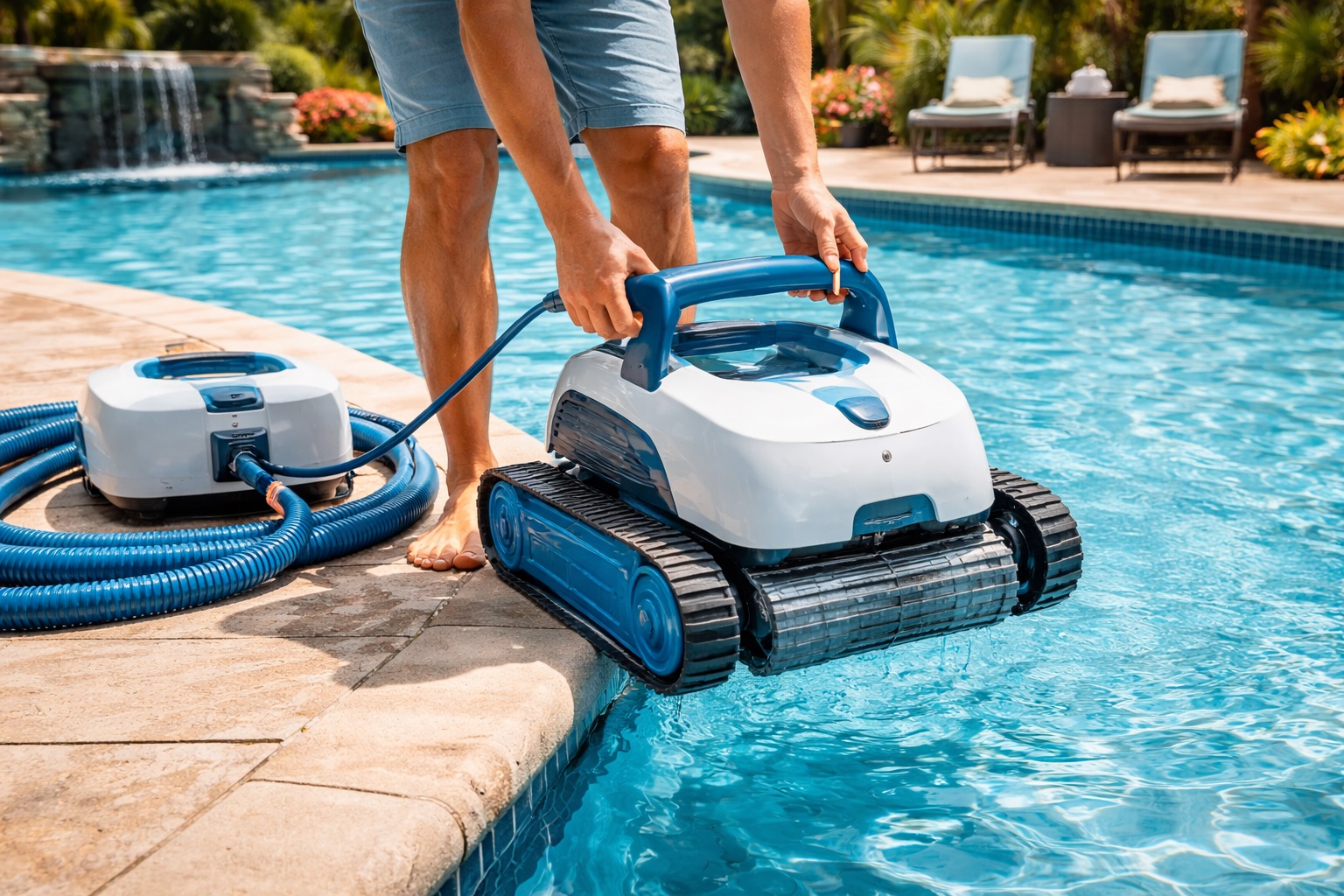
A robotic pool cleaner is one of the most advanced solutions in modern pool maintenance. Compared with manual or suction-based tools, robotic systems offer independent operation, consistent cleaning performance, and reduced labor.
However, many users fail to achieve optimal results simply because they don’t use their pool swimming vacuum cleaner correctly. This guide walks you through the professional workflow—from preparation to maintenance—used by experienced pool technicians.
Step 1: Choose the Right Robotic Pool Cleaner for Your Pool 🔍
Before operation, ensure your robotic cleaner matches your pool conditions.
Key Factors to Check
Pool type: inground or above ground
Pool size and depth
Surface material (tile, concrete, vinyl)
Debris type (sand, leaves, algae)
A High Suction Vacuum Cleaner robotic model is ideal for dusty or sandy environments, while lighter models suit smaller residential pools.
📌 Pro Tip
Using an oversized robotic cleaner in a small pool wastes energy and shortens component life.
Step 2: Prepare the Pool Before Cleaning 🧼
Professional pool cleaners never skip preparation.
Pre-Cleaning Checklist
Remove large floating debris with a skimmer
Check water level (mid-skimmer height is ideal)
Inspect pool floor for loose objects
This step improves cleaning efficiency and protects internal components of your robotic pool vacuum cleaner.
Step 3: Inspect Power, Battery, and Filters 🔋
Corded Robotic Pool Cleaners
Cordless Robotic Pool Cleaners
Clean filters are critical. Even the best Energy-Saving Efficient Powerful Vacuum Cleaner will lose performance if filters are clogged.
Step 4: Correctly Place the Robotic Cleaner in the Pool 📍
Lower the cleaner slowly into the water at an angle to release trapped air.
Why this matters:
Once submerged, place it near the pool wall for optimal startup positioning.
Step 5: Select the Right Cleaning Mode ⚙️
Modern robotic cleaners often include multiple modes:
For routine maintenance, a standard cycle is sufficient. For heavy debris or algae, use deep-clean mode with a High Suction Pool Vacuum setting.
📌 Case Example
A villa owner in Spain reduced cleaning time by 30% by switching from daily full-cycle cleaning to alternating floor-only and wall modes.
Step 6: Let the Robot Work—Don’t Interfere 🤖
One of the most common mistakes is interrupting the cleaning cycle.
Best Practices
Do not lift the cleaner mid-cycle
Avoid walking near the pool edge
Let navigation algorithms complete their path
Robotic cleaners are designed to optimize coverage automatically.
Step 7: Remove and Clean the Robotic Pool Cleaner Properly 🪣
After the cycle:
For models with Self-Cleaning Vacuum Cleaner features, still perform visual checks to ensure no residue remains.
Step 8: Regular Maintenance for Long-Term Performance 🛠️
Professional users follow a simple maintenance routine:
Weekly
Rinse filters
Inspect brushes
Monthly
Check motor housing
Inspect seals and wheels
Proper maintenance extends lifespan and keeps your Multi-Functional Durable Vacuum Cleaner performing like new.
Common Mistakes to Avoid ❌
Running the cleaner in very cold water
Using it without cleaning filters
Leaving it submerged when not in use
Ignoring manufacturer runtime recommendations
These mistakes are among the top causes of premature failure reported by vacuums manufacturer service centers.
Robotic Pool Cleaners vs Manual Pool Vacuums ⚖️
| Feature | Robotic Cleaner | Manual Pool Vacuum |
|---|
| Labor | Minimal | High |
| Consistency | Very High | Operator-dependent |
| Initial Cost | Higher | Lower |
| Long-Term Value | High | Moderate |
For frequent use and larger pools, robotic systems deliver superior ROI.
OEM & Engineering Perspective 🏭
From a manufacturing standpoint, professional robotic cleaners emphasize:
Brands like Lanxstar, as a professional vacuum cleaner maker, focus on durability, optimized suction paths, and OEM customization for global markets.
Final Pro Tips for Crystal Clear Pools ✅
✔ Clean filters after every cycle
✔ Match cleaning mode to debris type
✔ Store the cleaner in shade
✔ Schedule cleaning consistently
For advanced robotic pool vacuum solutions and OEM support, visit www.lxvacuum.com 🌍
50 Related Keyword Groups
robotic pool cleaner, pool vacuum cleaner, pool swimming vacuum cleaner, cordless robotic pool vacuum, high suction pool vacuum, quiet pool vacuum cleaner, wet dry pool vacuum, large capacity pool vacuum, self-cleaning vacuum cleaner, energy-saving efficient powerful vacuum cleaner, fast lightweight vacuum cleaner, durable pool vacuum cleaner, robotic pool vacuum for inground pools, robotic pool vacuum for above ground pools, cordless pool vacuum, best vacuum on a budget, best affordable vacuum, good budget vacuum cleaner, best value hoover, best vacuum cleaners on a budget, best vacuums on a budget, pool vacuum for leaves, pool vacuum for sand, pool vacuum for algae, quiet vacuum for night use, HEPA filter vacuum cleaner, vacuum cleaner for allergies, wet and dry vacuum cleaner, multi functional vacuum cleaner, vacuum for multi-surface, Lanxstar robotic pool vacuum, vacuums manufacturer, vacuum cleaner maker, OEM robotic pool cleaner, smart pool cleaning robot, pool maintenance equipment, backyard pool vacuum, residential pool cleaner, hotel pool cleaning vacuum, energy saving pool vacuum, cordless handheld vacuums, apartment vacuum cleaner











