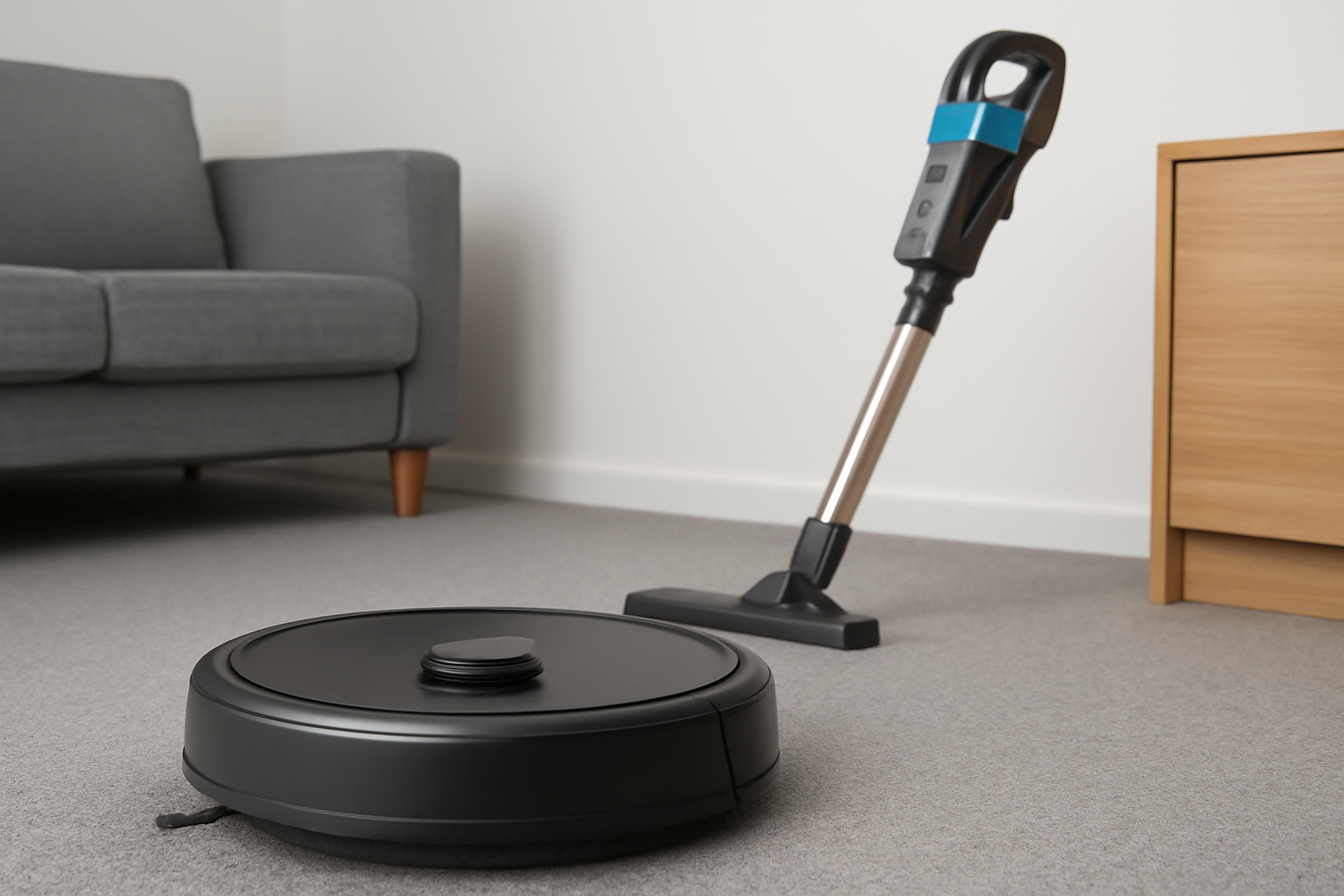
I. Introduction – From Manual Labor to Intelligent Cleaning
Start with a hook: cleaning used to be about labor, now it’s about data and automation.
Introduce the concept: “smart vacuums” merging hardware + AI + IoT.
Mention market growth data:
According to Statista 2024, global smart vacuum revenue grew 38% year-over-year, driven by commercial adoption.
Promise to explain how startups and innovators can leverage this disruption.
II. What Defines a “Smart Vacuum” in 2025 🤖
Explain key components:
Insert keywords naturally: Upright Vacuum Cleaners, Cordless Handheld Vacuum Cleaner, 4-in-1 Smart Wet & Dry Vacuum Cleaner.
Describe how these systems outperform traditional Household Vacuum Cleaners.
Example phrase: “Unlike traditional Household Vacuum Cleaners, modern smart models use multi-sensor mapping and cloud analytics to self-optimize cleaning routes.”
III. Case Study – Dyson’s Smart Airflow Revolution 💡
Real brand example (keep factual):
Dyson’s latest R&D focuses on adaptive airflow control, allowing upright vacuums to maintain steady suction across carpet and tile.
Explain how this approach inspired many B2B startups to design energy-efficient HEPA Filter Vacuum Cleaners.
Mention EnergyStar data: new AI-controlled brushless motors can reduce energy use by 25–30%.
Emphasize: “Smart doesn’t just mean automated — it means efficient, maintainable, and upgradeable.”
IV. The Business Impact: Automation = Profitability 📈
For startups and B2B operators, the key disruption isn’t just technology — it’s business scalability.
Show data:
IFMA’s 2024 Cleaning Operations Survey found that IoT-enabled vacuums cut maintenance costs by 32% and extended lifespan by 40%.
Explain how data helps:
Example insight: “Smart vacuum fleets let B2B cleaning companies operate more like software firms — scalable, data-driven, and subscription-ready.”
V. Industrial Application: From Hotels to Factories 🏭
Describe expansion beyond homes:
Mention compliance: OSHA and LEED standards for indoor air quality.
Quote or paraphrase: “As air quality becomes a KPI, smart vacuums shift from optional tools to essential compliance devices.”
VI. Emerging Business Models 🚀
Discuss how smart vacuums enable new revenue models:
Hardware-as-a-Service (HaaS)
Subscription cleaning analytics platforms
Fleet sharing among commercial cleaning contractors
Give example of startups using this model.
Use natural keyword embedding: Cordless Handheld Vacuum Cleaner, HEPA Filter Vacuum Cleaner.
Example line: “Startups building connected Cordless Handheld Vacuum Cleaners now sell efficiency, not equipment.”
VII. AI + SaaS Integration: The Future of Smart Cleaning 🧠
Explain synergy between hardware and software:
Real-time mapping → cloud optimization
Fleet dashboards → predictive insights
App-based alerts → preventive maintenance
Example: iRobot’s machine-learning platform now processes more than 10 million cleaning maps daily (source: public company filings).
Show how smaller brands can use open-source IoT frameworks (like AWS IoT Core) to compete.
VIII. Challenges and Entry Barriers ⚙️
IX. The Global Shift: Sustainability + Smart Cleaning 🌱
Mention the growing pressure from ESG goals:
Cite EnergyStar 2025 Report: “Smart vacuums with adaptive motors consume up to 40% less electricity annually.”
Highlight that sustainable smart vacuums aren’t just eco-friendly — they’re profitable (lower TCO, longer use, higher resale value).
X. Conclusion: The Smart Cleaning Revolution Is Just Beginning 🚀
Summarize disruption points:
Automation and data are transforming cleaning into a high-tech service.
Smart vacuums lower costs and raise performance standards.
Startups that merge hardware + data + design thinking will define the next decade.
End with a call to action:
“For vacuum startups, the question isn’t whether AI will transform cleaning — it’s whether your brand will lead that transformation.”
XI. Hashtags (50+)
Upright Vacuum Cleaners, Household Vacuum Cleaners, 4-in-1 Smart Wet & Dry Vacuum Cleaner, HEPA Filter Vacuum Cleaner, Cordless Handheld Vacuum Cleaner, Smart Cleaning Devices, AI Vacuum Technology, Lanxstar, Commercial Cleaning Automation, Cleaning Industry Innovation, Smart Cleaning Startup, Industrial Vacuum Systems, Smart Home Appliances, IoT Cleaning Equipment, Data-Driven Cleaning, Predictive Maintenance Cleaning, Cleaning Workflow Optimization, AI Robotics Cleaning, Energy Efficient Vacuum Cleaner, Professional Cleaning Machines, Cleaning Business Growth, Smart Facility Cleaning, Cleaning Equipment Distributor, Sustainable Cleaning Solutions, Smart Cleaning Insights, Industrial Cleaning Automation, Cleaning Technology Trends, Vacuum Cleaner Innovation, Cleaning Robot Market, Smart Cleaning Entrepreneurs, Cleaning Equipment Design, Connected Cleaning Devices, Industrial Hygiene Equipment, Energy Saving Cleaning Solutions, Cleaning Startup Ideas, Smart Vacuum Fleet Management, Intelligent Cleaning Technology, Commercial Cleaning ROI, Modern Cleaning Devices, Smart Sensor Cleaning Equipment, Professional Vacuum Supplier, Cleaning Equipment Procurement, Cleaning Technology Upgrade, Cleaning Innovation 2025, Future of Cleaning Industry, Smart Cleaning Revolution, Data Analytics for Cleaning, Cleaning Equipment Development, Lanxstar