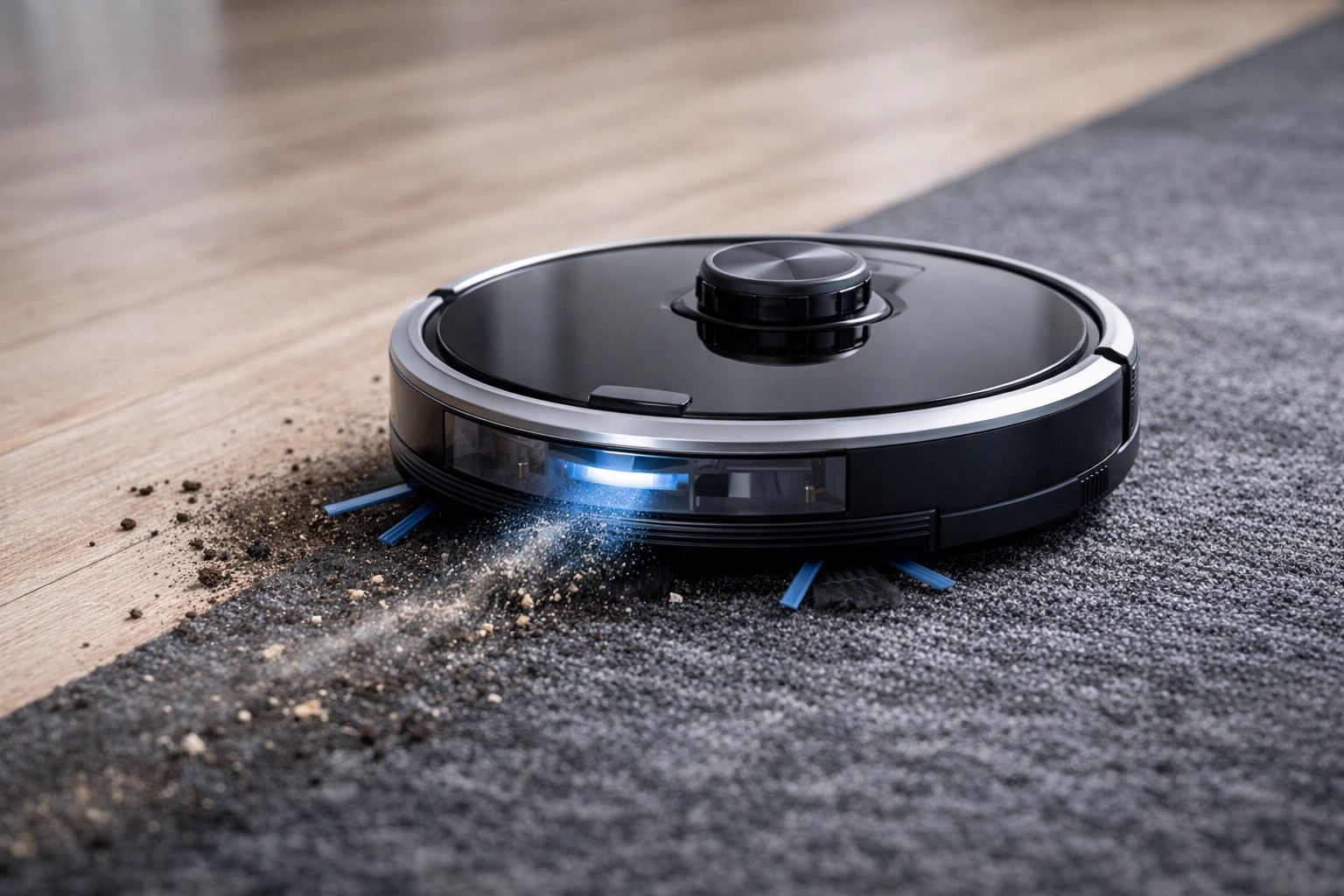
Low cleaning efficiency is rarely caused by unmotivated staff.
It is almost always caused by the wrong tools doing the wrong jobs.
In commercial environments—offices, hotels, healthcare facilities, retail spaces, restaurants, and mobile operations—cleaning efficiency directly affects:
This article explains how smart vacuums solve low cleaning efficiency, not through automation hype, but through better task alignment, adaptive performance, and multi-functional design.
⚠️ 1. Why Cleaning Efficiency Breaks Down in the First Place
Before fixing efficiency, you need to understand why it drops.
Common causes include:
Traditional cleaning setups rely heavily on human judgment and physical effort, which creates inconsistency and waste.
Core Problem:
Cleaning workflows have become more complex—but tools have not kept up.
💧 2. Wet and Dry Vacuums Eliminate the Biggest Time Waster
One of the biggest efficiency killers is task switching.
A wet and dry vacuum cleaner solves this by:
In high-traffic environments, this means:
Faster turnaround
Fewer tools
Less retraining
Efficiency Gain:
One workflow replaces three—immediately improving productivity.
🧠 3. Multi-Functional Design Reduces Human Error
Low efficiency often comes from incorrect tool usage.
A Multi-Functional Durable Vacuum Cleaner improves efficiency by:
Adapting to multiple surfaces
Reducing the need for manual adjustments
Delivering consistent results across operators
When staff no longer need to decide which tool to use, cleaning becomes:
Faster
More predictable
Easier to scale
Operational Insight:
The less staff have to think about the tool, the more efficient the process becomes.
🔇 4. Quiet Operation Expands Available Cleaning Time
Cleaning efficiency is also about when you can clean.
A Quiet Vacuum Cleaner allows:
Daytime cleaning in occupied spaces
Night and early-morning cleaning without complaints
Flexible scheduling without overtime
Noise restrictions often force cleaning into narrow windows.
Quiet technology removes that constraint.
Efficiency Link:
More usable hours = better labor utilization without hiring more staff.
⚡ 5. Energy Efficiency Improves Output per Hour
An Energy-Saving Efficient Powerful Vacuum Cleaner improves efficiency in two ways:
Lower energy consumption
More stable long-term performance
Efficient airflow design means:
Hidden Benefit:
Machines that stay cool and stable clean faster because they don’t require pauses or rework.
🧬 6. HEPA Filtration Prevents Re-Cleaning
Low efficiency is often caused by invisible failure—dust and allergens being redistributed into the air.
A HEPA Filter Vacuum Cleaner:
This reduces:
Repeat cleaning
Complaints
Compliance issues
Efficiency Reality:
If you have to clean the same area twice, efficiency is already lost.
🧳 7. Portable Vacuums Solve Efficiency Gaps in Mobile Scenarios
Large operations are rarely centralized.
A Portable Vacuum for Travel improves efficiency in:
Service vehicles
Temporary sites
Remote facilities
Mobile teams
Instead of waiting for central equipment, portable units:
Operational Insight:
Mobility is a form of efficiency, not a convenience feature.
📊 8. Smart Vacuums Reduce Labor Dependency
Smart vacuums improve efficiency by:
Adjusting performance automatically
Reducing operator fatigue
Delivering consistent results regardless of experience level
This is especially valuable in:
Key Advantage:
Efficiency becomes system-driven, not person-dependent.
🏢 9. Where Smart Vacuums Deliver the Highest Efficiency Gains
| Environment | Main Efficiency Gain |
|---|
| Offices | Quiet + energy efficiency |
| Hotels | Wet & dry speed |
| Healthcare | HEPA filtration |
| Retail | Multi-functional adaptability |
| Mobile operations | Portable response |
Efficiency improves fastest where conditions change frequently.
✅ Conclusion: Smart Vacuums Fix Efficiency at the System Level
Low cleaning efficiency cannot be solved by working harder.
It is solved by working smarter.
Smart vacuums improve efficiency by:
Combining multiple cleaning tasks
Reducing tool switching
Expanding cleaning windows
Preventing rework
Making performance consistent
In modern commercial environments, cleaning efficiency is no longer about effort—it’s about intelligent design and adaptive performance.
When the vacuum becomes smart, efficiency follows naturally.
📌 Suitable Reading Audience
Commercial Cleaning Equipment Procurement Managers
Facility & Operations Directors
B2B Cleaning Service Providers
Healthcare, Hospitality & Retail Operations Teams
📌 Hashtags
wet and dry vacuum cleaner, Multi-Functional Durable Vacuum Cleaner, Quiet Vacuum Cleaner, Energy-Saving Efficient Powerful Vacuum Cleaner, HEPA Filter Vacuum Cleaner, Portable Vacuum for Travel, Smart Vacuum Cleaner, Commercial Cleaning Equipment, Cleaning Efficiency Solutions, B2B Cleaning Machines, Facility Management Tools, Professional Cleaning Machines, Smart Cleaning Technology, Commercial Cleaning Innovation, Energy Efficient Cleaning Equipment, Quiet Commercial Vacuum, Wet Dry Cleaning Solutions, HEPA Filtration Technology, Portable Cleaning Equipment, Mobile Cleaning Solutions, Labor Saving Cleaning Tools, Commercial Cleaning ROI, Facility Operations Optimization, Cleaning Equipment Procurement, Smart Facility Management, Hygiene Compliance Tools, Indoor Air Quality Solutions, Professional Facility Cleaning, Sustainable Cleaning Equipment, Durable Vacuum Cleaner, Multi Surface Cleaning Solutions, Intelligent Cleaning Systems, Commercial Cleaning Best Practices, Global B2B Procurement, Cleaning Equipment Distributor, Commercial Vacuum Manufacturer, Service Efficiency Tools, Operational Cost Reduction, Smart Cleaning Workflow, Facility Cleaning Strategy, Advanced Cleaning Solutions, Business Cleaning Equipment, Productivity Improvement Tools, Long Term Cleaning Efficiency, Smart Operations Management, Lanxstar











