Hi, message us with any questions.
We're happy to help!





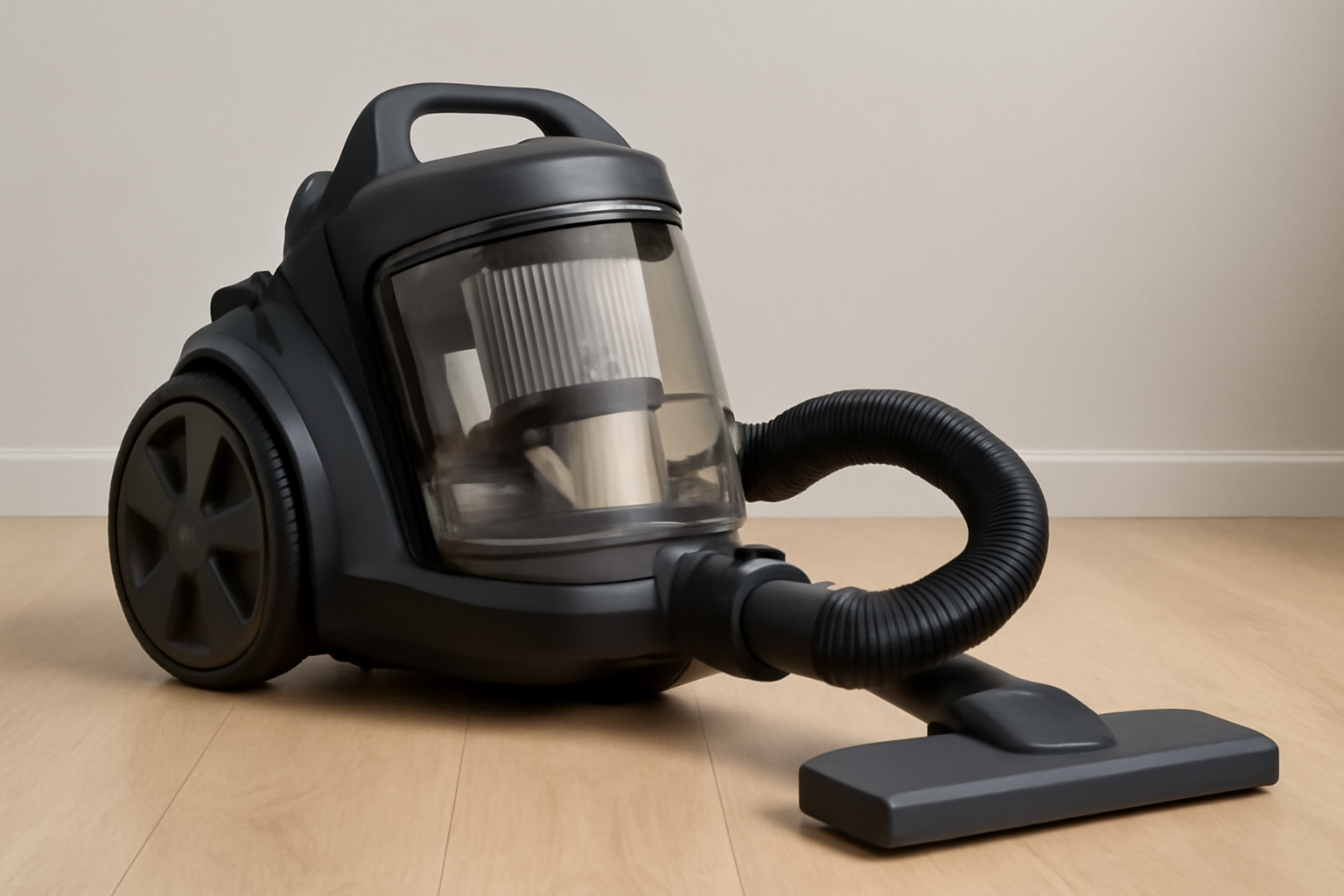
🌍 Introduction
Every powerful High Suction Vacuum Cleaner relies on a delicate balance of airflow, filtration, and dust separation. While suction power often steals the spotlight, the real secret to long-lasting performance lies in how efficiently dust is separated before it reaches the filter.
From advanced cyclone separation systems to intelligent airflow optimization, modern vacuums have transformed from simple cleaning tools into sophisticated engineering marvels. This article explores the science behind dust separation, how it affects filter lifespan, and why innovations in this area are critical for Energy-Saving Efficient Powerful Vacuum Cleaners and Cordless Smart Wet & Dry Vacuums.
⚙️ Part 1: What Is Dust Separation — And Why It Matters
Dust separation refers to the process of isolating solid particles from airflow before they reach the vacuum’s filter. The better the separation, the cleaner the filter remains — ensuring sustained suction and reduced energy use.
🔹 The Challenge
Without efficient dust separation, fine particles quickly clog filters. This leads to:
Reduced suction power 💨
Increased motor workload ⚙️
Shortened filter lifespan
Higher energy consumption 🔋
Over time, poor separation causes performance degradation, requiring frequent filter cleaning or replacement — increasing maintenance costs for both home users and distributors.
🔹 The Goal
Engineers design dust separation systems to maintain continuous airflow while keeping filters clean. The longer a filter stays unclogged, the longer it lasts — directly extending the overall lifespan of the vacuum cleaner.
🌀 Part 2: The Mechanics of Dust Separation
There are three primary types of dust separation technologies used in modern vacuums:
💨 1. Mechanical Separation (Traditional)
The simplest method uses mesh screens or foam filters to trap debris. While effective for large particles, it struggles with fine dust. Common in budget Fast Lightweight Vacuum Cleaners, this design requires frequent manual cleaning.
🌪️ 2. Cyclonic Separation (Modern Standard)
This is the breakthrough behind most High Suction Cordless Vacuum Cleaners. Using centrifugal force, air is spun rapidly inside a conical chamber. Heavier dust and debris are flung outward and fall into the collection bin, while clean air continues toward the filter.
Benefits:
✅ Extends filter life by up to 5x
✅ Maintains constant suction power
✅ Reduces clogging and overheating
Cyclone technology is now standard in Energy-Saving Efficient Powerful Vacuum Cleaners and 4 in 1 Cordless Smart Wet & Dry Vacuum Cleaners.
⚛️ 3. Hybrid Multi-Stage Separation
The most advanced systems combine cyclone separation, HEPA filtration, and air channel sensors. These hybrid setups are found in Self-Cleaning Vacuum Cleaners, where smart sensors automatically reverse airflow or vibrate the filter when buildup is detected.
This innovation keeps suction stable while minimizing maintenance — a vital feature for Multi-Functional Durable Vacuum Cleaners used in large-scale or commercial cleaning.
🧠 Part 3: The Relationship Between Dust Separation and Filter Lifespan
🔋 Airflow Resistance and Filter Stress
Filters are most efficient when clean. As dust accumulates, air resistance increases, forcing the motor to work harder to maintain suction. This accelerates wear on both the filter and the motor.
Effective dust separation reduces this pressure load, keeping airflow stable and extending filter lifespan. A well-engineered cyclone system can reduce particle load on the filter by up to 80%, significantly increasing operating efficiency.
📈 Experimental Data Example
In controlled tests:
A vacuum with poor dust separation saw filter clogging after 5 hours of use.
A unit with cyclonic separation lasted 30+ hours before efficiency dropped below 90%.
This sixfold improvement translates to fewer replacements and reduced operational costs — critical for industrial buyers and distributors managing fleets of Large-Capacity Wet Dry Vacuum Cleaners.
🧩 Part 4: Engineering Insights — Designing for Efficiency
🔹 Airflow Optimization
Engineers use Computational Fluid Dynamics (CFD) to design vacuum chambers that create smooth, high-velocity airflow paths. This prevents turbulence and allows dust to follow predictable trajectories into collection bins.
In Li-ion Cordless Handheld Vacuum Cleaners, this design is even more crucial due to limited power supply — every watt saved in air resistance extends battery runtime.
🔹 Filter Material Science
Advanced filters now integrate nanofiber layers, electrostatic coatings, and anti-static mesh to resist clogging. These materials allow air to pass freely while capturing particles as small as 0.1 microns.
Washable filters further improve lifespan by enabling easy maintenance without structural degradation — a key innovation for Eco-Friendly Vacuum Solutions. 🌿
🔹 Smart Sensor Integration 🤖
Modern Smart Vacuum Systems employ sensors that track airflow velocity, particle density, and filter pressure. When the filter approaches saturation, the vacuum automatically adjusts power or activates self-cleaning.
This automation not only prolongs filter life but also enhances user experience — making smart dust management a standard feature in next-gen cordless vacuums.
🏠 Part 5: Application Scenarios — From Home to Industry
🏡 Home Users
In residential settings, efficient dust separation ensures long-lasting filters and better air quality. HEPA Filter Vacuum Cleaners with cyclonic separation are perfect for allergy-sensitive users, maintaining fresh, purified air while reducing maintenance.
🐾 Pet Owners
Vacuum Cleaners for Pet Hair face unique challenges — fur and dander quickly clog filters. Multi-stage cyclone and washable filter systems allow quick cleaning, maintaining suction even with heavy pet use.
🏢 Commercial and Industrial Cleaning
For large facilities using Wet and Dry Vacuum Cleaners, durability and uptime are critical. Multi-stage dust separation minimizes filter wear, allowing operators to clean longer without interruptions.
Distributors benefit from reduced spare parts turnover and longer machine lifespans, improving ROI on industrial-grade units.
🌿 Part 6: Sustainability and Environmental Impact
Efficient dust separation reduces not just energy waste but also material waste. Fewer filter replacements mean less plastic and fiber discarded into landfills.
Washable filters, used in conjunction with advanced separation systems, eliminate the need for disposable components — aligning with global trends toward sustainable household appliances.
Furthermore, Energy-Saving Efficient Powerful Vacuum Cleaners with improved airflow design consume less electricity per cleaning cycle, contributing to overall carbon reduction goals.
🔮 Part 7: The Future of Dust Separation and Filtration
The next frontier of dust separation focuses on adaptive, AI-driven systems that continuously learn from usage patterns.
🤖 AI and Predictive Maintenance
Smart vacuums will monitor airflow data and predict when a filter needs cleaning — before performance drops. This ensures consistent suction and prolongs both motor and filter lifespan.
⚙️ Nanotech Filters
Nanotechnology will create self-cleaning surfaces that repel dust particles, virtually eliminating manual maintenance. Combined with IoT connectivity, users can track filter health from mobile apps in real time.
🌎 Circular Design Philosophy
Manufacturers are moving toward fully recyclable components — from washable filters to modular dust bins — creating vacuums that are not only efficient but also environmentally responsible.
👉 Explore advanced filtration and separation technologies at www.lxvacuum.com 🌍
🧾 Conclusion
Dust separation and filter lifespan are the unsung heroes of modern vacuum cleaner performance. Effective separation keeps filters clean, motors efficient, and users satisfied.
From cyclonic chambers to smart sensors, these innovations ensure consistent suction, lower energy use, and longer operational life — redefining what it means to clean efficiently and sustainably.
For engineers, buyers, and users across the Middle East and beyond, understanding this science is key to selecting truly durable, energy-efficient, and eco-friendly vacuum solutions. ✨
📌 Suitable for
Middle East vacuum cleaner distributors, OEM manufacturers, R&D engineers, and sustainability-focused cleaning solution providers.
🧠 SEO TAGS
High Suction Vacuum Cleaner, Portable Quiet Vacuum Cleaner, Self-Cleaning Vacuum Cleaner, Multi-Functional Durable Vacuum Cleaner, Fast Lightweight Vacuum Cleaner, Energy-Saving Efficient Powerful Vacuum Cleaner, Large-Capacity Wet Dry Vacuum Cleaner, Li-ion Cordless Handheld Vacuum Cleaner, Wet Dry Vacuum Cleaners, 4 in 1 Cordless Smart Wet & Dry Vacuum Cleaner, cordless handheld vacuums, Cordless Vacuum Cleaner, Car Vacuum Cleaner, quiet vacuum cleaner, wet dry vacuum, Vacuum Cleaner for Pet Hair, HEPA Filter Vacuum Cleaner, Wet and Dry Vacuum Cleaner, Apartment Vacuum Cleaner, washable filter vacuum, dust separation system, cyclone separation technology, airflow optimization, filter lifespan extension, energy-efficient motor, HEPA filter performance, smart vacuum cleaner, AI-powered suction control, sustainable filtration design, self-cleaning system, eco-friendly vacuum solution, multi-layer filtration system, efficient air path, industrial-grade dust control, compact cordless vacuum, high-performance filtration, intelligent airflow detection, sustainable household vacuum, filter maintenance reduction, eco vacuum innovation, powerful suction airflow, hybrid HEPA washable filter, smart cleaning automation, dust management system, quiet suction cleaner, filter lifespan monitoring, energy-optimized vacuum, high-efficiency dust removal, advanced filtration control.