Hi, message us with any questions.
We're happy to help!





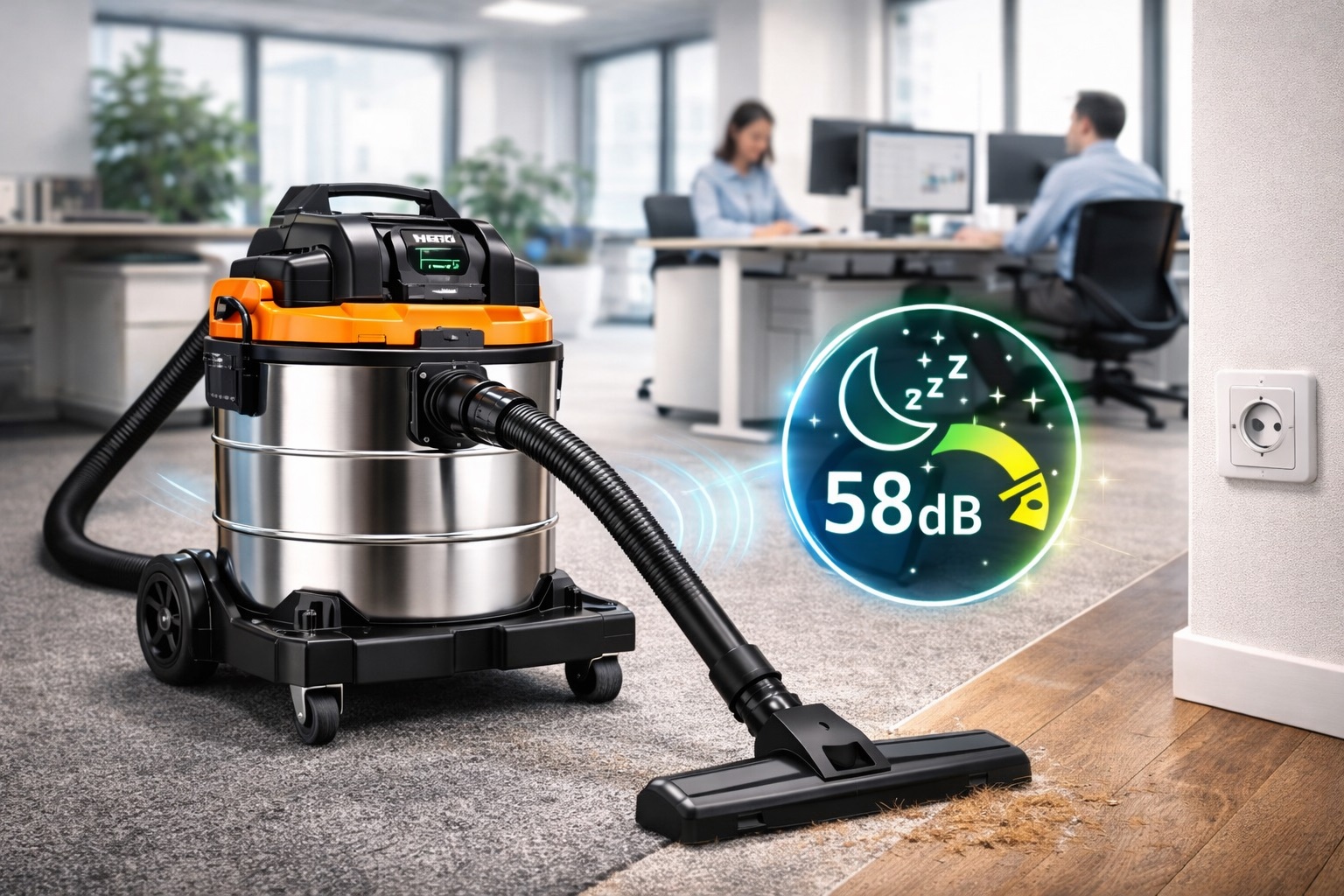
Creating a Quieter and More Productive Workspace with Advanced Cleaning Technology
In busy commercial environments—such as offices, hospitals, hotels, and retail stores—cleaning is essential, but it can also be a source of noise pollution. Loud vacuums disrupt the workday, creating distractions, increasing stress, and lowering productivity. For facility managers, cleaning contractors, and B2B buyers in Europe, the US, and the Middle East, choosing the right quiet vacuum cleaner is an important step towards improving the working environment and promoting employee well-being.
This article delves into how quiet vacuums help reduce noise pollution in commercial spaces and discusses the key features to consider when selecting vacuums for noise-sensitive environments.
🧠 Why Noise Pollution Is a Concern in Commercial Spaces
In commercial spaces, noise pollution can have a significant impact on employee well-being, productivity, and even customer satisfaction. When cleaning equipment is too loud, it can:
Disrupt work: Employees have trouble concentrating and experience stress when exposed to excessive noise.
Affect communication: Loud vacuums make it harder for employees to communicate effectively.
Reduce customer comfort: Customers in retail stores, hotels, or restaurants may feel uneasy or frustrated by the noise during their visit.
Research has shown that noise exposure in the workplace is linked to:
Reduced productivity
Increased stress
Higher rates of absenteeism
By investing in quiet vacuums, commercial spaces can reduce noise pollution, creating a more comfortable and efficient working environment.
🧩 Key Features to Look for in Quiet Vacuums for Commercial Environments
When selecting a vacuum for a noise-sensitive commercial space, there are several factors to consider. Quiet operation is critical, but it should not come at the expense of cleaning performance.
1. Noise Reduction Technology
Some vacuums are designed with sound-dampening technology to minimize operational noise. Look for:
Soundproofing around the motor and noise-reducing components that keep the noise level low.
Acoustic insulation that dampens the noise produced by the motor, reducing noise transmission to the environment.
A Quiet Vacuum Cleaner designed with these features can provide an effective cleaning solution without disturbing employees or customers.
2. Powerful Suction with Low Noise
The challenge with quiet vacuums is achieving high suction power without making a lot of noise. However, some manufacturers have developed vacuums that combine strong suction and low noise through:
Brushless motors: These motors not only consume less energy but also produce less noise than traditional motors.
Variable suction settings: Many vacuums now come with suction adjustments that allow you to use lower suction for light cleaning, reducing noise in areas that don’t require maximum power.
A High Suction Vacuum Cleaner with adjustable power levels can provide a balance between strong cleaning performance and quiet operation, making it ideal for multi-surface commercial environments.
3. Cordless Design for Greater Flexibility
Cordless vacuums often produce less noise because they tend to have smaller motors and are more compact. In commercial environments, a Cordless Vacuum Cleaner can offer:
Reduced motor noise compared to traditional corded models.
Greater mobility, allowing cleaners to move easily between areas without being restricted by cords or outlets.
Quick and efficient cleaning for smaller areas or spot cleaning without causing much disturbance.
While cordless vacuums may not always have the same power as larger models, a 4 in 1 Cordless Smart Wet & Dry Vacuum Cleaner can provide a balance between noise reduction and versatile functionality.
4. HEPA Filters for Improved Air Quality
Many quiet vacuums come with HEPA filters, which not only improve air quality by trapping fine dust and allergens but also help reduce noise. These filters prevent dust from circulating back into the environment, thus contributing to cleaner air.
Look for vacuums with high-efficiency filters that capture fine particles while also contributing to quieter operation by minimizing the airflow noise typically created by less effective filters.
🧹 Best Practices for Reducing Noise Pollution with Quiet Vacuums
1. Use Smart Scheduling for Cleaning Tasks
One of the best ways to minimize the disruption caused by cleaning is by scheduling cleaning tasks during off-hours. Using quiet vacuums, cleaning can be done in the early mornings, evenings, or weekends when there are fewer people around, ensuring that noise doesn’t interfere with daily activities.
Some vacuums, especially IoT-enabled vacuums, allow for automated scheduling, making it easier to set up cleaning routines that match the building’s traffic patterns.
2. Focus on Quiet, Frequent Cleanings
Instead of waiting for floors to become overly dirty before cleaning, schedule frequent, light cleanings using quiet vacuums. Frequent cleaning ensures that vacuums don’t have to work as hard, reducing the need for high suction and ultimately producing less noise.
Cordless vacuums with adjustable suction settings work well for this approach, allowing you to clean lightly used areas without excessive noise.
3. Use Appropriate Attachments for Specific Areas
When working in noise-sensitive spaces, make sure you’re using the right attachments to minimize disturbance:
Soft brush heads: Ideal for hard floors or carpets, they reduce the noise caused by the vacuum head dragging against the floor.
Crevice tools: Perfect for cleaning narrow or tight spaces without turning up the suction power, reducing overall noise levels.
4. Maintain Your Vacuums Regularly
Even the quietest vacuum can become noisy if not maintained properly. Regular maintenance ensures that vacuums stay in top working condition and continue to operate quietly:
Clean the filters to ensure smooth airflow and reduce motor strain.
Check for blockages in the hose or attachments that can create additional noise.
Lubricate moving parts to minimize friction and noise during operation.
📉 ROI from Using Quiet Vacuums in Commercial Environments
Investing in quiet vacuums can provide a strong return on investment through:
Improved employee productivity: Reducing noise distractions helps workers concentrate, leading to better output and lower stress.
Enhanced customer experience: In hotels, retail stores, and hospitals, reducing vacuum noise can improve guest satisfaction and contribute to a more positive atmosphere.
Long-term cost savings: Quiet vacuums that are properly maintained tend to have longer lifespans, reducing replacement costs and minimizing the need for repairs.
In noise-sensitive environments, such as healthcare facilities or open office spaces, investing in quieter equipment enhances overall workplace wellness and operational efficiency.
🧭 A Practical Framework for Choosing Quiet Vacuums
| Commercial Space Need | Quiet Vacuum Feature That Solves It |
|---|---|
| Low noise during work hours | Soundproofed, noise-reducing motor technology |
| Strong suction for various surfaces | Adjustable suction and brushless motor |
| Flexibility for tight spaces | Cordless design with lightweight structure |
| Improved air quality | HEPA filtration to trap allergens and dust |
| Ease of use in different environments | Multi-functional attachments and wet-dry functionality |
🧠 Final Insight for Facility Managers
Choosing the right quiet vacuum for your commercial space doesn’t just improve air quality—it enhances employee comfort, increases productivity, and improves customer satisfaction. By selecting vacuums that provide both powerful suction and low noise, you can create a quieter, cleaner environment that benefits everyone.
With proper maintenance and strategic use, quiet vacuums can become a long-term solution for reducing noise pollution while maintaining high cleaning standards.
👥 Suitable Readers
Facility managers
Cleaning contractors
B2B vacuum equipment buyers
Property managers
Healthcare and hospitality facility managers
🔖 Hashtags
wet and dry vacuum cleaner, Multi-Functional Durable Vacuum Cleaner, Quiet Vacuum Cleaner, Cordless Vacuum Cleaner, Vacuum Cleaner for Multi-Surface, HEPA Filter Vacuum Cleaner, noise reduction vacuums, quiet commercial vacuums, vacuum noise reduction, cleaning with low noise, commercial vacuum solutions, vacuum for office spaces, low noise vacuum systems, quiet cleaning tools, quiet vacuum cleaner for offices, vacuum for hotels, multi-functional vacuum systems, quiet vacuums for commercial spaces, eco-friendly vacuums, vacuum for sensitive environments, sustainable cleaning solutions, commercial cleaning systems, vacuum for noise-sensitive spaces, commercial janitorial equipment, professional cleaning tools, vacuum for healthcare facilities, hotel cleaning solutions, vacuum cleaning systems, high suction vacuum cleaner, vacuum for large venues, energy-efficient cleaning systems, high-performance vacuum cleaners, office cleaning equipment, commercial facility cleaning, quiet vacuum systems, vacuum equipment maintenance, high-performance cleaning tools, multi-surface cleaning vacuums, efficient vacuum solutions, clean air vacuums, cleaning equipment for public spaces, Lanxstar