Hi, message us with any questions.
We're happy to help!





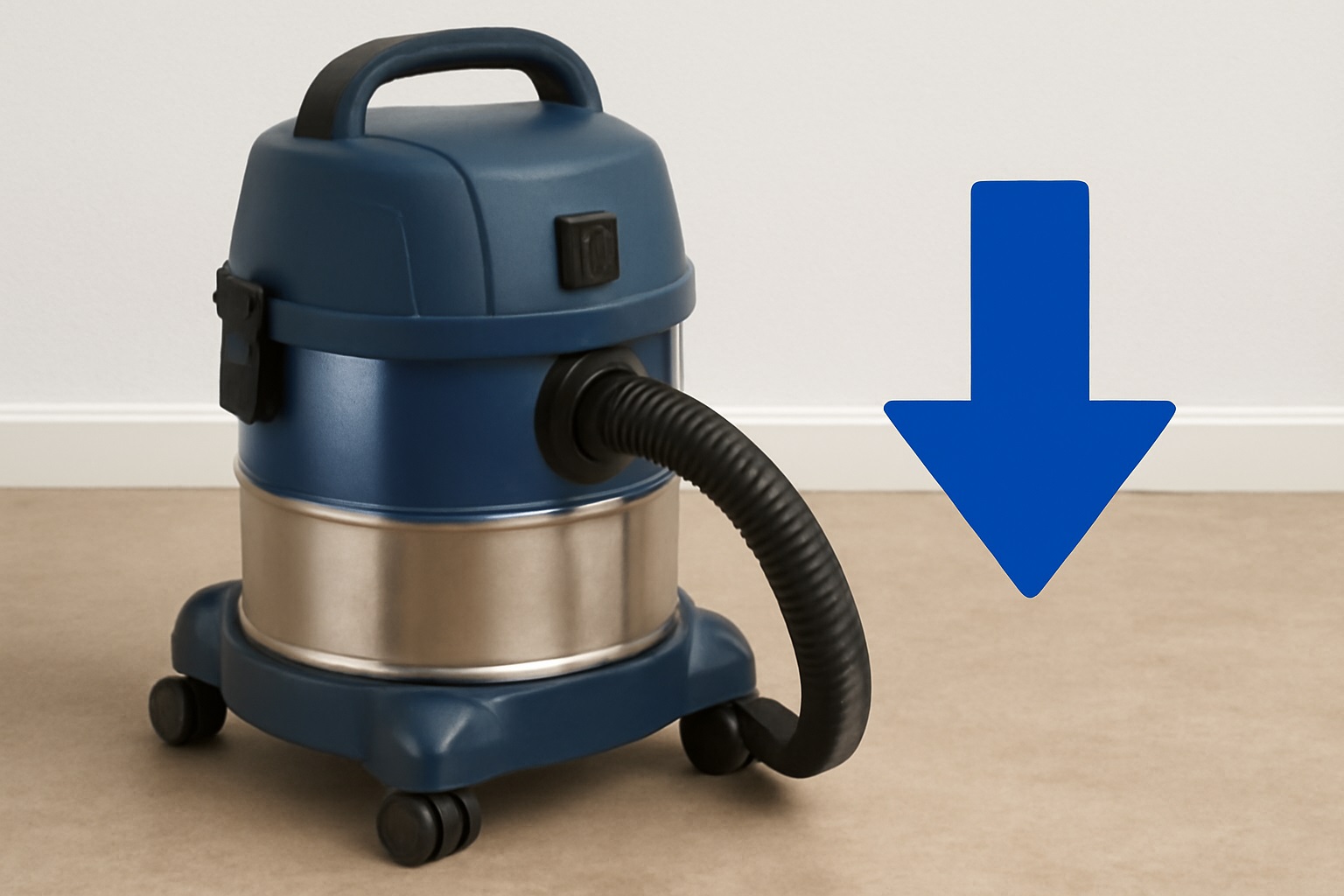
Most factories don’t overspend on maintenance because technicians are careless. They overspend because the vacuum was never selected for the realities of the site: fine dust that loads filters fast, long hoses that reduce airflow, messy emptying that creates secondary cleaning, and wear parts that fail early (hoses, latches, casters, seals).
If you’re an EU or Middle East B2B buyer, this guide shows how to select a Barrel Vacuum Cleaner that genuinely delivers Low-Cost Maintenance—not by cutting corners, but by cutting the repeatable failure modes that drive Maintenance Costs.
We’ll also clarify where Upright Vacuum Cleaners and Household Vacuum Cleaners belong (and don’t) so you don’t create hidden replacement churn in production zones.
🧭 1) Treat Maintenance Costs as a Purchasing Spec (Not an Afterthought)
A cost-reduction purchase decision must start with a measurable maintenance definition:
Annual Maintenance Costs = Consumables + Repairs + Labor Minutes + Downtime Events
What most buyers miss is labor minutes, which often exceed filter spend.
The “minutes” you should track
emptying time × frequency
filter cleaning time × frequency
unclogging time × frequency
time spent finding missing accessories
rework cleaning after dust plumes
If your vacuum selection reduces these, you’ve achieved real Cost Reduction even if the unit costs more upfront.
🧪 2) The 5 Root Causes of High Maintenance (and the Matching Selection Fix)
Here are the most common causes of high maintenance in barrel vacuums—and what to select instead.
1) 🌀 Filter loading (airflow collapse)
Fix: choose a filtration architecture that matches your dust:
pre-separator compatibility for heavy dust volume
large-area cartridge filters for general factory dust
protected final-stage filtration if needed
2) 🪤 Clogs from wrong hose/nozzle
Fix: specify hose diameter and accessory kit in the RFQ.
Maintenance drops when clogs drop.
3) 🛞 Mobility damage (casters and tipping)
Fix: industrial casters, stable base, hose storage.
Broken wheels = vacuum avoidance = more dirt buildup.
4) 🧷 Wear-part failure (hoses, cuffs, latches)
Fix: reinforced hose cuffs, durable latches, replaceable wear modules, parts availability.
5) 🔥 Thermal stress from restricted airflow
Fix: thermal protection + designs that tolerate filter loading.
A motor that survives restricted airflow reduces catastrophic maintenance.
🧰 3) The “Low-Cost Maintenance” Feature Checklist (High ROI)
When comparing models, prioritize features that reduce service time and failure frequency.
🔧 Fast-service design
tool-less filter access
quick-release latches
clear fill line and anti-overfill design
easy clog-clearing access points
🧼 Filtration cost control
separator/pre-filter options
filters with larger surface area
simple, repeatable cleaning method (operators can do it)
🛠️ Wear parts built for factories
anti-kink hose
reinforced cuffs
rugged wheels/casters
durable seals and gasket compression
Procurement insight: These features often save more maintenance spend than upgrading motor power.
🧻 4) Bagged vs Bagless: Which Lowers Maintenance Costs?
This is not just preference—it’s maintenance economics.
Bagged systems can reduce maintenance when:
your site needs dust-free emptying
operators don’t clean filters reliably
audits punish dust release
Why: bag swaps are predictable and fast.
Bagless systems can reduce maintenance when:
operators empty carefully and frequently
disposal is close and easy
your debris is not ultra-fine powder
Why: fewer consumables—if behavior is disciplined.
Decision rule: Choose the system that matches your site behavior. Misaligned behavior is the #1 driver of surprise maintenance.
🧠 5) Choose the Right Capacity to Cut Maintenance (Yes, Capacity Affects Cost)
Under-sized capacity increases maintenance through:
overfill clogs
more emptying events
more dust exposure during disposal
Over-sized capacity can increase maintenance through:
heavier handling → damage
tipping risk if base design is weak
Best practice: aim for 1 emptying per shift in general areas, and 1–2 in heavy zones.
🔌 6) Minimize Maintenance with Service Readiness (EU/MENA Reality)
Even a great vacuum becomes expensive if parts take weeks.
What to require from suppliers
consumables price list (filters, bags, hoses, seals)
local stock or short lead time for wear parts
warranty clarity on motor vs wear components
documented service process (who, where, turnaround time)
Cost reduction is supply-chain readiness.
🧩 7) Standardize to Reduce Maintenance Across Multiple Sites
If you manage multiple facilities, the easiest maintenance savings come from standardization:
same filter type across models
same hose diameter and cuff style
accessory compatibility
shared spares inventory
one training routine across sites
This reduces “parts chaos,” which is a hidden maintenance multiplier.
🧑🏫 8) The 10-Minute Operator Routine That Cuts Maintenance Costs
The best low-cost maintenance strategy is prevention:
Daily / per shift
30-second filter check
enforce fill line (no overfill)
quick hose inspection (kinks/cracks)
store hose correctly
use correct nozzle for debris type
This routine reduces clogging, overheating, and breakage.
Even the best vacuum fails without basic habits—so choose designs that make the routine easy.
🧹 9) Where Upright and Household Vacuums Fit (Maintenance Cost Boundaries)
Upright Vacuum Cleaners
Use in:
office zones and carpets
They can reduce maintenance by matching the surface type.
Household Vacuum Cleaners
Use only in:
very light-duty areas
In production zones, they often increase maintenance costs through clogging and replacement churn.
Boundary rule: Don’t chase low maintenance by buying consumer equipment for industrial debris.
📝 10) RFQ Questions That Force “Low-Cost Maintenance” Proof
Copy/paste these into your RFQ:
What are the top 5 replacement parts in factory customers?
What is the filter cleaning method and time-to-service (minutes)?
What is the full consumables list and unit pricing?
What is the recommended duty cycle and thermal protection behavior?
What hose diameter and accessory kit is recommended for our debris?
What parts are stocked for EU/MENA and typical lead times?
How does performance change after 15 minutes on fine dust?
Suppliers who answer these clearly are far more likely to deliver low-cost maintenance in real use.
✅ Conclusion 🏁🔧
To reduce maintenance costs, you don’t need the cheapest Barrel Vacuum Cleaner—you need the right one. Select for filtration architecture that resists loading, accessories that prevent clogs, durable wear parts (hose/casters/latches), stable capacity sizing, and EU/MENA service readiness. Combine that with standardization and a simple operator routine, and you’ll achieve meaningful Cost Reduction through predictable Low-Cost Maintenance—without sacrificing cleaning performance.
Hashtags
Lanxstar, BarrelVacuumCleaner, MaintenanceCosts, CostReduction, LowCostMaintenance, VacuumMaintenance, lowMaintenanceVacuum, filtrationCostControl, preSeparatorOption, filterLoadingCurve, airflowRetention, consumablesCostControl, filterReplacementCost, baggedVsBagless, dustFreeEmptying, sealedDisposal, linerBagSystem, hoseDurability, antiKinkHose, reinforcedCuffs, casterDurability, latchReliability, gasketSealIntegrity, bypassPrevention, clogReductionStrategy, accessoryKitValue, VacuumAccessories, capacitySizingRule, emptyingFrequencyTarget, overfillPrevention, thermalProtection, dutyCycleSelection, sparePartsAvailability, EUDistributionSupport, MENAServiceNetwork, serviceReadinessChecklist, multiSiteStandardization, partsCompatibility, trainingRoutine, operatorCompliance, downtimeReduction, totalCostOfOwnership, productionFloorCleaning, warehouseAisleCleaning, machineAreaDetailCleaning, UprightVacuumCleaners, HouseholdVacuumCleaners, B2BSourcing, OEMVacuumSupplier



