Hi, message us with any questions.
We're happy to help!





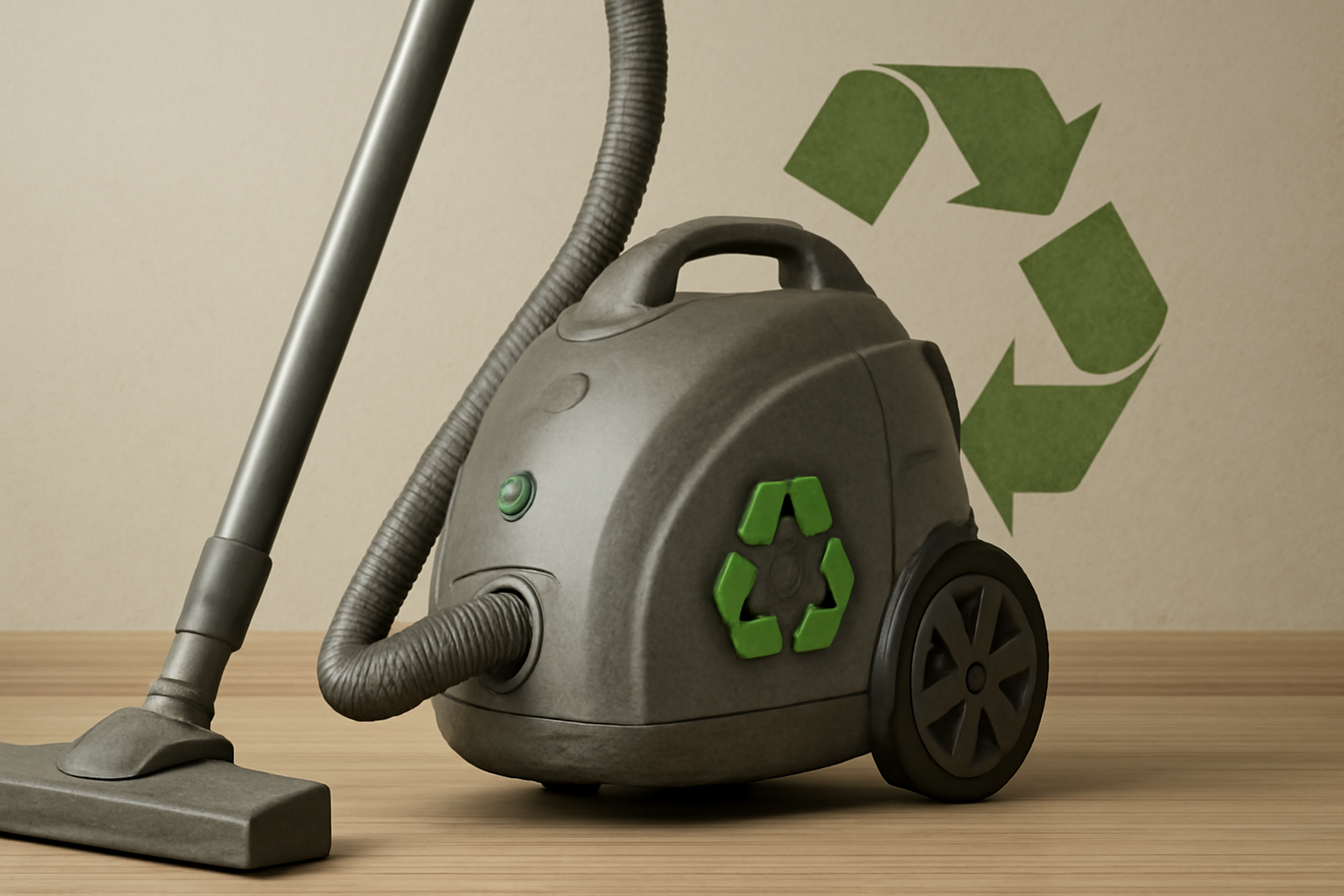
🎯 Target Audience: OEM Buyers, Supply Chain Managers, and Product Engineers in the Cleaning Equipment Industry (Europe & Middle East)
(Focus: Sustainable manufacturing, material innovation, and circular design in vacuum cleaner production)
🏭 1. The Manufacturing Challenge: Innovation Meets Responsibility
The global cleaning equipment industry is at a crossroads.
Consumers and B2B clients alike now expect brands not only to deliver performance and durability but also to demonstrate environmental accountability.
For vacuum cleaner manufacturers, this demand translates into a new engineering challenge:
How can we reduce our dependence on virgin plastics while maintaining structural strength, reliability, and design precision?
At Lanxstar, the answer came through a strategic material transition — replacing conventional plastics with recycled and bio-based polymers in both Upright Vacuum Cleaners and Household Vacuum Cleaners.
This shift not only lowered carbon emissions during production but also created a competitive advantage in ESG-driven markets.
🌱 2. The Problem with Traditional Plastics
The average vacuum cleaner contains 4–6 kg of plastic, primarily ABS, PP, and PC blends.
While these materials provide excellent durability, their environmental cost is high:
High carbon footprint: 1 kg of virgin ABS emits 3.8 kg of CO₂ during production.
Difficult to recycle: Complex pigment and additive blends reduce recyclability rates.
Petrochemical dependency: Over 90% of global vacuum plastics come from fossil fuel sources.
For manufacturers supplying Europe and the Middle East — regions with increasingly strict sustainability regulations — the message is clear:
Plastic use must evolve from linear consumption to circular utilization.
♻️ 3. The Shift to Recycled & Circular Components
⚙️ 3.1. Post-Consumer Recycled (PCR) Plastics
Lanxstar began integrating PCR ABS and PP into the casings of Portable Self-Cleaning Vacuum Cleaners and Cordless Handheld Vacuum Cleaners.
These recycled materials, sourced from certified waste streams, now make up 40–60% of each product’s plastic volume.
Despite common misconceptions, modern PCR plastics — when properly processed — offer comparable tensile strength and color stability to virgin materials.
Results:
CO₂ reduction: –45% per unit
Material cost savings: –18%
No compromise on aesthetics or performance
This innovation allowed the company to maintain the sleek design of premium vacuums while dramatically lowering their environmental footprint.
🌿 3.2. Bio-Based Polymers: From Corn to Cleaning
The second step in the transformation involved experimenting with bio-based plastics, such as PLA (polylactic acid) and PA11 (castor oil-derived nylon).
Used in Portable Vacuums for Travel and select Apartment Vacuum Cleaners, these materials are renewable and biodegradable under industrial conditions.
Key benefits:
Reduced dependency on fossil fuels
Up to 60% lower embodied carbon
Non-toxic, VOC-free surfaces
For OEM partners, bio-based materials not only enhance ESG reporting but also improve brand positioning in eco-conscious markets.
🧩 4. Engineering Solutions: Strength, Durability & Quality Control
A major challenge when using recycled materials is maintaining mechanical integrity.
To address this, Lanxstar’s R&D team implemented:
Reinforced glass-fiber PCR blends for critical components (motor housings, handle joints)
Precision molding calibration to counter viscosity variations in recycled resins
Closed-loop testing for color consistency and impact resistance
As a result, Multi-Functional Durable Vacuum Cleaners achieved the same drop-test endurance (1.5m impact) and UV resistance as their virgin-plastic counterparts.
Sustainability without compromise became not just a goal — but a manufacturing standard.
🔋 5. Smarter Production: Energy-Efficient Manufacturing Lines
Sustainability doesn’t stop at materials — it extends to how components are produced.
Lanxstar upgraded its molding and assembly lines with:
Energy-saving servo-hydraulic injection systems (reducing power use by 30%)
Heat recovery modules that recycle waste energy into drying processes
Smart sensors that monitor mold temperature for optimal yield
Together, these initiatives reduced overall factory energy consumption by 22%, while ensuring consistent quality across all HEPA Filter Vacuum Cleaner product lines.
🌍 6. Closed-Loop Recycling: Turning Old Vacuums into New Ones
In collaboration with local recycling partners, Lanxstar launched a Closed-Loop Recovery Program:
Customers can return end-of-life vacuums.
Components are disassembled and sorted into material streams.
Recovered plastics are reprocessed and reintegrated into new products.
This approach ensures zero landfill contribution and aligns with EU Circular Economy goals (2025).
Every returned Household Vacuum Cleaner offsets approximately 4.5 kg of new plastic production — proving that circular design can be both sustainable and profitable.
🧠 7. ESG & Compliance Advantages for OEM Buyers
For OEM buyers and distributors, partnering with a manufacturer that practices sustainable material sourcing offers multiple strategic benefits:
ESG Reporting – Directly contributes to clients’ sustainability disclosures.
EU & GCC Compliance – Meets upcoming eco-design and packaging directives.
Brand Reputation – “Recycled content certified” labeling increases buyer trust.
Cost Efficiency – Stable PCR supply chains reduce exposure to virgin resin price volatility.
Tender Competitiveness – Many institutional contracts now require evidence of green manufacturing.
In short, green sourcing = stronger global positioning.
💬 8. Real Case Study: Middle East OEM Partnership
In 2024, a large distributor in the UAE partnered with Lanxstar to produce a regional line of Cordless Handheld Vacuum Cleaners using 50% recycled PP components.
After the first production cycle:
Material costs dropped 16%
Factory energy use reduced by 20%
CO₂ footprint per unit lowered by 42%
The distributor used this data in ESG reports and marketing campaigns, gaining faster market entry in Saudi Arabia and Qatar — regions where green procurement regulations are rapidly tightening.
🌐 9. The Future: Designing for Circular Intelligence
The next frontier of sustainable manufacturing lies in smart material tracking.
Lanxstar’s engineers are integrating QR-coded material passports into every Upright Vacuum Cleaner and Household Vacuum Cleaner, allowing full traceability of recycled content.
This digital transparency builds trust with OEM clients and regulators alike — creating a “digital twin” for every product, linking design, sourcing, and recycling history.
The long-term vision:
A fully circular ecosystem where vacuums are not simply made, used, and discarded — but continuously reborn through intelligent design.
💡 Conclusion
The shift from virgin plastic to recycled and bio-based materials is no longer an option — it’s a necessity for future-ready manufacturers.
By embracing sustainable materials, energy-efficient production, and closed-loop recycling, companies like Lanxstar prove that green innovation and engineering precision can coexist.
For OEM buyers and supply chain managers, partnering with such manufacturers not only ensures compliance and cost stability but also positions their brands as leaders in responsible manufacturing.
In the end, purpose-driven design transforms every vacuum cleaner from a plastic product into a statement of sustainability.
📌 Hashtags
Upright Vacuum Cleaners, Household Vacuum Cleaners, Portable Self-Cleaning Vacuum Cleaner, Cordless Handheld Vacuum Cleaner, Portable Vacuum for Travel, Apartment Vacuum Cleaner, Eco-Friendly Vacuum Cleaner, Recycled Plastic Vacuum, Sustainable Manufacturing, Circular Economy Equipment, Green Technology, Energy-Efficient Vacuum Cleaner, Recyclable Components, Multi-Functional Durable Vacuum Cleaner, HEPA Filter Vacuum Cleaner, Eco Design Vacuum, Carbon-Neutral Production, PCR Material Vacuum, Bio-Based Plastic Vacuum, Sustainable Product Engineering, Energy Saving Motor System, Smart Factory Equipment, ESG-Compliant Manufacturing, Low-Energy Production Line, Smart Injection Molding, Sustainable Supply Chain, OEM Vacuum Manufacturer, Eco Certification Factory, Recycled ABS Components, Green Material Innovation, Smart Manufacturing System, Closed Loop Recycling, Zero Waste Production, Sustainable Component Design, Brushless Motor Vacuum, IoT Enabled Factory, Recycled Polypropylene Housing, Durable Industrial Vacuum, Low Emission Production, Green Procurement Strategy, Industrial Sustainability Goals, Material Passport System, Energy Optimization Process, Renewable Material Vacuum, Eco Label Certified Factory, Green Industry Innovation, Smart Production Control, Sustainable Innovation, Lanxstar



