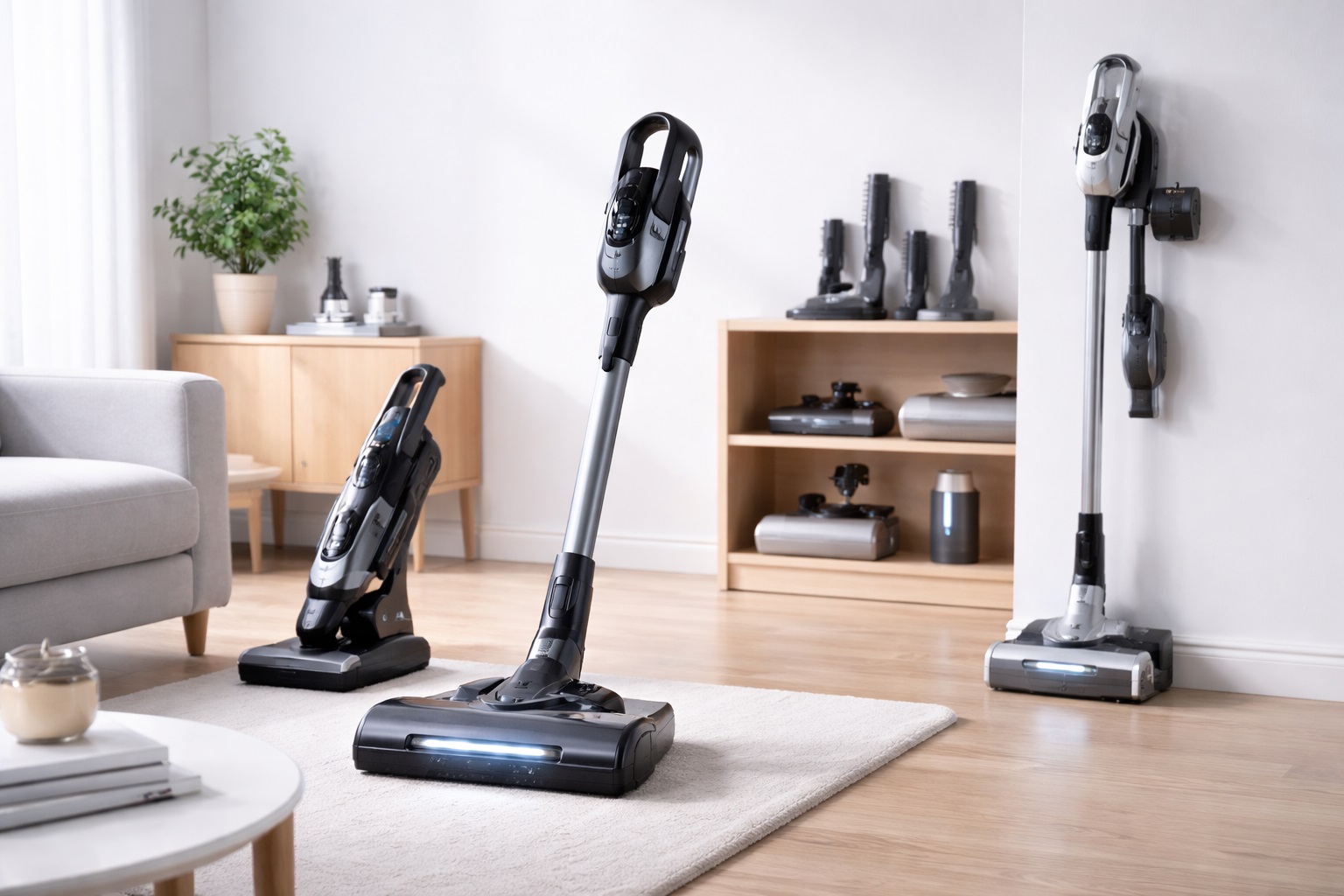
In the vacuum cleaner industry, profitability is not determined by a single best-selling model. Instead, it depends on how well the entire product mix is structured. Brands that rely too heavily on low-margin volume products often struggle, while those that design a balanced portfolio achieve more stable and scalable profits.
From Cordless Vacuum Cleaner lines to Wet and Dry Vacuum Cleaner solutions, optimizing product mix allows companies to capture different customer needs, price tiers, and usage scenarios — all while maximizing total margin.
1. Understand the Three Core Product Roles in Your Portfolio 🧩
An optimized vacuum cleaner product mix usually consists of three strategic roles:
① Volume Drivers
These products generate sales volume and brand exposure.
Margins are thinner, but they attract traffic and distributors.
② Margin Builders
These models deliver higher profitability.
They justify higher pricing through features and performance.
③ Niche Specialists
Smaller volume, higher willingness to pay.
Vacuum Cleaner for Pet Hair 🐾
Vacuum Cleaner for Allergies
Portable Vacuum for Travel
Car Vacuum Cleaner
🧠 Key Insight:
Profitability increases when these three roles are intentionally designed, not accidentally mixed.
2. Use Feature Layering to Create Natural Price Steps 📊
Rather than launching unrelated models, smart brands use feature layering to build a logical price ladder.
Example Product Ladder
Base model: Fast Lightweight Vacuum Cleaner
Mid-tier: Energy-Saving Efficient Powerful Vacuum Cleaner
High-tier: 4 in 1 Cordless Smart Wet & Dry Vacuum Cleaner
Most components remain shared, while pricing and margin expand upward.
📌 OEM Case
A brand working with a professional vacuums manufacturer reused the same motor and battery platform across three SKUs. Result:
3. Balance Wet & Dry Models to Increase Basket Value 💧🧺
Adding Wet Dry Vacuum Cleaners to a dry-only lineup significantly improves product mix strength.
Why Wet & Dry Models Matter
A Large-Capacity Wet Dry Vacuum Cleaner often acts as a premium anchor, making mid-range models feel more affordable.
🎯 Profit Tip:
Even if wet & dry models represent only 20–30% of unit sales, they can contribute over 40% of total profit.
4. Segment Product Mix by Usage Scenario, Not Just Price 🎯
Many brands organize products only by price. High-performing brands segment by use case, which improves conversion and margin.
High-Value Scenarios
Apartment Vacuum Cleaner (quiet & compact)
Quiet Vacuum for Night Use 🌙
Vacuum for Multi-Surface homes
Car Vacuum Cleaner for mobility users
This strategy allows the same core product to be marketed differently, increasing ROI without new development costs.
5. Align Product Mix with Channel Strategy 🌍
Your product mix should differ by channel:
E-Commerce
Offline Retail
B2B / OEM
🧠 Case Example
A global distributor split its lineup by channel. Online-focused models emphasized portability and quiet performance, while offline stores pushed premium wet & dry units. Overall margin improved by 18% year-over-year.
6. Control SKU Count to Protect Profitability 🔍
Too many SKUs dilute focus and increase inventory risk. Optimized product mix means:
Fewer models
Clear differentiation
Shared components
Brands like Lanxstar, working closely with experienced vacuum cleaner maker teams, often help clients reduce SKU count while increasing total revenue.
Conclusion: Product Mix Is a Profit Engine, Not a Catalog
Optimizing your vacuum cleaner product mix is one of the most powerful ways to boost profitability without increasing marketing spend. By balancing:
You create a resilient, scalable business structure.
Whether you sell quiet vacuum cleaner, wet dry vacuum, or Cordless Vacuum Cleaner solutions, a well-designed product mix turns complexity into competitive advantage.
For OEM support and portfolio optimization insights, visit
👉 www.lxvacuum.com
50 Related Keyword Groups
High Suction Vacuum Cleaner, Portable Quiet Vacuum Cleaner, Self-Cleaning Vacuum Cleaner, Multi-Functional Durable Vacuum Cleaner, Fast Lightweight Vacuum Cleaner, Energy-Saving Efficient Powerful Vacuum Cleaner, Large-Capacity Wet Dry Vacuum Cleaner, Li-ion Cordless Handheld Vacuum Cleaner, Wet Dry Vacuum Cleaners, 4 in 1 Cordless Smart Wet & Dry Vacuum Cleaner, cordless handheld vacuums, Cordless Vacuum Cleaner, Car Vacuum Cleaner, quiet vacuum cleaner, wet dry vacuum, Portable Vacuum for Travel, HEPA Filter Vacuum Cleaner, Apartment Vacuum Cleaner, Wet and Dry Vacuum Cleaner, Quiet Vacuum for Night Use, Vacuum Cleaner for Pet Hair, Vacuum Cleaner for Allergies, Vacuum for Multi-Surface, best vacuum on a budget, best budget hoover, good budget vacuum, best affordable vacuum, best budget vacuum, best value for money hoover, best value hoover, best vacuum cleaners on a budget, best vacuums on a budget, good budget vacuum cleaner, Lanxstar vacuum, vacuums manufacturer, vacuum cleaner maker, OEM vacuum supplier, product mix optimization, vacuum portfolio strategy, global vacuum buyer, vacuum cleaner distributor











