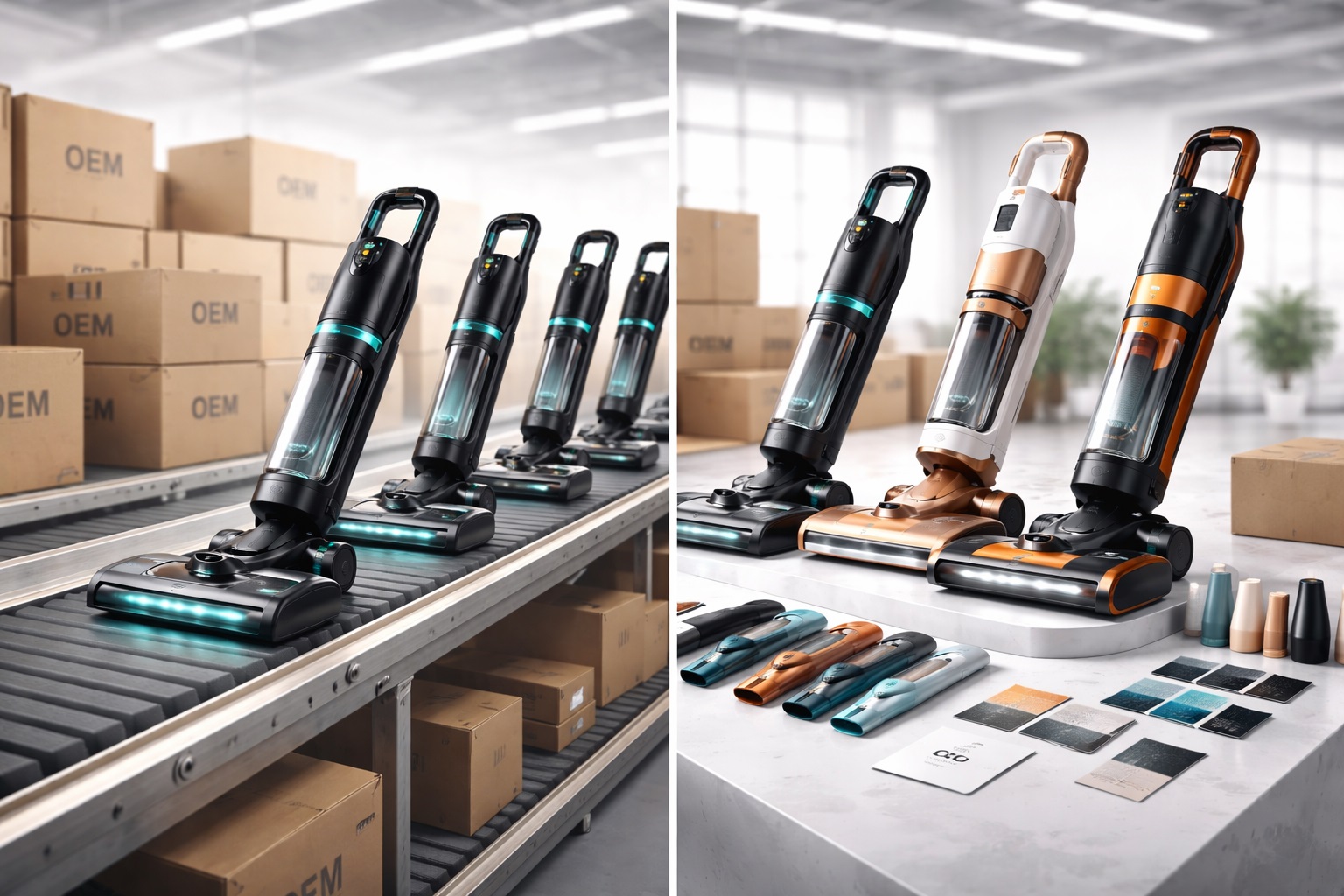
For small and medium vacuum cleaner distributors, selecting the right manufacturing model is a critical strategic decision. The choice between traditional OEM production and small-batch vacuum cleaner customization directly impacts cost structure, inventory risk, branding flexibility, and time-to-market.
While OEM manufacturing has long been the industry standard, changing market dynamics are pushing more distributors toward flexible, small-batch solutions—especially for cordless vacuum cleaners and wet dry vacuum products.
1. Understanding the Traditional OEM Model 🏭
OEM production focuses on standardized designs manufactured at large scale. Distributors typically select from existing models and place bulk orders.
Key characteristics of OEM manufacturing:
High minimum order quantities
Lower unit cost at scale
Limited customization options
Longer production and delivery cycles
OEM works well for distributors with predictable demand and strong sales volume, especially in mature markets.
2. What Is Small-Batch Vacuum Cleaner Customization? 🔧
Small-batch customization combines OEM manufacturing capability with flexible production quantities and configurable features.
This model allows distributors to:
Customize Cordless Vacuum Cleaner features
Adjust designs for Apartment Vacuum Cleaner or Car Vacuum Cleaner use
Launch limited production runs for market testing
Instead of competing purely on price, distributors can differentiate through performance, design, or targeted use cases.
3. Cost Comparison: Unit Price vs Total Risk 💰
At first glance, OEM manufacturing appears more cost-effective due to lower per-unit pricing. However, total cost tells a different story.
OEM risks include:
Overstock and slow-moving inventory
Cash flow pressure from bulk purchasing
Limited ability to correct market mismatch
Small-batch customization advantages:
For many distributors, small-batch production delivers a stronger best value vacuum strategy despite slightly higher unit costs.
4. Flexibility and Speed to Market ⏱️
Market trends evolve rapidly—especially in e-commerce channels. Small-batch customization enables faster response.
Distributors using small-batch models can:
Launch new cordless handheld vacuums quickly
Test features like quiet vacuum cleaner performance
Adapt to emerging needs such as Vacuum Cleaner for Pet Hair
In contrast, OEM production cycles often limit responsiveness.
5. Branding and Product Differentiation 🏷️
OEM products are often visually and functionally similar across brands. This limits long-term brand equity.
Small-batch customization supports:
A customized Portable Quiet Vacuum Cleaner or Wet and Dry Vacuum Cleaner is easier to market and harder to replace with a competitor’s product.
6. Engineering Control and Quality Optimization 🧠
Small-batch customization allows closer collaboration with engineering teams. Distributors gain influence over:
Suction optimization for High Suction Vacuum Cleaner designs
Noise reduction for Quiet Vacuum for Night Use
Filtration performance via HEPA Filter Vacuum Cleaner systems
OEM buyers typically have less control over these parameters.
7. Scalability: From Testing to Expansion 📈
Small-batch customization does not limit growth. Successful products can scale into full OEM production once demand stabilizes.
A common path includes:
Market testing via small batches
Refinement based on feedback
Transition to larger OEM runs
This hybrid strategy reduces risk while preserving long-term scalability.
8. Which Model Is Best for Small Distributors?
There is no one-size-fits-all answer, but general guidance applies:
Choose OEM if demand is stable, price competition is key, and branding is less critical
Choose small-batch customization if flexibility, differentiation, and risk control are priorities
For many modern distributors, especially those serving niche markets, small-batch customization provides a clear competitive edge.
Conclusion: Strategy Over Scale
In today’s vacuum cleaner market, success is driven by strategic choices rather than sheer volume. While OEM production remains relevant, small-batch vacuum cleaner customization offers small distributors greater control, faster response, and stronger brand potential.
By aligning manufacturing strategy with market reality, distributors can build sustainable businesses around cordless vacuum cleaners, wet dry vacuum solutions, and value-focused designs.
To explore OEM and small-batch customization options, visit www.lxvacuum.com 🌐
50 Related Keyword Groups
High Suction Vacuum Cleaner, Portable Quiet Vacuum Cleaner, Self-Cleaning Vacuum Cleaner, Multi-Functional Durable Vacuum Cleaner, Fast Lightweight Vacuum Cleaner, Energy-Saving Efficient Powerful Vacuum Cleaner, Large-Capacity Wet Dry Vacuum Cleaner, Li-ion Cordless Handheld Vacuum Cleaner, Wet Dry Vacuum Cleaners, 4 in 1 Cordless Smart Wet & Dry Vacuum Cleaner, cordless handheld vacuums, Cordless Vacuum Cleaner, Car Vacuum Cleaner, quiet vacuum cleaner, wet dry vacuum, Portable Vacuum for Travel, HEPA Filter Vacuum Cleaner, Apartment Vacuum Cleaner, Wet and Dry Vacuum Cleaner, Quiet Vacuum for Night Use, Vacuum Cleaner for Pet Hair, best vacuum on a budget, best budget hoover, good budget vacuum, best affordable vacuum, best budget vacuum, best value for money hoover, best value hoover, best vacuum cleaners on a budget, best vacuums on a budget, good budget vacuum cleaner, Lanxstar, vacuums procurement, vacuum cleaner distribution, OEM vacuum cleaner, small batch vacuum customization











