Hi, message us with any questions.
We're happy to help!





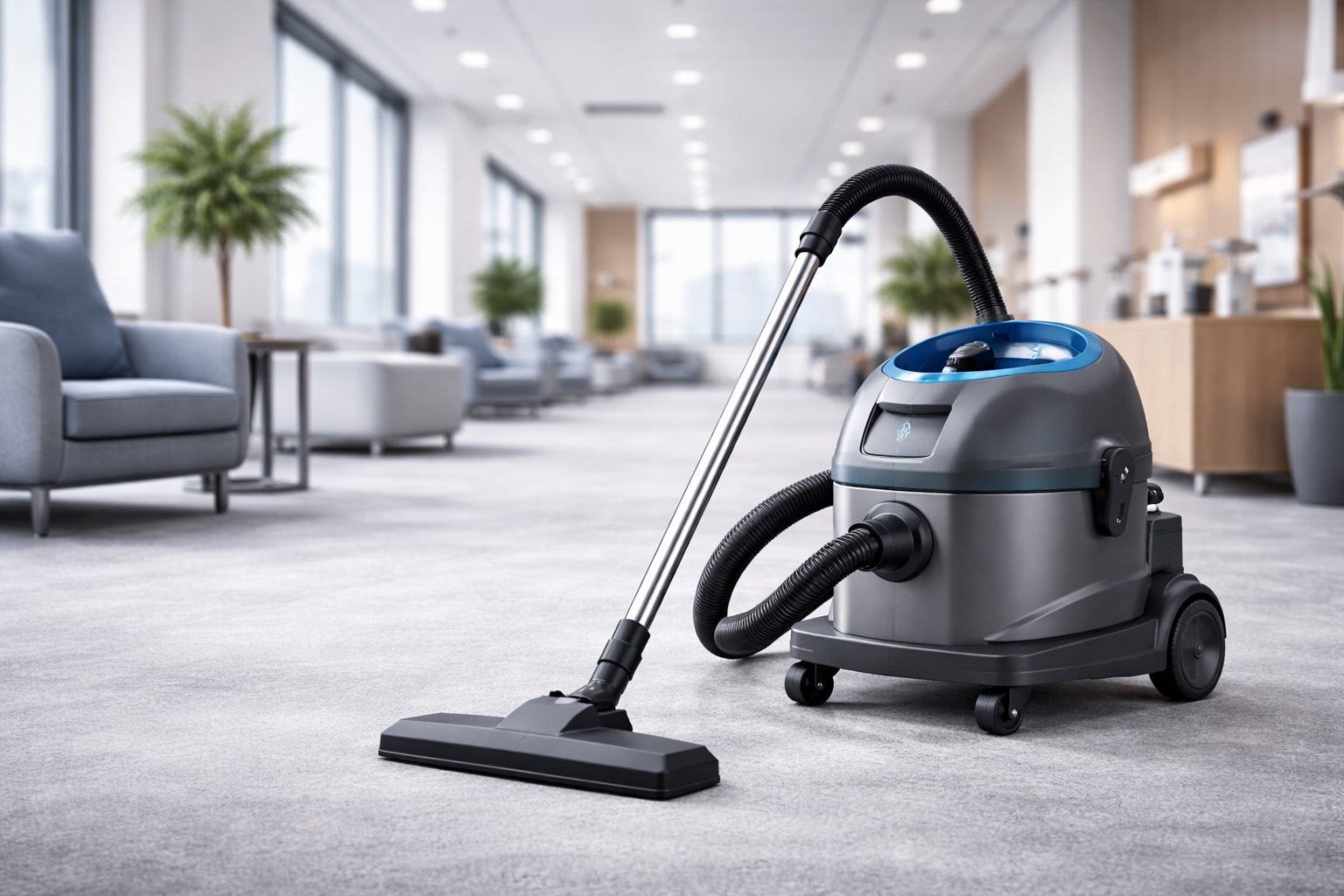
In modern commercial environments, noise is no longer tolerated—it is measured, reviewed, and remembered.
Whether in office buildings, hotels, healthcare facilities, or mixed-use commercial spaces, cleaning often happens:
Early mornings
Late nights
Alongside ongoing operations
This article explains how to choose low-noise vacuums that truly reduce disturbances, focusing on real-world performance—not marketing claims. It is written for professional buyers who care about efficiency, compliance, and reputation.
🔇 1. Why Noise Control Is Now a Business Requirement
In commercial spaces, cleaning noise directly affects:
Tenant satisfaction
Guest reviews
Patient comfort
Employee productivity
A vacuum that is “powerful but loud” may clean floors—but it damages experience.
This is why many facilities are moving away from repurposed Household Vacuum Cleaners, which often:
Lack noise insulation
Use high-RPM motors
Transfer vibration directly to the floor
Low-noise performance is no longer a luxury—it’s a procurement criterion.
🧭 2. Understand What “Quiet” Actually Means in Commercial Use
Many suppliers label products as a Quiet Vacuum Cleaner, but experienced buyers know better.
True low-noise performance depends on:
Motor design (airflow efficiency, not brute force)
Internal sound insulation
Vibration control between motor and chassis
Practical Insight:
Two vacuums with the same decibel rating can sound very different in real spaces.
Procurement Tip:
Always evaluate noise under load, on actual flooring—not in empty demo rooms.
🧍 3. Upright Vacuum Cleaners Can Be Quiet—If Designed Correctly
There is a misconception that Upright Vacuum Cleaners are inherently loud.
In reality, well-designed upright models:
Contain sound better than open canister designs
Reduce hose-related airflow noise
Maintain stable suction without over-revving motors
For large commercial areas, quiet upright vacuums offer:
Faster coverage
Predictable noise levels
Better operator ergonomics
Key Point:
Noise problems often come from poor airflow design, not upright structure.
🌙 4. Why “Quiet Vacuum for Night Use” Is a Separate Category
Night cleaning is a different operational scenario.
A true Quiet Vacuum for Night Use must:
Avoid sudden pitch changes
Minimize startup noise
Reduce vibration transmitted through floors and walls
This is critical in:
Hotels
Hospitals
Office buildings with overnight staff
Residential-commercial mixed properties
Hidden Risk:
In quiet environments, even short bursts of noise feel disruptive. Consistency matters more than peak volume.
🪵 5. Flooring Type Directly Affects Perceived Noise
Noise is not just airborne—it travels through surfaces.
A Vacuum Cleaner for Hardwood Floors designed for commercial use:
Uses soft-contact brush systems
Avoids aggressive mechanical agitation
Reduces rattling and surface vibration
Hardwood, laminate, and polished floors amplify sound.
Choosing the wrong vacuum can double perceived noise—even if the motor is quiet.
Facility Insight:
Floor-friendly design = quieter cleaning + lower floor maintenance costs.
🛠️ 6. Multi-Functional Design Reduces Total Noise Events
A Multi-Functional Durable Vacuum Cleaner reduces disturbances by:
Handling multiple surfaces with one machine
Eliminating equipment changes
Reducing repeated cleaning passes
Fewer machines + fewer passes = fewer noise incidents.
For mixed-use commercial spaces (office + retail + lobby), multi-functionality improves:
Operational efficiency
Noise management
Equipment ROI
🧠 7. Durability Matters More Than Initial Noise Specs
Noise increases over time.
Cheap machines often become louder due to:
Worn bearings
Loose housings
Degraded airflow paths
Durable commercial vacuums maintain:
Stable sound levels
Consistent performance
Predictable maintenance cycles
Procurement Reality:
A vacuum that starts quiet but degrades quickly creates long-term complaints.
📊 8. How to Evaluate Low-Noise Vacuums Before Purchase
Smart buyers test beyond brochures.
Ask suppliers:
How does noise change after 6 months of use?
Is vibration isolated from the handle and floor?
Can the vacuum operate quietly at partial power?
Best Practice:
Run side-by-side tests during actual cleaning hours, not demos.
🏢 9. Match Vacuum Choice to Commercial Space Type
| Space Type | Noise Priority |
|---|---|
| Hotels | Night-use consistency |
| Offices | Low vibration, steady tone |
| Healthcare | Patient comfort, compliance |
| Retail | Minimal disruption during hours |
| Mixed-Use | Multi-functional adaptability |
One-size-fits-all solutions rarely work in noise-sensitive environments.
✅ Conclusion: Low Noise Is Part of the Experience Economy
In commercial spaces, cleaning should be invisible—not audible.
Choosing the right low-noise vacuum means:
Understanding real noise sources
Selecting durable, well-engineered machines
Matching equipment to flooring and usage timing
Prioritizing consistency over marketing claims
A well-chosen quiet vacuum protects:
Brand reputation
Tenant relationships
Long-term operational efficiency
In today’s commercial environments, silence is a competitive advantage.
📌 Suitable Reading Audience
Commercial Facility Procurement Managers
Office & Mixed-Use Property Operators
Hospitality & Healthcare Cleaning Buyers
B2B Cleaning Equipment Distributors
📌 Hashtags
Upright Vacuum Cleaners, Household Vacuum Cleaners, Multi-Functional Durable Vacuum Cleaner, Quiet Vacuum Cleaner, Quiet Vacuum for Night Use, Vacuum Cleaner for Hardwood Floors, Low Noise Vacuum Cleaner, Commercial Cleaning Equipment, Night Cleaning Solutions, Office Cleaning Machines, Hotel Cleaning Equipment, Healthcare Cleaning Tools, Noise Sensitive Cleaning, B2B Vacuum Cleaner, Commercial Upright Vacuum, Silent Cleaning Equipment, Hardwood Floor Commercial Cleaning, Facility Management Tools, Commercial Cleaning Efficiency, Durable Vacuum Cleaner, Professional Cleaning Machines, Mixed Use Building Cleaning, Tenant Friendly Cleaning Equipment, Quiet Commercial Vacuum, Cleaning Equipment Procurement, Office Facility Maintenance, Hospitality Cleaning Solutions, Healthcare Facility Cleaning, Commercial Floor Care, Low Vibration Vacuum Cleaner, Night Shift Cleaning Equipment, Energy Efficient Cleaning Machines, Commercial Cleaning Innovation, Facility Operations Optimization, Cleaning Equipment Distributor, Commercial Vacuum Manufacturer, Workplace Experience Management, Building Maintenance Solutions, Quiet Technology Vacuum, Commercial Cleaning ROI, Noise Control Solutions, Professional Cleaning Industry, Property Management Tools, Global Commercial Procurement, Sustainable Cleaning Equipment, Long Life Vacuum Cleaner, Lanxstar



