Hi, message us with any questions.
We're happy to help!





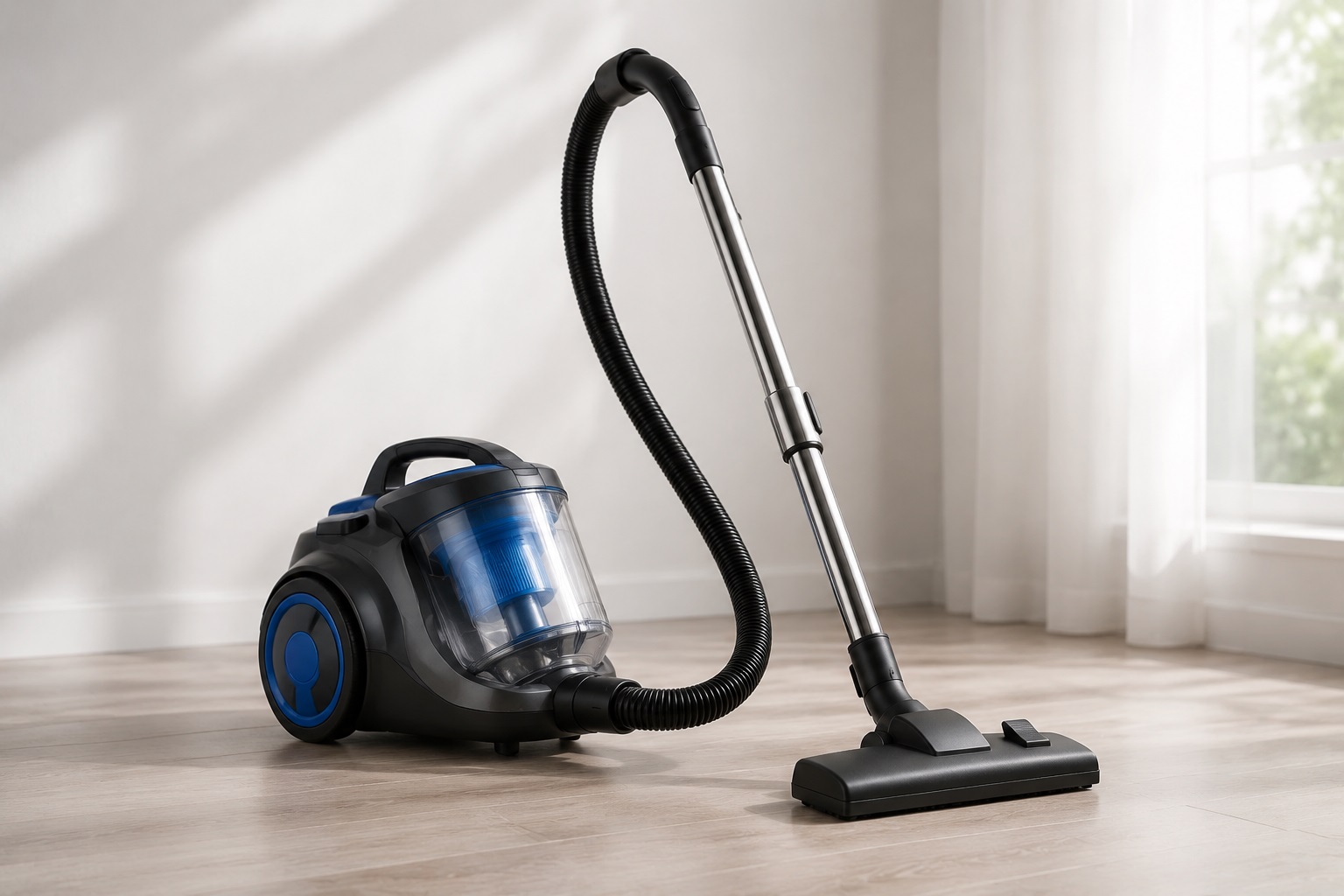
🚨 Most Cheap Vacuum Cleaners Fail Before Consumers Realize Why
Many buyers believe low budget vacuum cleaners fail because they are “too cheap.”
That is only partially true.
The real problem is that most low-cost vacuum cleaners are optimized for:
❌ lower factory quotation
instead of
✅ long-term product stability
This creates a dangerous illusion in the cleaning appliance industry.
A vacuum cleaner that looks competitive during procurement may quietly contain:
unstable motors
low-grade lithium battery cells
poor airflow sealing
weak filtration systems
fragile injection-molded parts
The result?
The product performs well during early testing — but begins failing after several months of real consumer use.
This is why experienced sourcing professionals rarely ask:
“Which vacuum cleaner is the cheapest?”
Instead, they ask:
“Which affordable cleaning machine creates the lowest long-term failure risk?”
That question changes everything.
According to appliance retail trend analysis, return rates for poorly optimized budget vacuum cleaners can exceed 18%–25% within the first year in highly competitive e-commerce markets.
For distributors and OEM buyers, that becomes a profit disaster.
🧠 Why Low Budget Vacuum Cleaners Often Fail in Real Markets
Most consumers never see:
motor suppliers
airflow engineering
battery sourcing
material quality
factory QC systems
They only experience:
weak suction
short battery life
overheating
difficult maintenance
product failure
This creates a major challenge for wholesalers and retailers.
Because:
Cheap vacuum cleaners do not fail in factories.
They fail in consumer expectations.
⚠️ Case Study: The “Low Price” Vacuum That Destroyed Retailer Confidence
A North American online appliance seller launched a cordless stick vacuum through multiple e-commerce platforms.
The factory quotation was approximately 11% lower than competing suppliers.
Management believed the sourcing decision was smart.
The product samples looked acceptable.
Initial reviews were positive.
However, six months after large-scale sales began, serious issues started appearing.
📉 What Consumers Reported
unstable suction performance
overheating during extended cleaning
declining battery runtime
excessive motor noise
clogged filtration systems
Within 10 months:
return rates increased to 23%
platform ratings dropped from 4.6 to 3.7
retailer advertising costs increased sharply
customer acquisition costs nearly doubled
warranty claims surged
The problem was eventually traced to:
❌ Low-grade brushless motor balancing
combined with
❌ unstable battery cell sourcing
The factory reduced costs by using lower-tier upstream component suppliers.
The buyers focused on procurement pricing.
The factory focused on quotation competitiveness.
Nobody focused on long-term product stability.
The real lesson?
Most buyers optimize purchase cost.
Smart buyers optimize return rates.
🔍 The Most Important Low Budget Vacuum Features Buyers Should Prioritize
Low-cost products can absolutely succeed in global markets.
But only when factories optimize engineering intelligently.
Professional vacuum cleaner suppliers reduce unnecessary costs without sacrificing critical performance systems.
⚙️ Feature #1 — Airflow Efficiency Matters More Than High Wattage
One of the biggest misconceptions in the vacuum cleaner industry:
❌ Higher wattage automatically means better cleaning.
In reality:
✅ Airflow engineering determines real-world suction performance.
Poor airflow design creates:
suction leakage
dust retention problems
inefficient cleaning
battery waste
📊 Comparative Product Testing Example
A European appliance distributor tested two affordable cordless vacuum cleaners.
Model A
550W motor
aggressive marketing claims
weak airflow channel sealing
Model B
420W motor
optimized airflow structure
better cyclone separation system
After consumer testing:
Model B achieved:
18% lower return rates
higher user satisfaction
longer battery runtime
improved pet hair pickup
The reason?
The factory invested in:
airflow leakage control
internal pressure optimization
cyclone airflow balance
instead of simply increasing motor wattage.
This demonstrates a critical sourcing principle:
Engineering efficiency beats specification marketing.
🔋 Feature #2 — Battery Stability Is More Important Than Battery Size
Many low-cost suppliers advertise:
larger battery capacity
ultra-long runtime
aggressive pricing
However, battery quality depends heavily on:
cell consistency
thermal protection
cycle degradation control
charging stability
⚠️ Procurement vs Engineering Conflict (Real Industry Pattern)
In many appliance companies, procurement teams push aggressively for lower battery pricing.
Meanwhile, engineers warn about long-term stability risks.
This internal conflict is extremely common in the vacuum cleaner industry.
📉 Case Example: Procurement Team Ignored Engineering Warnings
One European private label vacuum brand attempted to reduce production costs before entering a major retail chain.
The procurement department selected a cheaper battery supplier despite engineering concerns regarding:
thermal stability
cycle lifespan
charging protection systems
Management prioritized pricing pressure.
Initially, profit margins improved.
However, after large-scale retail sales:
charging failures increased rapidly
overheating complaints appeared
warranty replacement costs surged
retailer trust weakened
Within one year, the company was forced to redesign the entire battery system.
The final operational loss exceeded the original procurement savings multiple times.
The deeper lesson?
Cheap battery sourcing often creates expensive brand damage.
🌀 Feature #3 — Filtration Systems Directly Affect Product Reputation
Consumers increasingly care about:
indoor air quality
allergen reduction
pet hair control
fine dust filtration
Even affordable cleaning machines now require:
multi-layer filtration
HEPA-level filtering capability
sealed airflow structures
Poor filtration systems often create:
dust leakage
unpleasant odor circulation
reduced suction consistency
🧪 Manufacturing Insight Most Buyers Ignore
Many factories reduce costs through:
thinner sealing materials
weaker filter frames
lower-grade sponge structures
These changes appear minor during inspection.
But after months of use, filtration leakage increases dramatically.
This is why experienced OEM buyers audit:
filter sealing quality
airflow pressure stability
filtration durability testing
instead of only checking appearance.
🧩 Feature #4 — Lightweight Design Creates Better Consumer Retention
Modern consumers increasingly prioritize:
portability
maneuverability
easy daily use
especially in urban apartments and small living spaces.
Heavy machines may look “powerful,” but they often reduce long-term usage frequency.
📈 Market Trend Insight
According to appliance retail analysis across Europe and North America:
Lightweight cordless vacuum cleaners continue outperforming bulky traditional models in repeat purchase satisfaction.
Consumers now prefer:
✅ practical convenience
over:
❌ excessive industrial-style specifications
This shift is reshaping affordable vacuum cleaner design globally.
🔧 Feature #5 — Easy Maintenance Reduces Negative Reviews
Many vacuum cleaner failures are not mechanical.
They are usability failures.
Consumers dislike products that require:
difficult dustbin removal
complicated filter cleaning
expensive maintenance parts
⚠️ Case Study: The Dustbin Design Failure
An affordable stick vacuum gained strong early sales through online retail channels.
However, negative reviews increased rapidly after mass adoption.
Surprisingly, the main complaint was not suction performance.
It was:
❌ Difficult Dustbin Cleaning
Consumers struggled to empty debris without touching dust directly.
Within months:
product ratings declined sharply
return requests increased
social media complaints spread
The product itself technically functioned well.
But the user experience failed.
This demonstrates a critical market truth:
Small usability frustrations create massive long-term reputation damage.
🏭 How Professional Vacuum Cleaner Suppliers Reduce Costs Intelligently
Experienced wholesale vacuum cleaner manufacturers rarely reduce costs by blindly lowering quality.
Instead, they optimize:
automated assembly
packaging efficiency
airflow engineering
material standardization
supply chain coordination
This creates sustainable cost-performance balance.
🔍 Smart Buyer Evaluation Framework
Before selecting a vacuum cleaner supplier, professional buyers should verify:
✅ Motor System
brushless motor balancing
overheating control
suction consistency
✅ Battery System
cycle lifespan
thermal stability
charging protection
✅ Filtration System
HEPA sealing
airflow leakage control
dust containment
✅ Structural Design
injection molding tolerance
lightweight balance
durability testing
✅ Quality Control
aging tests
drop tests
runtime testing
airflow simulation
✅ Supply Chain Stability
motor supplier consistency
battery supplier reliability
packaging standardization
🚀 Why Cost Effective Vacuum Cleaners Will Dominate Future Markets
Global consumers are becoming increasingly rational.
Most buyers no longer want:
❌ the cheapest product
They want:
✅ the smartest long-term value
This is fundamentally changing the vacuum cleaner industry.
Future winning products will focus on:
stable performance
practical usability
energy efficiency
lightweight design
affordable ownership cost
instead of unnecessary premium marketing features.
🌐 The Future of Budget Vacuum Cleaners Is Engineering Optimization
The next generation of affordable cleaning machines will increasingly rely on:
smarter airflow systems
lightweight material engineering
battery efficiency optimization
AI-assisted cleaning logic
improved filtration performance
The factories that understand intelligent cost-performance balance will dominate future OEM vacuum manufacturing.
Because in modern appliance markets:
Consumers forgive high prices faster than they forgive disappointing products.
❓FAQ
🔹 What is the most important feature in a low budget vacuum cleaner?
Stable airflow efficiency and long-term component reliability are usually more important than high wattage numbers.
🔹 Why do cheap vacuum cleaners fail so quickly?
Most failures originate from unstable motors, low-quality battery cells, weak airflow sealing, and poor filtration systems.
🔹 How can buyers identify a reliable vacuum cleaner supplier?
Evaluate engineering capability, QC systems, battery sourcing stability, airflow testing capability, and export compliance experience.
🔹 What should OEM buyers audit before selecting a wholesale vacuum cleaner factory?
Buyers should verify motor systems, battery lifecycle testing, airflow design, injection molding consistency, filtration sealing, and quality control infrastructure.
🎯 Conclusion
The best low budget vacuum cleaner is not simply the cheapest machine available.
It is the product that balances:
affordability
durability
airflow efficiency
battery stability
usability
long-term consumer satisfaction
For distributors, wholesalers, and OEM sourcing professionals, understanding the deeper logic behind low budget vacuum features is essential for reducing return rates and building sustainable market competitiveness.
In the modern cleaning appliance industry, intelligent engineering now matters far more than aggressive pricing.
📌 Suitable Readers
European vacuum cleaner distributors
American appliance wholesalers
OEM vacuum cleaner sourcing managers
B2B appliance procurement teams
Vacuum cleaner product engineers
Private label vacuum cleaner startups
E-commerce appliance sellers
📌 Hashtags
low budget vacuum cleaner, low budget vacuum features, vacuum cleaner supplier, wholesale vacuum cleaner, cost effective vacuum, affordable cleaning machine, cordless vacuum cleaner, budget vacuum cleaner, vacuum cleaner manufacturer, OEM vacuum cleaner, vacuum cleaner sourcing, wholesale cleaning machine, stick vacuum supplier, affordable cordless vacuum, vacuum cleaner distributor, vacuum cleaner wholesaler, vacuum cleaner factory, vacuum cleaner B2B, budget cleaning appliance, low cost vacuum cleaner, vacuum cleaner engineering, vacuum cleaner filtration system, lightweight vacuum cleaner, smart cleaning machine, affordable home vacuum, vacuum cleaner battery, HEPA vacuum cleaner, suction power vacuum, vacuum cleaner QC, vacuum cleaner export, private label vacuum cleaner, vacuum cleaner retailer, vacuum cleaner startup, vacuum cleaner importer, vacuum cleaner Europe, vacuum cleaner USA, vacuum cleaner product development, vacuum cleaner supply chain, cordless stick vacuum, vacuum cleaner airflow system, vacuum cleaner logistics, affordable vacuum manufacturer, vacuum cleaner procurement, vacuum cleaner quality control, vacuum cleaner technology, vacuum cleaner market trends, affordable appliance sourcing, Lanxstar, cost effective cleaning appliance, vacuum cleaner global market