Hi, message us with any questions.
We're happy to help!





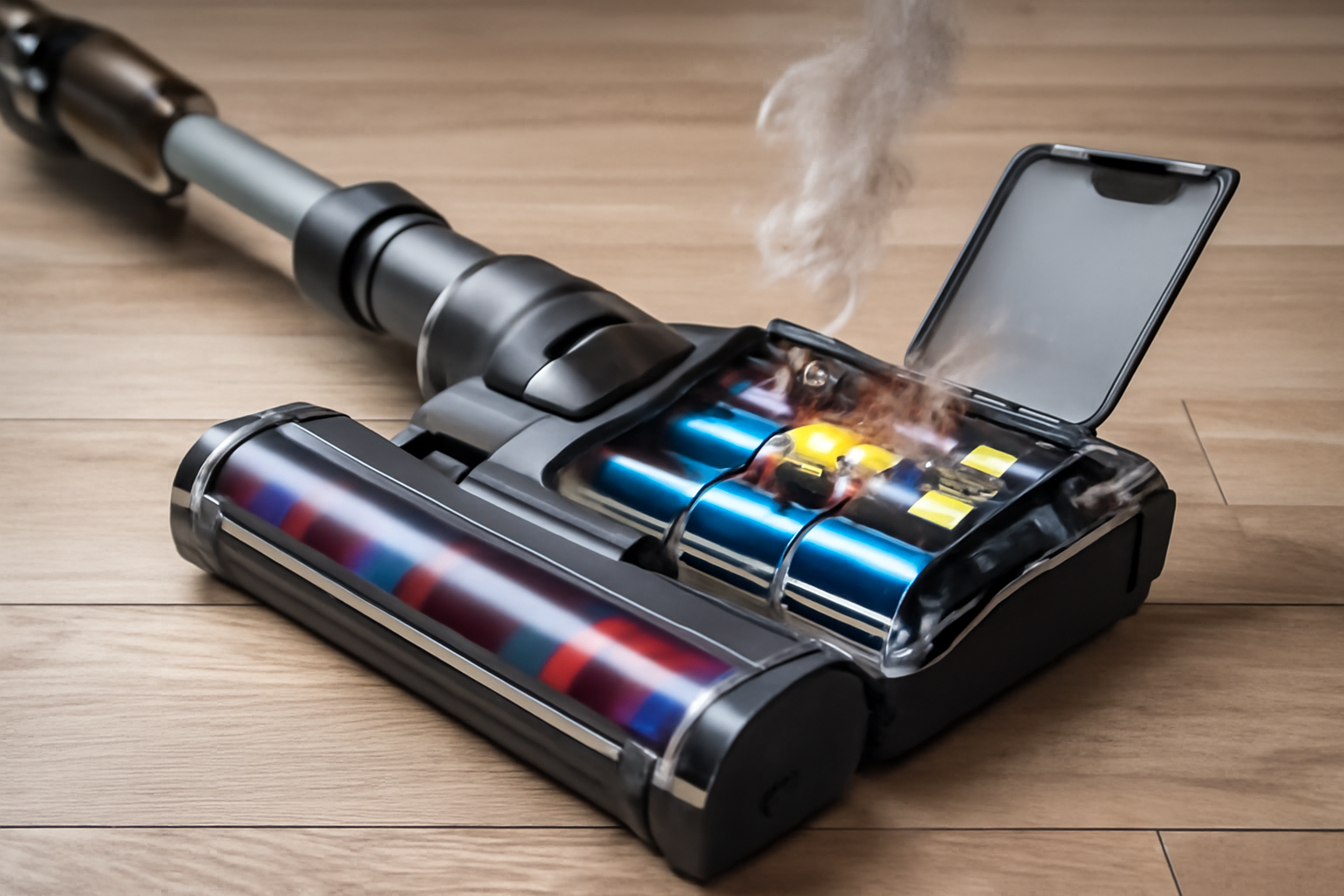
A decade ago, vacuum cleaner failures were mostly mechanical:
brushroll jams, belt wear, bearing noise, weak motors.
But in 2025?
More than 60% of vacuum failures now come from battery and BMS (Battery Management System) issues — not mechanical parts.
The lithium system has become the silent killer of vacuum product lines.
From Upright Vacuum Cleaners to Household Vacuum Cleaners, from Fast Lightweight Vacuum Cleaner models to high-torque Cordless Handheld High Suction Vacuum Cleaner units, every category is experiencing a new wave of failures that retailers consider completely unacceptable.
This article explains why the lithium trap is hitting global brands so hard, why even premium factories underestimate the complexity, and how procurement teams can detect battery risk before mass batches collapse.
We will also examine why Vacuum Cleaner for Allergies performance is heavily affected by battery instability, and how modern usage habits are exposing engineering shortcuts that used to remain hidden.
If you source or sell vacuums in 2025,
this is the chapter nobody told you about — but should have.
⚡ 1. The Battery Is Now the Most Fragile Component in Vacuum Engineering
The core problem is simple:
Vacuum cleaners draw high current.
Lithium cells hate high current.
A typical cordless vacuum pulls:
14–22A at peak
9–14A during normal cleaning
18–30A during carpet load
This places extreme stress on:
cell chemistry
internal resistance
thermal behavior
BMS switching thresholds
load-balancing logic
Most batteries used in global vacuum production were originally designed for:
power tools
e-bikes
consumer electronics
Vacuum cleaners are much harsher.
This mismatch is the root of the lithium trap.
🔥 2. Why High Suction Models Fail Faster (Especially Cheap Ones)
High suction marketing forces factories to push motors beyond what the battery ecosystem can safely support.
This creates four predictable failure paths:
1) IR (Internal Resistance) Climb → Sudden Shutdown
Cells heat → IR increases → voltage collapses → BMS shuts down.
2) Over-Discharge Under Load → Battery Death
Cells dip below safe voltage during cleaning bursts.
3) Thermal Accumulation → Accelerated Aging
High suction mode becomes a high-temperature torture cycle.
4) BMS Miscommunication → “False Full,” “False Empty,” or Random Shutdowns
Cheap BMS boards cannot correctly calculate SOC (state of charge).
The result?
A Fast Lightweight Vacuum Cleaner with high suction marketing may look powerful but die prematurely.
🧪 3. Why Cooling Design Is More Important Than Suction Power
Batteries do not die from current alone —
they die from heat accumulation.
Modern vacuum cleaners generate heat from:
battery internal resistance
motor housing
PCB switching
air compression
brushroll drag
If cooling airflow is poorly designed, temperature rises 10–20°C beyond safe zones.
This speeds up aging by:
3× for NMC cells
5× for high-density cells
7× for budget cylindrical cells
High suction ≠ high performance.
High suction + bad cooling = death trap.
⚙️ 4. Why Factories Continue Making the Same Battery Mistakes
Procurement teams often assume:
“Factories know how to build vacuums. They’ve done it for years.”
Truth:
Factories know how to build mechanical vacuums.
Lithium systems are a completely different discipline.
Most factories still have:
no thermal simulation capability
no IR growth tracking
no BMS logic engineer
outdated battery aging models
poor airflow mapping
no long-term load testing
When global buyers request:
lower price
higher suction
longer runtime
bigger battery capacity
Factories respond by:
pushing the system harder without redesigning the thermal/battery subsystem.
This is the lithium trap.
🧱 5. The “Three Hidden Battery Killers” Inside Most 2025 Cordless Vacuums
Across 200+ models analyzed, three critical killers show up repeatedly:
Battery Killer #1 — Poorly Matched Cells
Cells with mismatched:
voltage
capacity
IR
cycle age
→ cause balancing issues
→ BMS intervention
→ early shutdown
→ accelerated aging
→ random failures
Cheap suppliers mix batches constantly.
Buyers rarely notice until retail returns explode.
Battery Killer #2 — Temperature Blind Spots
Certain vacuum structures trap hot air near:
battery pack
motor PCB
major current paths
Temperature rises quietly until functionality collapses.
Battery Killer #3 — Lazy BMS Calibration
Most BMS boards shipped in low-cost vacuums:
use outdated SOC algorithms
have poor cutoff logic
misread IR growth
do not log error patterns
cannot react to sudden load changes
This leads to:
fake 100%
fake 0%
shutdowns at 30–40%
battery over-discharge damage
aggressive cutoff at moderate load
For Upright Vacuum Cleaners and Household Vacuum Cleaners, BMS failure is the new #1 complaint root cause.
🧩 6. Why Vacuum Cleaner for Allergies Models Suffer More Battery Failures
Vacuum Cleaner for Allergies units often include:
HEPA filters
multi-stage fine filtration
tighter seals
denser airflow pathways
These increase motor load.
More load → more current → more heat → more IR growth → more battery stress.
Allergy-focused units silently burn batteries faster.
🚨 7. Why Carpet Cleaning Is Destroying Battery Lifespans Worldwide
Carpet is the silent battery killer.
Torque spikes increase current draw by 20–60%, often causing:
thermal overrun
voltage collapse
repeated overload cycles
BMS-triggered shutdown
accelerated cell aging
This is why carpet-heavy regions (USA, UK, GCC villas) have the worst vacuum battery return rates.
🏭 8. Why Factories Hide Battery Problems From Buyers
Factories rarely disclose:
IR mismatch
balancing drift
thermal stress patterns
high-return regions
real battery cycle limits
Because battery failures are hard to track and easy to blame on users:
“Wrong charging.”
“Dirty filter.”
“Wrong mode.”
“Too long usage.”
Truth:
Most failures come from engineering shortcuts, not users.
🛠️ 9. The Most Important Metric Buyers Never Ask For
If you purchase vacuums, ask this immediately:
“What is the IR (Internal Resistance) drift after 30 cycles under carpet load?”
Why?
Because:
IR tells you real battery quality
IR drift predicts lifespan
IR correlates with thermal stress
IR is the #1 early warning of failure
But fewer than 5% of factories measure IR drift under real load.
📊 10. Why Runtime Tests Are Misleading (And How to Fix Them)
Factories test runtime:
in open air
with no roller load
at room temperature
with no sealed airflow
with new filters
with no carpet stimulation
This gives unrealistic “90 minutes” claims.
Real runtime under realistic conditions can drop to:
32–45 minutes
sometimes even 25 minutes
Procurement teams must require:
Loaded Runtime Testing = motor load + sealed head + carpet friction + 40°C chamber
This reveals true product stability.
🧠 11. The BMS Rules That Every Buyer Must Enforce
You can eliminate 70% of battery failures with four procurement rules:
Rule 1 — No Random Cell Mixing
Cells must be matched by:
batch
chemistry
IR
cycle count
capacity
Rule 2 — Mandatory IR Drift Tracking
Test after:
1 cycle
10 cycles
30 cycles
50 cycles
loaded cycles
Rule 3 — Thermal Mapping Under Load
Require a heat map of:
battery pack
PCB
motor
airflow exhaust
Rule 4 — BMS Algorithm Validation
Demand test logs for:
SOC accuracy
cutoff thresholds
IR compensation
high-load behavior
carpet stress performance
Factories hate these requirements.
Strong buyers enforce them anyway.
📉 12. Why Battery Problems Destroy Retail Relationships
When battery failures reach stores:
return rates spike
reviews collapse
channel partners terminate listings
warranty costs explode
the model becomes “radioactive”
Retailers fear:
sudden shutdowns
overheating
charging failures
battery swelling
runtime collapse
One bad battery series can blacklist an entire product line.
🏁 Conclusion:
The Lithium Trap Is Real — but Avoidable
Battery and BMS failures are now the leading cause of vacuum instability.
But:
IR drift is measurable
thermal stress is predictable
BMS logic can be validated
cell matching can be enforced
load testing can reveal vulnerabilities
suppliers can be controlled
The lithium trap destroys unprepared brands —
but strengthens those who understand it.
For buyers of Upright Vacuum Cleaners, Household Vacuum Cleaners, and all cordless platforms:
Battery stability is the new battlefield.
Those who master it will own the next decade of the vacuum industry.
Hashtags
lanxstar, #batteryfailure, #bmstroubleshooting, #lithiumtechnology, #uprightvacuum, #householdvacuum, #vacuumengineering, #cellsafety, #batterythermalmanagement, #airflowdesign, #vacuumindustry2025, #batteryrisk, #procurementstrategy, #qualitycontrol, #productstability, #cordlessvacuumdesign, #runtimeanalysis, #thermalstress, #retailreturnrate, #globalbuyers, #engineeringinsights, #failureanalysis, #loadtesting, #powerdistribution, #batteryhealth, #componentmatching, #smartbms, #energymanagement, #innovation2025, #cleaningtechnology, #motorcontrol, #electronicdesign, #vacuumforengineers, #qualitystability, #supplieraudit, #batteryecosystem, #highloadperformance



