Hi, message us with any questions.
We're happy to help!





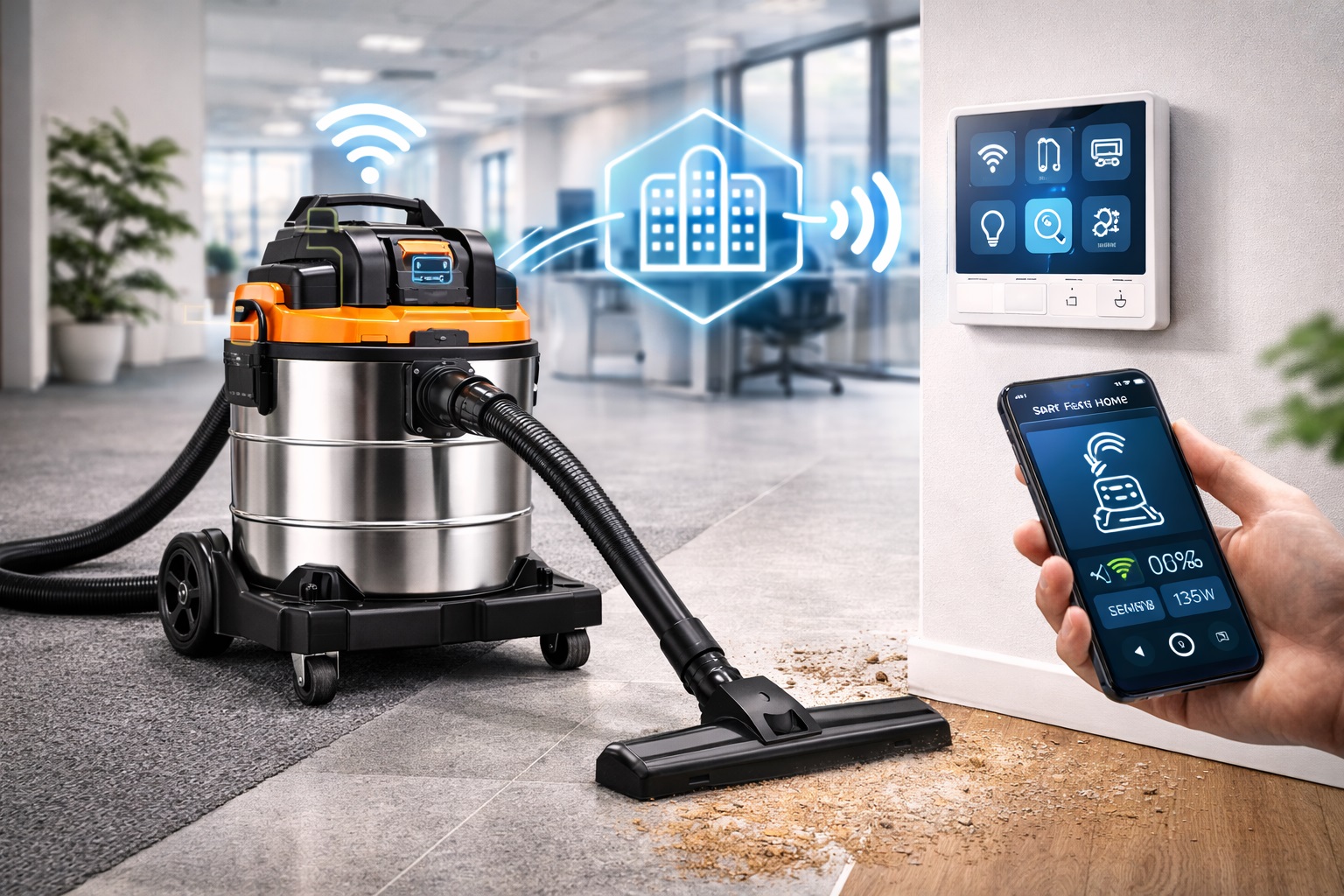
Enhancing Commercial Cleaning with Smart Technology
In today’s fast-paced commercial environment, smart buildings are becoming the standard. These buildings are designed to optimize operations, reduce energy usage, and enhance tenant comfort through integrated technologies. For facility managers, cleaning contractors, and B2B buyers in Europe, the US, and the Middle East, integrating vacuum cleaners into smart building systems is a significant step toward increasing cleaning efficiency, reducing costs, and promoting a sustainable environment.
This article explores how to integrate vacuum cleaners into smart building infrastructures, leveraging the power of IoT, automation, and energy-efficient technologies to create smarter, more efficient cleaning operations.
🧠 Why Smart Building Integration Is Crucial for Commercial Cleaning
Smart buildings use advanced technologies like IoT (Internet of Things), automation, and data analytics to streamline building operations, improve energy efficiency, and enhance tenant experience. Cleaning is a critical function in these environments, and by integrating vacuum cleaners into the broader building management system, facility managers can achieve:
Optimized cleaning schedules based on real-time data
Energy savings through smart power management
Predictive maintenance that reduces downtime
Improved indoor air quality by integrating high-efficiency filtration systems with building air quality monitoring systems
Higher cleaning performance through automation and smarter resource allocation
Integrating vacuums into a smart building system enhances cleaning operations by making them more data-driven, automated, and efficient, creating a more sustainable and productive workspace.
🧩 Key Features to Look for in Smart Vacuums for Building Integration
To integrate vacuums seamlessly into a smart building, facility managers need to choose vacuums with the right combination of smart technology, efficiency, and versatility.
1. IoT Integration for Remote Monitoring and Control
Smart vacuums should be able to connect to the building management system (BMS) via IoT. This connectivity allows facility managers to:
Monitor vacuum performance in real-time, including battery life, suction power, and usage data
Schedule cleaning tasks based on building occupancy or other operational data
Track maintenance needs and receive predictive alerts for when maintenance is required (e.g., filter changes, battery replacement, etc.)
A vacuum integrated with IoT technology helps create a data-driven cleaning system, improving both efficiency and maintenance management.
2. Multi-Surface and Multi-Functionality for Versatility
In commercial spaces, you need vacuums that can clean different floor types and handle multiple tasks. Look for Multi-Functional Durable Vacuum Cleaners with capabilities such as:
Wet and dry functionality: Ideal for environments with both liquid spills and dry debris
Adaptable suction: Adjustable suction power based on floor type or cleaning requirement, ensuring energy efficiency
Multiple attachments for cleaning various surfaces, including upholstery, hard floors, carpets, and even cars (with Car Vacuum Cleaner features).
For smart building integration, vacuums that are multi-functional and multi-surface capable ensure that all cleaning needs are met with one machine, improving both space utilization and maintenance.
3. Energy-Efficiency and Smart Power Management
Energy consumption is a key concern in modern buildings. Vacuums equipped with smart power management capabilities can significantly reduce energy use by adjusting power based on task requirements. Look for vacuums that offer:
Energy-saving modes that adjust suction power or motor speed when cleaning light debris
Automatic shut-off features that turn off the vacuum when not in use, saving energy
Battery optimization for cordless models, ensuring efficient use and longer runtimes
An Energy-Saving Efficient Powerful Vacuum Cleaner with these features can drastically reduce operational costs and contribute to the building’s sustainability goals.
4. Automation and Scheduling Features
For large commercial spaces, the ability to automatically schedule cleaning tasks is essential. Smart vacuums can be set up to clean during off-hours or when the building is least occupied, ensuring no disruption to work processes. Features include:
Automated scheduling based on building usage patterns, occupancy sensors, or real-time data from IoT devices
Integration with building scheduling systems to adjust cleaning times based on events, meetings, or traffic patterns
By automating cleaning tasks, facility managers can ensure that spaces are consistently maintained without the need for manual intervention, reducing labor costs and improving efficiency.
5. Advanced Filtration for Improved Indoor Air Quality
Vacuum cleaners with high-efficiency filtration systems like HEPA filters contribute to improved indoor air quality (IAQ) by trapping dust, allergens, and other pollutants that vacuums typically stir up. In a smart building, the vacuum’s filtration system can be monitored remotely, ensuring it’s always operating at optimal performance:
Real-time filter status updates to know when filters need to be changed
Integration with IAQ monitoring systems to track the effect of vacuum cleaning on air quality
A vacuum equipped with HEPA filters and connected to IAQ systems ensures that the air in the building remains clean and safe, contributing to the health and comfort of building occupants.
🧹 Best Practices for Integrating Vacuums into a Smart Building
1. Set Up Data-Driven Cleaning Schedules
Use the data provided by IoT-enabled vacuums to create smart cleaning schedules that align with building usage patterns. Integrating with the BMS will allow you to automatically schedule cleaning tasks based on:
Peak occupancy times
Event schedules (for conference halls, auditoriums, etc.)
High-traffic areas (such as entryways or hallways)
This ensures that cleaning is done efficiently and timely, without interrupting building activities.
2. Regularly Monitor and Maintain Smart Vacuums
Just like any piece of smart technology, vacuums integrated into a smart building require regular monitoring and maintenance. Use the built-in predictive maintenance features to track:
Battery health (for cordless vacuums)
Filter performance
Suction power degradation
Set up regular maintenance alerts and schedule timely repairs to keep vacuums operating at full capacity and prevent breakdowns during critical cleaning periods.
3. Train Staff to Use and Maintain Smart Vacuums
Even though smart vacuums can automate many tasks, staff should be trained on how to interact with the vacuum management system and maintain the equipment properly. Ensure that they:
Understand how to access remote monitoring systems and interpret alerts
Know how to adjust settings based on floor types or cleaning needs
Keep vacuums properly cleaned and serviced to maintain their smart features
📉 ROI from Integrating Smart Vacuums
The return on investment (ROI) from integrating smart vacuums into a smart building can be significant:
Labor savings through automated cleaning schedules and reduced manual intervention
Energy savings from optimized power management and efficient operation
Improved building performance with higher cleaning standards and better IAQ
Reduced downtime through predictive maintenance, minimizing costly repairs
Over time, the combination of automation, efficiency, and cost savings leads to a more sustainable and productive cleaning operation.
🧭 A Practical Smart Vacuum Integration Framework
| Smart Building Need | Vacuum Feature That Solves It |
|---|---|
| Cleaning efficiency | IoT-enabled scheduling and monitoring |
| Energy savings | Smart power management, energy-saving modes |
| Flexibility | Multi-surface, wet-dry, and multi-functional capabilities |
| Air quality | HEPA filtration and IAQ monitoring integration |
| Predictive maintenance | Data-driven alerts for filter and battery replacement |
🧠 Final Insight for Facility Managers
Integrating vacuum cleaners into a smart building system is not just about improving cleaning efficiency—it’s about transforming how cleaning operations are managed and optimized. With IoT integration, smart scheduling, and energy-saving features, vacuums become a part of a larger system that enhances both building performance and sustainability.
By selecting the right smart vacuums, facility managers can ensure maximum efficiency, reduced energy costs, and a cleaner, healthier environment for building occupants.
👥 Suitable Readers
Facility managers
Commercial cleaning contractors
B2B vacuum equipment buyers
Smart building solution providers
Property management teams
🔖 Hashtags
wet and dry vacuum cleaner, Multi-Functional Durable Vacuum Cleaner, 4 in 1 Cordless Smart Wet & Dry Vacuum Cleaner, Car Vacuum Cleaner, Vacuum Cleaner for Multi-Surface, Apartment Vacuum Cleaner, smart building cleaning systems, IoT-enabled vacuums, vacuum integration with BMS, smart building cleaning, energy-efficient vacuums, predictive maintenance vacuums, commercial cleaning systems, high-performance vacuum cleaners, cleaning technology for smart buildings, sustainable cleaning solutions, indoor air quality with vacuums, smart vacuum features, connected vacuum systems, cleaning automation, commercial cleaning technology, HEPA filter vacuums, multi-functional vacuum systems, vacuum scheduling for buildings, vacuum battery management, wet-dry vacuum systems, vacuum management solutions, commercial facility management, cleaning system optimization, green building cleaning, sustainable cleaning practices, smart maintenance vacuums, vacuum integration with IAQ systems, commercial space cleaning, smart vacuum solutions for large venues, vacuum fleet management, energy-saving vacuum equipment, smart commercial cleaning tools, cleaning productivity with IoT, efficient cleaning in smart buildings, Lanxstar



