Hi, message us with any questions.
We're happy to help!





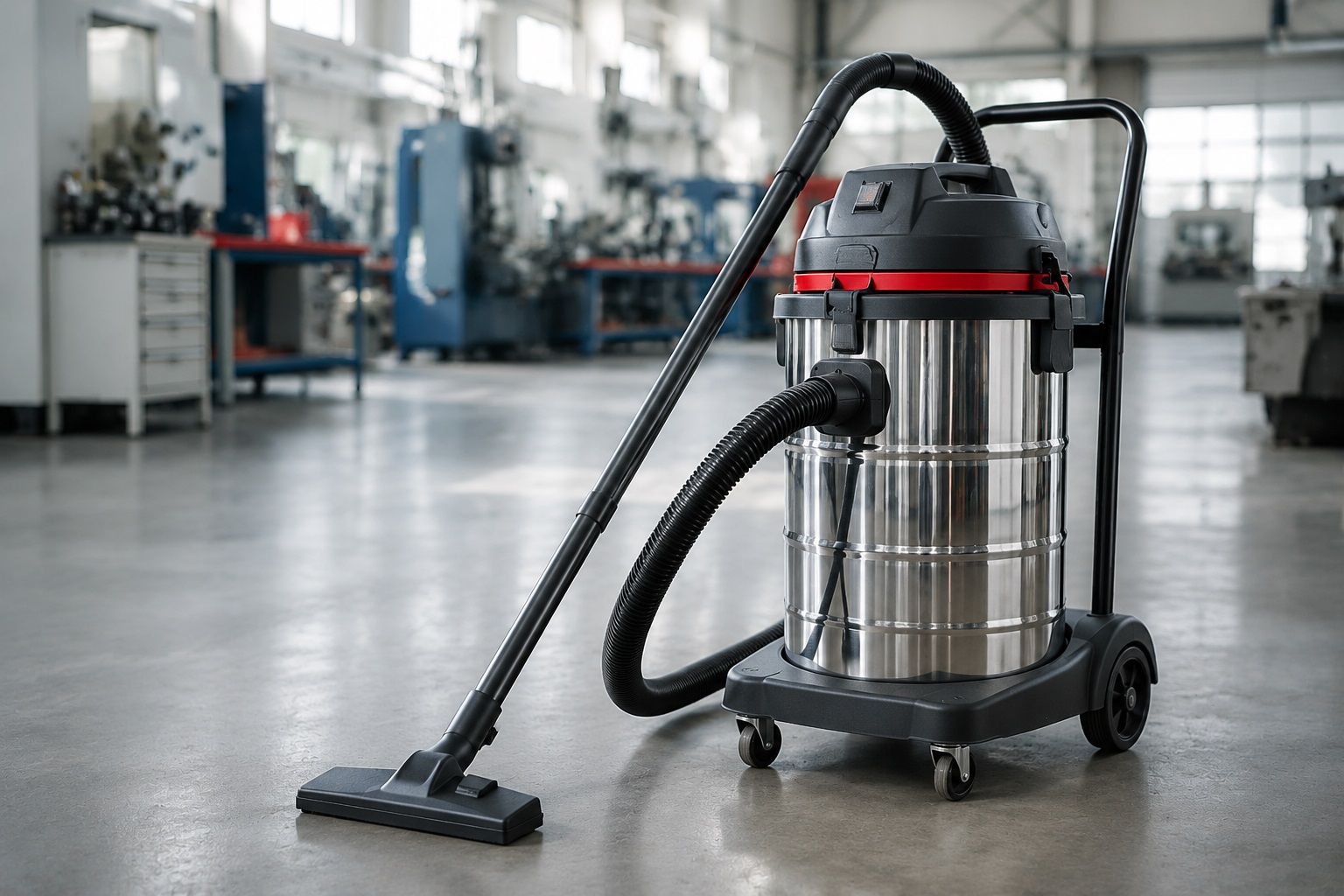
In modern manufacturing, industrial waste reduction is no longer achieved only through production optimization. A growing portion of waste comes from an often overlooked source: inefficient cleaning and maintenance processes.
For B2B buyers, facility managers, and sustainability engineers, improving cleaning systems is one of the fastest and lowest-cost ways to enhance sustainable maintenance, reduce operational waste, and improve overall factory ESG performance.
This article breaks down how cleaning systems directly influence waste generation—and how factories can redesign cleaning strategy as a resource-saving engineering system instead of a labor cost center.
🧭 1. Industrial Waste Reduction Starts After Production, Not During It
Most factories focus heavily on production-side waste reduction (material yield, machining efficiency, scrap control). However, up to 20–35% of avoidable industrial waste is generated during:
Equipment cleaning cycles
Filter replacement and disposal
Dust and residue removal processes
Maintenance shutdown procedures
This is where industrial waste reduction becomes a maintenance engineering problem, not just a production problem.
🧼 2. Efficient Cleaning Process: The Hidden Driver of ESG Performance
An efficient cleaning process directly impacts ESG outcomes in three ways:
🌿 Environmental Protection (E)
Poor cleaning practices generate secondary waste:
Disposable rags and wipes
Overused chemical solvents
Premature filter disposal
Contaminated wastewater
Improving cleaning efficiency reduces:
Material consumption
Hazardous waste output
Environmental discharge load
👷 Operational Stability (S)
Cleaner equipment = fewer failures:
Reduced machine contamination
Lower downtime risk
Improved operator safety
Better air quality in production zones
🏢 Governance (G)
Factories with structured cleaning systems can:
Track maintenance waste data
Document ESG compliance metrics
Standardize cleaning cycles across facilities
♻️ 3. Reusable Filter Systems: The Core Technology Behind Waste Reduction
One of the most impactful innovations in industrial cleaning is the adoption of reusable filter systems.
🧠 Why it matters
Traditional filters create continuous waste streams:
Frequent replacement cycles
High landfill contribution
Supply chain dependency
Reusable systems change this structure.
⚙️ Engineering advantages:
Washable or pulse-cleaned filter media
Extended service life (3–5x longer than standard filters)
Reduced disposal frequency
Lower lifecycle cost per filtration cycle
In industrial dust-heavy environments, reusable filtration is one of the most direct ways to reduce operational waste at scale.
🏭 4. Green Factory Initiatives: Cleaning as a Sustainability Lever
Modern green factory initiatives increasingly include cleaning system redesign as a core pillar.
Instead of treating cleaning as a support function, leading manufacturers integrate it into sustainability strategy:
Key initiatives include:
Centralized vacuum cleaning systems
Closed-loop dust recovery systems
Automated cleaning scheduling
Chemical-free or low-chemical cleaning protocols
👉 The shift is clear:
Cleaning is no longer maintenance—it is environmental engineering.
🧪 5. Sustainable Maintenance: From Reactive to Predictive Systems
Traditional maintenance creates waste through:
Over-replacement of parts
Emergency cleaning operations
Inefficient downtime cleaning cycles
Modern sustainable maintenance introduces:
🔧 Predictive cleaning cycles
Based on sensor data (pressure, airflow, contamination levels)
Cleaning only when required—not on fixed schedules
📊 Condition-based maintenance
Equipment cleaned based on performance degradation
Not time-based replacement
🔁 Lifecycle optimization
Extending usable life of filters, ducts, and cleaning components
This reduces both physical waste and labor inefficiency.
🧹 6. Industrial Cleaning as a System, Not a Task
Factories often fail because cleaning is treated as a manual labor task instead of a system.
A high-performance industrial cleaning architecture includes:
🧩 System components:
Central dust collection network
Automated vacuum distribution
Reusable filtration modules
Waste segregation stations
Real-time monitoring sensors
When integrated, cleaning becomes a closed-loop waste reduction system rather than a repetitive manual process.
📉 7. Waste Reduction Impact Model (Real Factory Logic)
Below is a simplified impact model of optimized cleaning systems:
| Area | Before Optimization | After Optimization |
|---|---|---|
| Filter waste | High | Reduced 40–70% |
| Chemical usage | High | Reduced 30–60% |
| Downtime cleaning | Frequent | Predictive & minimal |
| Labor cost | High | Optimized scheduling |
| Environmental load | Uncontrolled | Measurable & reduced |
👉 The key insight:
Most waste reduction gains come from system redesign, not cleaning frequency reduction.
🌱 8. Environmental Protection Through Smart Cleaning Design
A modern industrial facility improves environmental protection not by cleaning more, but by cleaning smarter.
Key engineering strategies include:
Closed-loop dust capture systems
Dry cleaning instead of chemical cleaning
Multi-stage filtration recovery
Waste sorting at source
Reduced consumable dependency
These systems directly reduce environmental discharge and improve compliance readiness.
🚀 9. Future Trend: Autonomous Cleaning Systems in Smart Factories
The next stage of industrial evolution integrates cleaning into automation:
🤖 AI-driven cleaning systems:
Detect contamination levels in real time
Trigger automated cleaning cycles
Optimize resource usage dynamically
🌐 IoT-enabled maintenance:
Cross-machine cleaning coordination
Facility-wide waste tracking dashboards
🔋 ESG reporting integration:
Cleaning efficiency becomes a measurable ESG KPI
Waste reduction data feeds directly into compliance systems
👉 Cleaning is becoming part of the factory’s digital brain.
🔚 Conclusion: Industrial Waste Reduction Begins with Cleaning Intelligence
Reducing industrial waste is no longer only about production efficiency—it is about redesigning how factories clean, maintain, and sustain operations.
Factories that implement advanced efficient cleaning process systems and reusable filter systems achieve:
Lower operational waste
Higher ESG compliance performance
Reduced maintenance costs
Improved workplace safety
Stronger green factory positioning
In modern manufacturing, cleaning is not a cost—it is a waste reduction engine.
🔖 Hashtags
industrial waste reduction, sustainable maintenance, reusable filter systems, green factory initiatives, environmental protection, efficient cleaning process, industrial cleaning systems, factory waste management, industrial dust control, central vacuum systems, industrial filtration systems, HEPA filtration industrial, baghouse maintenance systems, cartridge filter systems, industrial sustainability, ESG manufacturing, factory sustainability, workplace cleanliness, industrial hygiene systems, production maintenance optimization, predictive maintenance systems, smart factory cleaning, IoT industrial monitoring, automated cleaning systems, industrial vacuum solutions, dry cleaning industrial systems, chemical-free cleaning systems, industrial waste recycling, manufacturing waste reduction, production efficiency optimization, industrial air filtration, dust extraction systems, CNC cleaning systems, metalworking maintenance systems, woodworking dust control, chemical plant cleaning systems, pharmaceutical cleanroom cleaning, food factory hygiene systems, industrial environmental protection, carbon reduction manufacturing, sustainable factory operations, green manufacturing technology, ESG reporting systems, maintenance engineering systems, industrial automation cleaning, resource efficiency manufacturing, lifecycle maintenance optimization, industrial facility management, smart maintenance scheduling, Lanxstar



